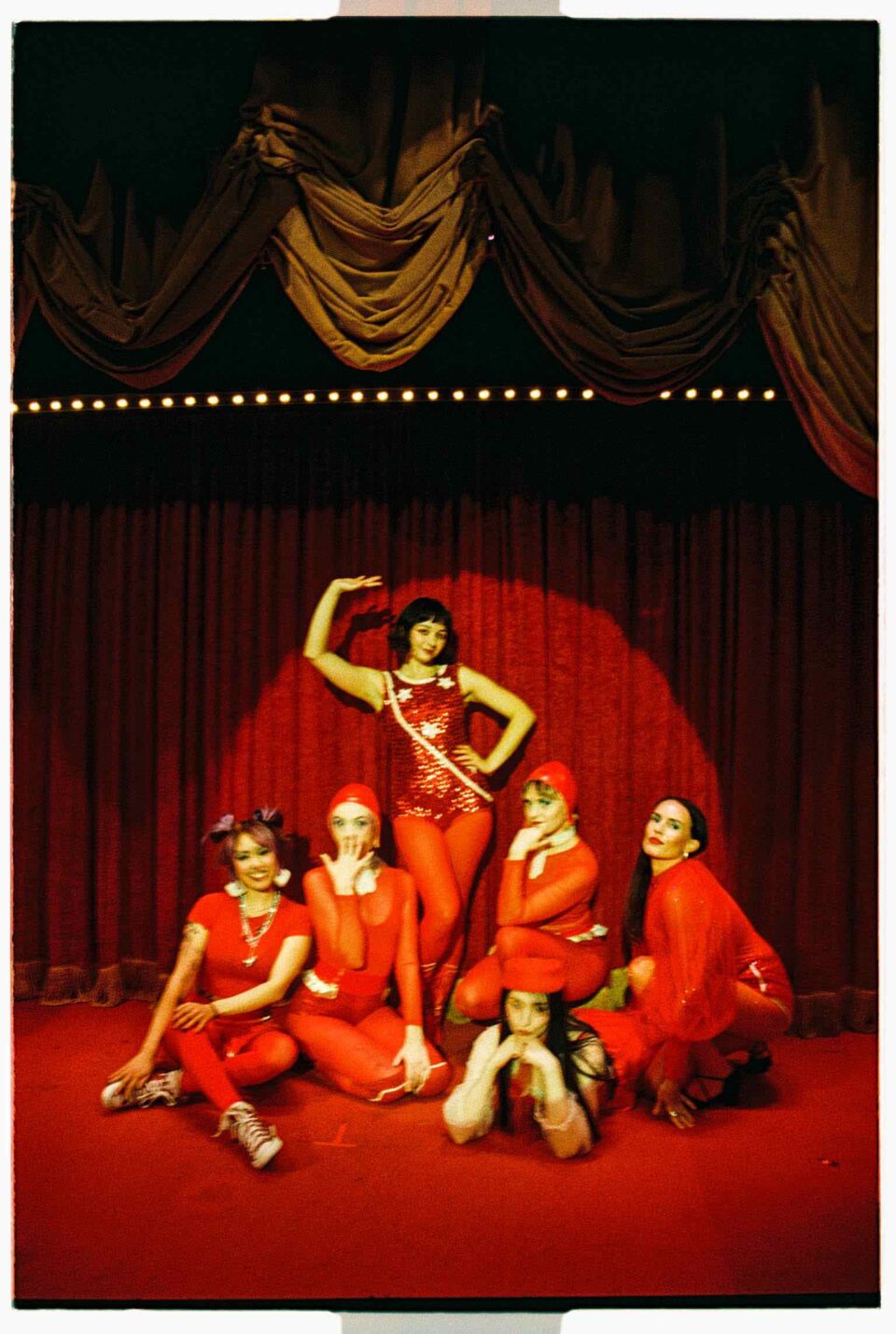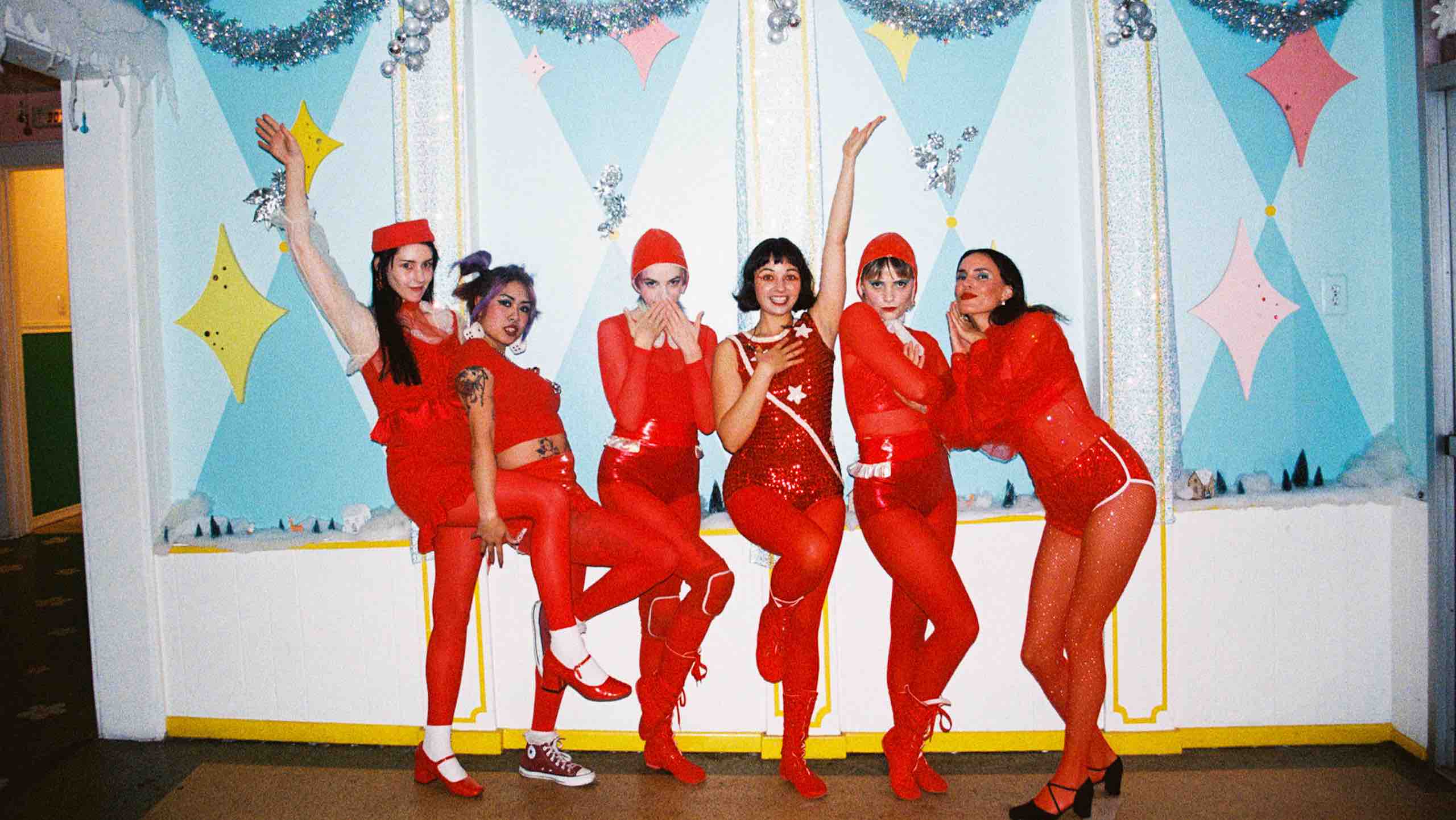
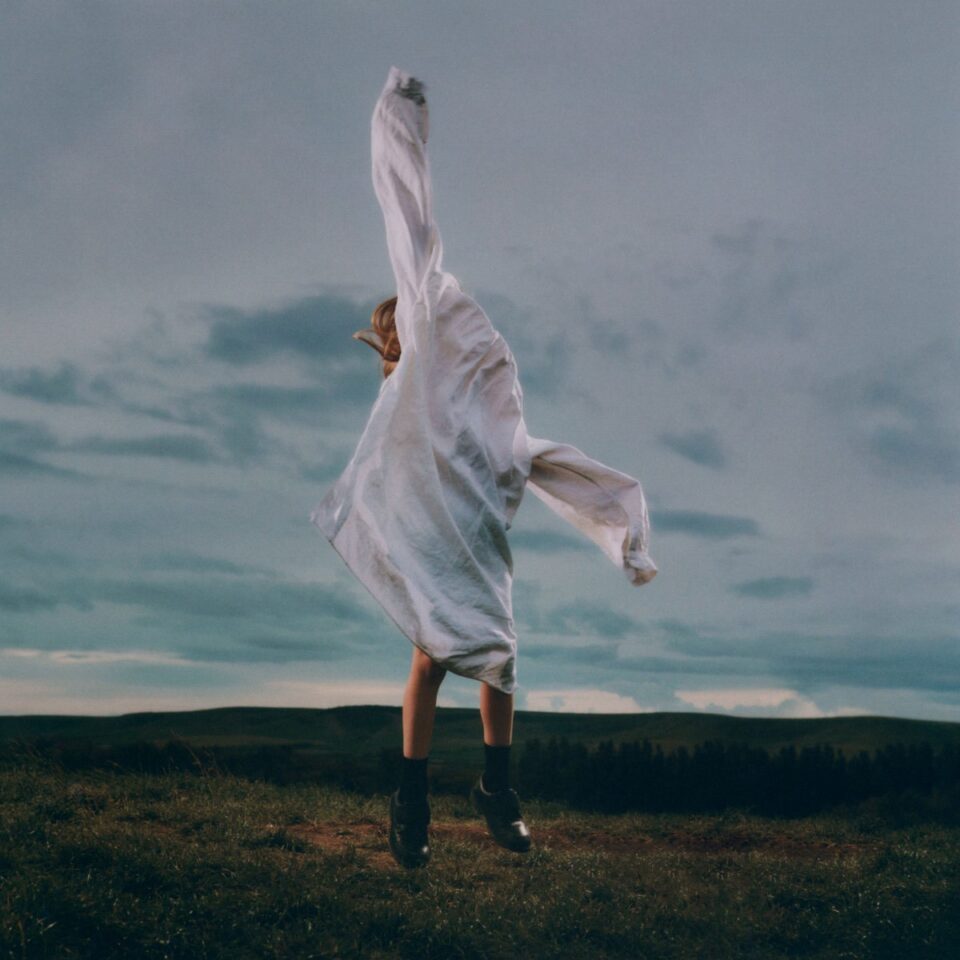
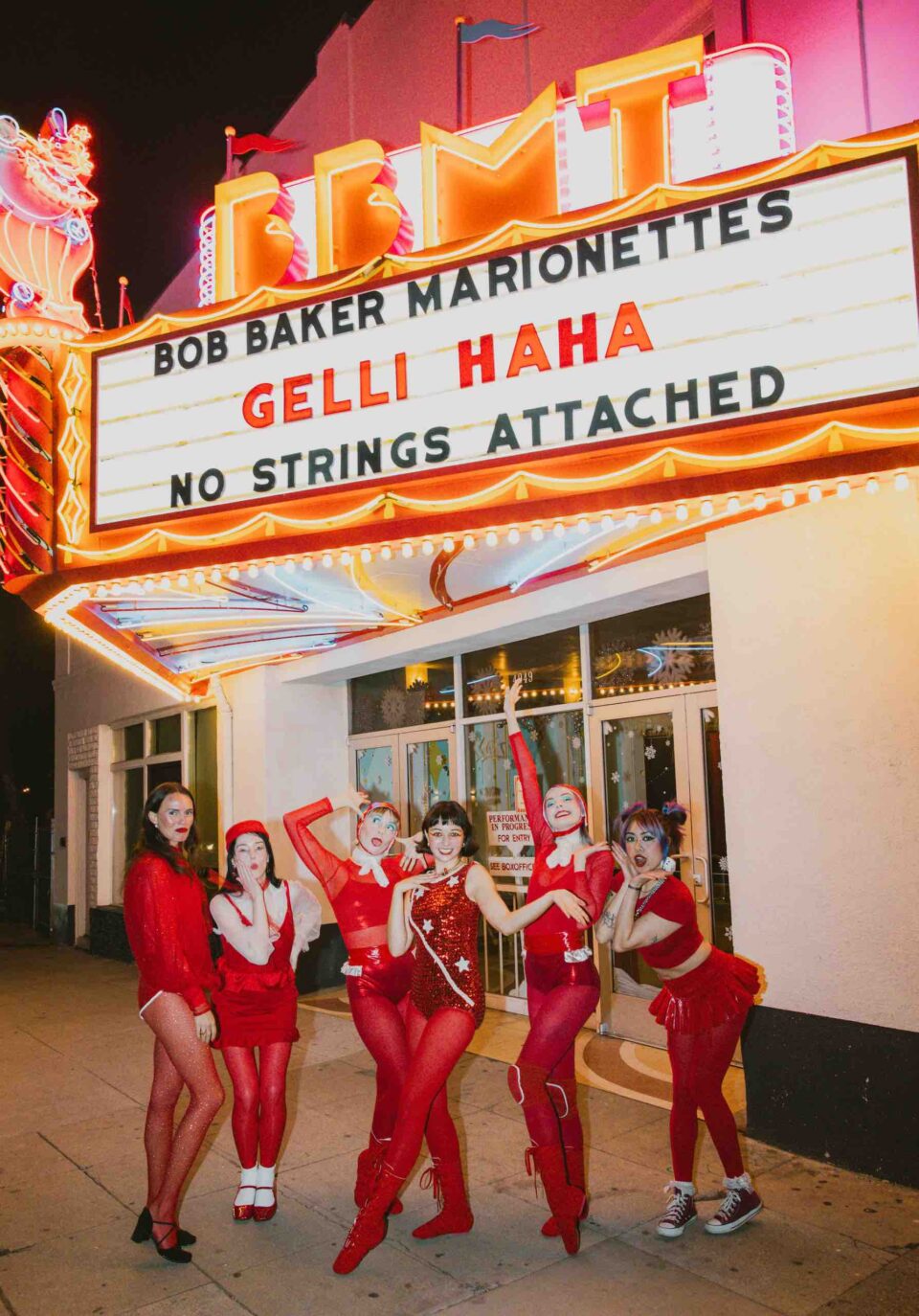
Gelli Haha’s eccentric live act has only further set her apart from her indie-pop contemporaries, helping the artist sell out her recent show at LA’s Bob Baker Marionette Theater within three hours. Her success comes after a long journey of inner work and years of playing in bands in the Boise, Idaho scene—both were vital experiences that pushed her toward her current, authentic self.
Born in Hawaii and raised in Idaho, Angel Abaya, the artist behind the Gelli Haha moniker, has always had a love for music. Her grandmother was a music professor and church organist, and as a kid, Abaya would round up her family to perform songs for them. This will to perform has guided her to where she is today. Her propensity for theatricality and character creation is akin to artists like David Bowie or Kate Bush. Her own alter ego has an affinity for bright reds, adopting the color in a surrealist manner, as if her inner child emerged from the Red Room in Twin Peaks.
Her latest album, Switcharoo, is playful and novel, influenced by artists like LCD Soundsystem, Björk, Animal Collective, Grace Jones, and Of Montreal. With this aughts-flavored indie-pop and her newfound authenticity from self-work, it’s not hard to see why listeners have gravitated toward her nostalgic multimedia project.
What was it like growing up in Boise? I understand that your grandmother was a music professor.
From a young age, I would sit [my family] down and I would use my great-grandpa’s cane and pretend it was a microphone. The music that I ended up wanting to do was different. My grandma is more traditional; she also grew up being the organist at the church. I grew up thinking I’d go to Juilliard. I went through this whole phase of, like, “Oh, I’ll go to jazz school or something.” And then, the closer I got to college, I was like, “I actually don’t want to go to college for music.” I realized, for the most part, you either become a teacher or you do something like composition, or something more traditional. I just realized by that point that that wasn’t my path. So it’s like, “OK, we’re gonna be in bands.” And not that this is a big thing, but I was actually born in Hawaii.
Did you live in Hawaii?
Yeah, I was pretty young, but I spent the first few years of my life there. My parents were both in the military, and they both got stationed there. They were from different branches—my mom was Army, my dad was Navy—but they were pretty high up. Like, they met in the Pentagon, and when they got married, they wanted to switch bases. They very conveniently got sent to Hawaii. How nice for them, right? And I was born in that process.
“I’m so much better at creating now because I don’t act that way anymore. I think there’s just a lot more trust and surrender in my process.”
How was the Boise music scene in comparison to LA?
Growing up, there wasn’t much of a scene. I grew up in the suburbs of a small city. I wasn’t super connected to the city itself until I was in high school, but mostly when I started going to college was when I really got into the scene and started playing. But yeah, growing up, if you were a creative person, you probably wanted to leave [Boise]. A lot of people in Boise move to Portland or Seattle. You’d stay Northwest, but not go too far. I almost did that.
Why did you want to go to music school?
It didn’t seem good enough to just sing in a band; I felt like I needed to also prove myself. I think one of the special parts of the project was when I just allowed myself to not be perfect. I don’t need to prove to anyone that I made this. Now I’m kind of just like, “Whatever.” I jump on trampolines [in my live shows]. I don’t give a shit what you think about me.
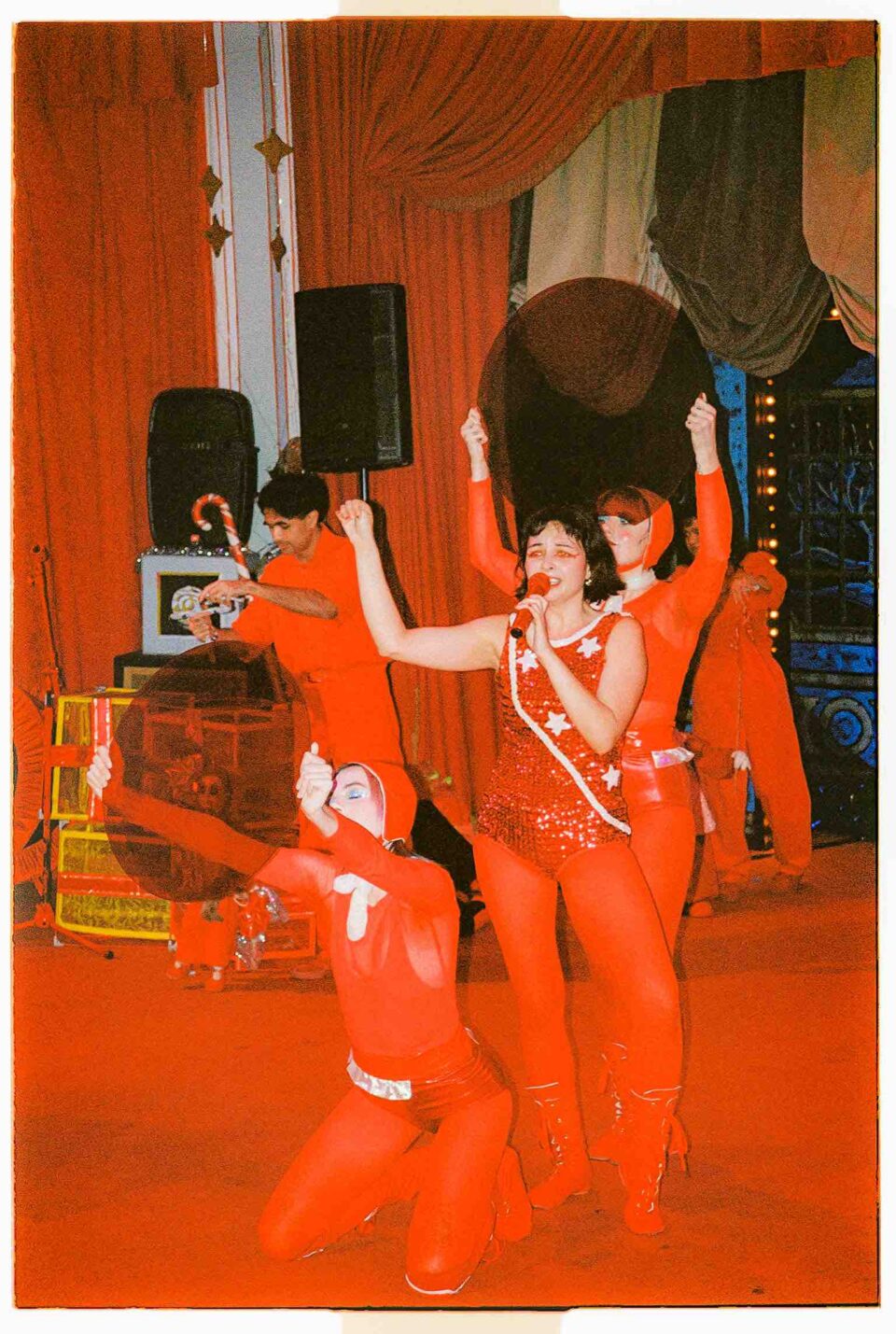
I read that you have a theater background, too. Did that affect or influence the performative direction in your live shows?
I was a little shy. Not super shy, but I wasn’t, like, a theater kid. I still loved being in the musicals, and I was definitely very confident in that space, especially when singing. I wanted my experience on stage to internally and externally feel good. I wanted to feel good expressing myself, and I also wanted to share something that was inspiring and exciting. I think that’s where I was: “I want to go more dancey, more electronic, weird, and experimental.”
Since you had a jazz influence in the past, did you approach Switcharoo with music theory, or was it more spontaneous?
For the most part, we were just like, “What would be fun to hear?” or “What would be fun to make, or experience?” So on “Piss Artist,” I’m talking about a time I got really drunk and peed in a jar at a party. Sean [Guerin] thought it would be funny if I got drunk and came into the studio. And I ended up just wanting to talk. I also just love that it was very real, because in the beginning of the song, I say to him, “Oh my god, did I tell you about that one time!”
“Now I’m kind of just like, ‘Whatever.’ I jump on trampolines [in my live shows]. I don’t give a shit what you think about me.”

You mentioned that this album was like your inner child coming out. How did you make that connection?
When we first started writing “Funny Music,” the first song we wrote, there were some sessions that ended in tears. It wasn’t anything Sean did; it was just hard for me to let loose and sing in the studio without thinking about it. Sean sometimes would be like, “No, I don’t like this,” “Yes, I like this,” and I was taking everything personally. I think that there’s just a part of myself that was really, really sensitive to those things, because I think it means something about me. “I got this wrong,” “I’m not good.” I’m so much better at creating now because I don’t act that way anymore. I think there’s just a lot more trust and surrender in my process.
You bring up your connection to red in a lot of interviews. Why the fixation?
I think it’s playful, but also it’s not super wacky, either. I mean, it is—the way that we use it, we, like, cartoon it. It’s one of the most common colors, and I just liked that it felt very communal, I suppose. It’s not like neon green or something that’s kind of trying to be weird.
What do you want listeners to take from Switcheroo?
I think the message is to not take yourself too seriously and not to take life too seriously. I’d say that’s kind of a main thing for me and the project, because that kind of philosophy, I guess, is what helped me make this. I took myself way too seriously before. FL