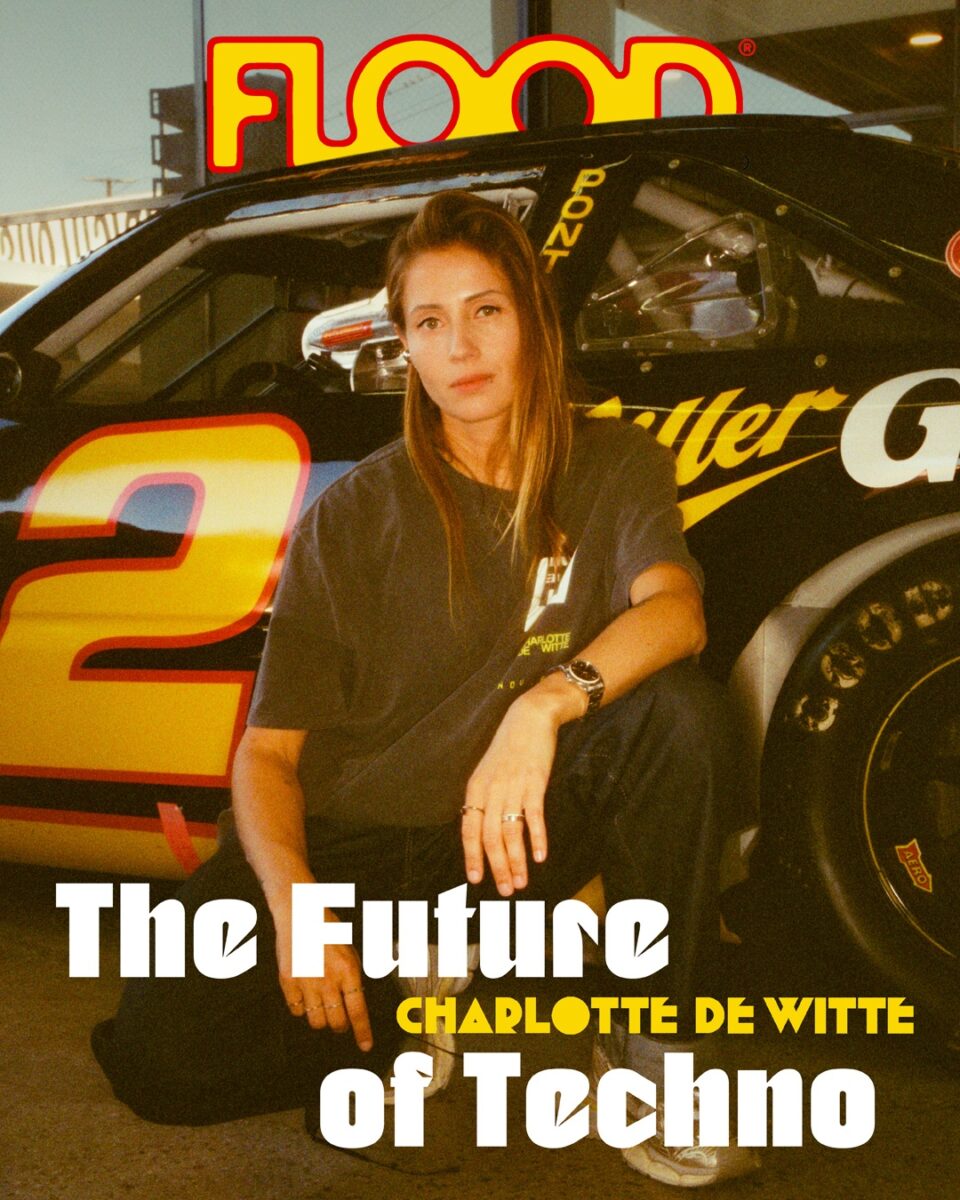
A touring force and club icon with a global following, Belgian DJ Charlotte de Witte is one of the most visible figures in contemporary techno. She’s headlined major festivals, built a groundbreaking label ecosystem in KNTXT, and made history as the first techno act to close the main stage at Belgium’s Tomorrowland EDM festival. But despite all the milestones, de Witte had still never done the one thing that traditionally anchors an artist’s identity: release a debut album.
Her self-titled record arrived as a declaration of identity back in November, with a deluxe version of the project arriving at the beginning of February. “I felt it was time for a bigger personal challenge,” de Witte says. Fifteen years of singles and EPs allowed her to explore fragments of herself, but the album allowed her to show “all the different sides of techno that make me as an artist,” and to return to the nightclub—the sacred place that first changed her life. For an artist as prolific as de Witte, the idea of a debut album almost feels like a contradiction. She’s released dozens of EPs and toured relentlessly in the years leading up to the release. Her discography was already expansive, but, in her mind, incomplete. EPs are snapshots, she says, small windows into whatever corner of her sound she was exploring at a given moment.
The decision to finally make a longform statement coincided with a shift in de Witte’s perspective on what an album should be. Instead of treating the format as an opportunity to push techno outward, toward the mainstream with high-profile collaborations and broad pop detours, she found herself looking inward. The breakthrough was realizing that she didn’t need to reinvent the genre or engineer a crossover moment. “It was a big relief to realize that I wanted the album to go back to my essence as a clubber,” she says. Returning to the club both sonically and spiritually felt truer than chasing expansion for its own sake. “It was really nice to just go back and make it all about clubs and that initial feeling I had when I entered them, and the impact that had on my life.”
De Witte simply describes the long-percolating opus as “a DJ album.” Instead of chasing crossover hits or reimagining her sound for new audiences, she made the record she wanted to hear if she were still just a clubber in the crowd, seeking transcendence under the flashing lights. “It’s raw, it’s emotional,” she says. “It’s who I am.” For de Witte, it crystallizes the way she thinks about energy, emotion, and movement. The structure of the record mirrors that of her DJ sets, as she tends to think in arcs, in rising and falling intensities, in the slow hypnosis of repetition. When she plays all-night sets, she often begins with ambient material before moving into deeper, burrowing rhythms, then pushing toward the peak-time hammering that has become her signature. The album’s tracklist is built to be immersive in full, but modular in pieces—a dual function she sees as essential to the project. “If you have slightly more than an hour, it’s nice to listen to it in the intended chronology,” she says. “But since it’s meant for DJs, you can just pick whichever track suits your set or mood.”
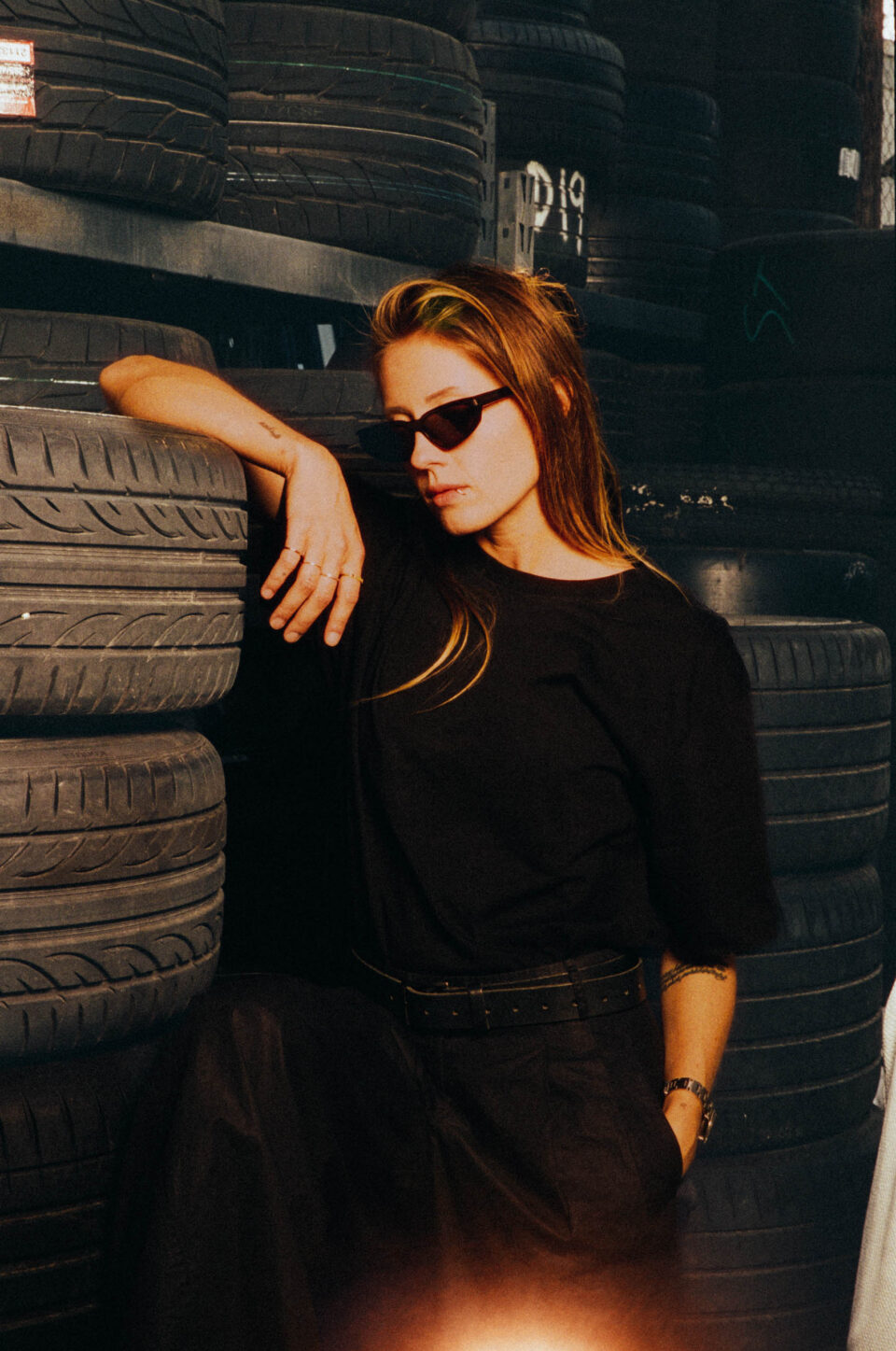
“It was really nice to just go back and make [the album] all about clubs and that initial feeling I had when I entered them, and the impact that had on my life.”
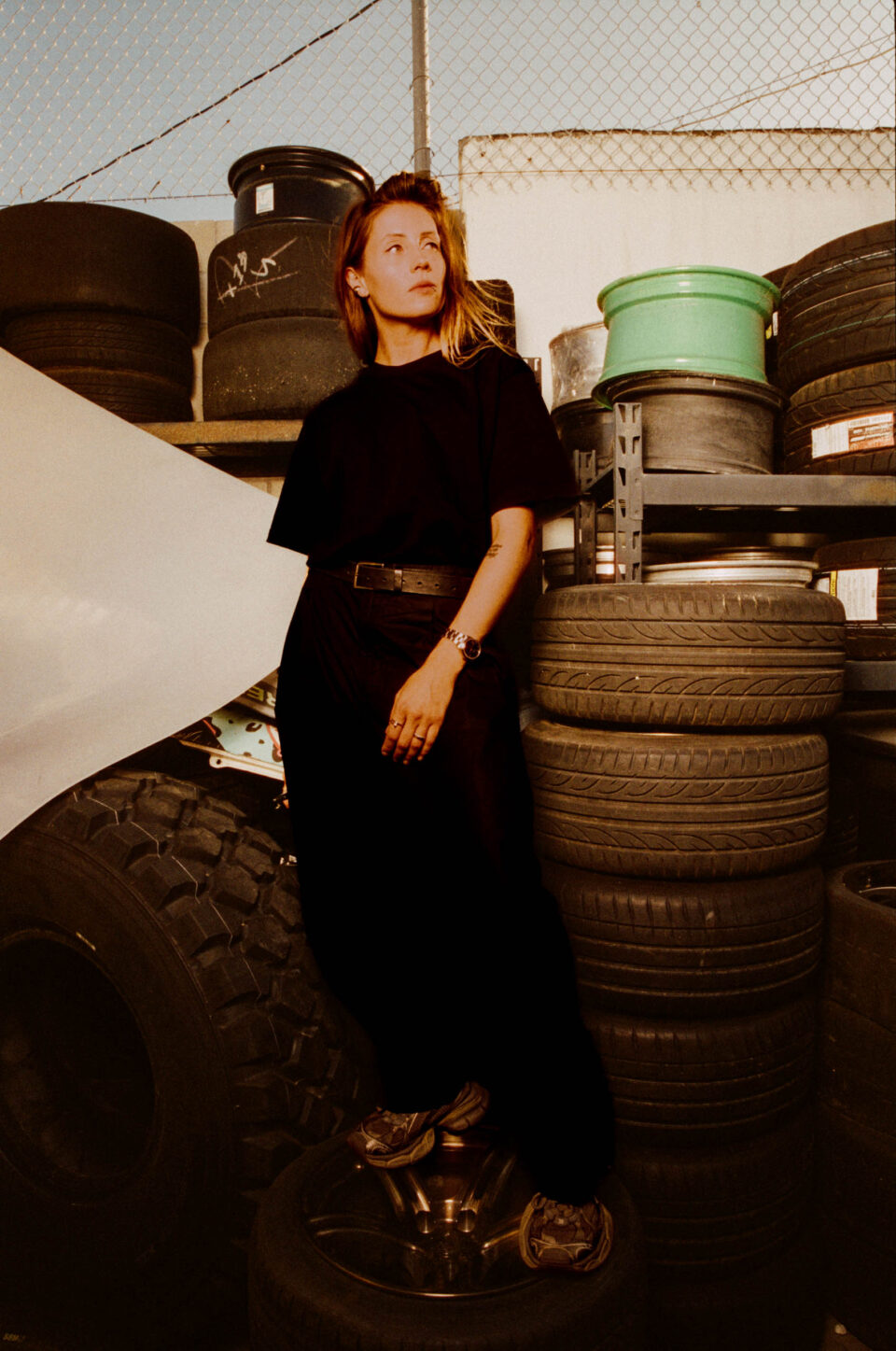
That duality reflects the two audiences she’s always in conversation with: the dancers in front of her and the DJs who use her music as fuel for their own sets. When it came to the singles that would introduce the project—“The Realm,” “No Division,” and “The Heads That Know”—she gravitated toward the songs that felt most emblematic of her identity. “Those are the tracks that are more typically me,” she says. “The Heads That Know,” like much of the album, emerges from her commitment to the power of simplicity. Rather than starting with a vocal, she began with an old-school sine-wave sound. “It’s the less-is-more principle,” she says. “You just need a catchy hook with a super simple sound.” Only after the instrumental was finished did she send it to UK-based producer Comma Dee, whose vocal became the final layer.
Elsewhere on the album, she lets other voices widen the emotional vocabulary of the record. “No Division” features XSALT, while “After the Fall” includes contributions from Dead Can Dance’s Lisa Gerrard. But even these moments aren’t gestures toward crossover; they’re extensions of her world. Gerrard, she notes, gave her exclusive samples, while poet Alice Evermore, who appears on “Matière Noire,” connected with de Witte via an email way back in 2019, and after collaborating on the track "Meridians" that same year, she kept in touch. While vocals were important, the album’s manifesto isn’t written in words. It’s carved into architecture: in tension, release, repetition, and control. It’s a blueprint of the dancefloor, as she feels it in her bones. If the album is built on feeling, the process behind it is built on intuition—a constant toggling between impulse, curiosity, and the technical fluency she’s honed over years of touring and studio work.
De Witte moves quickly when she’s inspired and patiently when she’s searching. Some tracks on the record flow with almost unnerving ease, others require waiting for the right sample, the right sound, the right texture to reveal itself. But she’s not precious about any of it. “There’s no shame in using samples,” she says. “DJs use samples all the time. I’m using them for my album. Anyone else can do it.” Never one to be hemmed in by a rigid routine, her workflow is fluid. Sometimes she begins with a specific vocal she’s hunted down and other times she scrolls through online sample banks waiting for something to trigger an idea. Vocals can arrive fully formed from collaborators like XSALT or Comma Dee, but they can also come from unexpected places, like the chanting on “Hymn,” which she found buried in a library anyone could theoretically access. “You just need to know where to find it,” she says. “But also, that’s not rocket science.”
While much of the album was shaped on the road, as well as in studios in Lisbon and Portsmouth, her most trusted companion is a piece of hardware with history. “My golden friend is the 303,” she says of the vintage Roland machine she bought years ago and modified so she could run it via MIDI. “It’s super nice to play with the knobs and hear the crackles, because it’s a very old machine.” She and her husband, Italian DJ Enrico Sangiuliano, are now building studios at home—“a longtime dream”—but the album itself came together in motion over the course of two years of travel. That restlessness is part of its DNA. The tracks aren’t static objects; they’re lived-in, road-tested, shaped by the rooms, crowds, and nights where they first took root.
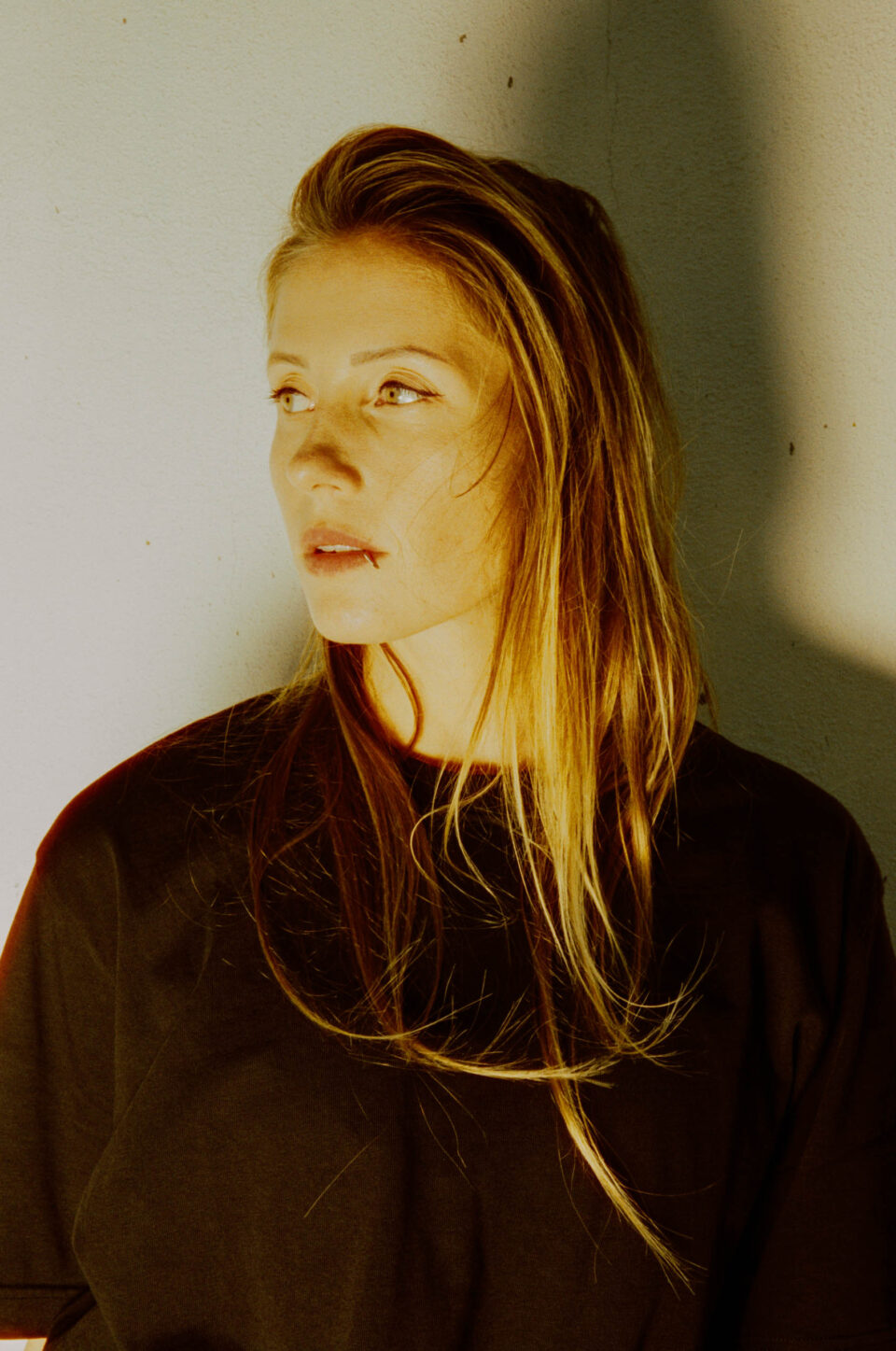
Even for someone as self-contained as de Witte, the scale of what she’s accomplished is difficult to ignore. In 2018, she was one of the only techno artists performing on Tomorrowland’s main stage. By 2022, she became the first techno act ever to close it—a symbolic moment not just for her, but for the genre itself. “I knew it was a big thing,” she says, though at the time she was prouder of representing techno than of also being the first woman to do it. “I’ve been asked so many times what it’s like to be a woman in a man’s world. It became tiring.” What she didn’t fully grasp then, but recognizes now, is how much it meant for the people watching her. Sometimes it takes a stranger to clarify your own impact. “When a woman approaches me and says, ‘Charlotte, thank you so much for what you do for women,’ that’s when it hits,” she says. “It makes me feel very proud.”
Despite years of those types of gender-based questions asked with varying degrees of subtlety, she’s never positioned herself as a figurehead. Her instinct has always been to keep moving, to stay productive, to outrun the mythology. “I try not to think about the pioneering work too much,” she says, “to protect myself from the additional pressure.” Only later, in retrospect, does the magnitude register. “Techno is female,” she says with characteristic directness—not as a provocation, but with a smile, and as a simple reflection of how times have changed. The scene is full of “strong colleagues, powerful women leading the way,” and she sees that not as novelty but as the natural order. Techno, she insists, “doesn’t have a gender—it's neither male nor female ,” but the people shaping its future are increasingly women, and she counts that as one of the genre’s strengths.
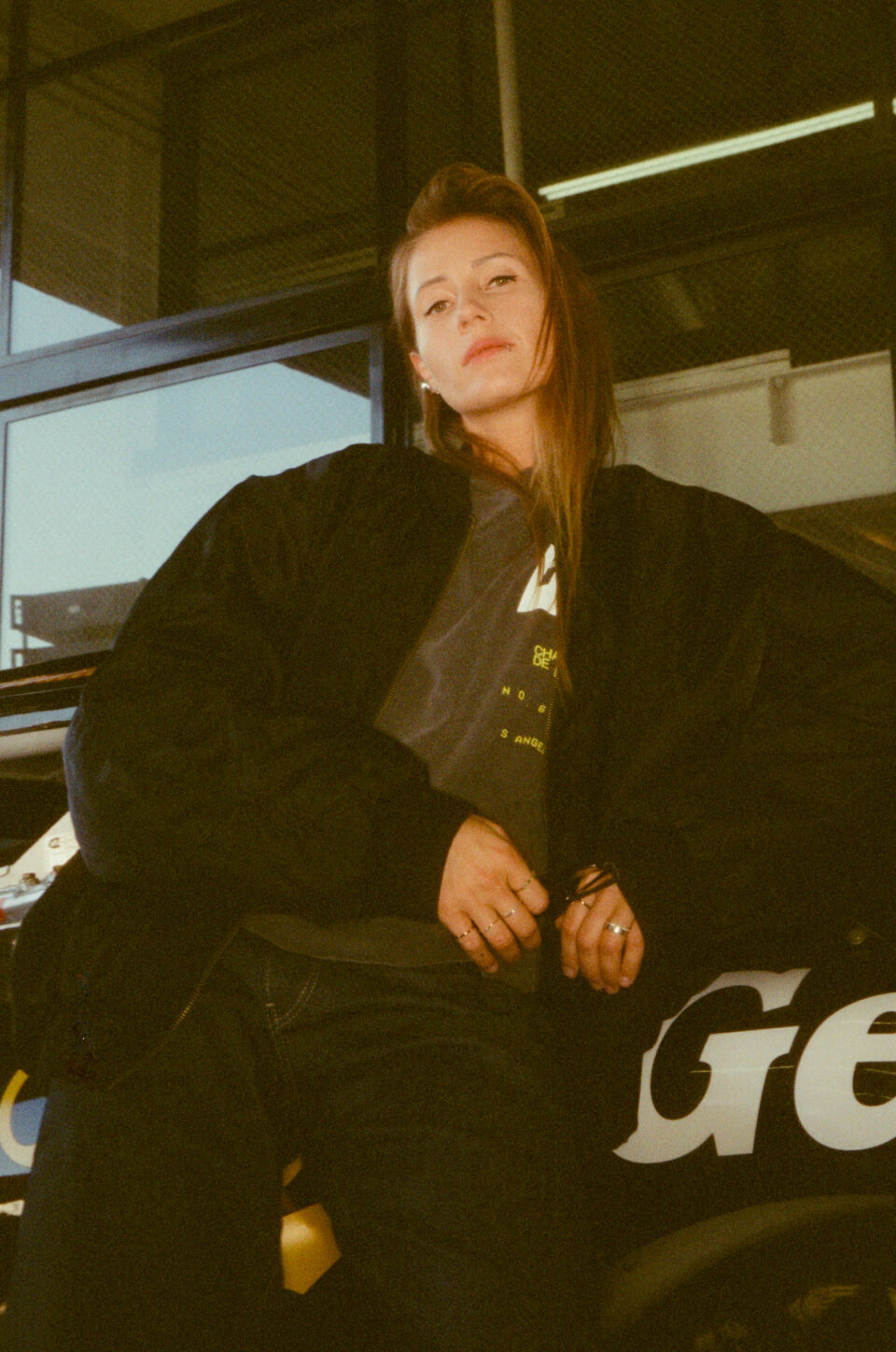
“When a woman approaches me and says, ‘Charlotte, thank you so much for what you do for women,’ that’s when it hits. It makes me feel very proud.”
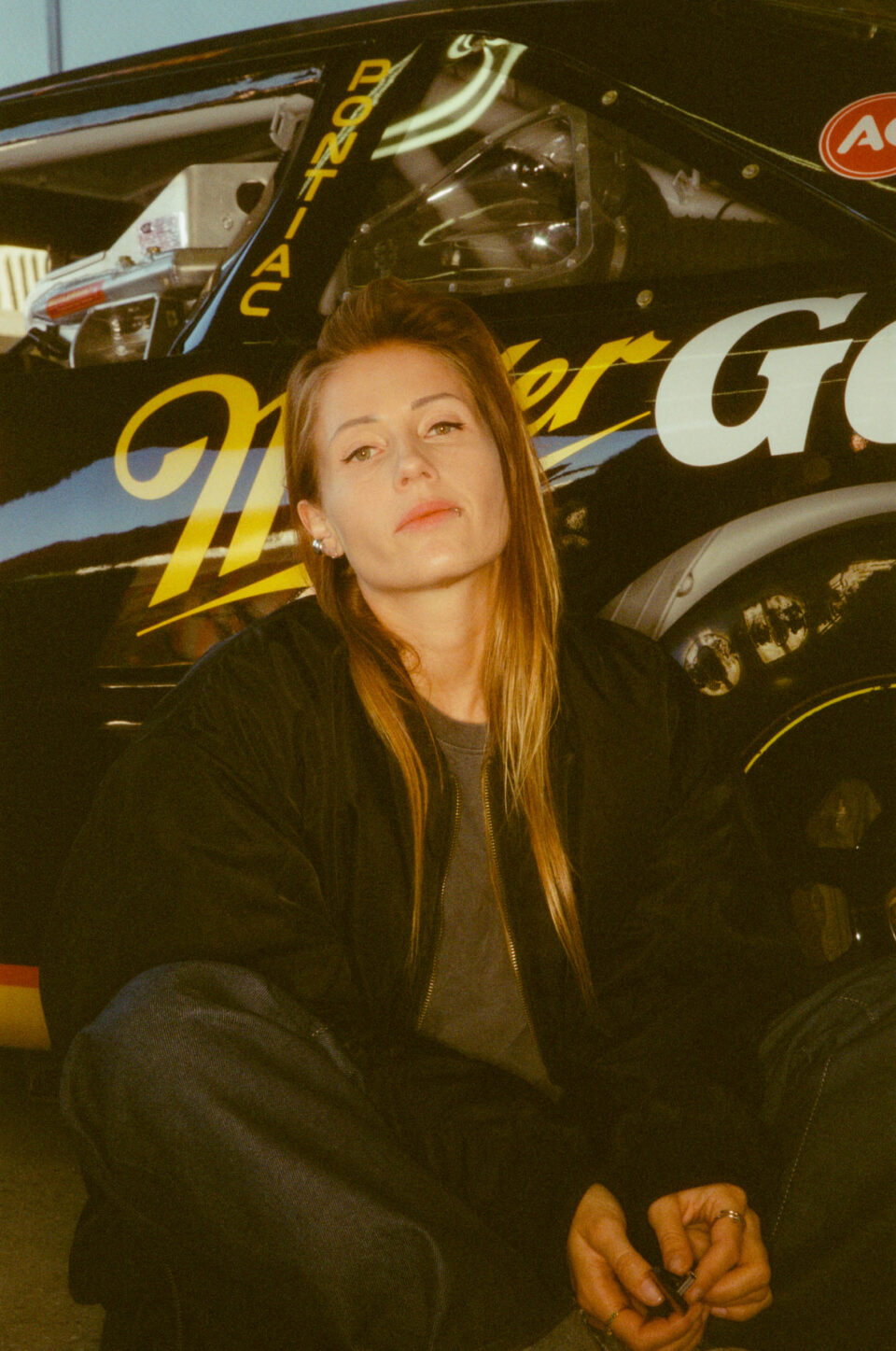
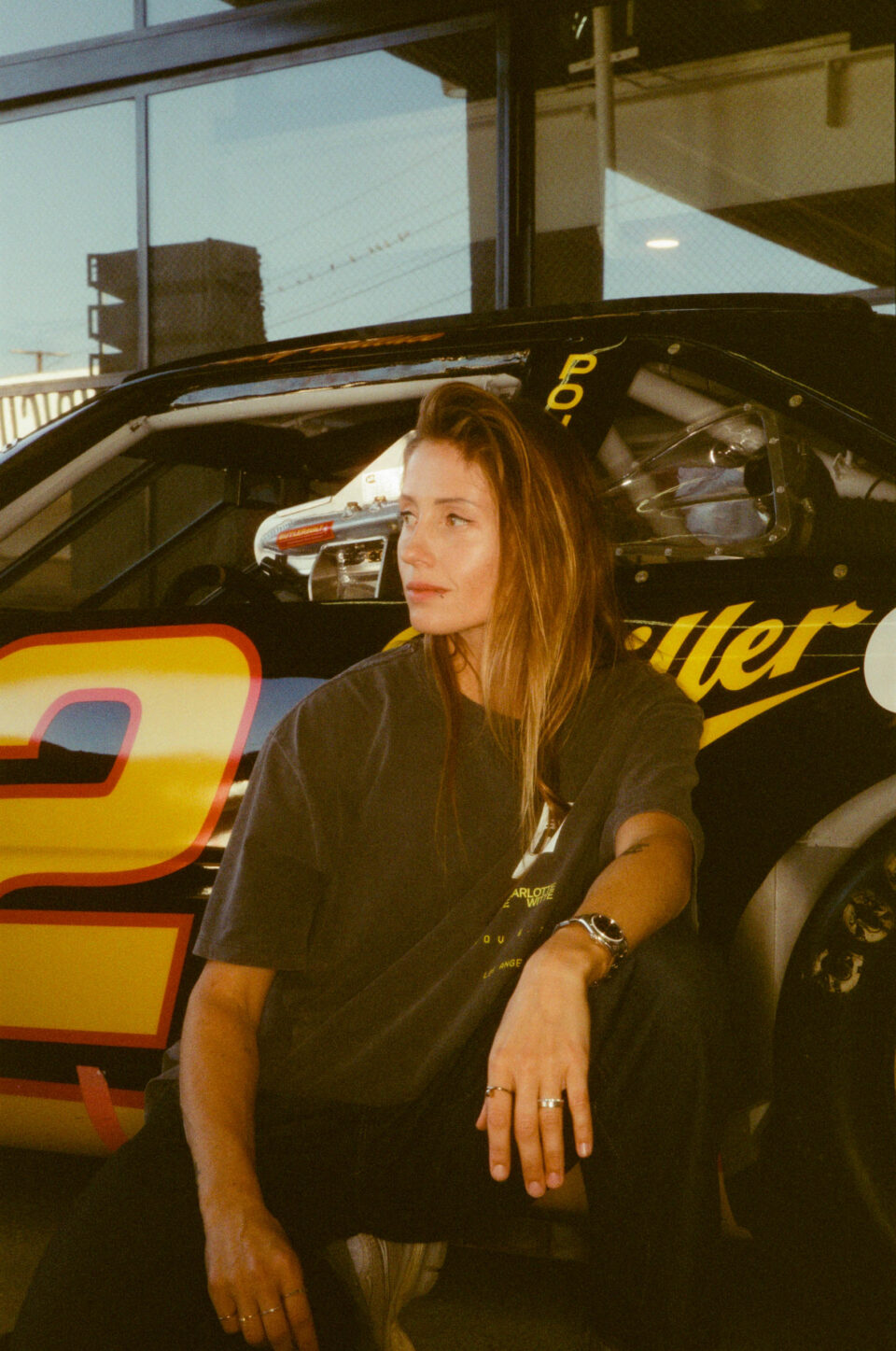
Her rise also maps onto techno’s global expansion. She’s watched the culture shift from abandoned warehouses to full sensory spectacle. “Festivals 10 or 15 years ago were literally just a stage in a field,” she says. “Now you need production, you need branding.” She plays both ends of that spectrum: One night she’s headlining a massive stage with a 20-person production team, like her Overdrive show at Coachella, and the next she’s throwing free street parties, reconnecting with the intimacy and immediacy of techno’s underground roots. “It’s so nice to play for free for an hour and see people just dance and be together,” she says. “That sense of community is what it’s all about.” It’s a delicate balance: navigating superstardom while preserving the raw, communal spirit that shaped her. For her, longevity isn’t about protecting a ranking, it’s about remaining in motion—the next track, the next idea, the next city. The momentum itself is the point.
If Charlotte de Witte’s debut album is the most complete expression of her artistic identity, then KNTXT is the framework she’s built around it—a world designed not just to house her own work, but to amplify others’. What began as an outlet for self-expression has expanded into a full ecosystem: a record label, an events platform, a space for apparel and branding, and, increasingly, a community shaped in her image. “It’s very important so I can creatively express myself in the purest form without compromises,” she says of the label. That independence has always been core to her ethos as a producer and DJ, but KNTXT gives her something she didn’t have when she started: a home. “When I began, I never really had a mentor or a little techno family I belonged to,” she explains. “I had some people supporting me, but never really a home base.” KNTXT, in many ways, is her answer to that absence, a structure built to hold others the way no one held her.
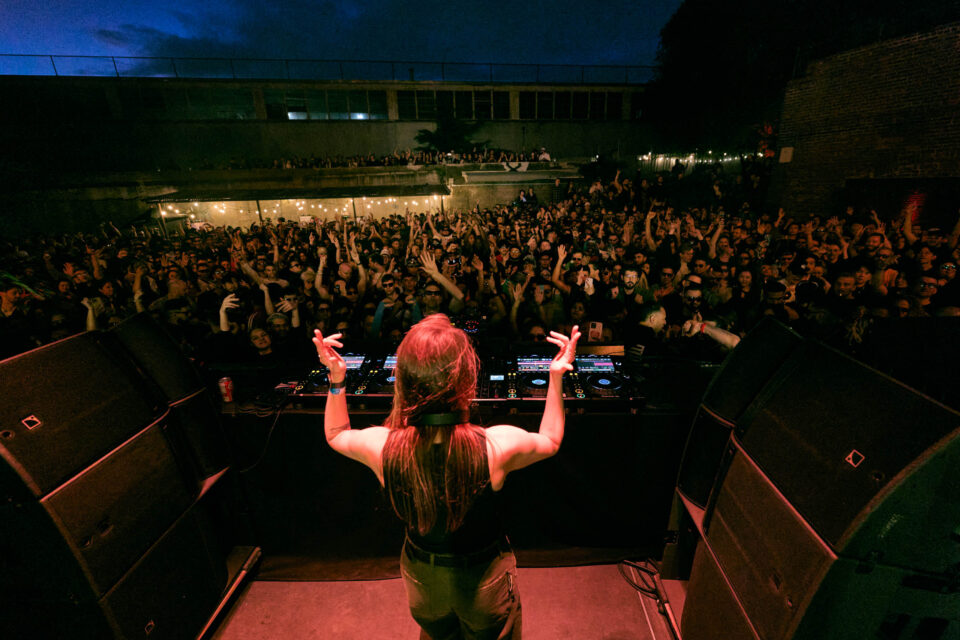
Charlotte de Witte at The Ruins at Knockdown Center / photo by Dutch Doscher
“It’s so nice to play for free for an hour and see people just dance and be together. That sense of community is what it’s all about.”
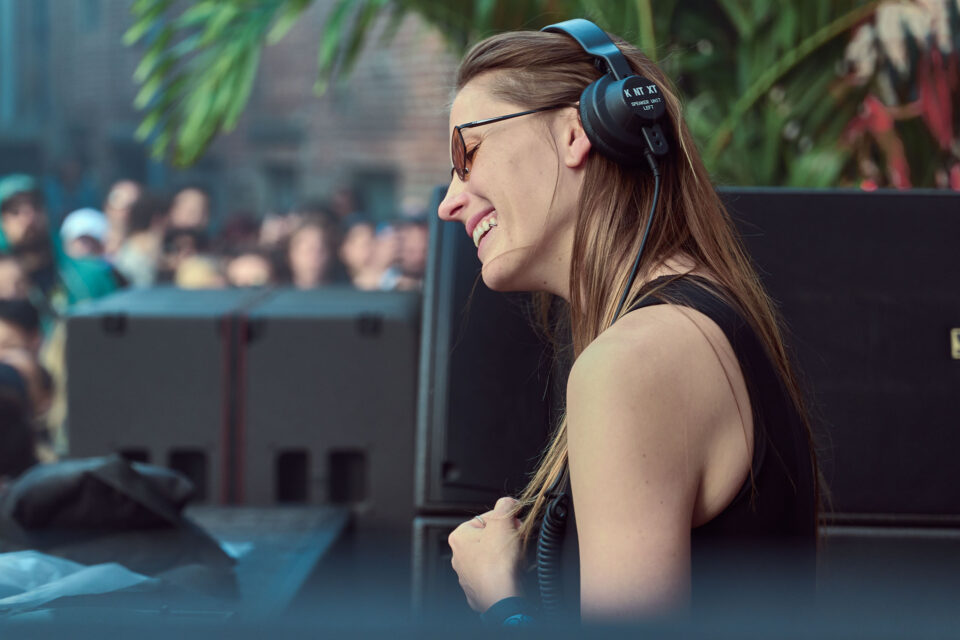
Charlotte de Witte at The Ruins at Knockdown Center / photo by Dutch Doscher
The label’s reach is amplified by her own gravitational pull. With millions of followers and a global touring footprint, tracks she plays from emerging artists can transform their trajectory. “I think one of my biggest strengths for KNTXT is that I have a big following,” she says. “If I play a track, it has more chances to be heard.” Developing artists is also incredibly rewarding. “It’s really nice to contribute to someone’s dream in that way.” The instinct to offer what she never had herself is what makes the label feel less like a business venture and more like a living network. It’s mentorship without hierarchy, curation without gatekeeping. And it mirrors her approach to the larger dance-music world: an emphasis on community, on access, on creating space rather than guarding it. Her album may be a deeply personal project, shaped by her instincts and her history, but KNTXT reminds her that she’s part of something bigger. A web that expands, evolves, and adapts.
For all the scale surrounding de Witte’s career, her personal life unfolds in a quieter, more grounded register. The night before COVID broke out in Milan, she went on a first date with her future husband Sangiuliano. Twenty-four hours later, the world shut down around them. “We ended up in lockdown together,” she says. “We had three months of bliss—no worries, just being together and being in love.” What followed was far less idyllic. Like so many in nightlife, she lost her income, her support system, and any sense of stability. “You are the black sheep of the world because nightlife is the biggest spreader,” she says. “There was so much negativity and polarization—definitely not my happiest period.” The anxiety lingered; the uncertainty calcified. “It was shit. It was rough. I never, ever want to experience that again.”
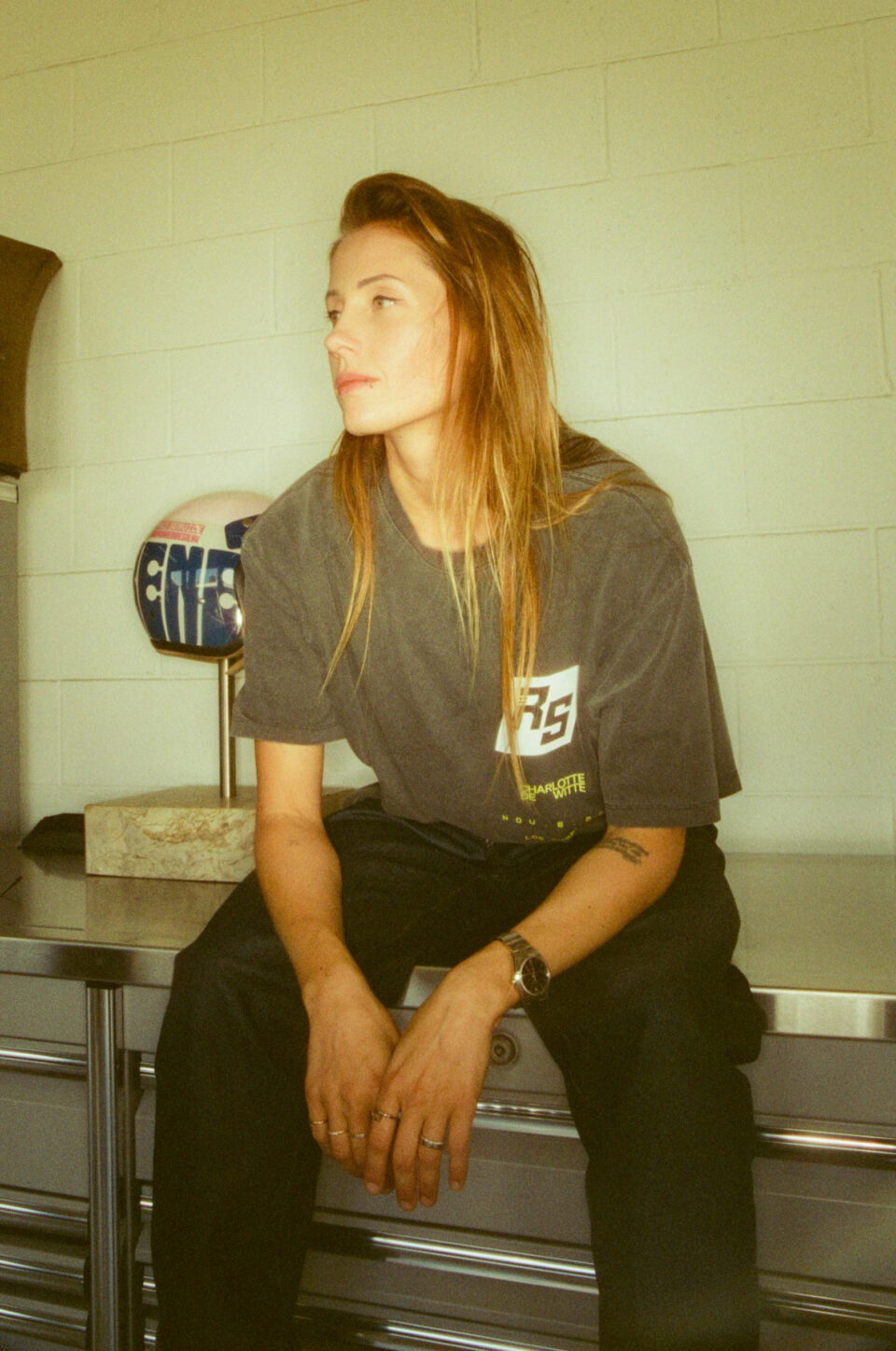
Yet the pandemic also clarified what mattered to her: connection, community, the emotional logic of dance culture. And those values are rooted not just in her career, but in her upbringing. “Belgium is small, but it has left a significant impact on electronic music since the ’90s,” she explains, citing genres like EBM and new beat, venues like Cherry Moon, and labels like Bonzai Records. Even people who don’t club absorb techno by osmosis. She laughs recalling a friend’s wedding where the bride chose an entire playlist of rave tracks. “It’s such a part of growing up in Belgium,” she says. “The moment you start drinking beer, you start listening to that kind of music. It’s very much in our DNA.”
If there’s a through-line in de Witte’s career, it’s momentum and a refusal to become the thing success wants her to become. Even now, with her debut album finally out in the world, she’s already thinking about what comes next. There’s a new EP scheduled for release this year, which she considers “one of my best works so far.” The machine never stops, but it’s not out of obligation—it’s instinct. Her future, like her past, will likely continue oscillating between extremes: the massive productions and the small, communal spaces; the headlining slots and the free street parties; the global stages and the DIY ethos that shaped her. That balance—not prestige, not rankings—is what keeps her grounded.
“[Electronic music is] such a part of growing up in Belgium. The moment you start drinking beer, you start listening to that kind of music. It’s very much in our DNA.”
What matters more is the thing she keeps returning to: unity. The shared beat. The sense of people being together, even for a moment, even in a world that’s pulling itself apart. “To bring people together and let them dance to music in one unity—that’s what we all want from time to time,” she says. The album is proof of how deeply she believes that. The next shows, the next projects, the next tracks will only push that belief further.
While de Witte made the transition from avid clubber to the sanctity of the DJ booth a lifetime ago, those early nights, that teenage sense of exuberance and discovery, still flicker through her work. Her debut album may be polished, intentional, and structurally meticulous, but its emotional core is rooted in something far simpler: the feeling of being transformed on a dancefloor. Fifteen years in, Charlotte de Witte isn’t settling into her legacy. She’s widening it. As long as there’s a dance floor, she will continue to find new and innovative ways to honor it. FL