


This feature appears in FLOOD 13: The Tenth Anniversary Issue. You can purchase this deluxe, 252-page commemorative edition—a collectible, coffee-table-style volume in a 12" x 12" format—featuring Gorillaz, Magdalena Bay, Mac DeMarco, Lord Huron, Bootsy Collins, Wolf Alice, and much more here or at Barnes & Noble stores across the US.
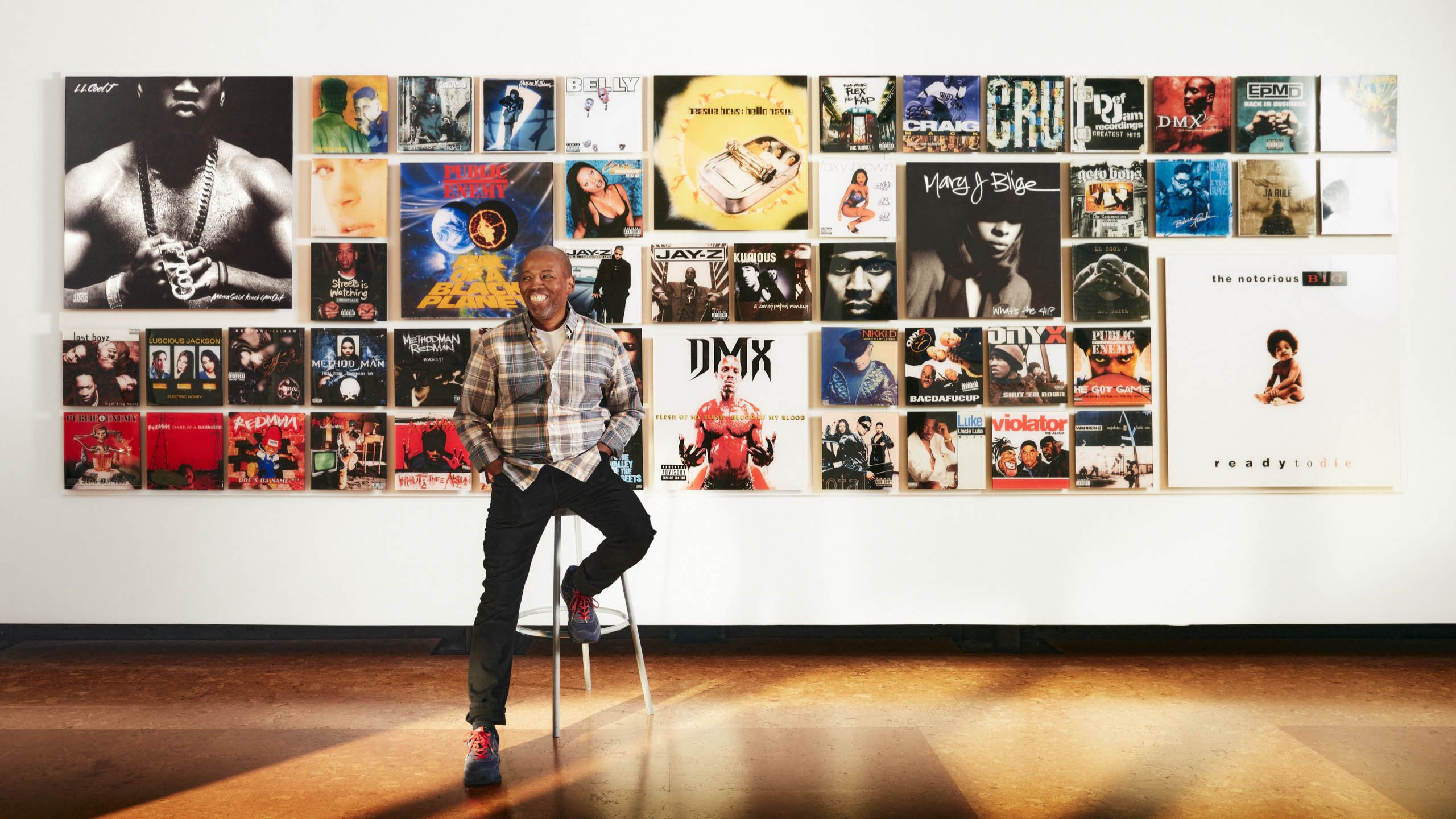
As the founding Creative Director of Def Jam Recordings, Cey Adams often found himself having philosophical artistic discussions with some of rap’s most creative minds. So when it came time to develop the artwork for Public Enemy’s third album, 1990’s Fear of a Black Planet, Adams was able to pull from his conversations with the group’s frontman, Chuck D. “We would spend hours hanging out after quote-unquote traditional business hours at Def Jam,” Adams recalls from his New York studio. “We would just kick it about design and the power of the logo and how we were gonna separate Public Enemy from the pack. That was one of my favorite things about working with Chuck: that he got it and we didn’t have to explain it to him.”
In turn, Chuck D didn’t have to do much explaining to Adams and his team about bringing his vision for that album cover to life, one that played off of the Death Star from Star Wars. “The concept is 100 percent Chuck D,” Adams says. “I don’t want there to be any confusion. Chuck D did a thumbnail sketch with the logo on the top. The two circles represented the Black Planet and the Earth. Then the bottom was a pyramid shape where the typography was. Then it was up to us to determine how that illustration was gonna come to life. He didn’t get hung up on colors, about the type. That was all for us to figure out.” The resulting image stands as one of rap’s most iconic and imaginative album covers.

The Fear of a Black Planet album cover is also notable because it was the first Public Enemy album not to feature an image of any of the group members, an unusual distinction for a rap album at the time. “That was the fight that we had every time we were talking to the recording artists about making a cover,” Adams says. “People are gonna dig the music. People are gonna seek it out. It was hard because it was also a fight with marketing, because marketing thought it was for a teenage audience. ‘How they gonna know you’re young if they don’t see your picture on the front?’ ‘What’s a conceptual album cover?’ Being creatives, we were looking at rock and roll, and we were looking at alternative music. We were trying to go in different directions, but it was really challenging.”
Thankfully for Adams, Chuck D and the rest of the group understood the power of art and having their own logo. “Public Enemy,” Adams says, “was a group that understood that right from the start.”
Before he was Def Jam’s Creative Director, Adams was a first-generation hip-hop graffiti artist who emerged from Jamaica, Queens during hip-hop culture’s nascent years and became a fixture in the downtown graffiti movement of the late 1970s and early 1980s. At the time, hip-hop culture was not the commercial and artistic juggernaut it is today. In fact, it was largely dismissed as a fad. Adams found motivation for his art in that lack of interest.
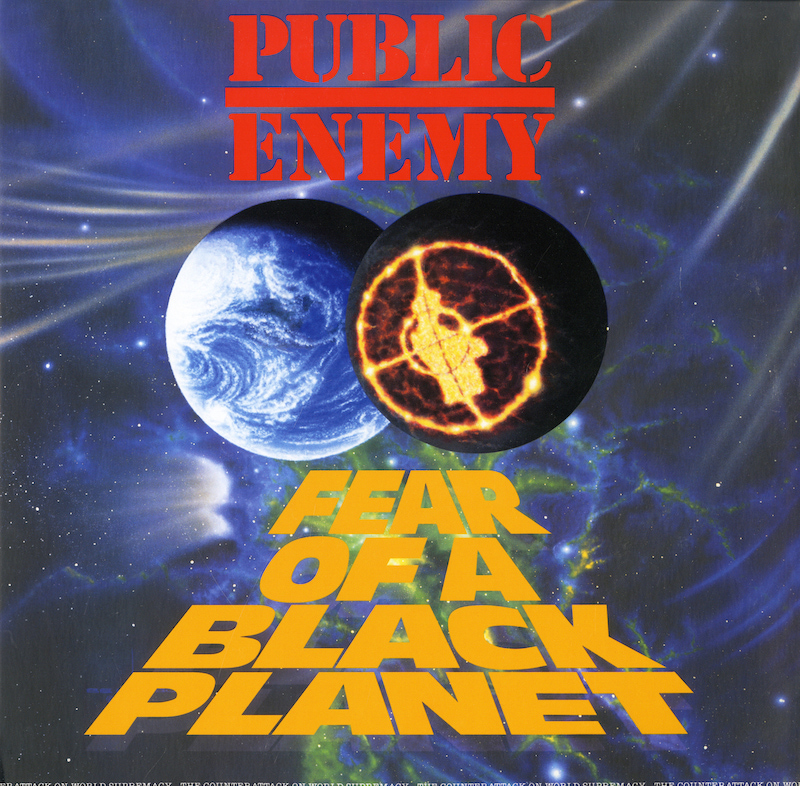
“Chuck D did a thumbnail sketch with the logo on the top. The two circles represented the Black Planet and the Earth. Then it was up to us to determine how that illustration was gonna come to life.”
“We have value,” Adams says today, echoing the thoughts he had while trying to break into the art world in the 1980s. “Just because we don’t go to Ivy League schools and we come from different socio-economic backgrounds, it doesn’t mean we aren’t serious about the work that we’re doing. I think that’s the thing that’s always sort of carried me, knowing that I have something to say and wanting to figure out a way to say it, and ultimately just wanting my voice to be heard. That’s the thing that’s really, really important [for artists]—and they’re gonna do it by any means necessary.”
Adams was painting on clothes and making his own designs on sneakers long before it was fashionable. He was drawn to the rebelliousness and danger of graffiti—and the thrill that came from evading law enforcement—as well as the skill needed to expertly execute calligraphy-styled writing. As someone trying to break into the industry, he knew that he had to create first; opportunities would (hopefully) come later. Although he never developed a signature style or aesthetic, per se, he relied on certain eye-catching color palettes. His favorite reds and yellows (which are on full display on Fear of a Black Planet) appealed to Adams because they stand out. He felt the same way about bold typography and graphics, things he felt would “knock you over.” Adams always wanted his work to grab people’s attention.

photo by Janette Beckman
After a chance meeting with the Beastie Boys before they exploded in popularity, Adams became fast friends with group members Adam “Ad-Rock” Horovitz, Adam “MCA” Yauch, and Michael “Mike D” Diamond. The trio were subsequently signed to Def Jam for the release of their debut album, 1986’s Licensed to Ill. Adams had been doing design work and artwork for them since their formative years, so as the group toured the US, UK, Europe, and Japan to promote their new album, Adams became a part of the group’s entourage.
This was a time where designing T-shirts, tour backdrops, and club flyers could take days or weeks, from creating the design, printing it, having samples made, sending it out to the band, reviewing the samples with management, and communicating any changes via fax or phone. Adams came up with an idea to truncate that process: Since the Beastie Boys were making big money, Adams pitched the idea for him to travel with the band. “I filled so many voids that they never thought about before,” Adams says. “All of this stuff was getting farmed out to somebody, and I had the aesthetic that the band related to. I understood the look and feel of who they were and where they came from. All of those things are valuable and nobody had really thought of them before. But I connected the dots just by convincing the band that, ‘You’re not spending money—you’re saving money, because I can turn things around in my hotel room. You can approve it. Boom. That night, you’re selling T-shirts. If that’s not money in your pocket, nothing is.’ Ultimately, that was the thing that I think resonated with them.”

“Just because we don’t go to Ivy League schools and we come from different socio-economic backgrounds, it doesn’t mean that we aren’t serious about the work that we’re doing.”


After a messy breakup with Def Jam, the Beastie Boys relocated to Los Angeles. Adams remained close friends with each of the members, but the group worked with other artists on their next several projects. When the Beasties returned to New York several years later, though, they enlisted Adams to handle the art direction for their 1998 album, Hello Nasty. Despite living apart for years, the creative bond Adams shared with the trio remained strong. As the group was finishing recording the LP, they had neither a title for the project nor a concrete idea for its artwork. “It was gonna be called something else,” Adams says. “I have mockups of the other ideas that we were gonna do, and I think they were leaning more toward something like ‘Intergalactic.’ That’s why you have the whole space scene [on the rest of the album art].”
But a new cover concept was born when MCA’s lyrics about being “packed like sardines in the tin” on the song “Body Movin’” were brought up. “I still got a chance to have a lot of fun with it, because even though they came up with the idea, they weren’t going to spend time figuring out how it was gonna come together—that’s what I did,” Adams laughs. “The goal was always to have a good time. That’s why if you look at that cover really closely, they’re clowning around while we’re taking the picture. That’s why Yauch is making a funny face. The idea was they’re clowning around and if you could make somebody laugh, that would make the others laugh.”

“Now, when I’m going into a pitch meeting, I don’t have to convince them that I know. My body of work tells them that I know.”


As much as Adams wants to have fun, he takes his work seriously; more and more, the art and business worlds do, too. He had his own capsule collection with Adidas in 2006, and in 2017, Adams created a graffiti Google Doodle to celebrate hip-hop’s 44th anniversary. Two years later, he designed limited-edition packaging for Pabst Blue Ribbon. A retrospective exhibition of his work, Cey Adams, Departure: 40 Years of Art and Design, debuted in 2022 at Boston University’s Stone Gallery. Since then, it has traveled to the University of North Texas in Denton, Drexel University in Philadelphia, and the Museum of Graffiti during the Art Basel Miami Beach international art fair.
In 2025, Adams teamed with Hampton Water, the premium rosé brand created by rocker Jon Bon Jovi, his son Jesse Bongiovi, and renowned French winemaker Gérard Bertrand to launch its Artist Series, with the aim of celebrating the intersection of wine, art, and purpose. “The joy of doing this kind of work is that I get an opportunity to try different things and to see if we’re on the same page,” Adams says. “I’ve been doing this for a really long time, and know some of the shorthand when it comes to how my artwork relates to people.

“In the end,” he continues, “I think that’s the thing that makes what I do in particular special, because I really do know what I’m doing and I’m not gonna make something that’s not on target. It’s taken a lifetime to figure that out. The best part about doing this kind of work is that brands trust you. Now, when I’m going into a pitch meeting, I don’t have to convince them that I know. My body of work tells them that I know.”
Like hip-hop culture, Adams and his work have achieved widespread respect over the last several decades. But as much as his work is driven by creativity, passion, and love for the art, Adams knows that he needs to remain focused on more than just that. “I’m a working artist and I’m working to make money, to keep my studio afloat, and pay my team and myself,” he says. “That’s the first thing that I’m always thinking about: working to not only make good work, but to make sure that the shop is open. And that means constantly keeping it moving. But let’s face it; it’s like you blink and 10 years go by, 20 years go by, so there’s always that necessity to keep working. You listen to any actor talk, and the number one thing that they talk about is just to be able to keep working, because that’s what matters.” FL
Beastie Boys’ Ad-Rock
The Beastie Boys’ Ad-Rock and Cey Adams met in high school and remain close today. Here, Ad-Rock reflects on their distinct bond.

How did you meet Cey?
I met him outside of a club in Union Square called Zippers. I only went there a couple times, but we were hanging around out front and somebody introduced me to Cey. I knew who he was ’cause I was really into graffiti. Cey and I just got along; we hung out at this club called Danceteria a lot and just became really, really good friends.
What do you make of hip-hop’s explosion and you guys being two integral parts of helping it become popular?
I didn’t know that rap music would become what it became. I also didn’t know that anybody would like our band. So it all sort of unfolded at a similar time. It all seemed sort of unreal, but it all makes sense in terms of rap exploding in a big way, just because Black culture has always been co-opted in America. Once it gets to white people and they think it’s cool, then it’s a big thing. It certainly happened with rock and roll and disco and jazz, and in all forms of creativeness in life.
“I like his way with words and his oddness and uniqueness. He’s just so weird in all the best ways. He’s a true artist.” —Ad-Rock
Did you guys ever discuss those types of things back then?
It’s weird. Think of your best friend and you kind of work with them sometimes, but the work stuff isn’t discussed that much. It’s more that we’re hanging. We’re friends. We really don’t talk that much about art or music. We talked about friendship stuff—gossip among other people and friends, about who did this, that, and the other. “What are we gonna eat tonight?” Just usual friendship stuff.
After knowing and working with Cey since the 1980s, what made Hello Nasty the time you reconnected with him on a work level?
Cey and I have been such good friends for so long, so it didn’t feel like reconnecting ’cause I was with him all the time. We’d moved back to New York, but for the couple records we did when we were in LA, we were sort of doing everything ourselves. So it was more proximity-based.
What made your friendship endure?
I love Cey, so I just wanna make sure that I’m always in his life. He’s a good person, and I just enjoy his company. When you have a true friend, you want to keep them around. Also, I like his way with words and his oddness and uniqueness. He’s just so weird in all the best ways. He’s a true artist and I’m just proud of him; years ago he decided that, “I’m not gonna do anything else. I’m just gonna dedicate my work and my life to my art and be a true artist.” I’m very proud of him.
Run-DMC’s Darryl “DMC” McDaniels
Run-DMC’s Darryl “DMC” McDaniels formed a quick bond with Cey Adams when they first met in 1981. They’ve worked together on numerous projects since, including collaborating on clothing and merch for Adidas in the early 2000s. Here, DMC reflects on what made Adams and his formative work distinctive.

How did you meet Cey?
I met him at Rush Artist Management. I knew Cey before the whole explosion of Def Jam and all that. The beautiful thing about Rush was that it was graffiti. It was hip-hop. It was fashion. It was style. It was DJs. It was the culture. So, even if you didn’t work there, you had a reason to be there. Cey was the resident graffiti guy who became the guy that answered the call: “Yo, we need an image for this.” He’s got that. “We need a guy for a cover.” He’s got that. That’s how I met Cey. I didn’t meet him as a worker. It was just the environment at the time. It was like he was on the block. He knew Keith Haring. He knew all of the other artists. He knew the people running the spots. He knew all the punk rockers. He knew all the skateboarders. Cey was a connect to all the artistic people.
“The beauty about Cey was he wasn’t this hired kid that went to school for graphic arts. He didn’t have a degree in it, ’cause he didn’t need it. He didn’t have to study it ’cause he lived it.” — Darryl “DMC” McDaniels
Why do you think he was able to go from being a guy you met to the guy doing art direction, layouts, and logos for a wide array of acts?
’Cause he was authentic. The beauty about Cey was he wasn’t this hired kid that went to school for graphic arts. He didn’t have a degree in it, ’cause he didn’t need it. He didn’t have to study it ’cause he lived it. By him being the personification of art, it was easy for him. It’s different if [Rush owner and Def Jam co-founder] Russell Simmons would’ve hired a student—and I’m not against that. I’m just showing you why it’s different. If you hire an art student from Howard University or Notre Dame, they studied this thing. So when they bring the student the Beastie Boys or Eric B. & Rakim or De La Soul or Big Daddy Kane, they’re not going to be able to capture them—the essence of the subject—because they don’t know it. But Cey didn’t have to know it. He lived it and felt it.
What was it like working with Cey?
When Cey was working for you, he wasn’t working for you. We were just sitting there kicking it. We might be talking about how good the pizza is down the block. Or we might be talking about, “Yo, did you see the front page of the Daily News or the New York Post?’ That’s what was so beautiful about it. We were all in the same place experiencing everything all together. It wasn’t like, “Cey is sitting there with DMC from the rap group Run-DMC.” He’s sitting there with Darryl. It was very special. Cey was a special person in a special place at a special time that needed special people.
