

This Is Lorelei
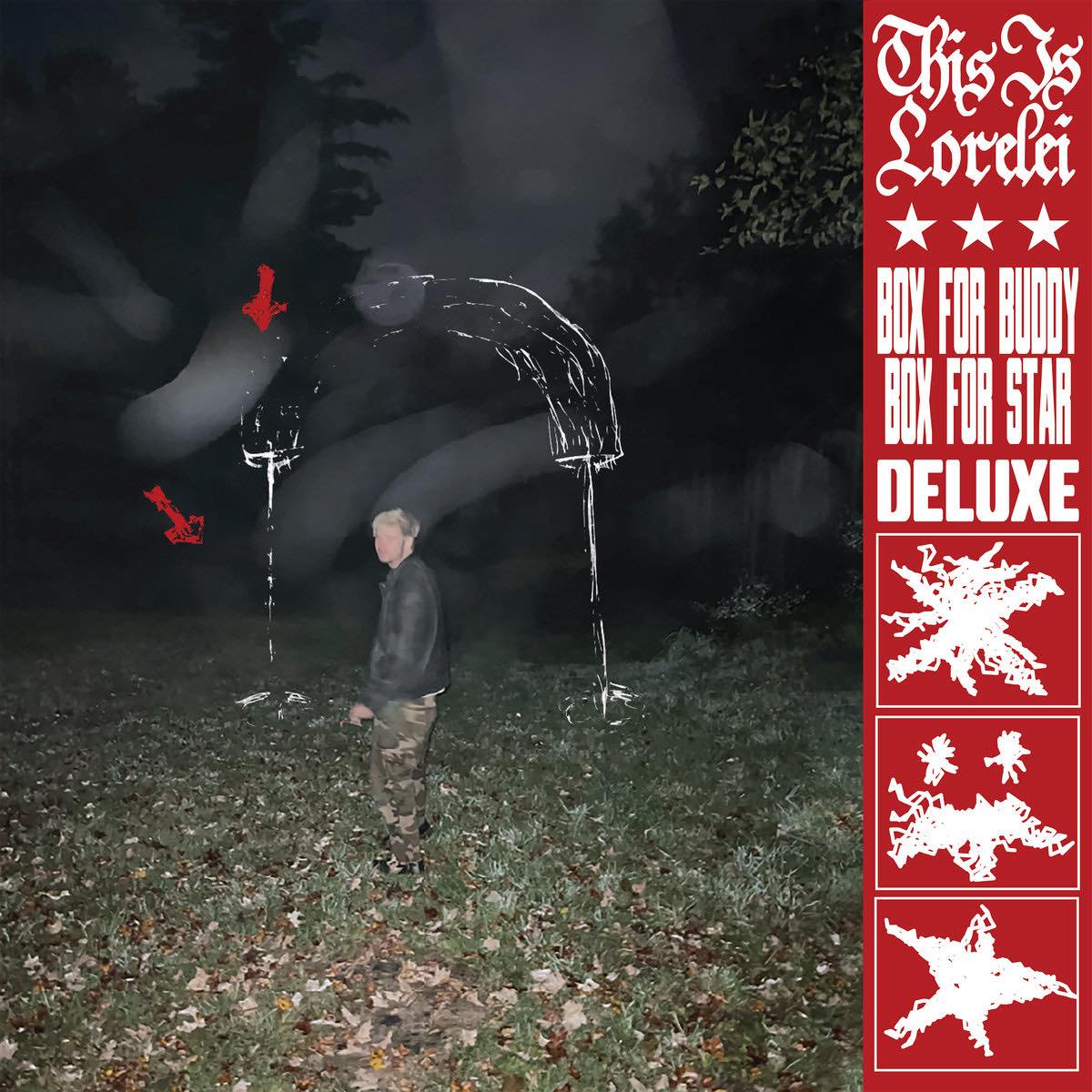
Box for Buddy, Box for Star [Super Deluxe]
DOUBLE DOUBLE WHAMMY
It was around two years ago when I finally gave in. I’d been aware of a buzz in my algorithmic corner of the internet about an artist called This Is Lorelei that had a certain declaration to it, a confidence: “This is the song, from the new artist, from the album you will need to know.” The song in question was not what I expected. “Dancing in the Club” isn’t really a cool song unless, of course, indie-pop Auto-Tune, aching sincerity, and name-dropping Steely Dan are considered “cool” now. I wasn’t sure I saw the hype until I listened to it two dozen more times over the next month. Nearly a year later, Nate Amos’ label debut Box for Buddy, Box for Star was fresh off a December of year-end list ubiquity, and in a move of indie-rock Predator-handshake memeing, Amos teamed up with recent the-new-artist alum MJ Lenderman for a brand new version of the track. This version has none of the frantic unrest of the original, favoring the laconic, hangdog shrug of its new singer. Everything I loved about the original had been undercut, flipped on its head, shuffled and redealt. I once again become hopelessly obsessed.
The “songwriter’s songwriter” is quite a position to hold. There’s no official induction ceremony, of course—more of an informal crowning. There’s usually a slow-build, a kind of word-of-mouth wave. The praise might feel a bit backhanded at first: “Can you believe this random guy with a bizarre band name, who has conservatively 10,000 songs uploaded to his Bandcamp page, might actually be brilliant?” But then, suddenly they’re everywhere. Maybe they get a few cosigns from the pillars of modern indie-rock cool—Lenderman, Waxahatchee’s Katie Crutchfield, Cameron Winter—who all choose to cover the artist’s songs. Then terms like “genius,” “timeless,” and “classic American songwriter” might appear in a New York Times profile. Finally, a “Super Deluxe” version of their breakout album will appear, this time featuring an album’s worth of covers with the likes of Lenderman and Crutchfield being joined by Jeff Tweedy, Hayley Williams, Tim Heidecker, and more. This is full “songwriter’s songwriter” ascension.
This new collection is a way to celebrate Amos’ newfound status, but also, at its best, a testament to the truth behind all the superlatives thrown at Box for Buddy, Box for Star in the first place. I’m fairly certain that Crutchfield could make the phonebook sound like the yearning pangs of heartache, but her version of “Where’s Your Love Now” is not only predictably brilliant, but may be one of the best songs she’s ever released. Like any truly great cover, Waxahatchee doesn’t reimagine the original, with its plinking toy piano and dry, understated vocal delivery, so much as she elevates the greatness already present. A line like “You should know that I knew this is why I would leave,” among other gems, will always hit like a ton of bricks, but with the pedal-steel sweep of Crutchfield and company, it enters a whole other stratosphere. Tweedy, paired with indie-pop duo fantasy of a broken heart, does a similar thing for “My Boy Limbo,” fleshing out the simplicity of the original and finding new areas to explore.
The modern tendency for re-release after re-release (in this case, the “Super Deluxe” version arrives after last April’s regular “Deluxe” version featuring only three additional tracks) might typically come off as a sacrifice to some algorithm streaming deity. But the songs here are the counter-argument, as they beg the simplest question there is: What makes a song good? And how much can they be manipulated, fed through another voice, another aesthetic, and remain tethered to the original? Amos is clearly a songwriter with a few dozen ideas percolating at any given moment, and this collection only highlights a small portion of them. Not only does he have an absolute deluge of self-released work in his back catalog (a small sampling of which, Holo Boy, was released four months ago), but he’s also half of one of the other buzziest indie bands going, Water From Your Eyes. So while I might not be able to pinpoint exactly what makes a song good or “timeless” or “classic,” it seems fair to say at this point that Nate Amos has that pretty well figured out.
