

Hip-hop has served as an outlet for underrepresented voices since its inception. Like any form of popular culture, it’s always been something of a mirror image of the society it was born within—so if today the genre feels directionless, that’s just a reflection of the cultural moment that produced it. After the panic that arose during hip-hop’s recent 50th-anniversary celebration over a lack of rap songs making the Billboard Top 40, and in the aftermath of the Kendrick/Drake battle, it’s fair to say that hip-hop is in an odd place. This is a bit confounding, considering the fact that the aesthetics of hip-hop—and, by extension, Black America—can be found everywhere from K-pop to high-fashion runways. Nonetheless, the future of the genre is in flux, and I think the best indicator of this is the concept of “meme rap.”
Rap has always had its fair share of eccentric figures, and typically those eccentricities only added to the mythos of the genre. Whether it’s the iconic story of ODB being too high to function on set at a Mariah Carey music video or Jadakiss wanting to throw a fridge off of a roof at Diddy, the absurdity of the artists within the genre has always existed behind the scenes. Yet meme rap—basically just a form of musical online trolling—takes that absurdity and throws it into an anxiety-inducing existential crisis. The staples of the subgenre include outlandish lyrics, off-beat rapping and/or off-keying singing, and instrumentals that make Cassidy look like Chad Hugo. It’s the closest hip-hop has come to anti-music, or music made for the sake of the absurdity of its own existence. Meme rap’s rise brings up the question of whether rap has overextended itself or if it’s something more integral to the core of the genre falling apart.
The blueprint for our modern meme rapper is Lil B, who came to prominence in online circles in the early 2010s with his album I’m Gay (I’m Happy), a project that poked the bear by exploring the taboo of homophobia in hip-hop. Along with that, The Based God brought a certain disdain for the conventions of the genre—such as rapping well, by the standards of the time—that made his online presence grow even further. From there we saw the emergence of artists who were able to leverage online virality into tangible success within the music industry. Many of the genre's biggest stars even evolved from meme-like beginnings, such as Doja Cat and the former members of Odd Future—both of whom rose to popularity with the help of provocative and off-putting imagery that captured the imagination of the internet without requiring a stamp of approval from the genre’s gatekeepers.
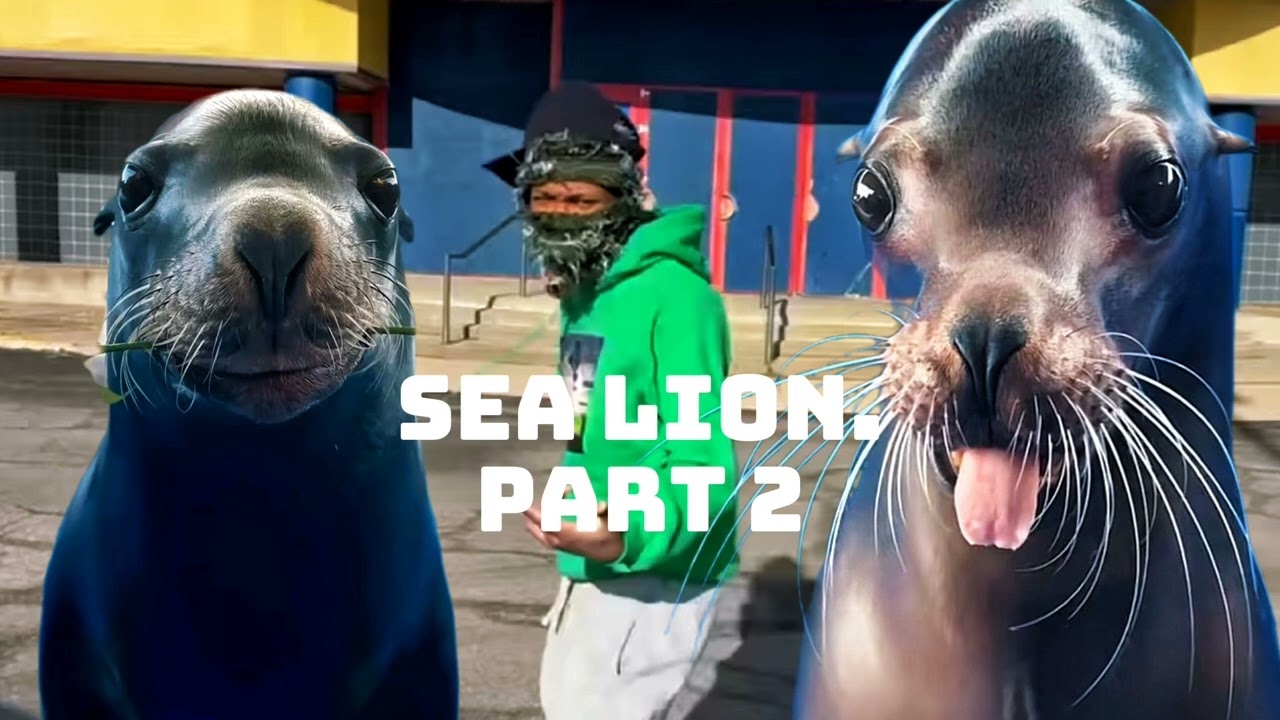
The ridiculousness of a rapper like Blueface, who could barely stay on beat, and the borderline minstrel-show antics of 6ix9ine dominated particular factions of the culture in the 2010s, while short-form social media celebrity even became a qualification for a rap career. At the end of the decade, we saw Lil Nas X using the internet to propel himself into the stratosphere with “Old Town Road” and its various remixes. This dependence on online exposure to create new stars showed a deficiency in the ability of hip-hop’s gatekeepers to control (or even relate to) the taste of an audience that was growing restless with the conventions of the genre. Which leads us to our present moment, where meme rap has become one of the most lucrative avenues rap has to offer. One of the movement’s current leaders is Yuno Miles, whose song “Sea Lion Rap” provides a perfect encapsulation of meme rap’s chaotic nature as a sea lion breaks out in random bursts of excitement throughout the track. Yet unlike his predecessors, Miles and many others in his lane seem unable to access the highest peak of the music industry with this strategy.
At this point, meme rap seems to be offering diminishing returns. While artists like Doja and Tyler, the Creator have found consistent mainstream success, many others have embraced the lowest possible forms of content creation. Miles has even taken to his YouTube page to describe his feelings of alienation and exploitation from an industry that seems all too ready to write him off as just another quirk of the algorithm. It’s not that meme rap is destroying hip-hop, but the problem is increasingly that this seems to be the easiest way for rap to garner guaranteed engagement. The reasons for this could be traced back to the founding mythology of the genre: its hypermasculine aesthetic and its preoccupation with wealth, both of which are losing cultural ground in the 21st century. For a genre like hip-hop that’s been embedded in the myth of Black hypermasculinity for so long, we’re beginning to see the effects on its listeners. The contradictions present in the concept of hypermasculinity are on full display, as a popular culture built around the façade of the brooding patriarch has only led men down an increasingly lonely and dark path.
The concept of American manhood was never intended to apply to Black men, so when you have a genre like hip-hop that took so many cues from the myths surrounding Black masculinity, you end up with memes. The same can be said for the displays of exorbitant wealth that the genre became notorious for in the late ’90s. It no longer feels socially relevant for rappers—especially meme rappers—to flex on anyone deciding between paying their rent or buying medicine. Hip-hop being steeped in these tropes is now causing it to fall victim to the same crisis that both masculinity and capitalism currently face. The truth is that meme rap exists in the same realm of hyperreality that hip-hop fostered, only now its sense of absurdity lies in the fact that the myths of masculinity and status through wealth are withering away before our eyes. Meme rap isn’t so much a postmodern shrug as it is a scream into a void that laughs back.
To put it another way, when the world is genuinely burning and most professions are at risk of being replaced by incompetent automated systems, when the contradictions of the neoliberal era have resulted in an ever-decaying society, and when the leaders of the genre are funding crypto MLMs and running sex-trafficking rings, what are the youth to do? The Sea Lion, I guess. FL
