Death Cab for Cutie will also be taking over FLOOD FM for our “Hacked” series airing at 10 a.m., 1 p.m., 5 p.m., and 10 p.m. PT everyday from July 13 through 17 for a guest DJ takeover featuring hand-picked tunes and commentary. Mark your calendar and tune in here.
Despite its normalization in the wake of a global pandemic, Death Cab for Cutie’s Ben Gibbard can’t bring himself to conduct long-distance interviews via video screen. His reasoning, he explains to me, is twofold: The first is that he paces when he talks, something which would certainly become problematic if he were forced to sit still in front of a computer. The second is for the benefit of both of us. “If I’m just talking to a voice on the phone, I’ll tell you pretty much anything,” he says. “But if I’m looking at you, I’ll probably be like, ‘I’m not sure I want to tell this guy anything.’” Even with our bicoastal confession booth established, Gibbard is still figuring out just how to talk about the last several years—how the dissolution of his second marriage upended his life, and how the ensuing effort to make sense of its aftermath led to I Built You a Tower, Death Cab’s 11th studio album. “I didn’t want to write an angry record,” says Gibbard. “I didn’t really feel angry. I just felt sad.”
Like so many albums that recount the turmoil associated with love lost, I Built You a Tower begins at the end. Several years after his split with actress and singer Zooey Deschanel in 2012, Gibbard found a renewed sense of partnership with a Seattle-based tour manager and fine art photographer. Marrying Gibbard in 2016, Rachel Demy became a fixture of the Death Cab family, capturing portraits and documentary stills of the band on tour, even releasing a photography book of their time on the road together in 2022. “There’s a shame that comes with divorce, that promises were broken,” Gibbard shares. “That’s just one part of the painful element of divorce—realizing that, yeah, I made a promise to somebody, they made a promise to me, and somebody broke that promise or walked away from what they said they were going to do. And I think that that's one of the most difficult and painful things. You either literally or figuratively make a pact with somebody that, if one of us is no longer in love with the other, they’ll say so rather than act out. And that was an element that we were dealing with that was also very difficult.”

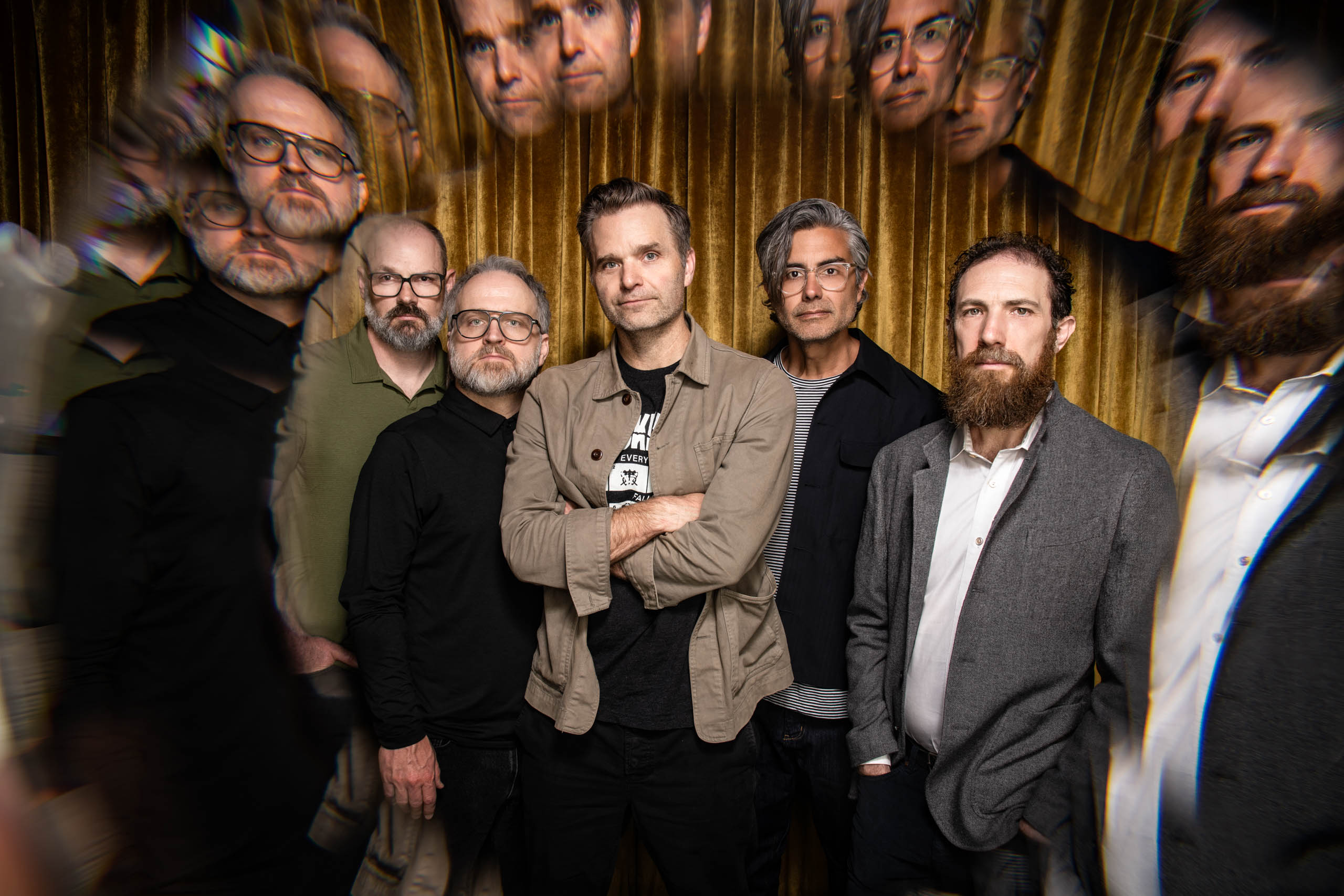
Photography: Michael Grecco Cover Design: Jerome Curchod Location: Gold-Diggers
Officially separating from Demy in 2023, Gibbard was forced to compartmentalize his personal life from his professional world as he embarked on a double-duty tour celebrating the 20th anniversary of both Death Cab’s Transatlanticism and The Postal Service’s Give Up. One moment he would be on the phone with his legal team (or even his ex) having very uncomfortable conversations, the next he’d be embodying his 26-year-old self performing to a throng of nostalgic concertgoers. Several hours after that he’d be right back to his 47-year-old existence answering emails from his lawyer that were sent to him while he was on stage. This seesawing of realities naturally took a toll. “I do a really good job of maintaining until I’m not maintaining. And this goes back to my drinking days. I would seem so sober—talking about Kierkegaard—and the next moment I’m through the coffee table. And that’s kind of how it works with me emotionally, as well.”
“I didn’t want to write an angry record. I didn’t really feel angry. I just felt sad.” — Ben Gibbard
Thankfully, however, everyone from tourmate Jenny Lewis to the crew manning the merch table knew what was going on in Gibbard’s life and stepped up to distract him, to comfort and ease the burden of being the most essential person for the shows to logistically function. “If I get emotional saying it, I apologize, but if there’s one thing that was so heartening to have occurred, it was that everybody lifted me up,” he shares. “Everybody stepped up in a major fucking way. It was something I’ll never forget.” Bassist Nick Harmer, who’s known Gibbard since they were college roommates, says that his “first response was just concern for my friend’s well-being. I think during a lot of it I was just hoping that my friend can hang in there and navigate the upheaval and the pain that he’s going through in his life.”
As up-and-down as Gibbard describes those days on the road, getting home and returning to an empty house is when he says things got really difficult. “It's very easy when you’re playing Madison Square Garden to lean into your ego and the performance itself and really just kind of be like, ‘This is why I’m here—I’m on this planet for this reason. And, yes, my life is a fucking mess right now, but you know what? There’s thousands of people here, and they’re having a great time and I get to do this with my life, and I’m so lucky at 47 years old that people still want to hear this.’ That’s easy. But then you go home and the phone calls from the lawyers and all these other things are still happening, but you’re now in your house by yourself. That’s where a lot of these songs got written.”
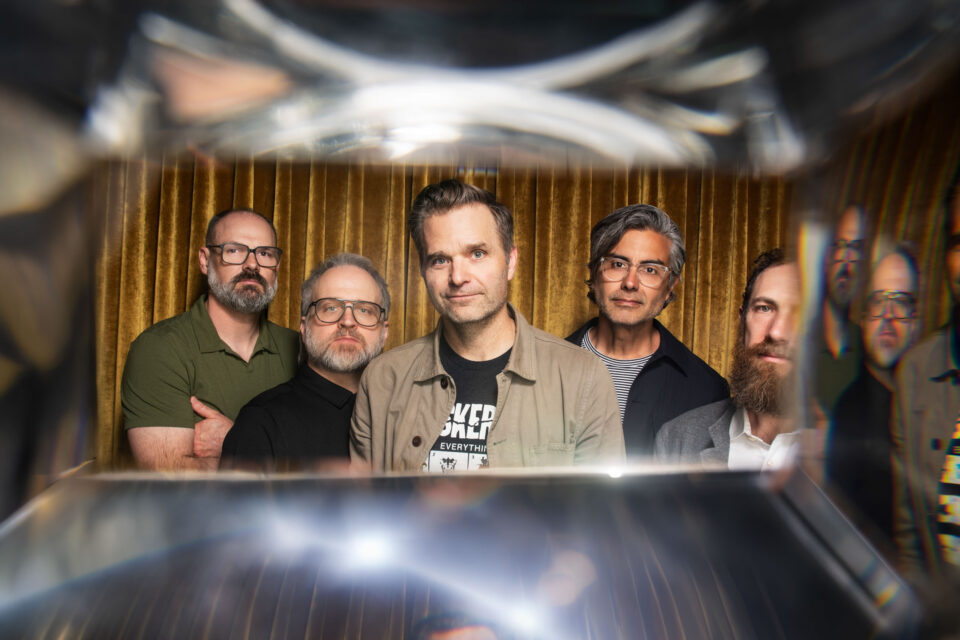
Almost compelled by catharsis, the material that began to manifest saw Gibbard reckoning with an unbearable weight of feelings he had to get a firmer grasp on in order to actually let them go. “I just really wanted to go internal with it,” he says. “I wanted this record to be an exploration of self rather than telling the story in a more traditional fashion that’s more in keeping with breakup records, or divorce records.” Often beginning with a simple drum beat, a guitar hook, and a bass line weaving between the two, Gibbard says the songs that were coming out of him felt reminiscent of the spirit of the way the band started. “Not that I didn’t ever feel like myself before, but I started to feel like myself again. I really started to feel that I was tapping into something that felt familiar, but that I was tapping into it from 25-plus years down the road of writing songs.”
Outside of these solo sessions, Gibbard also began engaging with the rest of the band in an effort to replicate the kind of chain-letter-like constructions that proved so fruitful in the creation of Death Cab’s 2022 album Asphalt Meadows. “Ben is a very reactionary writer to external stimuli,” says Harmer. “During Asphalt Meadows, because of the pandemic, there was a lockdown on Ben’s ability to go out in the world and get that external input. So we found really good success in this round-robin-style period where the band would kind of pass these ideas. I think Ben really needed us as a band at that point to feed him stuff to react to, to have some kind of push-and-pull against to have those songs take the shape that they did.” Unfortunately, Harmer says, the yield on their efforts just wasn’t producing the same satisfactory results as before. “We were kind of beating ourselves up about it. Concurrently, Ben was demoing on his own and it just became clear that a lot of the stuff that he was making just had so much more of a point of view.”

“I wanted this record to be an exploration of self rather than telling the story in a more traditional fashion that’s more in keeping with breakup records, or divorce records.” — Ben Gibbard
Recognizing that their leader was steering the group in an unobstructed direction, Harmer says that he, guitarist Dave Depper, keyboardist Zac Rae, and drummer Jason McGerr simply clicked into a support role. “Everyone has that confidence to pick a lane and be comfortable with that and not feel like in every instance they have to show everybody why they’re here and what they’re good at. I think that only comes from bands that have been around for a while. I think in the early days I certainly wouldn’t have had the ego to give up all of that. But all of us have just become so much more confident in the relationship that we have with one another and the music that we make together, that it’s changed from this kind of tacit competition in the band to this very overt support.”
“In virtually every case on this record,” Gibbard adds, “everybody understood the assignments. In the sports lexicon, no one was trying to do too much; I’m the pitcher and you’re just swinging and letting me tell you where the ball’s going to go. You’re not trying to pull everything into a home run. If you’re going to slap one to right field you’re going to slap one to right field. You still got a hit.”
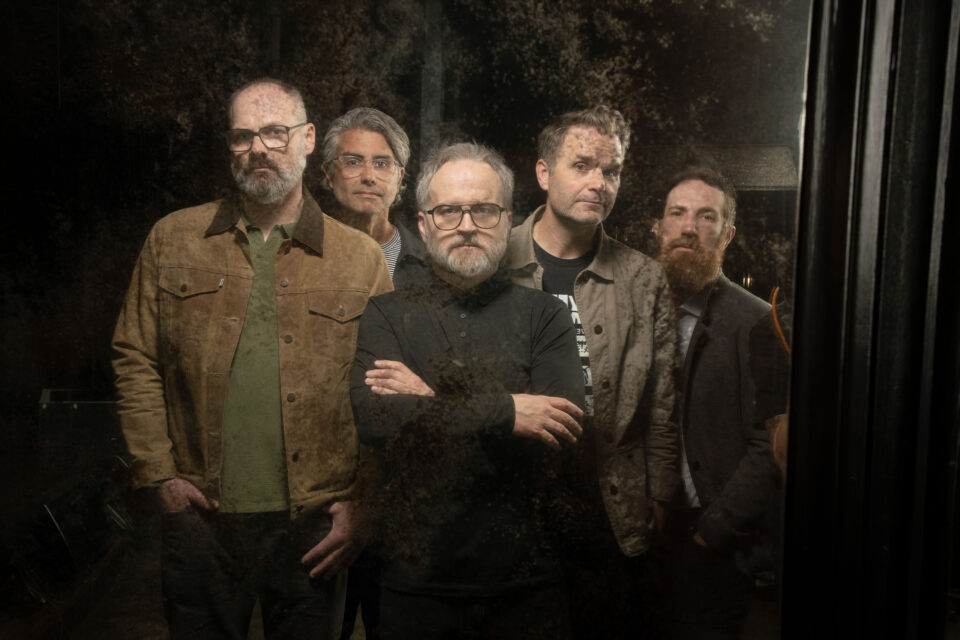
“All of us have just become so much more confident in the relationship that we have with one another that it’s changed from this kind of tacit competition in the band to this very overt support.” — Nick Harmer

Working almost completely off Gibbard’s arranged demos, foregoing the use of overdubs and studio ornamentation, the actual recording of I Built You a Tower was completed in as little as three and a half weeks—the fastest turnaround for the band since 2001’s The Photo Album. Matching this no-frills approach to the record’s instrumentation is Gibbard’s jarringly candid lyrics. “I think the records that people who are fans of the band like the most are the ones that are almost embarrassingly transparent,” says Gibbard. “They’re authentically me, because on those records I’m writing from a very personal place, and the hope is that if I can vividly write about something that I’ve experienced, and I’m writing in the first person—as I often do—people will find points of connection in the songs, where they see themselves in those songs. That’s not necessarily the goal, but I really believe that’s my best work, and that’s the work that people react the best to.”
As a songwriter, Gibbard has always been a master of melancholy. The lyrics within I Built You a Tower, however, somehow feel more anxious, grief-stricken, or guilty—as if there’s some personal sense of failure behind them. There’s an exhaustion to the whole undertaking that can be felt throughout the record. “And I keep telling my friends I’m alright,” Gibbard sings on “Stone Over Water.” “I’m trying to hold it together / Trying to take the first step / Into the arms of wherever, whenever.” Lead single “Riptides” is just as unable to find the means or the will for a resolution: “I’m too tired to talk / I’m too tired to end the war / And I can’t seem to hold it together / Anymore.” Even in the final lines of the album’s closing track, “I Built You a Tower (b),” Gibbard can’t help but lament: “I’m learning how to / Live without you / But these ruminations / Are all about you / And it makes me tired / So tired.”
This feeling of immobilization seemingly came to a head at some point for Gibbard, as he inevitably alludes to his worsening mental health in “Pep Talk,” the track that’s become the most important to him from the record. “I was realizing only after it was done that I was having an emotional reaction to my own work in a way that was alarming,” says Gibbard. “But it started to make me realize that this song is about those voices of self-harm that start to creep up when you’ve gone through something painful and you don’t feel like getting up in the morning. It’s not like all of a sudden one day you wake up and they’re loud; they started out tiny for me. And this was something I hadn’t had to deal with in a very long time. And it was scary as fuck. It was one of those things where we were recording it, and I had to kind of step out for a second. I was like, ‘Why am I feeling this way?’ And then I was transported back to a period that I’d erased from my memory because I didn't want to accept that it had happened.”
Not every track on I Built You a Tower feels like a safe space. Songs like “Punching the Flowers” and the aforementioned “I Built You a Tower (b)” feature some of the scuzziest riffs the band has written in years. “There’s an edginess,” says Harmer. “It has much more of a dagger to it—of a point on it. I like that there’s some tension in the chord changes. I like that there’s some aggressiveness in the sound palette. It’s territory in our band that we don’t really explore a lot.” For his part, Gibbard points to his own personal response to “How Heavenly a State,” a track that opens with a wave of brain-scrambling feedback. “I’d been having this recurring dream about a friend who had committed suicide, where he was just showing up at my house, and when he was on the steps of my house, when I would try to kind of go grab him, the dream would end. And that big blast of feedback that starts the song is akin to the feeling I had in the dream when I saw this person who’s not supposed to be there. So it felt very literal—like if you saw somebody you thought was dead, that’s what it would sound like. It would just be this arresting wall of sound where it was unclear what key it was in. It wasn’t telling you how to feel, but you knew that you were shocked.”
“The hope is that if I can vividly write about something that I’ve experienced, and I’m writing in the first person, people will find points of connection in the songs, where they see themselves in those songs.” — Ben Gibbard

Despite the fact that much of I Built You a Tower explores the personal fallout in the wake of a shattered relationship, there’s also a sentiment that occurs in the record’s opening track, “Full of Stars,” that Harmer believes acts as a thesis statement that sits above all of the pain that follows—specifically in the lyric “All I need is for you to be kind / But it’s rarely worth your time.” “That’s a really self-accusatory line,” says Harmer. “I like that a lot of people will think that song, and that line particularly, is about asking someone to be kind. But it’s a statement to the mirror. And there’s this sort of feeling in a lot of these songs about trying to find some forgiveness for yourself, trying to find some kindness for yourself. That thread moves through a lot of these songs in a way that I personally enjoy.” While the path that had to be taken to create I Built You a Tower isn’t one Gibbard wishes to ever repeat, the veteran songwriter is still proud of the resulting work. He’s proud of how he chose to address a remarkably difficult chapter of his life, and he’s proud of the sense of grace he brought to the record. In the process he even learned just how much grace he could save for himself.
These are, of course, just immediate reflections. The more time that passes, the more I Built You a Tower will continue to evolve and change. As experience has shown Gibbard, it may even become something more precious a few years down the line. “Take ‘Title and Registration,’” he says. “I’d been in what I consider to be my first adult relationship, and I was living with somebody for the first time. The band is starting to take off and we’re touring a lot, and the relationship doesn’t work out. This person moves to the East Coast. The story of ‘Title and Registration’ is very true. There’s an extension of that story in ‘The District Sleeps Alone Tonight.’ Those songs are chapters in the same story. Fast-forward and I go to New York City where this person lives, where they have a kid in college and a kid in sixth or seventh grade, and I see them all the time. We go to get coffee or lunch and we’ve moved on to another phase of our lives and a phase of our relationship together. And it’s a beautiful memory now to know that I felt so much for this person and that they had such an impact on my life, that they’re frozen in time forever in these songs for other people to experience.
“It’s a beautiful memory now to know that I felt so much for this person and that they had such an impact on my life, that they’re frozen in time forever in these songs for other people to experience.” — Ben Gibbard
“I don’t doubt that this record will reach a similar situation in some form or fashion,” Gibbard concludes. “Sticking to the same time period when I wrote ‘Tiny Vessels’ about another person, they were furious when that record came out, understandably. And we’ve moved on since. We understand that we were young and emotional and confused. We weren’t fully formed human beings, and we were going through things that were difficult, and we didn’t know how to talk about it because we didn’t have that vocabulary at that point in our lives. This is just part of getting older. This is part of developing emotional maturity. And so I’m not gonna lie: Not everybody in these new songs is happy with me. But at the end of the day, the idea is that there’s enough humanity in the songs that anybody—even the subject of the song, maybe later, at some point—can realize that I was really doing my best. We were all just doing our best.” FL