
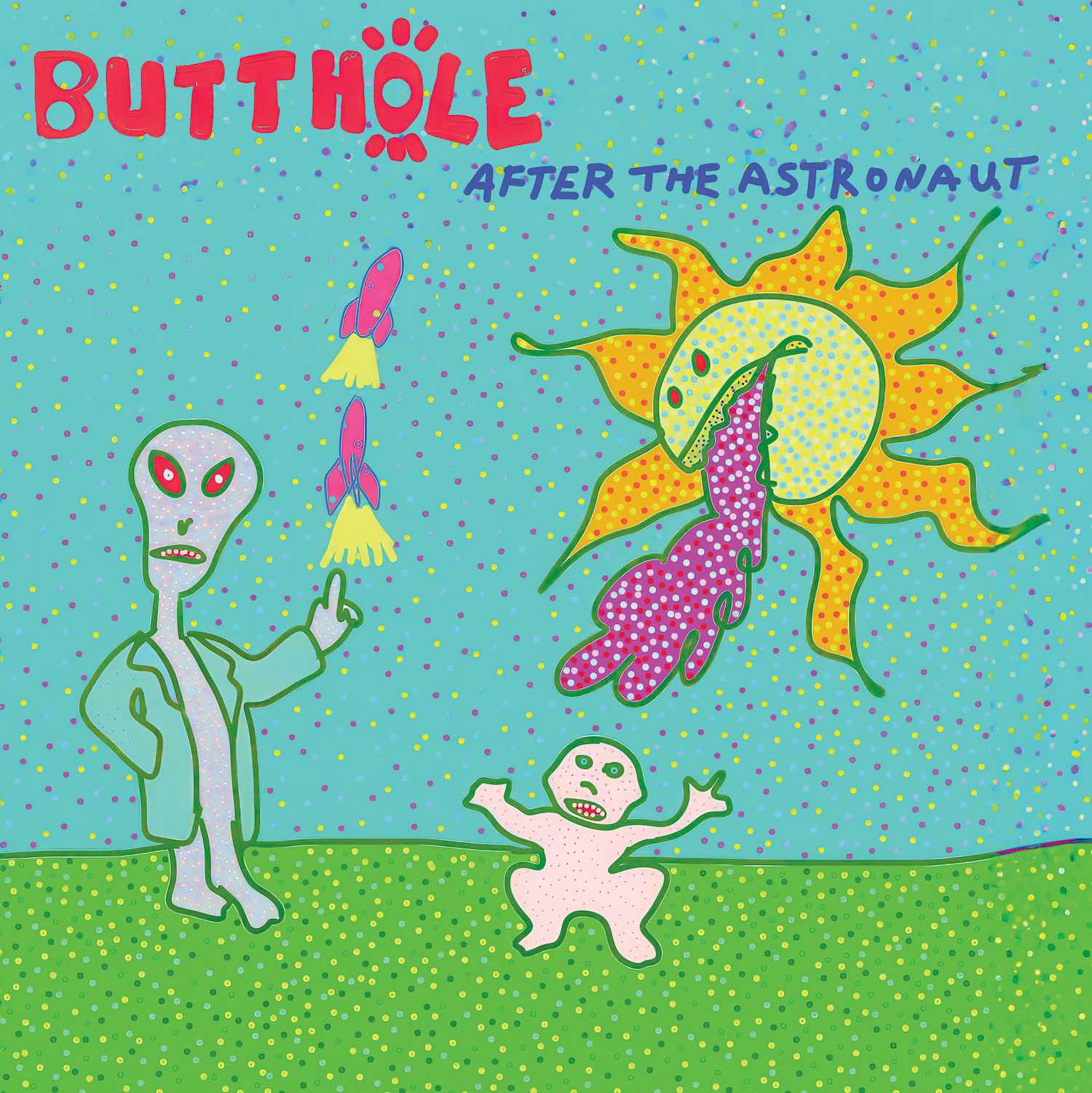



Butthole Surfers
After the Astronaut
SUNSET BLVD
The late ’90s were a gold-rush period for grunge and alternative rock. Desperate to replicate the lightning-in-a-bottle success of Pearl Jam, Nirvana, Beck, and The Flaming Lips, major labels tossed massive budgets at the underground’s most volatile outcasts from all corners of the country. Perhaps no one benefited more from this moment than Texas noise-rock experimentalists Butthole Surfers, who rode the unexpected wave of 1996’s Electriclarryland and its hit “Pepper” to the top of the charts. Guitarist Paul Leary, drummer King Coffey, and frontman Gibby Haynes managed to slip through a wormhole and mutate the period’s familiar styles by injecting their records with industrial beats, found sounds, electronics, acid bass, and an overall fascination with druggy sci-fi music.
Naturally, Capitol Records wanted lightning to strike twice after the success of “Pepper.” Instead, the Surfers handed them the difficult After the Astronaut LP. Shelved in 1998 after a tense standoff with the suits, the lost record has lived on for decades as a legendary bootleg, only to be heavily stripped for parts on 2001’s hip-hop-infused final album Weird Revolution. Now, after finally being given a proper release, After the Astronaut arrives not as a cobbled-together myth but instead as a fascinating artifact of a band caught between artistic self-sabotage and the lure of commercial pop accessibility. After the Astronaut is a jarring listen from the jump; where Weird Revolution felt like a compressed and vacuum-sealed product, the original album hums with the band’s punk-philosopher insanity.
From the opening track, it’s clear that the band’s appetite for mind-altering drugs during the ’80s and ’90s heavily influenced this album. Early single “Intelligent Guy” sounds like an alien on psychedelics observing the history of the human race, while the hypnotic centerpiece “The Last Astronaut” opens with an eerie, modulated synth that feels like a transmission from a UFO before Coffey’s drum patterns kick in and ground the chaos. The band doesn’t completely abandon their penchant for havoc, though. On closer “Turkey and Dressing,” Leary’s guitar work is frantic. He unleashes a barrage of feedback-heavy riffs that recall the band’s ’80s Wild West era. The bass locks into a relentless punk groove that provides a stark contrast to Haynes’ absurd vocal delivery, which serves to remind listeners that beneath the studio sheen, they remain the same weirdos who used to project surgeries during their live shows.
Side B’s “Junkie Jenny in Gaytown” features acoustic guitars layered over a mid-tempo beat. It sounds deceptively normal until Leary steps on his wah-wah pedal, slicing through the track with a piercing, psychedelic solo. Then there’s the intense surf rocker “Jet Fighter,” which features driving bass and a catchy chorus that should’ve made it a modern rock-radio staple. The band layers melodic vocal hooks over a wall of crunchy guitars run through an old PA system to create something incredibly infectious.
Ultimately, After the Astronaut is a superior record to the lackluster version that Capitol force-fed to the public nearly three decades ago. Preserving the band’s core identity, the record imperfectly captures a specific era when the Surfers were trying to figure out how to stretch their madcap concepts to new audiences without losing their love for the rougher edges. It turns out that their lost masterpiece wasn’t lost at all—Butthole Surfers were just waiting for the world to intersect with its inflexible, interstellar-surfing orbit.
