
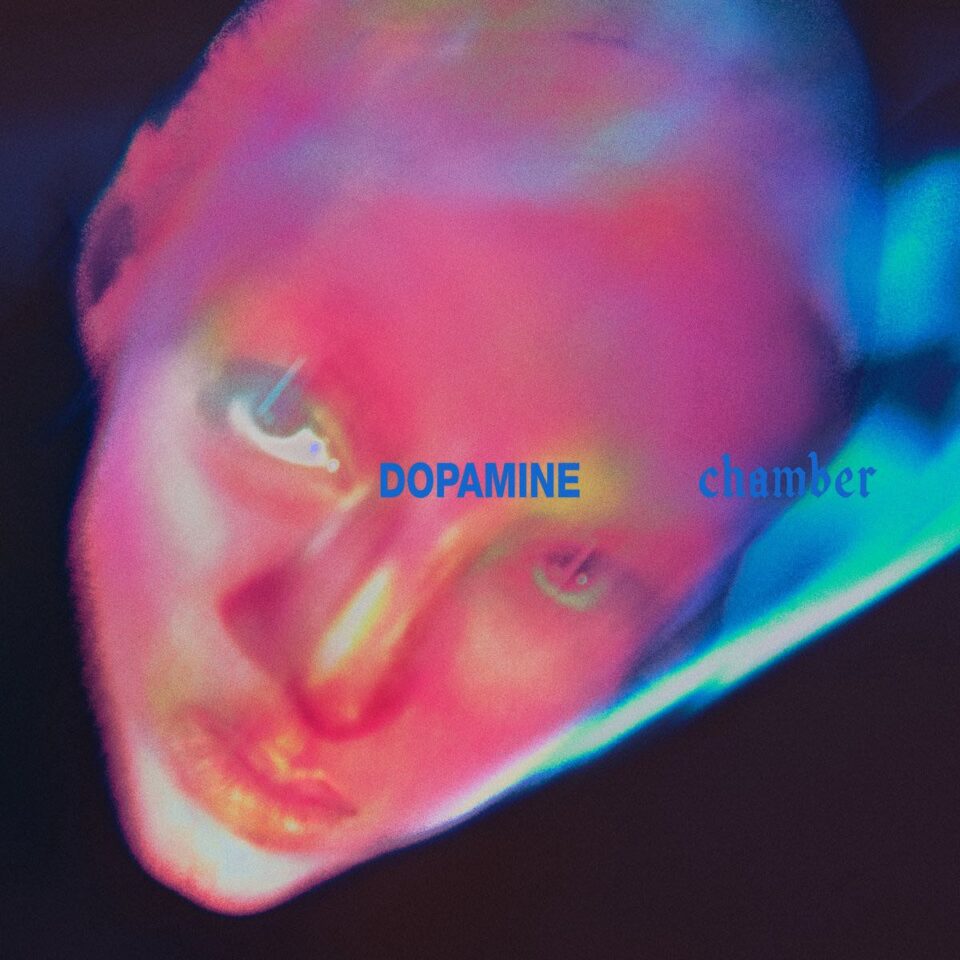
Next year will mark Robyn Hitchcock’s 50th anniversary as a recording artist. But judging by his new album The Confuser, the prolific English songwriter’s abilities remain remarkably undiminished by the passage of time. A self-described “jangle rock LP,” The Confuser is one of his strongest and most focused records in years, holding its own against such previous guitar-driven Hitchcock albums as 1991’s Perspex Island, 2006’s Olé! Tarantula, and even The Soft Boys’ 1980 masterpiece Underwater Moonlight.
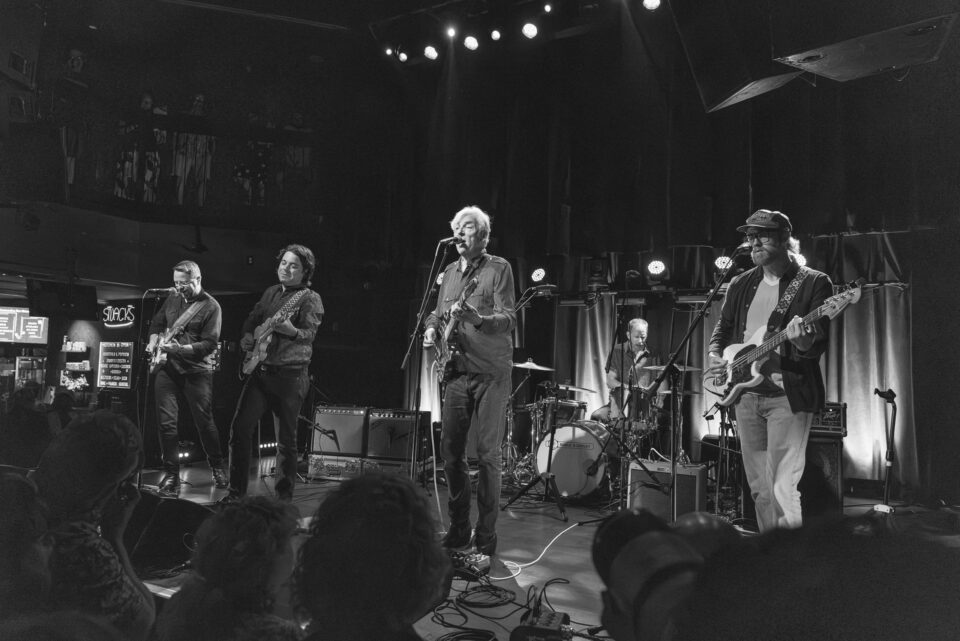
In fact, Hitchcock’s Soft Boys bandmate Kimberley Rew contributed a fair amount of electric guitar to The Confuser, which was co-produced by Hitchcock and Brad Jones in Nashville, where Hitchcock currently lives with his wife, songwriter Emma Swift. The album also features the deeply sympathetic instrumental backing of guitarist Jeremy Fetzer and bassist Todd Bolden, as well as Dr. Dog’s Eric Slick on drums. “I think it’s my most realized record in a long time,” says Hitchcock, “because we collectively took a lot of trouble to get it right, just in terms of the way it sounds and the way it’s presented.”
Ahead of The Confuser’s release tomorrow via Hitchcock and Swift’s own Tiny Ghost label, he reflects on his love of the two-guitar-bass-and-drums format, the importance of making fun music in unhappy times, and his need to keep busy.
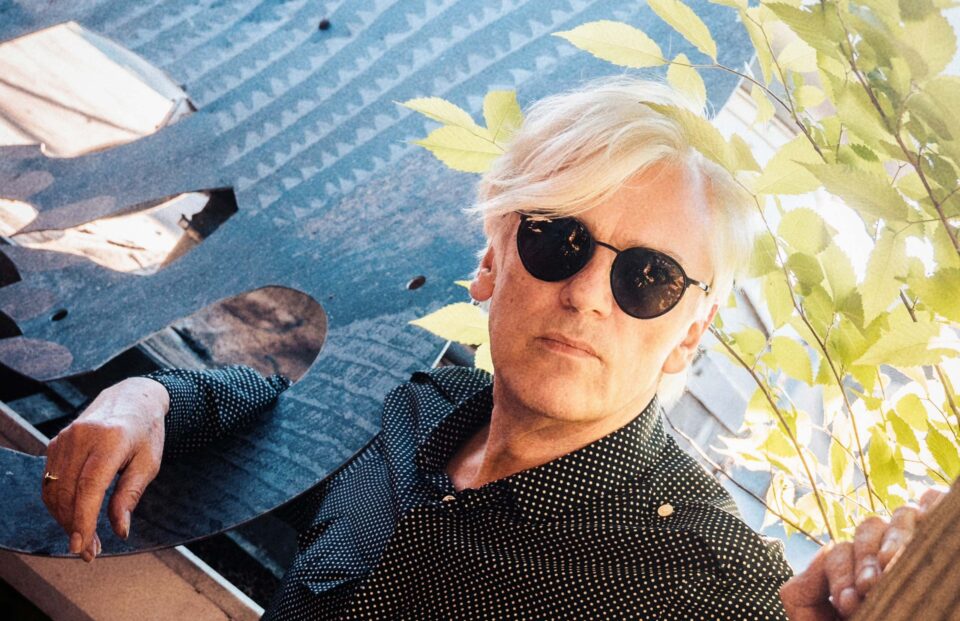
The Confuser is entirely based around two guitars, bass, and drums. You wrote about that template on your Substack, saying that it’s “an antique art form, like jazz.” Why are you still drawn to that setup?
The old template of two guitar, bass, and drums—where did it originate? Possibly Buddy Holly, certainly The Beatles and The Byrds. And to me, there was no improving on that. I loved some of the keyboard-based groups, like The Doors and Pink Floyd and Traffic; but two guitars and bass and drums always seems to me more than enough, so I’ve gone back to it numerous times. I mean, Underwater Moonlight is generally reckoned to be a high-water mark of that template—and then I went back to it again, kind of, with Perspex Island, because Peter Buck was playing guitar on a lot of that. And then we did Olé! Tarantula, and I did it on my self-titled 2017 album; I had Annie McHugh playing guitar on that one.
The two-guitars thing has a way of pulling me back, but what I need is a good foil, and I’m particularly well-endowed with good foils at the moment. I’ve got Jeremy Fetzer, but then we also sent a lot of it to Kimberley Rew over in Britain, who overdubbed on over half the record. I think we probably only kept 20 percent of what he did, but what we kept was very good. So there’s plenty of guitars on the album—but not too much, I hope.
You and Kimberley have been playing on and off together for nearly 50 years now. Has your guitar partnership always been this telepathic sort of thing that it seems to be from the outside?
No, I think it was quite…combative to begin with. He was much better than me, technically, and much louder, so it kind of pushed my guitar game up. Because I was basically just a folkie who had an electric guitar; I was an OK acoustic player, but I wasn’t much on electric, and I think it raised my game being in a band with Kim. We’re much more complementary now. We just know how to create a sort of guitar dialogue. Kimberley and I have also kind of learned to play less—so some of the best bits of Kimberley and me playing together is just us playing rhythm, where we’re both chugging with a little bit of lead, and it’s just all about the pulse and not trying to play all the notes. I like to think you can learn over the years to just get away with less.
“The old template of two guitar, bass, and drums—where did it originate? Possibly Buddy Holly, certainly The Beatles and The Byrds. And to me, there was no improving on that.”
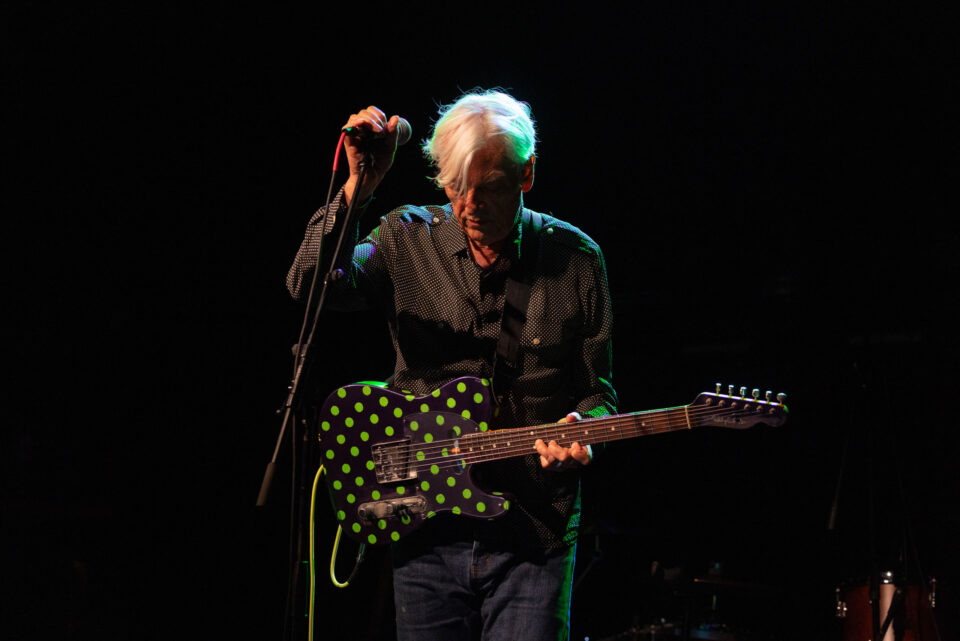
“I owe a lot to a dead man’s cock” is one of the greatest album-opening lines I’ve ever heard. Do you have a favorite opening line from someone else’s album?
“Once upon a time / You dressed so fine / Threw the bums a dime / In your prime / Didn’t you?” certainly throws a lot of carcasses on the floor very quickly. “It was 20 years ago today / Sgt. Pepper taught the band to play” is not a staggering couplet, you know. “Lime and limpid green / The second scene / The fight between the blue you once knew” [from Pink Floyd’s] “Astronomy Domine”—that’s not a typical opening salvo, but people wouldn’t necessarily know what he was talking about. I suppose my “dead man’s cock” stuff is pretty graphic, but people have said they like that as an opening salvo, and it seemed to make sense to have it as the first track on the record. It’s quite snappy. Bobby Bare Jr. said, “Oh, it’s a love song to your parents!” And I thought, “I suppose in a way it is, really.”
The Confuser comes across as a celebration of creativity in the face of all the ugliness that we’re currently being confronted with. Was that your intention going into it?
It’s never been uglier, but at the same time, the news is always bad; it has to get worse to have more impact, or something [laughs]. There’s always been lofty portents of doom, as far as I can remember. The first thing I remember in the outside world is the Cuban Missile Crisis when I was nine, and extinction was imminent. And then Kennedy was shot. There just seemed to be so many horrific, shocking things going on the whole time. So you could be in a permanent state of lamentation, but that doesn’t really make for a fun record—or a fun existence.
I kind of feel like the more pressure we’re under, the higher the stakes; the darker the background, the more it kind of behooves me as an artist to come up with stuff that actually is fun on some level. I call the record a “celebration of collapse.” The world’s falling apart, America’s falling apart, I’m falling apart—gently and slowly. It’s nothing compared to what’s happened to some of my contemporaries; my friends are dying off or getting really sick. I just have a series of minor ailments, but I can still get up and boogie in my own way.
In addition to the album, which will be your fourth since 2022, you have a new memoir coming out this summer, just two years after the release of your first memoir. Do you feel pressure to put more of yourself and your work out there as you get older?
Very much! You know, the less time you have, the more you have to fill it. And it’s not like I’m a worldwide legend or a trillionaire or something, so I can even afford to sit back and go, “Umm, yes, that was good, wasn’t it?” I mean, I’m sure I drink martinis with the best of them, but I have to keep busy, and I always did; I just realized that old age is not an excuse to slow down, as long as I can physically do this stuff. I’ve got tours planned, I’ve got records lined up—certainly in my mind—and I’ve got the beginnings of a third book. If I made it to 100, I would still be busy.