
Jay Blakesberg was just 16 years old when he took his dad’s Pentax film camera to shoot the Grateful Dead’s September 2, 1978 performance at Giants Stadium in East Rutherford, New Jersey. By his own accounting, he managed to take only “a handful of decent images” at the show, but that was enough to give him a vivid glimpse of his artistic destiny. “Three photographs from that day were the spark that ignited my life, my passion, and awoke the Muse that was before my eyes,” Blakesberg wrote in RetroBlakesberg Volume One: The Film Archives, a stunning 2022 coffee table book which collects more than 150 photos he shot on film between 1978 and 2008. “That single event, and the images I made of it, marked the beginning of what has now become a more than 40-year journey.”
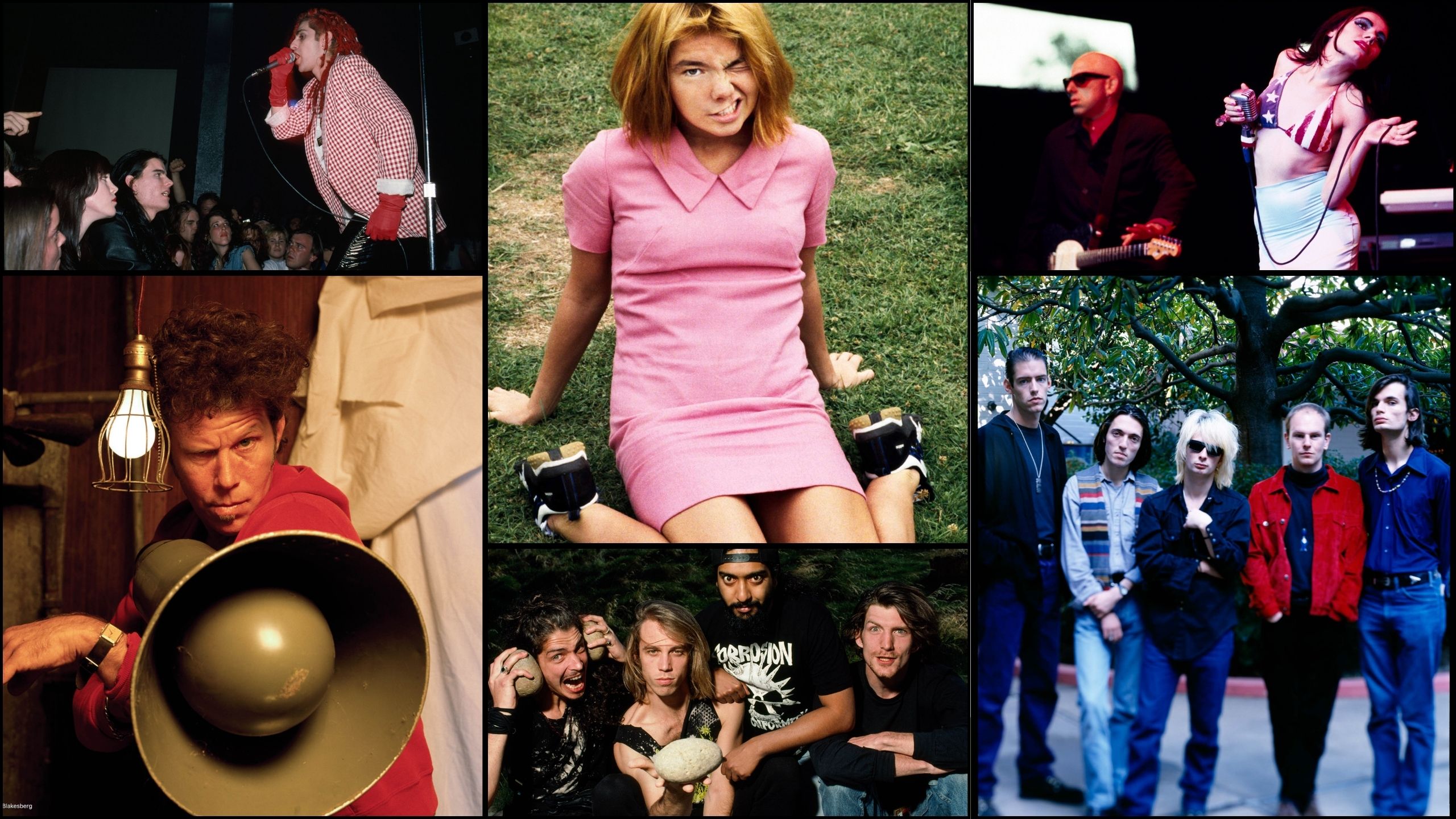
After following the Dead around the country for several years, capturing both the band and their audience on film, Blakesberg moved to the Bay Area in the mid-’80s where he talked his way into becoming the “house photographer” at the I-Beam, one of San Francisco’s hottest alt-rock clubs. From there, he wound up capturing a number of up-and-coming bands on film, an experience which both sharpened his technique and helped him launch his professional career. His vibrant images of musicians in concert and in repose—including everyone from Jerry Garcia and Joni Mitchell to Radiohead and Dr. Dre, often intentionally shot with the “wrong lighting” or “wrong film” to bring out hidden aspects of their personalities—have since adorned countless magazine covers. Many of these prints were on view as part of “The Music Never Stopped,” a career-spanning exhibition of his work which ran through this summer at LA’s GRAMMY Museum.

But Blakesberg is by no means a museum piece himself; at 64, he’s still photographing live gigs with the same giddy enthusiasm and daredevil intensity he brought to his earliest shoots. “I still love that experience,” he tells me. “I feel very honored that I’m still relevant enough that people allow me to come shoot their bands, and I’m not ‘old and in the way,’” he laughs. “I gotta keep photographing bliss, because that’s what it’s all about.”
Read on for more of our conversation, and pick up RetroBlakesberg here.

Jerry Garcia at the Oakland Auditorium in Oakland, CA December 28, 1979
Oakland Auditorium
Oakland, CA
December 28, 1979
You went from following the Grateful Dead to taking photos of bands at the beginning of the alternative rock revolution. As you say in RetroBlakesberg, those were two very distinct tribes back then.
There was a little bit of overlap between the hippie and punk scenes, but for the most part the punks were the punks and the hippies were the hippies, even though we all had essentially the same ideals—alternative lifestyles, anti-establishment. And by the late ’80s in the Bay Area, you had some Deadheads that were starting to go see the Butthole Surfers, but we were too young and naïve at that point to really let the hairdos and the clothing merge.
I’d moved to the Bay Area from Olympia, Washington in ’85. One of my roommates at Evergreen College had been a guy named Stuart Hallerman, who now owns a very famous recording studio in Seattle called Avast, where Sleater-Kinney and Built to Spill have recorded. Stuart went to high school with Kim Thayil and Hiro Yamamoto from Soundgarden, and he was their first sound man—so when Soundgarden first started coming down to the Bay Area, I’d go out to dinner with the band. I got to see them in this little club on Haight Street called the I-Beam; I’ve got pictures of Chris Cornell stagediving and crowdsurfing. So I was hearing about some of these new Seattle bands and things like K Records from Stuart and other friends who were still up in Olympia.

©Jay Blakesberg
A Gathering of the Tribes @ Pacific Amphitheatre
Costa Mesa, CA
October 7, 1990

Soundgarden
I-Beam
San Francisco, CA
December 15, 1989

Do not use unrelated to Jay Blakesberg feature without prior approval
I-Beam
San Francisco, CA
April 10, 1989

Do not use unrelated to Jay Blakesberg feature without prior approval
I-Beam
San Francisco, CA
June 12, 1988
The I-Beam was where you really cut your teeth as a professional photographer, right?
Yeah. I went to the club booker and said, “Hey, I want to be the house photographer!” And she was like, “What does that even mean?” There was no internet, no social media, no need for that. But I was trying to learn how to be a photographer, so I was like, “Look, I just want to come and take photos, and I’ll give you some 8x10s from the shows.” And she was like, “Great!” I was already starting to shoot Michael Franti’s first band, The Beatnigs, and I wound up shooting a lot of alt-rock bands at the I-Beam like The Flaming Lips, Faith No More, Soul Asylum, Jello Biafra, Jane’s Addiction, The Dickies, Butthole Surfers—there was a lot of really powerful stuff going on, and that was my introduction to that music in a big way. I was still shooting in the Grateful Dead world, but the music magazines were more interested in things like the Red Hot Chili Peppers or The Sugarcubes. So that was sort of the beginning for me as a professional photographer.

Bjork photographed at the Tibet Freedom Concert held at Golden Gate Park in San Francisco, CA on June 15th, 1996 ©Jay Blakesberg This image is a publicity photograph for The exhibition – RetroBlakesberg: The Music Never Stopped at The Contemporary Jewish Museum of San Francisco, August 31, 2023–January 28, 2024. They are not publicity photos for the artists in the photos and are only to be used in conjunction with stories about RetroBlakesberg: The Music Never Stopped (and stories about Jay or Ricki Blakesberg related to the exhibition).
Tibet Freedom Concert @ Golden Gate Park
San Francisco, CA
June 15, 1996

Dr. Dre
Los Angeles, CA
May 8, 1996
“I can shoot the subject against a white backdrop with very pretty, flat lighting, and everybody looks good. But to me, that was boring. That wasn’t my aesthetic.”

PJ Harvey photographed in San Francisco, CA November 23, 1992 © Jay Blakesberg/Retna LTD.
San Francisco, CA
November 23, 1992

©Jay Blakesberg
Petaluma, California
February 4, 1999

David Byrne photographed in San Francisco, CA on August 29, 1997 ©Jay Blakesberg
San Francisco, CA
August 29, 1997
As impressive as your live shots are, I’m even more blown away by the artist portraits in your book. What’s your general approach when you’re shooting a legendary artist?
Most of these are photographs that happened in 10 minutes; 30 minutes was a luxury for an editorial photo shoot. I would play it safe for the first seven minutes of my shoot, and then for three minutes I would go fucking crazy and try something completely out-of-the-box, whether with lighting or a film choice or a lens choice. And sometimes it failed, and sometimes it was brilliant. I know a lot of photographers that played it safe and did very well. I can shoot the subject against a white backdrop with very pretty, flat lighting, and everybody looks good. But to me, that was boring. That wasn’t my aesthetic. That’s why I shot with really hard, dramatic, contrasty lighting, because to me that helped bring out the personalities. Iggy Pop was a dark guy, so why are you going to light him flat? You’re going to light him with shadow and depth.
My philosophy going into it was, “Let’s try and pull this out of them, and if they’re not going to give it to me, I’ve got to do it with my lens choice, my film choice, my lighting choice, my backdrop choice, or my background or my environment—and I’ve got to do it really fast so they’re not annoyed!” And I got really good at being able to pull that kind of stuff off. When I did the Radiohead portrait, I was intentionally shooting the wrong film for the light, with the wrong camera, with the lens in the wrong position, to really fuck shit up and intentionally come up with something weird. And for some reason, it worked. I couldn’t do geometry or algebra in ninth grade, but I could figure out how to fuck up a photograph creatively and intentionally to have it actually come out and potentially be brilliant—probably because I took a lot of acid when I was young [laughs].

Radiohead photographed in San Francisco, CA July 13, 1995 © Jay Blakesberg/Retna LTD.
San Francisco, CA
July 13, 1995

Radiohead
Phoenix Hotel
San Francisco, CA
October 24, 1993

Radiohead
Back alley at Slim’s nightclub
San Francisco, CA
July 13, 1995
“I couldn’t do geometry or algebra in ninth grade, but I could figure out how to fuck up a photograph creatively and intentionally to have it actually come out and potentially be brilliant.”

Iggy Pop photographed in San Francisco, CA
June 28, 1990
© Jay Blakesberg
San Francisco, CA
June 28, 1990

R..E.M., Chateau Marmont, Los Angeles, CA, July 12, 1994
Chateau Marmont
Los Angeles, CA
July 12, 1994

Neil Young photographed at The Bridge School Benefit in Mountain View, CA
October 30, 2005
© Jay Blakesberg
Bridge School Benefit
Mountain View, CA
October 30, 2005

Flaming Lips
San Jose, CA
October 5, 1994

Flaming Lips
San Francisco, CA
October 22, 1989

Wayne Coyne, FLaming Lips
San Jose, CA
October 5, 1994
You mentioned The Flaming Lips earlier. I know your relationship with them goes back a long way.
My first shoot with them was in 1989, when they were just a three-piece band. It was Wayne Coyne and Michael Ivins and this guy Nathan [Roberts] on drums, and their manager at the time asked me to do some publicity photos of them while they were in San Francisco. A few months later, they were back in town with Jonathan Donahue from Mercury Rev on second guitar, so I did another shoot with them. It was just a few days after the big earthquake in ’89, the Loma Prieta quake, because there’s a picture of Wayne reading the Oakland Tribune where the headline says “Earthquake Rocks Bay Area.”
I didn’t see them for a few years, and then I got hired by Rolling Stone to shoot the second stage at Lollapalooza ’94. I reintroduced myself to Wayne—“Hey, I’m Jay Blakesburg, we did a shoot a few years back.” And he’s like, “I remember you!” And Wayne and I have literally been close friends from that moment on. I did a book on The Flaming Lips, and Wayne wrote the foreword for RetroBlakesburg. I’ll always have a special place in my heart for The Flaming Lips, no matter what they do or how they do it.
The Flaming Lips have always had a very artistic way of presenting themselves, but I’m guessing there were other bands who were not so cooperative.
I did a band portrait [of Jane’s Addiction] for the cover of BAM magazine on the eve of the first Lollapalooza in 1991, and the band hated each other. Dave [Navarro] and Perry [Farrell] weren’t speaking, and Eric [Avery] and Perry weren’t speaking, and it was a tough shoot. Dave was eating a cookie, and I said, “Hey, can we put the cookie down?” And he’s like, “This is my time, this is not your time.” But, you know, it was directed at me, it wasn’t about me; it was about what was going on with him and his band imploding. And then, in true Almost Famous fashion, when the magazine came out, they’d just put Perry on the cover [laughs].

Janes Addiction photographed in Mountain View, CA May 31, 1991 © Jay Blakesberg/Retna LTD.
Mountain View, CA
May 31, 1991

Fiona Apple photographed in San Francisco, CA December 15, 1996 © Jay Blakesberg/Retna LTD.
San Francisco, CA
December 15, 1996

Snoop Dogg photographed in Los Angeles, CA on February 2, 1998 ©Jay Blakesberg
Los Angeles, CA
February 2, 1998

Alanis Morissette
San Francisco, CA
July 16, 1995

Soundgarden
A Gathering of the Tribes @ Shoreline Amphitheatre
Mountain View, CA
October 6, 1990
Speaking of Lollapalooza, tell me about that photo in your book of Pearl Jam and Soundgarden hanging together backstage at the Shoreline Amphitheater in ’92.
I shot that for Rolling Stone. My photo editor Jodi Peckman said, “There’s a new band called Pearl Jam that’s on the bottom of the bill, and the Seattle thing is really blowing up. Try and get a backstage shot of anybody from Soundgarden with anybody from Pearl Jam; I don’t care if it’s the two drummers. We just want to get something that shows this sort of Seattle connection.” Well, the bands both insisted that their whole bands wanted to be in it, so they all gathered in a dressing room. I didn’t touch anything—you can see the stuff on the table, the chips, burritos, and whatever—I just sat them down, and they sort of just goofed around and half paid attention to me. Now the photo is almost 34 years old and it’s become super-iconic because of what those bands went on to accomplish. These photographs have become an important part of our pop culture history and our memory and our youth. I mean, if you were 20 at that Lollapalooza, you’re in your mid-’50s now.
And you’re 64 and still shooting gigs.
Oh, yeah. I’ve been really fortunate that I’ve spent most of my career in the front row—that’s where every fan wants to be, and I’m a fan, right? I still love it. I love the feeling. I love the energy. I love those first notes when the band comes out, and I love the fucking energy from the audience and the band and how it all erupts. It still turns me on, you know? FL

©Jay Blakesberg
Rochester, NY
September 1, 1979.
Jay Blakesberg’s first published photo for Aquarium Weekly. Blakesberg was 17 years old. He was paid $7.50.
