


It starts with a big, slow breath. “These bitches want Nikes,” Frank Ocean sings over ebbing effects. “They looking for a check / Tell ’em it ain’t likely,” he continues, his voice Auto-Tuned childlike. He immediately has you locked in, and for the next hour he’s not letting go. Yesterday marked 10 years since the release of Blonde, the Long Beach–born musician’s second album. Boasting a roster of master musicians ranging from producers Pharrell, James Blake, and Jon Brion to featured vocalists Beyoncé, Yung Lean, and André 3000, the long-awaited follow-up to 2012’s Channel Orange was reportedly the product of Ocean’s perfectionism.
Yet inarguably, as evidenced by the albums it’s gone on to influence (Dijon’s Baby being among the latest) and the heights it’s reached since its release a decade ago, Blonde is a masterpiece. Ocean’s stellar, crushing songwriting is the source. As heard on Channel Orange and his debut mixtape Nostalgia, Ultra. from the previous year, we knew Ocean could sing. Soaring on “Bad Religion” and swooping on “Thinkin Bout You,” his falsetto was perhaps the most stirring since Smokey Robinson’s. We also knew he could spin a yarn, whether it be one of unrequited love on the former track or inveterate longing on the latter. What we didn’t know was that Ocean could break and heal hearts just as easily.
A fantasia of youth, love, heartbreak, friendship, and so much more, Blonde is that rare record you can project your whole life onto. Even though Ocean lived a seemingly charmed life by the time he finally dropped Blonde in late summer 2016, playing global festivals and with a GRAMMY already on his resume, the artist was ostensibly under a lot of pressure. Channel Orange was such a global hit that he once said that he might not make another record. As the years passed, though, Ocean dropped clues to his follow-up to Channel Orange, hopping online with an ambiguous post here and there, but nobody really knew what was going on. Eventually, word came down that Ocean’s sophomore record would be released in July 2015. As the anticipation increased, the summer came and went without new material.
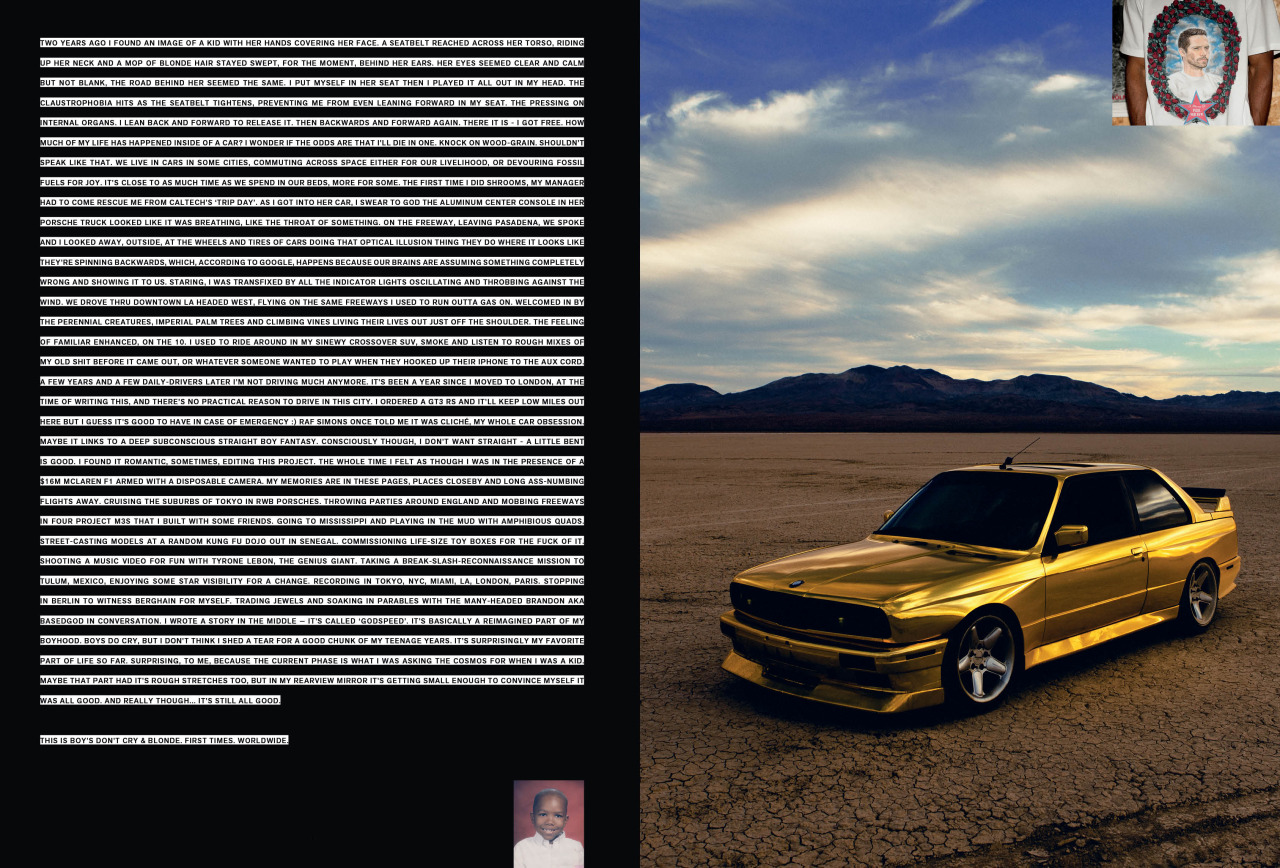
As 2015 turned into 2016, the new year quickly revealed itself to be a significant one in music. In January, David Bowie dropped his swan song Black Star; the next month, Kanye gave us The Life of Pablo. In May, Radiohead returned with A Moon Shaped Pool under the still-looming shadow of Beyoncé’s Lemonade. For its universalism, its emotional resonance, and its sheer cathartic power, though, Blonde may very well be the most enduring record of that year. But before that, Ocean teased it with something else: On August 19, he shared the 45-minute visual album, Endless. A still shot of Ocean welding in a warehouse with music playing in the background, the visual proved an enticing preview of the proper record. Accompanied by a magazine called Boys Don’t Cry (initially reported to be the title of the album) that appeared at pop-up shops in different cities around the world, the album that dropped at midnight intrigued from the moment its cover art was revealed.
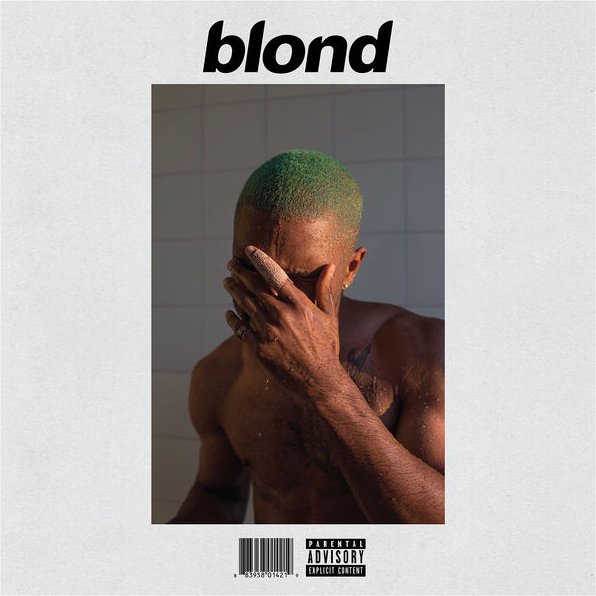
A close-up photo of Ocean sporting dark green hair (rather than blonde, as you might expect), hiding his face as he takes a shower, the cover photo taken by Wolfgang Tillmans is one of the more enigmatic images of the past decade. While up for interpretation, it’s undeniably a portrait of youth, which would emerge as a major theme on the album. On that beguiling opener, “Nikes,” Ocean mentions those who were gone too soon—Pimp C and Trayvon Martin among them. Ocean’s voice is still drenched in Auto-Tune here, only later reemerging as that first heard on Odd Future tracks some years prior, and which swelled on Channel Orange. “We’ll let you guys prophesy,” he sing-shouts over rippling guitars. “We gon’ see the future first / Living so the last night feels like a past life.” He immerses the listener in a party scene where “acid” is on him “like the rain” and “weed crumbles into glitter.”
The life of the party was something that Ocean portrayed on his previous records. There was “Novacane” on Nostalgia, Ultra., a bubbling track in which he experiences the numbness of the titular anesthetic while engaging in intercourse. There was mention of Ladera Heights—“the Black Beverly Hills,” as the singer calls it—on Channel Orange, along with the Earl Sweatshirt–featuring “Super Rich Kids.” On Blonde, as on those earlier records, Ocean shows the underbelly of the party as an ominous undercurrent courses throughout the album. On “Be Yourself,” the mother of one of Ocean’s childhood friends guests: “Many college students have gone to college and gotten hooked,” she says in a voicemail before warning of drug use and urging the listener to “be yourself and know that that's good enough. Don’t try to be someone else.”
We knew Ocean could spin a yarn, whether it be one of unrequited love or inveterate longing. What we didn’t know was that Ocean could break and heal hearts just as easily.
Ocean, however, isn’t a moralist. He’s an artist depicting a certain lifestyle, one that he seemingly knows all too well. It’s “a blonded life,” as he puts it later on “Self Control,” one of two tracks featuring guitar parts laid down by Alex G. It’s a life I’ve glimpsed: Parties in Manhattan. Parties on Long Island. Rides from Manhattan back to Queens after a night out with an older brother’s impossibly cool best friend in the front seat, stereo blasting past the bright windows that light the 59th Street Bridge. Guys you want to be. Things you want to do. Places you want to go. Seventeen years old and a whole life before you. Youth. Fleeting youth.
Ocean does, in fact, end it with the kids. On Blonde closer “Futura Free,” in what would become a rogues’ gallery of sharp new voices in music that included Navy Blue and Na-Kel Smith, Ocean lets the tape roll. “Make sure you speak up,” Ocean’s younger friend Mikey Alfred says at what sounds like a skatepark. “What’s your name?” he asks. “Ryan,” Ocean’s late biological brother answers. “What do you do? What's your first memory?” Alfred continues. “What’s the most amazing thing you’ve ever witnessed?” he asks later, to which Smith replies with a laugh, “Friendship, and how it controls the world.”

In the decade that’s passed since Blonde arrived, Ocean still hasn’t released a third record, instead venturing into fashion, photography, and even into talks of helming a feature film. Since then, what was a coterie of these friends has blossomed. The album is replete with remarkable artists, ranging from Tyler, the Creator to Rostam and Jonny Greenwood (who’s credited with the string arrangement on “Seigfried”). Ocean even interpolates Elliott Smith as he sings “This is not my life / It’s just a fond farewell to a friend” on “White Ferrari.”
Like Blonde, Ocean himself, still only 38 years old, has already built a legacy. Flea was so enamored of “Thinkin Bout You” that he released a jazz rendition of it on his debut solo album earlier this year. Mavis Staples, meanwhile, offered a lauded rendition of “Godspeed” on her latest record. Just this week in Manhattan there was a show at SOB’s of emerging musicians doing jazz renditions of Ocean’s songs in celebration of Blonde.
You can only hope that Ocean releases another album. As the cover of Blonde essentially hints, he may be camera shy, and it’s uncertain if he will. In the meantime, there’s the record itself. There’s the words and images he leaves you with, whether it be “a bull and a matador dueling in the sky” or someone, perhaps in review of their life, “Dreaming a thought that could dream about a thought / That could think of the dreamer that thought / That could think of dreaming and getting a glimmer of God.” It’s a blonded life here, and then it’s gone. FL
