




Slow Pulp
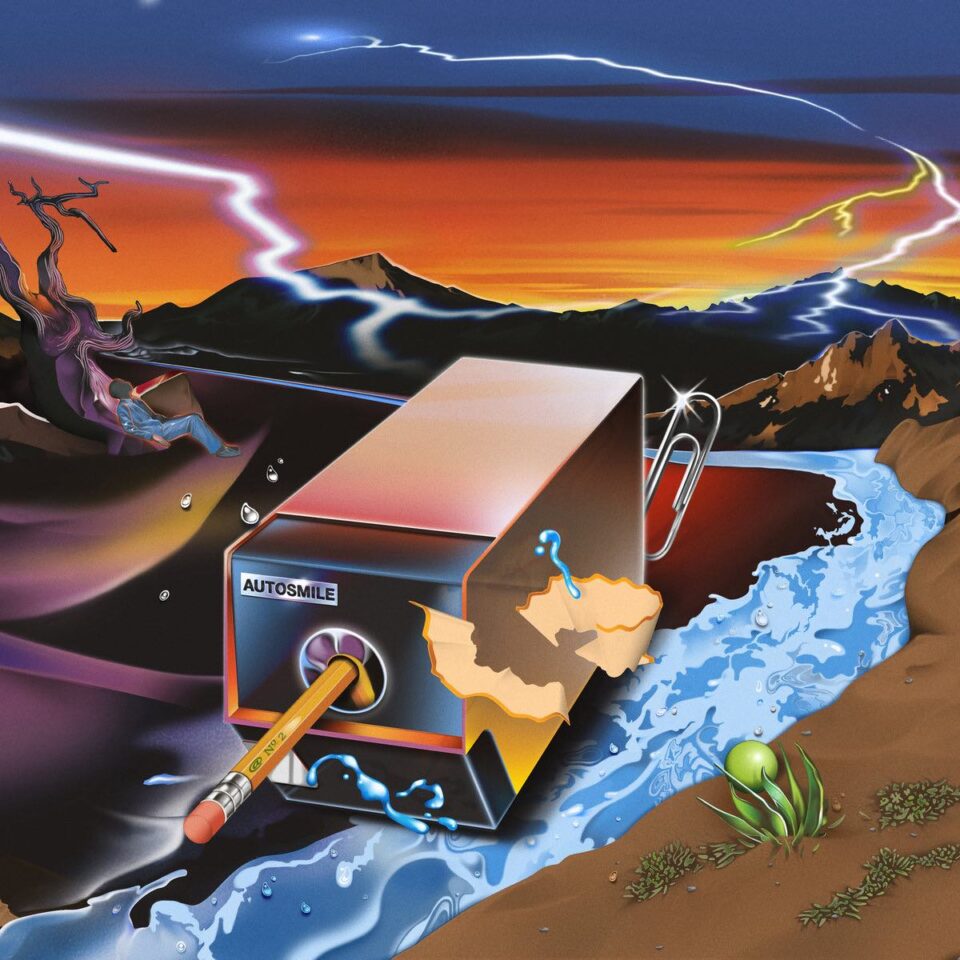
Melodie
ANTI-
Slow Pulp have been making music since 2015, when Wisconsin-based childhood friends Teddy Mathews, Alex Leeds, and Henry Stoehr decided to start a band. With the addition of vocalist and guitarist Emily Massey a year later, they began to truly discover their identity as a group, fleshing out the dreamy indie-rock sound that they’re known for today on 2020’s debut album Moveys. With their third release, Melodie, the group explores new territory that melds Tom Petty’s crisp, reverbed guitar and synths circa Full Moon Fever with modern indie folk and high-energy surf rock, creating a soundscape that’s both nostalgic and highly modern. It feels like they’re continuing to build upon the experiments they began on 2023’s Yard LP, creating something more cohesive, polished, and cathartic in doing so.
“Yellow and Green” sets the right mood with an engrossing atmosphere before the record begins building on its opener’s oscillating ambiance with each subsequent track. With “Better Man”—a song that seems to channel Muddy Wilbury himself in a late-’80s sort of way—the record starts to pick up energy; the title track sees the album lean toward Slow Pulp’s tried-and-true style while incorporating the subtleties of early-2010s surf punk a la FIDLAR. The high energy of these two tracks transitions beautifully into “Red Car,” a catchy modern road anthem. Massey’s languid vocals coast atop the melody, while the instrumentals harmoniously blend with her voice.
Melodie feels more balanced than Yard did, an album that was more diverse in sound and which tilted toward the experimental. Even though Melodie suffers from a slight stagnation around its midpoint, it’s quickly picks up juice again in the last quarter of the record. The album’s closer works well as a grand finale and exclamation point to the band’s exploration of loss and change. “Slip Away” is an emotional ballad with sparse instrumentation and Massey’s vocals front-and-center. It’s visceral, like Munch’s seemingly simple yet instantly evocative The Scream shaded by the bright guitar sounds of ’80s-era Stevie Nicks. “When I forget that everything is different / When it’s over / Then I slip away,” sings Massey, conjuring a rich tapestry of ambivalent feelings while hitting at the core of Melodie’s thesis.
Across its 11 tracks, Melodie keeps listeners engaged while leaving them wanting more. Its combination of engrossing, emotive songwriting, fluid transitions, and heightened energy varies these songs enough to create a dynamic world worth exploring. It’s an impressive evolution in Slow Pulp’s artistic journey.
