
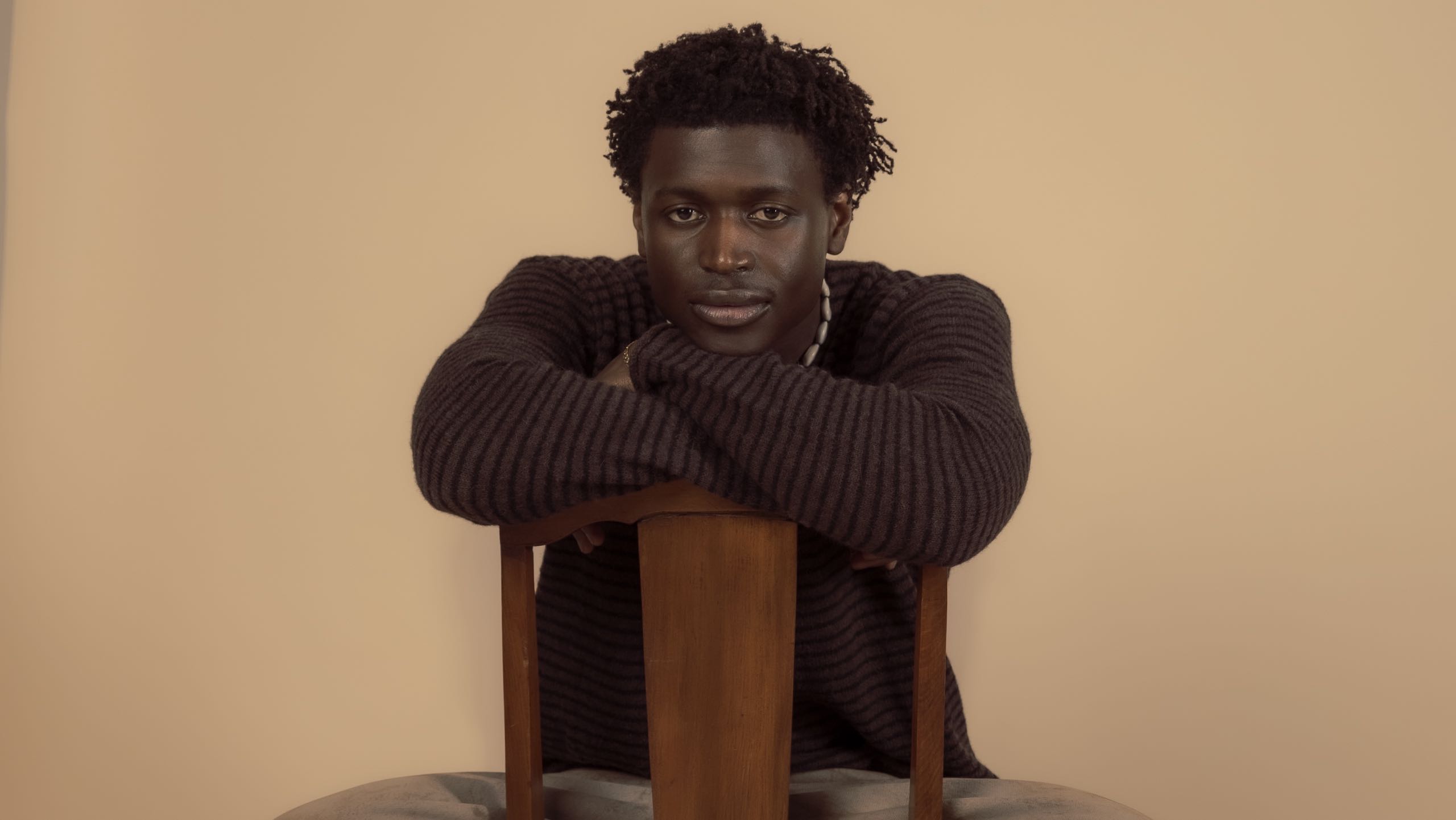


Although his indie-folk sound may suggest Appalachia as his origin story, Mon Rovîa’s moniker serves to remind his listeners that the artist was actually born in the Liberian capital before being displaced from the nation in the midst of Civil War. Now based in Tennessee, his backstory obviously provides him with a unique perspective to infiltrate not just the local scene, but a global audience drawn to the type of warm, upbeat acoustic anthems that have culminated in his newly released proper debut album, Bloodline.
Not that that unique perspective was easy to come by. “My earliest understanding of myself came in fragments, sensations, and inherited weight,” he shares with us in his track-by-track breakdown of the heavily autobiographical collection. “I spent years trying to understand where I came from before I had the tools to do so.” Bloodlines is proof of all the hard work he’s put into unlocking the past he’s long felt within himself, with the songwriting process itself guiding him to a sense of clarity. “Writing this helped me accept that wanting to know your story is not a flaw,” he shares regarding the track “Whose Face Am I.” “It is part of being human.”
With the record out today via Nettwerk, read through Mon Rovîa’s full breakdown of Bloodline below. You can listen to the record here.
1. “Black Cauldron”
This is the beginning. Not a clean origin story, but a felt one. My earliest understanding of myself came in fragments, sensations, and inherited weight. I spent years trying to understand where I came from before I had the tools to do so. This song opens the album by stepping back into that heat and acknowledging that my life was shaped long before I had any say in it.
2. “Pray the Devil Back to Hell”
This song honors the women of Liberia who stood together during the Civil War and demanded peace. Their strength did not come from force, but from resolve, unity, and faith put into action. What moved me most was how grief became something shared and transformed into power. This song carries deep respect for the kind of courage that refuses to turn away from love, even when the cost is high.
3. “A Day at the Soccer Fields”
Returning to Liberia as an adult confronted me with realities I was not prepared to face. I saw children holding weapons, living lives shaped by violence before they had a chance to choose otherwise. The experience stayed with me. Survival is not only about making it out alive. It is about learning how to carry what you have seen. I wrote this song for myself and for those whose childhoods were overtaken by conflict.
4. “Bloodline”
For a long time, I believed distance weakened identity. I thought being raised far from where I was born meant I was disconnected from my roots. Over time, I learned the opposite. What comes before you lives in you, whether you recognize it or not. This song is about ancestry as presence, not absence. It is about understanding that none of us stands alone.
5. “A Foreshadowing”
Some moments do not reveal their meaning right away. They sit quietly in memory and wait for time to catch up. This song reflects on an encounter from my childhood that only made sense years later. Looking back, I see how life often offers signals before we know how to read them.
6. “Little by Little”
Grief does not always arrive with drama. Sometimes it moves slowly, folding itself into daily life. As I grew up, moved, and tried to understand faith and healing, I learned that change happens gradually. This song is about honoring that pace and trusting that growth can happen even when it feels incomplete.
7. “Old Fort Steele Trail”
There is a road in Montana that holds a lot of memory for me. Long days outside, rivers, dirt, and questions we never spoke out loud. That landscape gave me a sense of freedom I did not fully understand at the time. This song reflects on memory, but also on the importance of letting the past rest once its work is done.
8. “Whose Face Am I”
Not knowing my biological parents left quiet questions that followed me into adulthood. This song is not about confrontation. It is about longing. I have wondered where certain features, instincts, and feelings come from. Writing this helped me accept that wanting to know your story is not a flaw. It is part of being human.
9. “Running Boy”
For a long time, movement felt safer than stillness. I believed healing would arrive suddenly, but I learned it asks for patience and rest. This song speaks to exhaustion and the deep need to stop running long enough to feel whole again. Rest is not giving up. It is choosing to care for yourself honestly.
10. “Field Song (To My Lover)”
Before I ever played these songs for people, they lived in workdays under the sun. Landscaping jobs, long hours, tired hands, and melodies hummed to get through it. This song is for anyone still working toward a future they cannot fully see yet. Where you are now does not define where you will end up.
11. “Somewhere Down in Georgia”
Living in the American South forced me to reckon with history that was never fully addressed. There is a tendency to move forward without repair, but the past does not disappear when it goes unnamed. This song is about acknowledging what still shapes the present and understanding that truth must be faced before healing can happen.
12. “Oh Wide World”
Fear can convince you that staying put is safer than stepping forward. This song pushes against that instinct. Even when the world feels heavy, I still believe there is goodness worth moving toward. You do not need a perfect plan to begin. You just need the courage to step outside what is familiar.
13. “Code of Many Colors”
This song came from a season marked by doubt and internal unrest. Sleep did not bring rest, and my mind felt crowded with fear and possibility at the same time. One night, I chose to trust my own voice instead of trying to silence everything else. That choice shifted something in me. This song is about belief and the strength that comes from speaking honestly.
14. “Heavy Foot”
This song looks outward. It questions systems that divide and distract and asks us to turn toward one another instead. Change does not happen alone. It happens through community, shared responsibility, and choosing to believe in each other when institutions fall short.
15. “Infinite Pines”
Looking back, I see growth in places I once only saw struggle. This song is about accepting where you are while still reaching for more. Fear and doubt do not disqualify you from hope. The fact that you are still here matters.
16. “Where the Mountain Meets the Sea”
This is where the album settles. Not with answers, but with peace. Strength does not have to mean hardness, and softness does not mean weakness. If something has been worn away while listening, I hope what remains feels more honest. Your story matters, and telling it can bring freedom—not only to you, but to others as well.
