
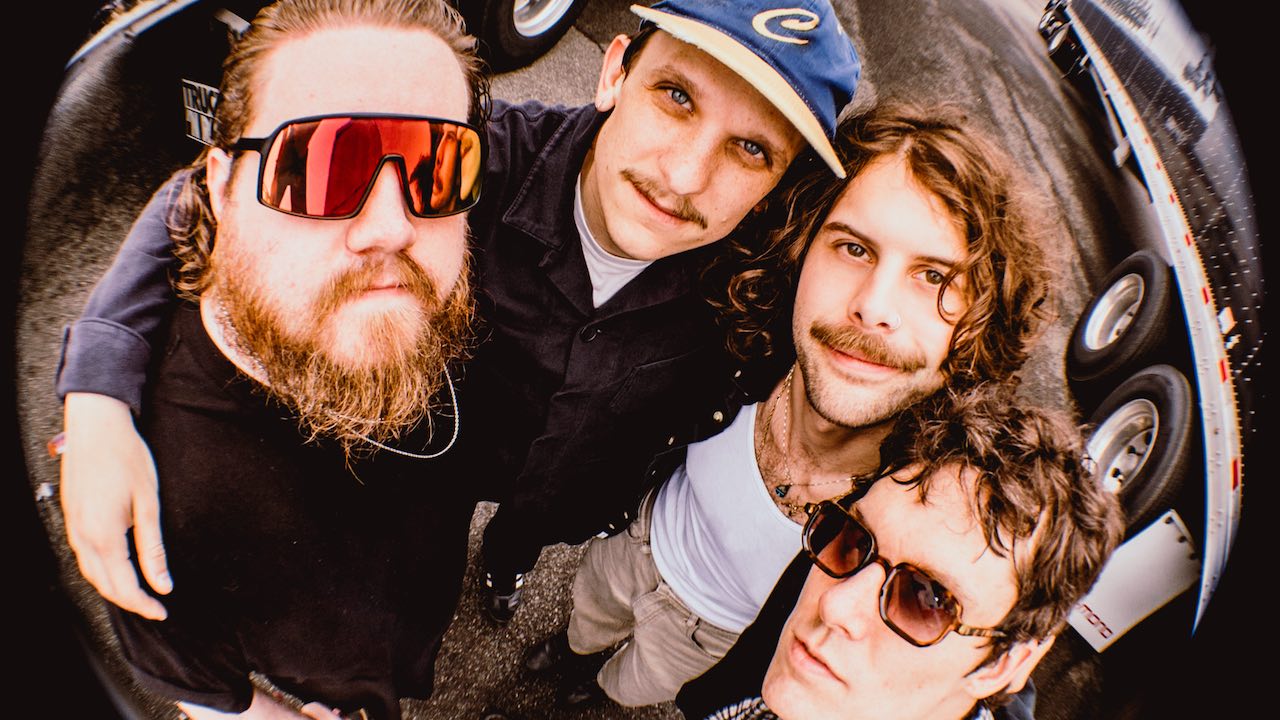
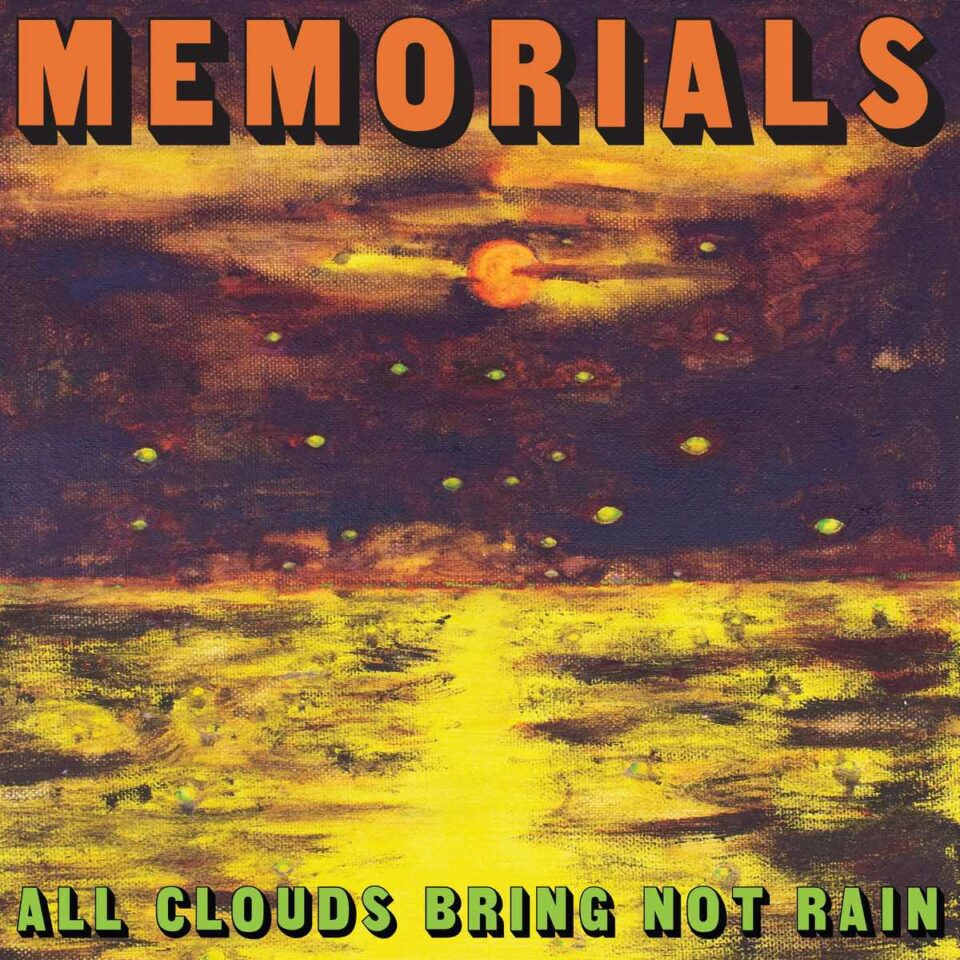
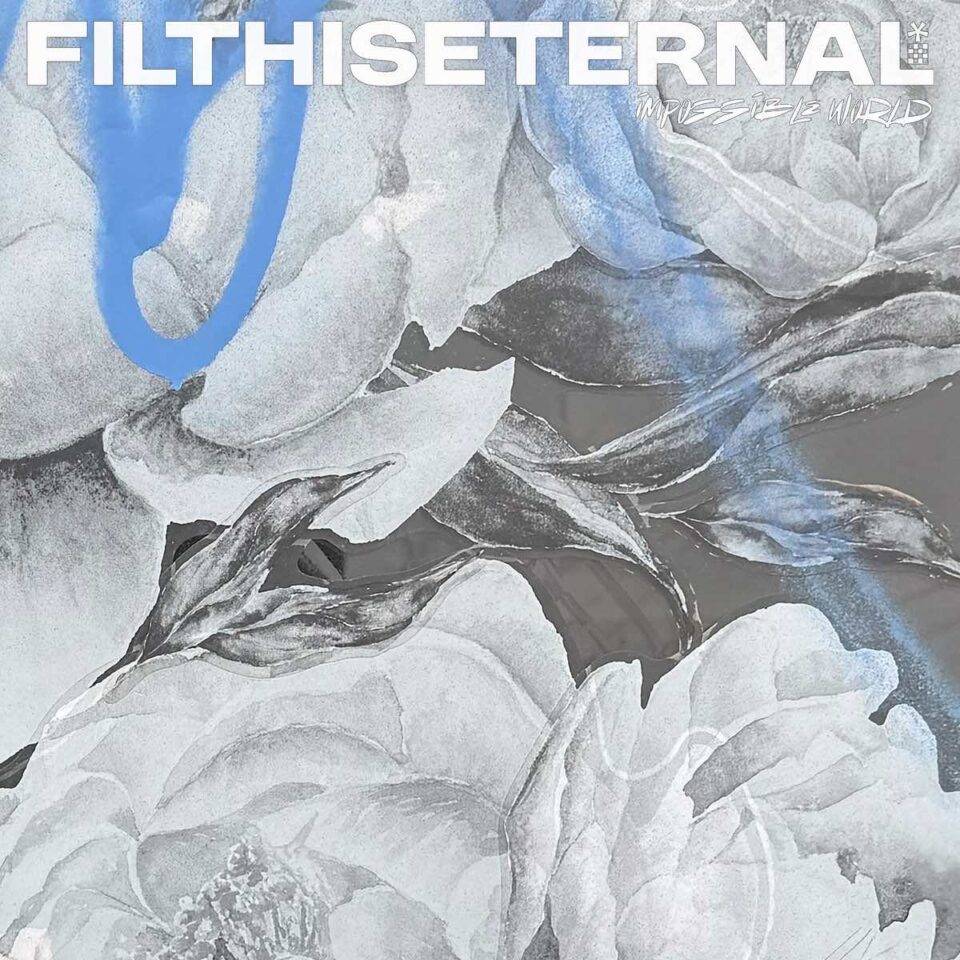
People generally think of bands as distinct entities. Even if members come and go, the band itself somehow remains intact—as Michael Stipe put it when drummer Bill Berry left R.E.M., “a three-legged dog is still a dog. It just has to learn to run differently.” Yet some bands are a little more amorphous, oftentimes even sharing members. Such is the case with SideOneDummy labelmates Carpool and Pretty Rude. The former put out their second full-length, My Life in Subtitles, in 2024, while Pretty Rude—the band James Palko formed after his previous outfit, Perspective, a lovely hand to hold, came to an end—released their debut, Ripe, in 2025. Both are, quite frankly, sensational records that—though they don’t sound that similar—share the same musical DNA. So it made sense that when Carpool’s lineup changed after that debut came out, Palko (a.k.a. Jimmy Montague) joined their ranks on guitar.
Now, the two bands are playing a show together in Carpool’s original hometown of Rochester, New York on January 30 at The Bug Jar, where that crossover will come full-circle. Ahead of the show, Pretty Rude also filmed a live session featuring two songs from Ripe and a new song called “Joy Buzzer,” which is debuting here today. “It’s a song about feeling disconnected or alienated from the things everyone seems to like,” says Palko, who will play his upcoming shows with members of Carpool in his backing band. “People around me seem to love watching me get worked up and agitated about the shit I don’t like, but when I try to articulate to them my criticism, or even criticism of something I do like, it’s frequently written off as me just being an asshole. So either my language doesn’t connect with the people around me, or I am living in a completely different universe.”
Check out the live video for the new song, and read a brief conversation between Palko and Carpool vocalist Chris “Stoph” Colasanto below.
Chris Colasanto: What’s “Polish Deli” about?
James Palko: It’s about the first stark realization that you’re going bald. You come around to it, and it doesn’t end up being quite so much a deal. But the first time you realize that you’re fucking going bald, suddenly you have to reckon with everything. I was doing a lot of pinning it on my family and blaming my genetics for it, because both my brothers are bald—like fucking egghead bald—and my dad’s bald, and my whole mom’s side, the whole Polish side of my family, is bald. At the time I was writing it, I was visiting my friend Paul who lived in the neighborhood that we live in now, which is a very Polish neighborhood, and we went to get breakfast in the morning and I went into a Polish deli and it was just a line of different aged Polish guys all ordering breakfast. And I was like, “Damn I can see my whole life in a straight line!”
Colasanto: If no one had ever listened to your band before and they put the record on from start to finish, what would you want them to get out of it?
Palko: If it was a really nuanced listener, I would want them to realize that you can do more with structure to songs than verse-chorus-verse-chorus-out. I’ve made it a point to explore different structures—starting a song with a chorus, having the solo be the pre-chorus, or doing a blank chorus with a solo. You can do pop in so many different ways that’s not boilerplate. From a lyrics standpoint, I guess it would just be that this one’s for the bands’ bands people stuck in that world. You and I and our friends have all played in bands where the only love we get is from other bands…
Colasanto: It’s the weirdest backhanded compliment.
Palko: Like you’re completely unlistenable for the average person. So it’s a record of frustration for people who’ve been in the grind for 10, 15 years and are feeling that frustration, but you can feel that in anything. You can be stuck at your job. You could be stuck in one place. Lyrically, I think it’s just a record about being frustrated. Not necessarily pissed, not necessarily depressed, but just being frustrated.
FLOOD: But it was a record born out of that frustration with the point of being in a band, right? Because you felt that you put all this time into other projects and they hadn’t really done as well as you wanted.
Palko: Sure. And when you put all your eggs in those baskets and then you finally decide to hang up a band or something changes, you’re left wondering, like, “Man, I just put off other careers, I put off other interests, I put off other things for this?” I can’t go back to school or I can’t be a fucking graphic designer all of a sudden. You really take a leap of faith with a lot of shit, and then you feel like, “What have I done with all my time?” But then you realize that no matter what, at every fork in the road, you’d still make the same decision every time because you’re an insane person. But how many times have we had opportunities to just walk away? And you just don’t take it, because you’re like, “What if this happens next?” So you’re constantly making that decision to continue. So to feel frustrated is valid, but at the same time you’re knowingly choosing this frustration because you love it.
FLOOD: Do you guys feel any less insecure than you did before about what you do?
Colasanto: No. I wake up every day like, “What the fuck am I doing?” I think what’s tough, too, is—and this isn’t throwing shade toward anybody whatsoever—but when you see these younger kids blow the fuck up and they just started their band…more power to you, I’m so happy for you. But then you’ve got us on the other end of the spectrum where we’re 30 years old, we’ve been doing this for 10 years. There have been points in my life where I’m like, “Damn, we’re about to fucking pop, this is it, we’re going to do it,” and then it doesn’t happen, and you kind of have to wrestle with that feeling for a while.
Palko: I definitely am an insecure person in a lot of ways, but I do now feel secure in my…“failure” is not the right word, but I feel secure in my attempts, I guess, where it’s like I know I’m a guy who’s playing in bands and is a lifelong musician. Whether or not that’s good, whether or not that’s bad, whether or not it’s successful, I know that I don’t have any sort of imposter syndrome about it. I know what I’m doing. How good it is is completely arbitrary, but that’s probably the only secure identity that I have.
Colasanto: But what happens when that goes? That’s what I’m afraid of.
Palko: That’s how I felt when the band started ending, before I hopped in with you guys. That’s the end of “No Moment”—I’m yelling “some guy” because sometimes you just end up being some guy. There’s plenty of some-guys in the world. Not everyone gets to be somebody. You stick around long enough that all your friends are musicians and the only people that you know are musicians, and you get close with people on varying steps of the ladder. You check in with these people you think are doing really well from the outside and even they’re struggling for that next rung of the ladder. So it can be humbling, but then also you see someone you know filling out these big rooms and having good tours and they’re still like, “[Onto] the next thing,” and you almost want to shake them and be like, “Man, fucking enjoy it for a second, please! For us, enjoy it!” But I’m sure there’s people below us that are doing the same thing to us.
Colasanto: I literally had that happen. My buddy was like, “Dude, you’ve got to shut the fuck up, bro. I have a hundred monthly listeners. I’ve never even been on tour.” When you’re onstage and it’s clicking and as a band you lock the fuck in and you feel like you’re playing really good after a day of six hours in the van—everything you’re feeling for 25 minutes—it’s very worth it in that moment.
FLOOD: Explain your history together and how this connection came to be.
Colasanto: When we first met, we almost fought. [Both laugh.]
Palko: We played a show together one night before we technically started hanging out. But it was at the end of a tour that, on our end, was falling apart. It was just a mess, and we were running around trying to fix things so we weren’t really talking to the other bands. And then we get down to Fest in Florida, where everyone’s walking around having a good time and seeing shows. And you walked up to me in the parking lot—from what I remember, I was dressed like a fucking idiot, but also you looked very drunk. And you were like, “What’s good?” and in my mind I was like, “Oh man, what’s up?” And then you were like “No! What’s fucking good, bro?” He almost came at me hard. I thought I had to fight him.
