
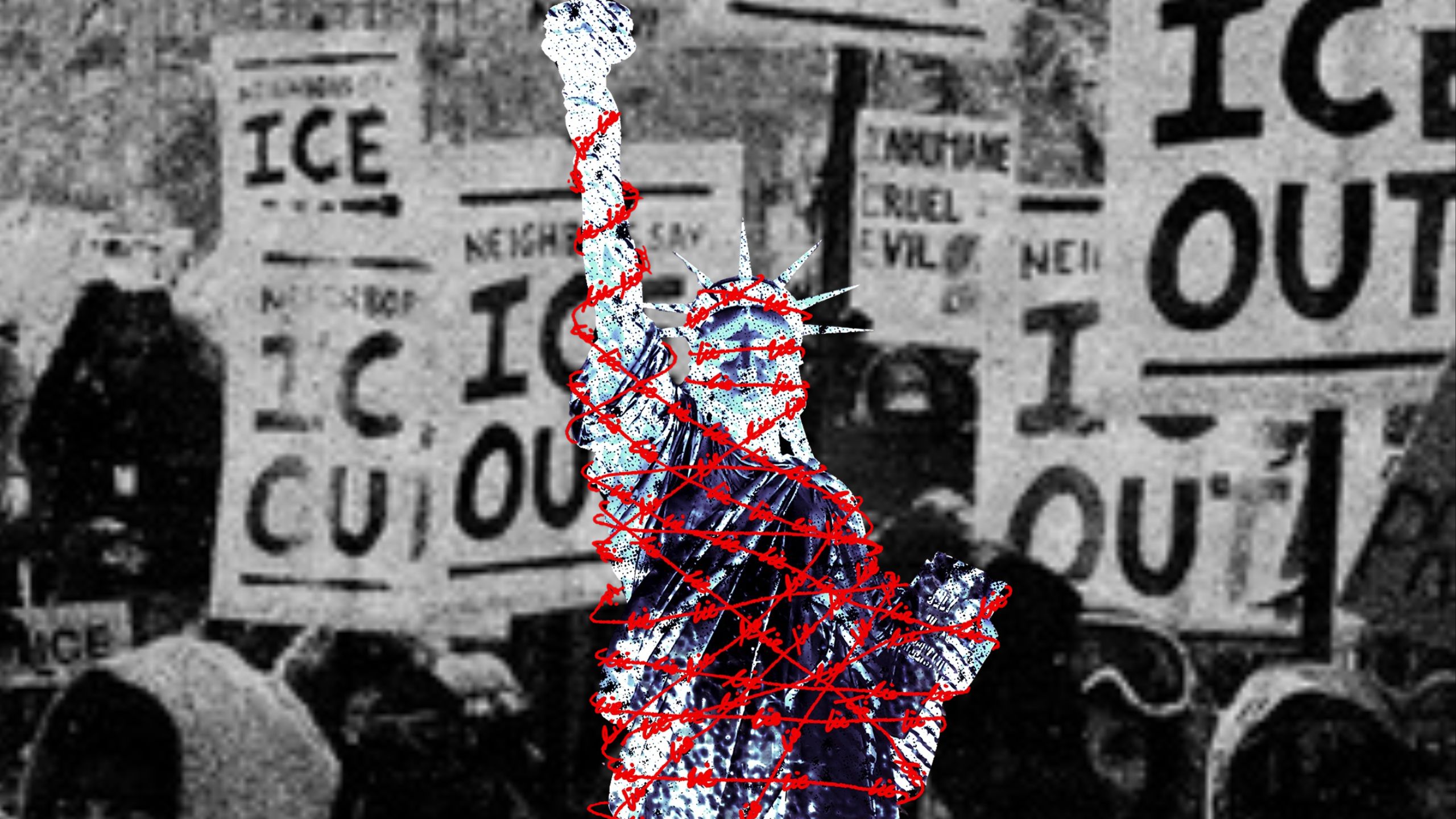

In a week where America mourns its most prominently beloved (by all, including, most surprisingly, Trump) old-school social justice activist, Rev. Jesse Jackson, it’s interesting to note how two of rock’s elder statesmen, Bruce Springsteen and U2 lyricist Bono, have decided to craft protest songs based on the rage and sorrow of a wounded Minnesota. While Springsteen dropped “Streets of Minneapolis” last month to address federal ICE agents following their murders of Alex Pretti and Renée Good, “American Obituary” from U2’s brand new Days of Ash EP focuses on the murder of Good in hushed whispers. On top of his release, Springsteen announced a gathering of his E Street Band for an upcoming tour that promises to highlight the plight that is America’s grief.
My fascination with the 21st century protest songs of Springsteen and U2 isn’t due to surprise. Like actors and influencers whose daily social commentary—whether clued-in or clueless—could fill TikTok and Instagram three times over, I would’ve been shocked if Springsteen and Bono hadn’t said or sung a word as to the current climate presently brought about by our current administration’s policies. What’s most curious is how (with what, age? Wisdom? Practice? Anger?) both Springsteen and Bono have dispensed with poetry’s folderol of metaphor and allegory and gone straight for the jugular. Similarly named to his “Streets of Philadelphia,” his elegantly prosaic anthem in dedication to the victims of HIV-AIDS, Springsteen’s “Streets of Minneapolis” wastes no time toying with signs, symbols, or figures of speech. He starts within the heart of the action:
“Through the winter’s ice and cold
Down Nicollet Avenue
A city aflame fought fire and ice
’Neath an occupier’s boots
King Trump’s private army from the DHS
Guns belted to their coats
Came to Minneapolis to enforce the law
Or so their story goes.”
And by the time of this protest song’s fade, after swearing to “remember the names of those who died,” Springsteen moves harshly and bluntly toward the exit with “ICE out” on repeat until the song’s close. Every poetic impulse Springsteen showed on past protest moments such as “Born in the U.S.A.” (a song so vague that Ronald Reagan used it to campaign with in the ’80s), “American Skin” (dedicated to the horrors of racial profiling and the murder of Amadou Diallo at the hands of the NYPD in 1999), and whole chunks of The Ghost of Tom Joad and Wrecking Ball have since fallen by the wayside in order to go straight for the upper cut.
In the U2 of the past, it’d be difficult to not find poesy in the chapter and verse of Bono’s harshest lyrical protests such as “Bullet the Blue Sky,” “New Year’s Day,” “Sunday Bloody Sunday,” and, most eloquently, “Pride (in the Name of Love).” And yet a more harrowingly heavy-handed Bono looks at the horrors wrought by ICE on “American Obituary,” first by reading us our rights (“You have the right to remain silent / Or not”), then by removing all expressionistic trope for something sternly journalistic:
“Renée Good, born to die free
American mother of three
Seventh day, January
A bullet for each child, you see
The color of her eye
Nine-thirty, Minneapolis
To desecrate domestic bliss
Three bullets blast, three babies kissed
Renée the ‘domestic terrorist’
Well, what you can’t kill can’t die.”
Is it more forceful to write the pain away while in the throes of rage touched by age? Or is there no other choice once things have gotten so bad, so ridiculous, and so awful than to just call it exactly what it is: murder? Sometimes outrage is best served cold.One could argue that wealth and status may have created a remove, a distance, for these two lyricists. Yet “American Obituary” and “Streets of Minneapolis” show otherwise—that one’s lyrical dedication to anger and activism never moves away. With these cuttingly journalistic anthems, the language of protest has been refined to its sharpest-ever point. FL
