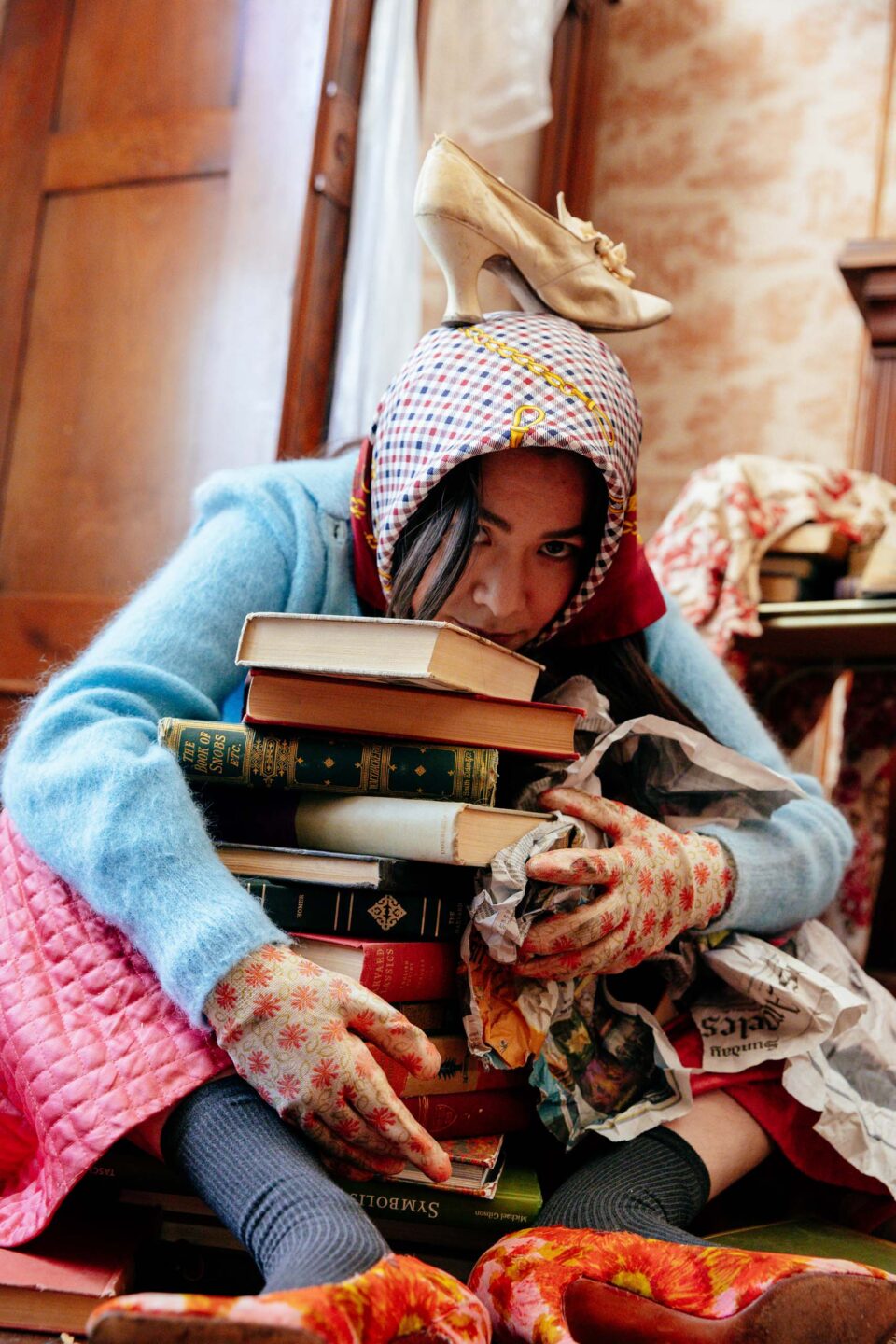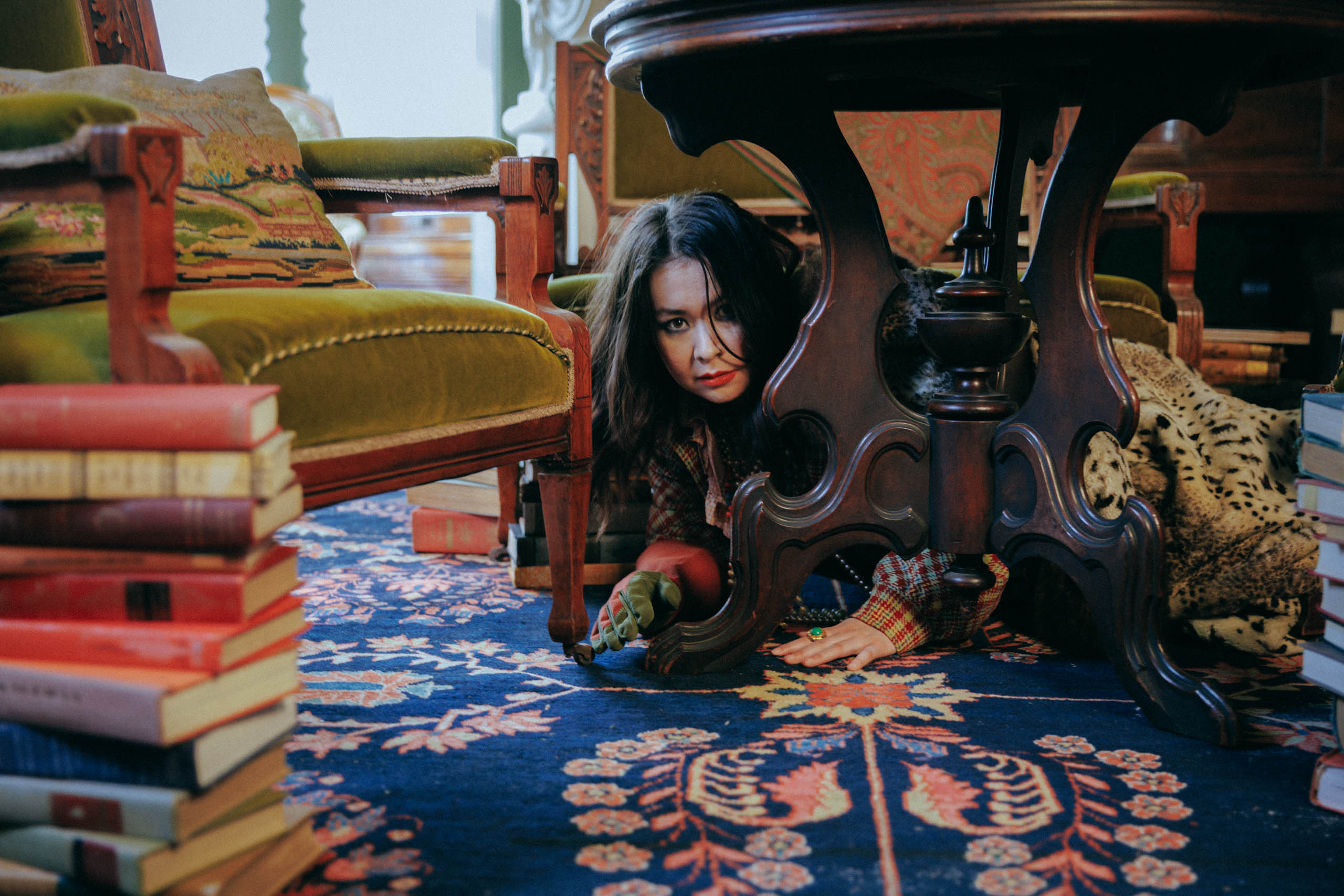

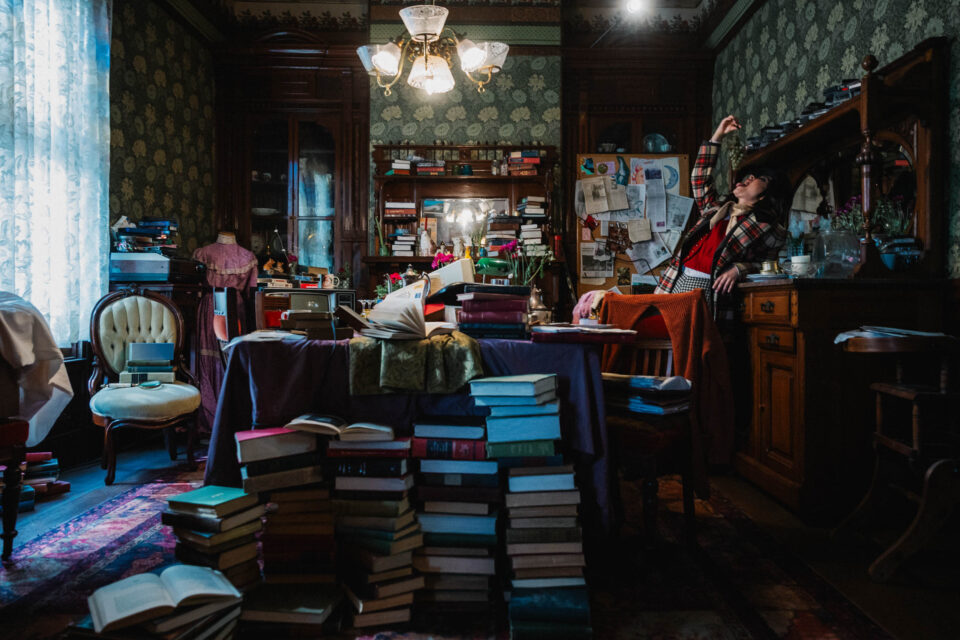
The gothic character in Mitski’s new album Nothing’s About to Happen to Me could easily be a figure ripped out of a Shirley Jackson novel. This is the hostile interior world the songwriter sets to spin out of control on her eighth studio album, which flips between rock, folk, and jazz like a hermit sorting through stacks of dusty books. Her Tansy House is full of cats, various stacks of books and desk stationery, a comically oversized wedding ring, and various bits and bobs to make a nest for a hoarder. The album’s main character has a love-hate relationship with her unraveling environment: “Outside of her home, she is a deviant; inside of her home, she is free,” reads the project’s press materials. Who can blame her when even an escape to a Victorian sanctuary these days can be derailed by the presence of your phone?
It’s no surprise that the album itself reads like a mantra you’d find in a self-help Instagram Reel. The wonderfully consistent songwriter has found a new audience with Gen Z after songs like “My Love Mine All Mine” and “Nobody” went viral. She’s shared in recent interviews that she’s an anxious person, but the music and art associated with this new record tells a more varied and mischievous narrative beyond such recent musical jump scares as The Land Is Inhospitable and So Are We and Laurel Hell. Nothing’s About to Happen to Me instead sounds like a dress rehearsal for her most theatrical impulses (perhaps foreshadowing the music and lyrics she’s currently penning for a stage adaptation of The Queen’s Gambit), and the like-minded art team she’s assembled to play in the Tansy House has certainly abetted her. Returning creative director Mary Banas of Yes Is More and photographer/videographer Lexie Alley both had wide canvases and a short brief from Mitski before they set to work on the project. They also had months to play with the scenery and make their mark on the Mitskiverse.
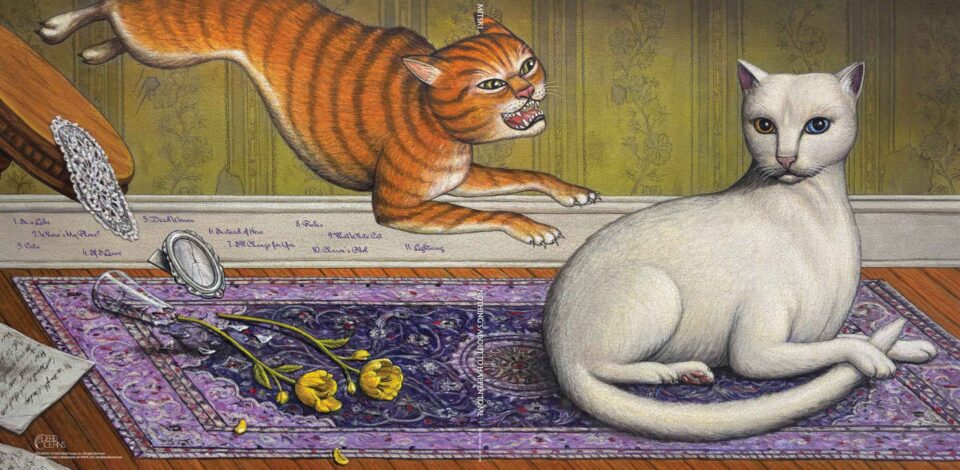
Banas started collaborating with Mitski on creative designs, art guides and templates, color palettes, and font types with Be the Cowboy, and each adventure since has been slightly different. She’s been teaching design since 2009, and currently works at the School of the Museum of Fine Arts at Tufts University in Boston. She felt energized and thoroughly enjoyed this latest challenge. “We didn’t hear [the album] until after, which I think is awesome—I’ve never done [it that way],” she tells me. Banas notes the lovely lilac color that appears all over the new record materials—centrally with the rug on the cover art, a painting by Marc Burckhardt—is a callback to Mitski’s Bury Me at Makeout Creek track “First Love/Late Spring,” which is about how destructive love can make us all feel (bruises also tend to turn purple, for example). “Color is both very specific and very arbitrary at the same time, so when it comes to the colors of the vinyl, the yellow one is for the tansy flower. There’s a blue one because the cat has one blue eye.”
Alley also enjoyed the level of freedom Mitski gave her after the two worked together on her 100-page tour zine and the beautifully shot concert film The Land. Directed by Grant James, the film documented Mitski’s 2024 tour and featured Alley’s photography from performances at Atlanta’s Fox Theatre with a seven-piece band. “Design is like, ‘Let’s do research and plan,’” Alley says, noting how she relies on her educational background in the sciences. “Sometimes that’s something I love about the music world… where people start doing things based on how you feel versus acting out what you’re supposed to do.” Alley deployed a lot of these improvisational techniques with the surreal “I’ll Change for You” video she shot with Andy DeLuca and Rena Johnson. In the clip, Mitski serves up a variety of moods and facial expressions to the camera like a silent film actor, which serves as a visual symbol for a song about molding your personality for a room full of different people.
“There’s a person, and then there’s an artist, and then there’s the personas, and it’s like that Spider-Man meme where everybody’s pointing at each other.” — Mary Banas
Alley started her photography career by shooting portraits and concerts of her friends in bands. Since then, she’s photographed musicians ranging from Father John Misty to AFI, and worked with major labels like Universal and Warner. As she shot more musicians, she started to connect with what she describes as “art therapy.” She has a positive personality and loves to get people humming in a room at the same frequency, placing them in the moment with their senses unshackled from any sort of external influence. “It’s kind of this whole ‘centering’ thing for me with whoever I’m working with and myself,” says Alley. “There’s constantly this getting-in-touch-with-yourself, intuitive process of everything I’m doing. And that definitely carried through my psychology background in school. That’s all been happening in the background of my mind. I just didn’t quite realize it.”
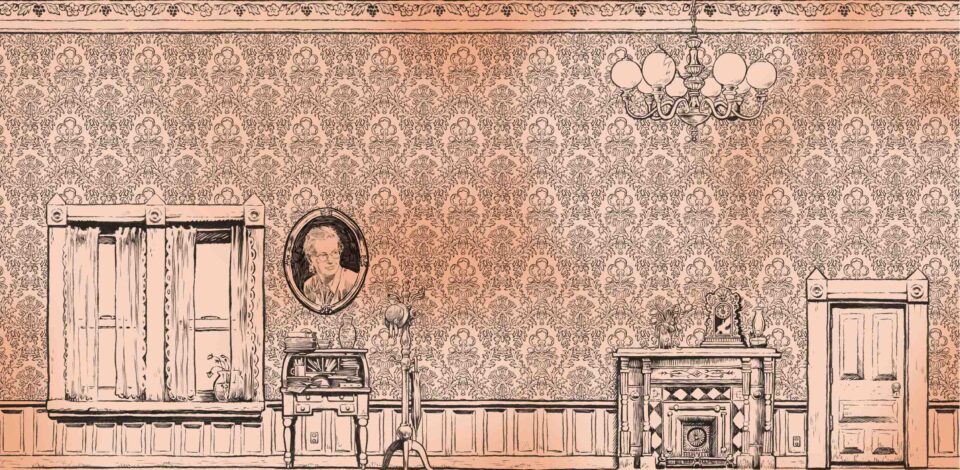
For the photos she shot for Nothing’s About to Happen to Me, Alley populated the Tansy House with items from her own family life. “My mom has acquired some fun items through the years that are really special: this leather jacket that she’s had since the ’80s, this one fur coat that she got from a vintage store in the ’90s, stuff like that,” Alley shares. “I brought a bunch of leashes and dog collars. We’ve always had a lot of rescue dogs; we probably have 20 fricking collars—some have gems on ’em, there’s one that’s plaid, there’s a pink one. So there’s a scene where they’re all hanging on a coat rack.” Alley filled the photos with big mirrors, cracked geodes, crystal glass, and other ephemera to give the house a lived-in, insular quality. Banas and Alley both wanted humanity to come through, but also mention that a keyword for the project was “playful.” The actual vinyl album can be opened up so listeners can make their own version of the Tansy House while listening to the record (look closely for the Shirley Jackson portrait on the wall).
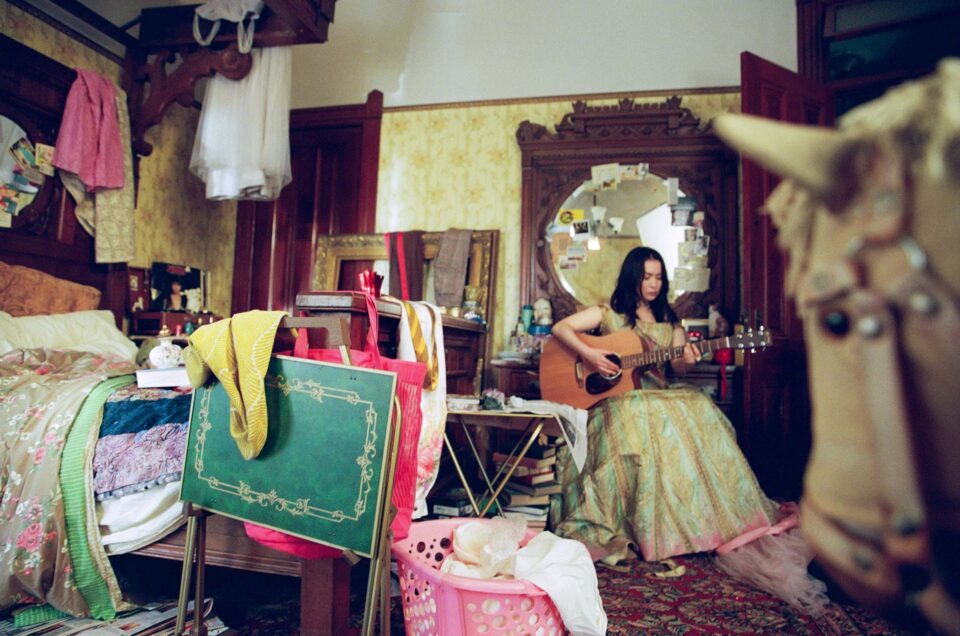
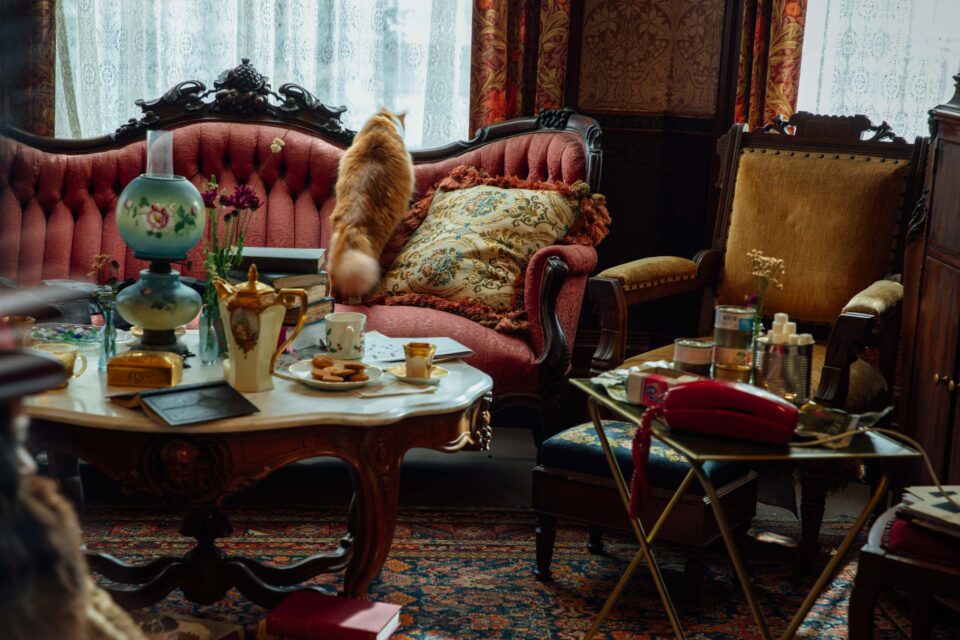
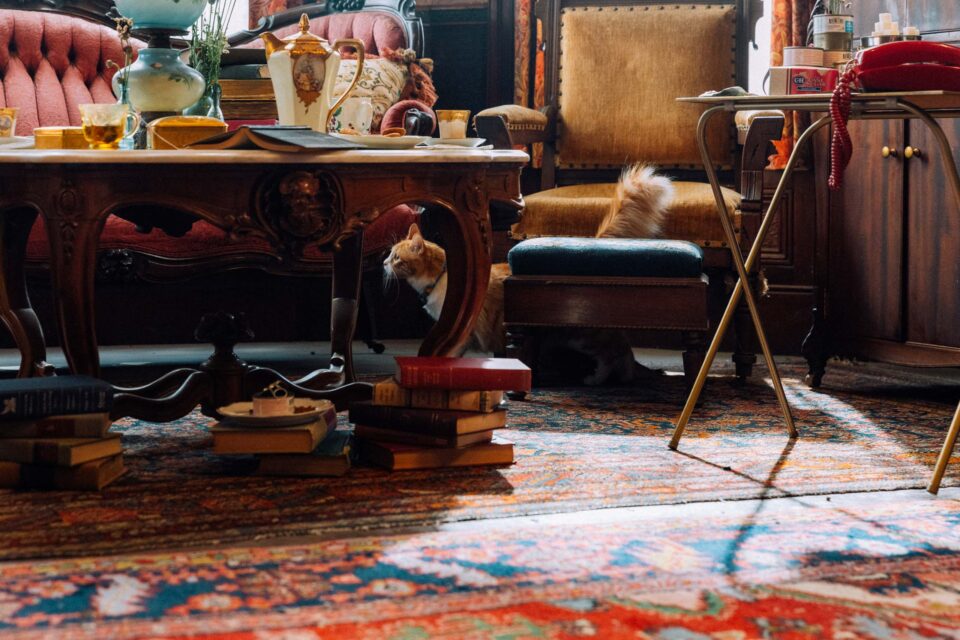
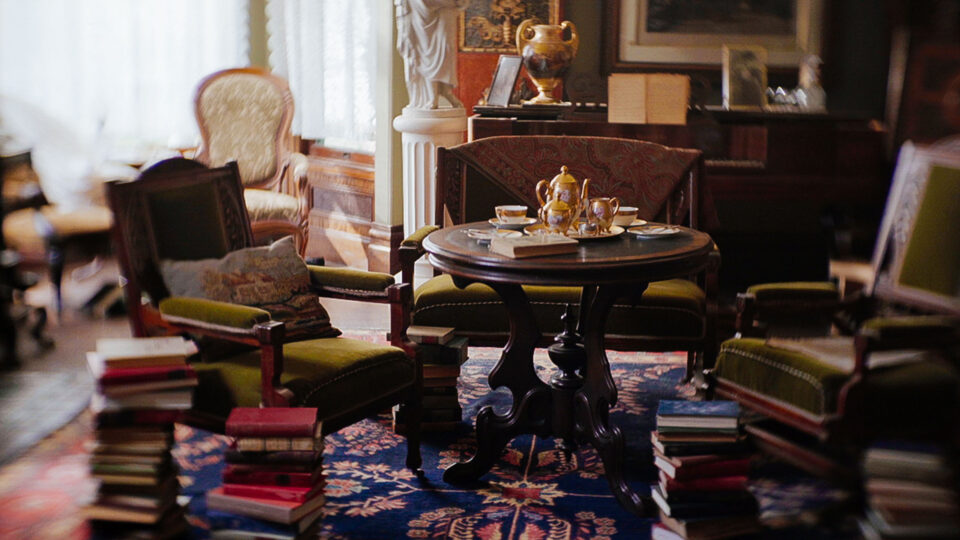
Banas agrees about the humanity angle as we all flip through Alley’s photos in a gallery from the shoot, with Banas noting the influence of photographer Larry Sultan’s domestic portraits. “It’s like his parents aging over time in their Florida home, just doing ordinary things like vacuuming in their Velour track suits or whatever Floridians wear. There’s something weird and sad but very intimate and honest about it.” Banas loved establishing the design guidance for this project because, since Be the Cowboy, she’s felt like Mitski has set up a prism of relationships around herself. “There’s a person, and then there’s an artist, and then there’s the personas, and it’s like that Spider-Man meme where everybody’s pointing at each other.”
It’s most likely why Mitski gravitated toward Shirley Jackson’s work, since there’s a similar layering of artists' personas across her novels and short stories. The vast majority of Jackson’s work is grounded in everyday characters and banal situations ripped from suburbia: the isolated woman in a community where marriage is the source of self-worth; the town snoop who meddles with others’ lives; the microaggressions between husbands and wives. Sometimes in Jackson’s world, insanity in your own home is an escape hatch from the dark reality skittering outside your window. This is the dark and playful world of Mitski’s new era, as well (she eats cat food in one music video). Banas mentions there are direct references to Jackson’s 1962 gothic novel We Have Always Lived in the Castle, including the poisoning of the Blackwood family.
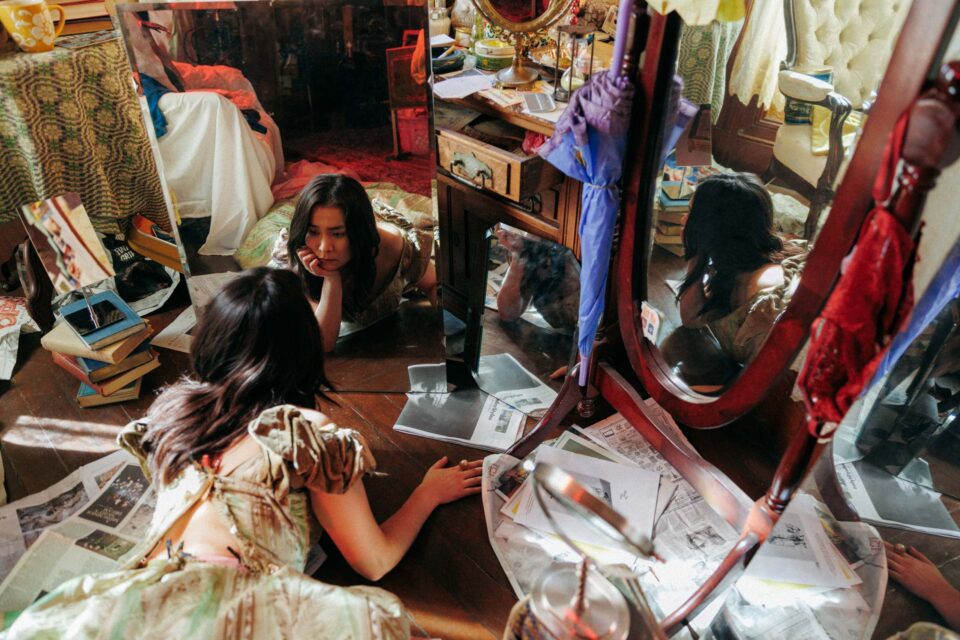
“It’s not all serious. And psychologically, that just changes everything about it, which in a very cool way is inspiring a kind of campiness throughout the whole thing, a theatric element.” — Lexie Alley
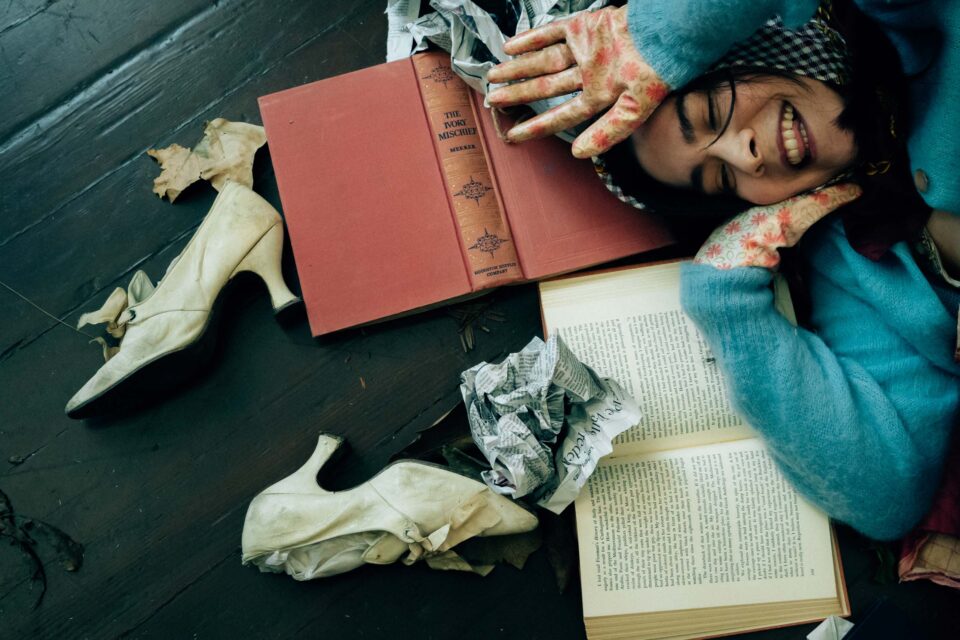
For Alley and Banas, other huge visual touchstones for what Mitski is wearing in the photographs and music videos included Shirley Kurata’s colorfully bold costume work and clothing catalogs from the 1940s, defined by “weird, stiff-looking” styles, as well as Vivienne Westwood’s runway shows. The aesthetic had to feel worn and shaped by years of emotional wear. “I think the idea was that this person who we had invented used to be wealthy and now is living alone,” notes Banas. “They’re in this grand house and they have grand things, but they’re not grand in their lifestyle anymore. So even the stationery in the deluxe album—where all the lyrics are written—is scrawled in a Sylvia Plath kind of vibe.” The pair imagined that this persona had boxes upon boxes of social stationery that they don’t use anymore for writing letters, so they use it for grocery lists and other random things. Both artists agree that the album keeps a raw tether to physical totems, whether it be cats, cartoons, someone’s phone, or the mythic Charon’s obol.
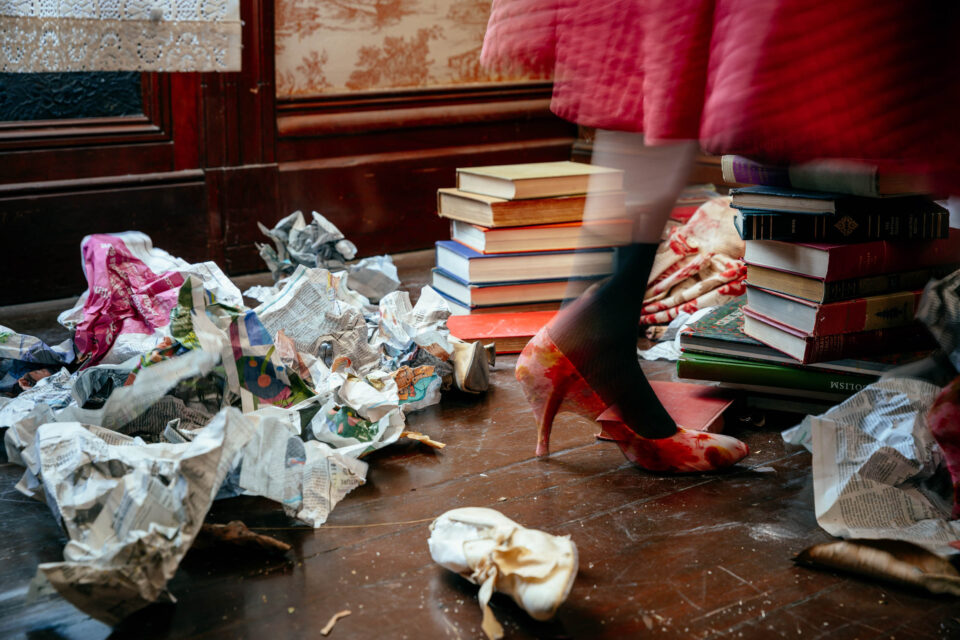
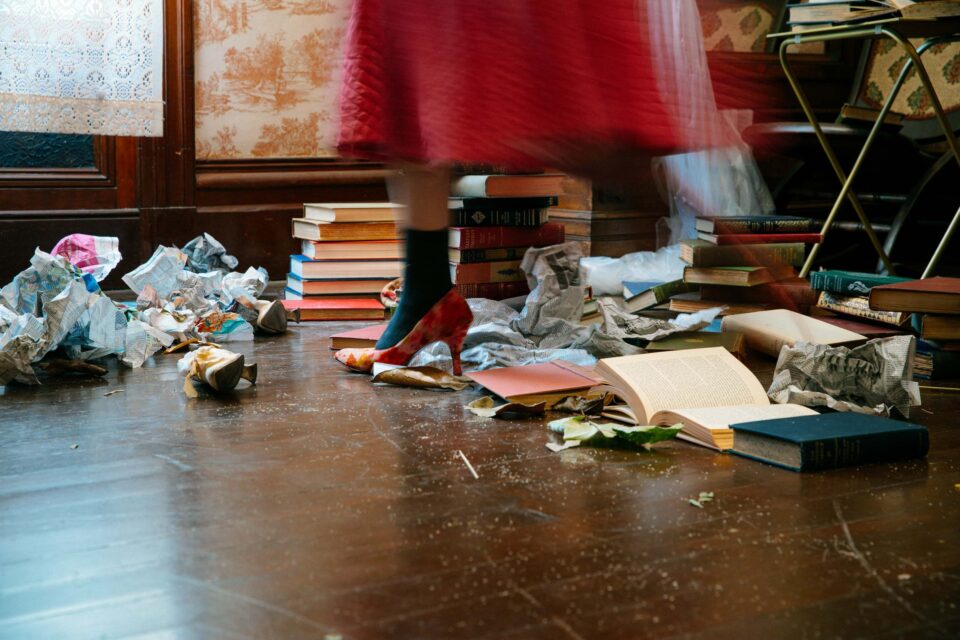
Mitski’s album is another musical totem of sorts in the sense that it inspires other art, something artists can take with them when the push notifications start up again, or the neighborhood cat signals a bad omen slinking through your front door. At the end of the day, she wanted all the artists associated with the project to just have fun in the Tansy House they all built together. “It’s not all serious,” says Alley. “And psychologically, that just changes everything about it, which in a very cool way is inspiring a kind of campiness throughout the whole thing, a theatric element.” Mitski plans on taking the Tansy House art show on the road soon for a series of residency-style tour dates, while the record was first introduced via listening events that took place at record shops last month where fans listened to the album early and doodled their own visions on lavender stationery. There’s even an art exhibit planned at The Shed in New York City.
Alley concludes by sharing how cathartic the project was on a personal level, as Banas nods in agreement. “The whole thing was a happy memory, really. I think it was just such a great example of artistic integrity and such a pure joy to be a part of. In that way, it was 100 percent about the art and every aspect and every choice made by everyone.” FL