
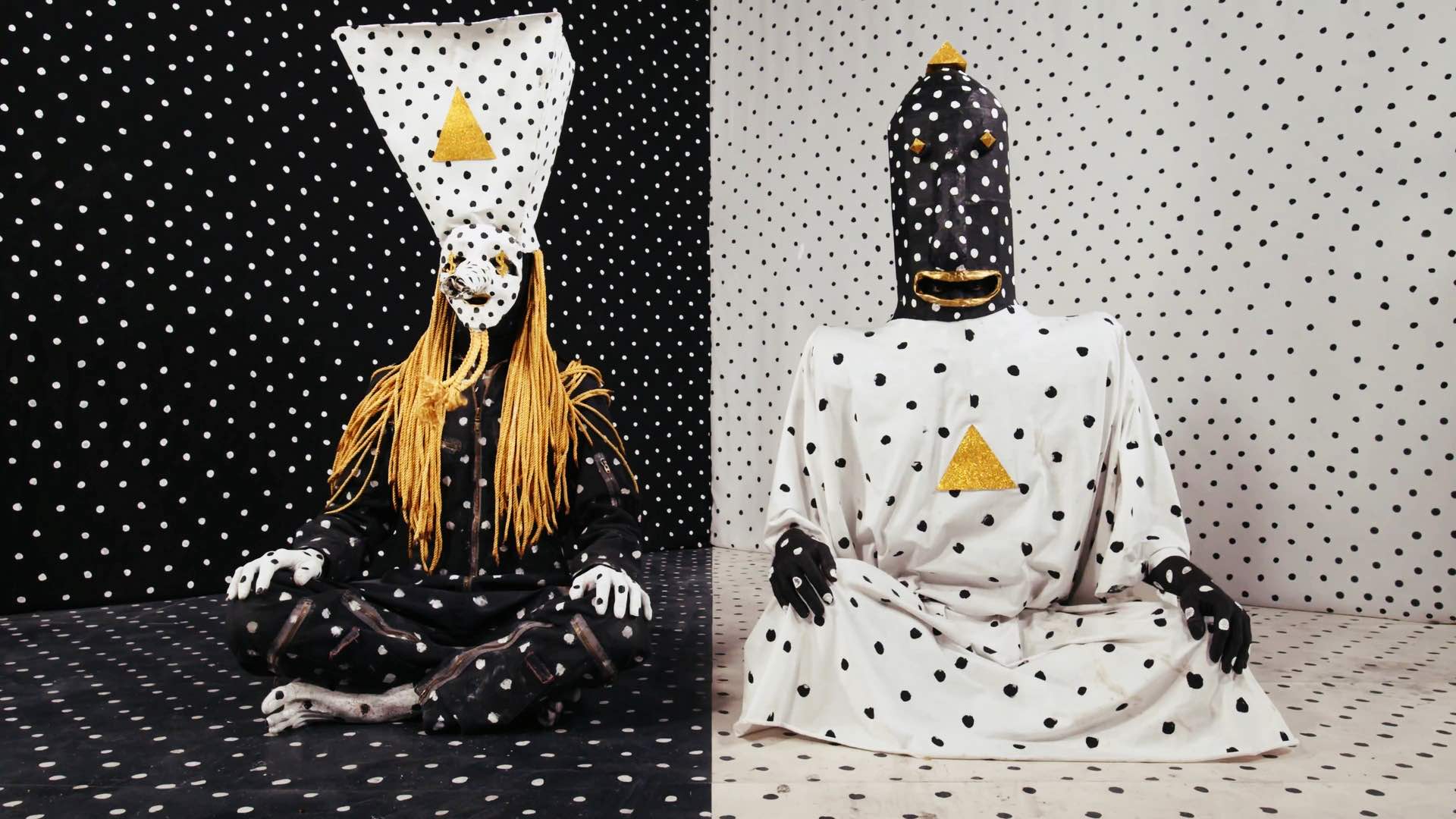


BACKSTORY: After their initial jam session “some 20 years ago,” improvisationalists Klek (drums) and Khn (microtonal double-guitar bass) de Poitrine became the anonymously costumed, experimentally rocking Angine de Poitrine (“angina pectoris,” as translated from French) and never looked back
FROM: Saguenay, Quebec
YOU MIGHT KNOW THEM FROM: Your wildest, noisiest nightmares—or their recent mind-blowing KEXP session filmed in Rennes, France
NOW: After a February tour of France and the duo’s recently released single “Fabienk,” Khn and Klek will drop their math-rocky full-length Vol. II next month in preparation of their first US dates this autumn
At once enigmatic and obvious, atonal yet hauntingly harmonious, Angine de Poitrine make an epic brand of primal microtone-driven math rock that’s so accessible that you may find yourself swaying to their rhythms. Sure, they borrow from Greek philosophy and Marcel Duchamp with their self-described “mantra-rock Dada Pythago-Cubiste” sound, but perhaps it’s another unknown genius who best describes what it is Angine de Poitrine do: “Dancing about architecture.”
That this duo makes all of its crushing, crashing sounds anonymously themselves—that is, beneath oversized, fully masking head gear and floppy, polka-dotted uniforms—may make them famous now. But face it: The Residents (with whom Angine de Poitrine share elements of distortion, fuzztone, and memorable melodies), Sleep Token, and Klaatu have forever played the game of namelessness and facelessness. You know Daft Punk and Ghost’s Christian names, but how often did you see them unmasked in their respective heydays? Such willing obscurity is actually the least interesting thing about this dynamics-rich, multi-layered duo. Besides, Angine de Poitrine won’t tell me anything about why it is that they choose anonymity, anyway, and state as much before our interview.
Even their formation beyond the usuals of new-band-making—the ritual of playing other artists’ music—is curious. “The first time we heard each other musically, it was our first jam together,” says Khn (or is it Klek?) of linking up in northern Quebec where both figures were raised. “Through those childhood years, we approached music like a playground rather than a workspace. We spent afternoons in the basement, or sometimes brought the drums and amps out to a field, improvising freely. I think what made us stick together and develop a tight-knit common artistic vision is the fact we’ve always shared a complete lack of interest toward playing covers, and have learned to play together through free improv rather than expressing verbally any stylistic intention whatsoever.”
“It was always about getting laughs out of grotesque improvisations or developing a repertoire of our own creations. That, or challenging each other through play.” — Klek
Klek (or Khn) concurs. “It was always about getting laughs out of grotesque improvisations or developing a repertoire of our own creations. That, or challenging each other through play, with games such as, ‘Hey, we’ll have our buddy here play an atonal walking bass line in triplets while the guitar cuts through with quirky sixteenth note lines, and the drum will alternate between swing and even rhythm—like the beats of playing video games.”
Then and now, the twosome utilize Khn’s house as a rehearsal space, a spot they say is “chaotic and kind of falling apart,” with ants, mice, mold on the walls, and water leaking from the roof. There’s also a serenity to their environs that makes the weirdness that they do possible. “It’s in a calm area out in the woods where one can make a lot of noise at any given time,” notes Klek.
No matter how anonymous one chooses to make themselves, few artists live covertly and sealed off from society. To that end, when the duo moved beyond their home studio, their spontaneous, planned, accidental sound was well-received. “The artistic and musical scene in Saguenay is small, but filled with inspiring artists and useful resources,” says Khn. “After years evolving as a band, at some point you feel surrounded by lots of good allies to put self-produced records out or to make your way in the live music market. And there are many venues and festivals that make space for up-and-coming bands and ‘artistically risky’ concepts.”
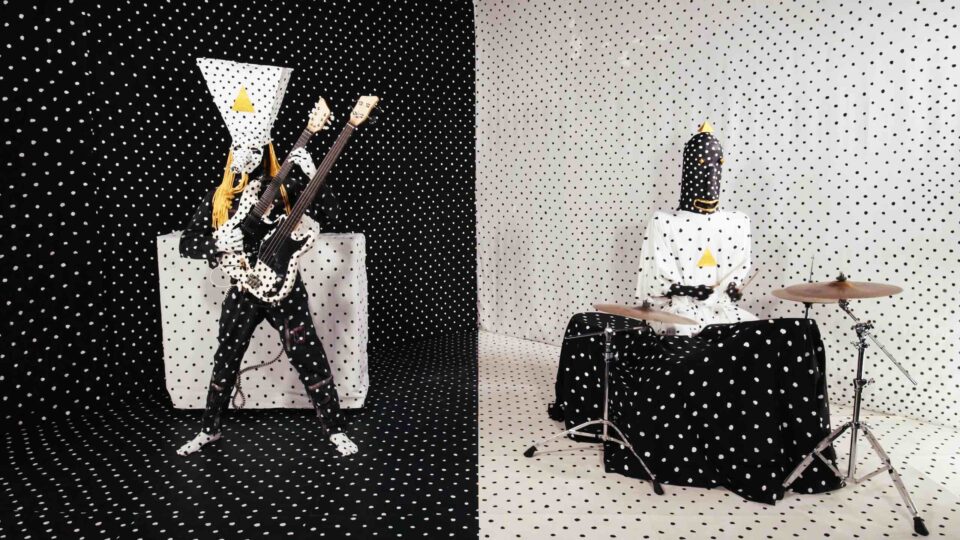
The first official Angine de Poitrine concert was in a performance art event in Chicoutimi, a space where the duo instantly felt support from “curious and open-minded” locals. “That initial show was a draft of what things might be if we kept going,” says Khn. Adds Klek: “The idea of the band really was oriented toward live performance and was a bit of a joke at first—but then again, so is a lot of the stuff we’ve always been doing.”
Though Klek and Khn de Poitrine won’t discuss their anonymity, they do cop (albeit humorously) to their name and inspiration. “Both visually and sonically, our main influence is the proboscis monkey,” says Khn. “The name was thrown out there as a joke at first, but we found it coherent with the idea of dissonance-induced cardiac malfunction,” adds Klek. “That, and the sense of urgency that can be felt in some of the songs,” Khn continues.
“Urgent” aptly describes the driving, microtonal, loop-heavy sound of Angine de Poitrine’s signatures and their evolution. From the insistently ringing “Sherpa” to the fractal-funk of recent single “Fabienk” and their upcoming album, what the duo do is acute, intense, and compelling, yet organic in its execution. “We let things evolve naturally—we don’t set strict stylistic boundaries for our musical direction,” states Klek. “Our musical taste is deeply rooted in rock music, so there might always be a bit of a ‘heavy’ feel in our stuff. But you might perceive a lot of different influences through the songs. I guess we took the liberty of going in different places for Vol. II without giving it much thought. Stuff happens.”
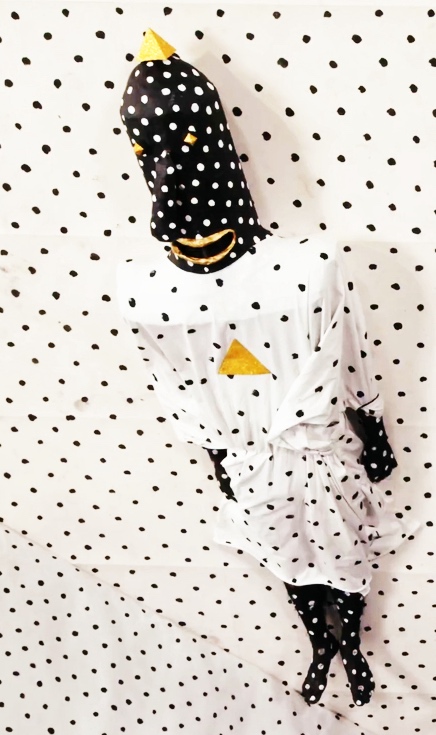
“I like to navigate between tight, ‘complicated’ beats and super danceable ones. Like the guitar, I try to create those tensions and release patterns.” — Klek
Suddenly, the twosome refers to each other as if brothers finishing each other’s thoughts on spontaneous creation and song development. “My mission statement has always been to try and bring fresh musical ideas out there, to stimulate the brain with elements of surprise while keeping things somewhat simple. And I’m willing to bet my right hand that Klek’s mission statement will be about making those ideas danceable,” Khn says with a laugh.
“I always try to make those odd time signatures somewhat digestible,” Klek says in agreement. “I like to navigate between tight, ‘complicated’ beats and super danceable ones. Like the guitar, I try to create those tensions and release patterns.”
While I know and respect that Angine de Poitrine won’t discuss issues of anonymity, I was curious to know how such oblique costuming relates to the music they make, and how it specifically illuminates that which they do on stage and in the studio. “We’re not heavy into any kind of symbolism,” Khn starts. “There is no deep and conceptual thought process behind the band as a whole. Everything you hear and see is always the product of our quirky sense of humor, and that’s what our common creative space has always been about: trying to reach a state of joy through grooving with the music, through laughter, through bizarre, absurd, or surprising esthetic statements, be it visually or musically.”
“That’s what our common creative space has always been about: trying to reach a state of joy through grooving with the music, through laughter, through bizarre, absurd, or surprising esthetic statements.” — Khn
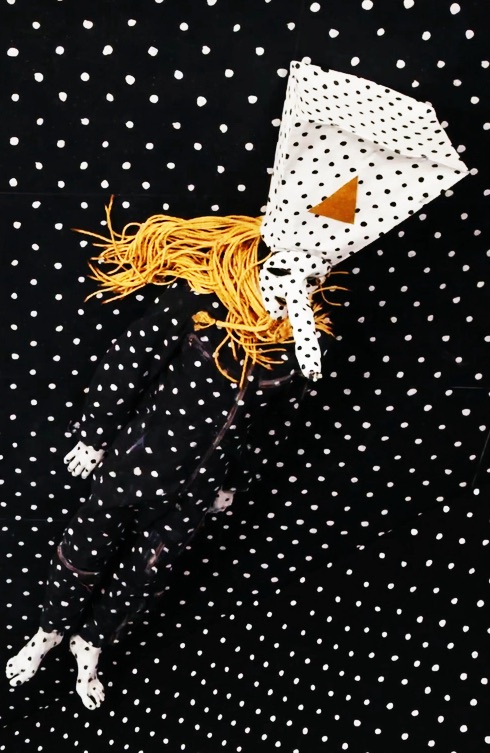
Klek moves the conversation forward: “The costumes were made spontaneously to serve the purpose of the first ever show, which was a bit of an Andy Kauffman–esque trick we were playing on our local crowd without knowing if we’d play the show once, twice, or 3,000 times.”
And whether they’re talking about their upcoming new album or live performances, the clues that Angine de Poitrine give to their future are as simple as they are complex. “We hope it brings pleasure and joy to people,” Khn says.
“We hope it puts them in a mood to act kindly,” Klek states. “And dance.” FL
