

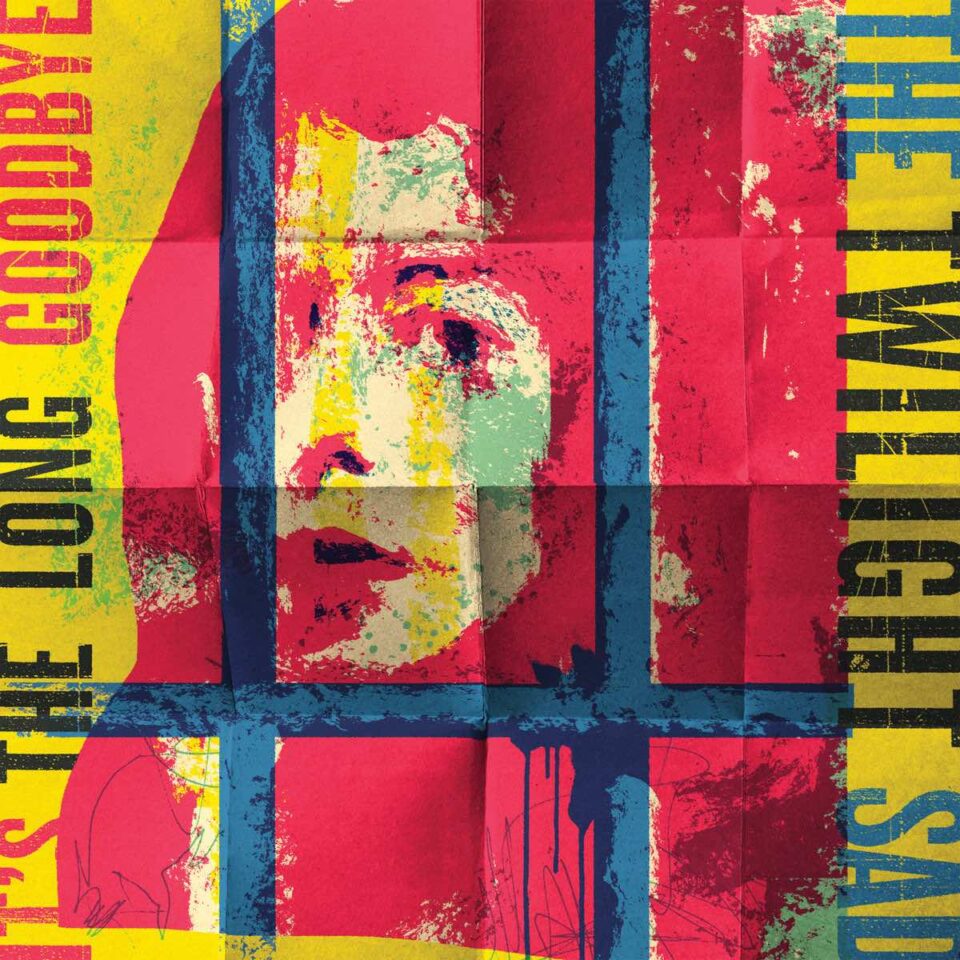
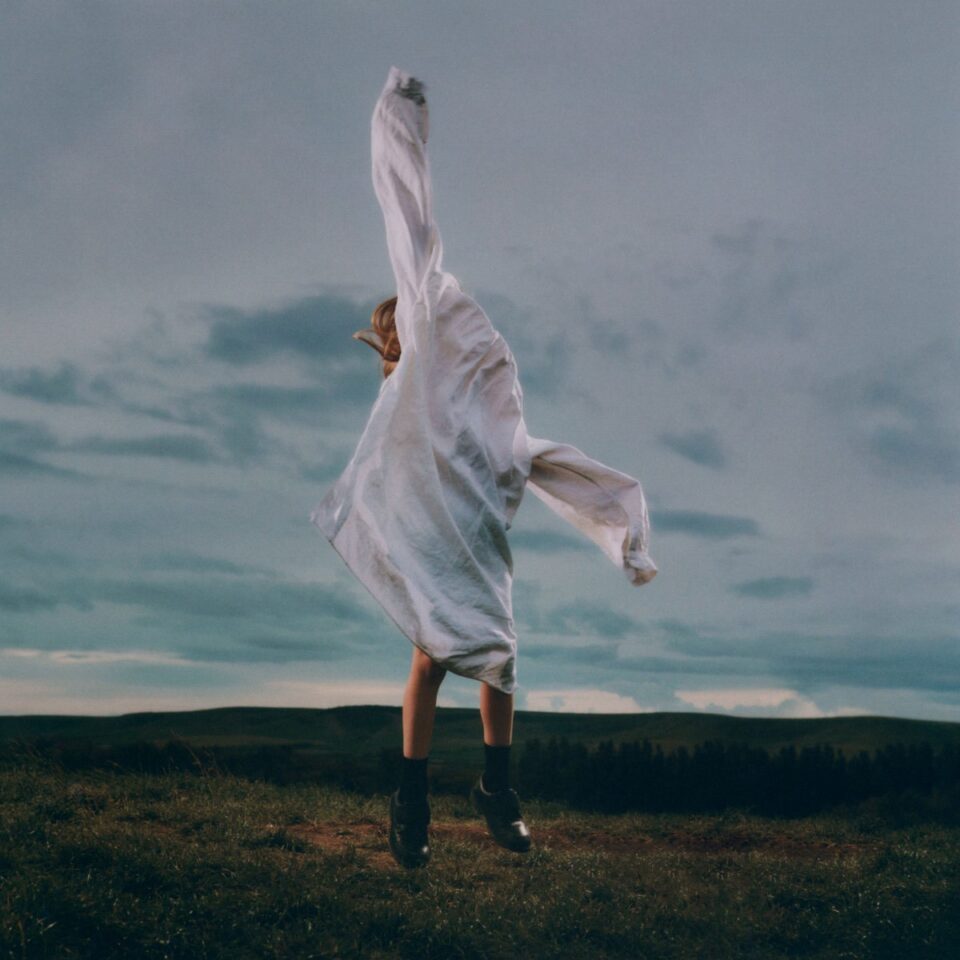
Back in the late ’70s and early ’80s, when Squeeze’s Chris Difford and Glenn Tilbrook were establishing themselves as one of the great songwriting duos of their time, they often spoke in interviews about how they’d already written hundreds of songs together. While the intensity of their work ethic has always been impressive, Trixies—the band’s first new studio album since 2017’s The Knowledge—makes it clear that Difford and Tilbrook were cranking out stunning material years before they ever signed a record deal.
A concept album revolving around the habitués of a fictional seedy nightclub, Trixies contains 13 songs (11 penned by the duo, and a pair written by Difford alone) that were originally recorded as demos back in 1974, when Difford was 19 years old and Tilbrook just 16. Newly re-recorded by the current Squeeze lineup, and produced by Squeeze bassist Owen Biddle (formerly of The Roots), these darkly endearing songs reveal that Difford and Tilbrook’s highly melodic and uniquely character-driven songwriting style was already fully formed by this early point in their partnership.
“We’d always thought about doing Trixies,” says Tilbrook, “but it was really hard to find a reason why we would do it. It felt like doing it would be a sign of a defeat—until we got older, and it was like, ‘Fifty years ago we wrote this thing, what a great story!’ It’s about the hope and dreams we had before we had anything, and they’re made real in those songs. And now I’m not embarrassed to say I’m really proud of what we did then.”
Tilbrook and Difford spoke with FLOOD about their songwriting partnership, the inspirations and influences behind Trixies, and how Biddle helped them finally bring the album to life over 50 years since its inception.
How long into your songwriting partnership did the Trixies project originally take shape?
Glenn Tilbrook: We met in about summer ’73 and started writing almost immediately. Chris wrote the lyrics, and I could put tunes to ’em all day long. We were very, very prolific, and it was like magic when we got together.
Chris Difford: I’d written a kind of science fiction thing, which was ridiculous, and it didn’t really make any sense at all [laughs]. But a friend of mine who lived on the estate where I lived was very much into science fiction, so I started writing about that, and “A Place We Call Mars” really came from that experience. And then we managed to slot it into the Trixies story.
At what point did you think, “OK, what we really need to do is write a concept album”?
Tilbrook: Well, that was Chris’ idea. He started writing Trixies, I think, before we met. In fact, the two songs that he wrote by himself for the album were written before I met Chris. Every now and then, I’d get a lyric from him that had “Trixies” marked in the top left-hand corner, and that’s how he talked to me about the concept of it.
Difford: In those days, there was never any real conversation about what we did. We just were very satisfied with each other’s roles that we played. And I think there was a lot of trust in what we did, and respect, and I think that’s really important in a songwriting partnership.

The Band Squeeze in 2025 photographed by Dean Chalkley
Tilbrook: I was in awe of Chris. He had such a fertile imagination, and to have all these lyrics plonked in front of me was just a joy. I didn’t have any sort of musical education, but his imagination was matched by mine, musically. And I just can’t get over how lucky it is that we met and we clicked, and we were on fire. It took a while for us to break through, but we were writing all that time, and we wrote some great stuff.
Difford: I’d been dabbling in musical theater and musical soundtracks, and it was quite prevalent at that point that people were doing rock operas like Tommy and Quadrophenia. It seemed like a good idea to have a kind of concept record, because you could keep the focus and the ambition tightly locked within one storyline, and I wanted to dabble in that and see how it would work. I had no idea what I was doing; I just wrote a lot of lyrics, and they all seemed to fit together, really. I’d been influenced by Raymond Chandler and Damon Runyon’s storytelling, and it just seemed like a great idea to write about a particular nightclub that would be a very dangerous place to go, but also quite a sexy place. And I’d never been to a nightclub, so I just imagined what it would be like—and it ended up being Trixies.
“In those days, there was never any real conversation about what we did. We just were very satisfied with each other’s roles that we played.” — Chris Difford
Tilbrook: We didn’t write it all at once; we wrote it among writing other songs. But over the period of six months or a year, we had all the songs for Trixies. We rehearsed a few of the songs with the band, but we had no idea about arrangements; plus, there were a lot of chords. We did our best, but it didn’t sound particularly great. We’ve got demos of it, and they’re definitely the same songs, just played by a bunch of kids.
Difford: You can tell [from the demos] that it’s far too ambitious for us. And we were just playing in local pubs in those days; the audiences wanted “Johnny B. Goode,” they didn’t want “Trixies, Pt. 1” and “Pt. 2.”
Tilbrook: We played it to our friends, and we tried to get a record deal with Polydor, Island, and RCA—in that order—and none of them really wanted us. So we didn’t get to make a record until three years after we wrote Trixies, by which time things had changed really a lot. A concept album in 1977? Good luck with that! [Laughs.]

The Band Squeeze in 2025 photographed by Dean Chalkley
Yeah, that’s the last thing you would have wanted to lead with at the height of the UK punk movement.
Tilbrook: I mean, we moved on, to be fair; by the time we did make a record, the songs from Trixies all sounded like they came from 1974. I can still really pinpoint all my influences in those songs, and they’re all within a three-year period of mostly rock music. Stevie Wonder is very much in there, too.
Difford: We shared a record collection that was very similar. In those days, you’d have nothing else to do but play each other records and to write songs. So it was a very passionate time.
Maybe I’m just keying in on the mention of Mars in “A Place We Call Mars,” but I’m assuming that David Bowie was a big influence for you at this point.
Tilbrook: Yeah, totally. And you’re right, “A Place We Call Mars” is very influenced [by Bowie]. But you know what? A couple of days ago I played Hunky Dory in its entirety, and “Life on Mars”—which is a masterpiece—is actually not like “A Place We Call Mars” at all. [The name] just sort of sounds like it [laughs]. And you know, I’ll have that; I wouldn’t want it to be a pastiche.
“I was in awe of Chris. He had such a fertile imagination, and to have all these lyrics plonked in front of me was just a joy... I just can’t get over how lucky it is that we met and we clicked.” — Glenn Tillbrook
Difford: I’d seen Bowie before I met Glenn in ’72. He came out on stage with his blue 12-string guitar and he played a bunch of songs and I sat on the floor like everybody else with my mouth open. I couldn’t believe how brilliant it was. I remember walking home from that to my house thinking, “That’s the job for me, I want to write songs, I want to do that.” And I knew I’d never be David Bowie, but I could be me, eventually; and thankfully, that’s what happened.
Who were some of the other artists that were inspiring you at this point?
Tilbrook: “What More Can I Say” is Stevie Wonder, musically. “Hell on Earth” is like Sparks; “The Dancer” is Velvet Underground; “Good Riddance” is sort of like Elton John and a bit of The Beach Boys. “Don’t Go Out in the Dark” is Paul McCartney; “Why Don’t You,” again, is Sparks; “Anything but Me” is Roxy Music; “The Jaguars” is T. Rex. “Trixies, Pt. 1”...I don’t know, I don’t think there is any influence to that. But “Trixies, Pt. 2” is [John Lennon’s] “Woman Is the N— of the World.”
What made you decide to re-record the Trixies songs?
Difford: I was on a tour bus with our bass player, Owen, and I was playing him songs that we’d written before Squeeze got off the ground. One of them was from Trixies, and he asked me about it. When we got in the studio last year, Owen brought the subject up; Glenn played the songs on the piano, and we started to record them. Owen looks after the songs beautifully; he handled our relationship extremely well, I thought. You can hear that in the music—it’s balanced very, very well.
Tilbrook: Owen has been such a great person to work with. He’s musically far more literate than I am, and he has a great ear. And I think it’s also nice for Chris and I, individually, to have someone to bounce off of, because Chris and I don’t bounce off each other very well. Owen can occupy that role, as well as many others. And he’s done a great job on production.
Difford: It was amazing how Owen managed to take each song and make it sound like it was being recorded in 1974. He went to great lengths to find drum kits and keyboards and all sorts of things that would be relevant to the sound that we would have done if we’d recorded it in ’74. So it was an archeological dig, in a way.
“We didn’t get to make a record until three years after we wrote Trixies, by which time things had changed really a lot. A concept album in 1977? Good luck with that!” — Glenn Tillbrook
You have UK and US tour dates coming up later this year. Will you be performing the entire record in concert?
Difford: That’s the ambition. It’s 42 minutes, so we could do that at the beginning of the show and then launch into “Pulling Mussels (From the Shell)” and everybody would get exactly what they wanted.
Tilbrook: We’ll just do it without any chatting, and then we’ll have whatever the normal show is—you know, with “Tempted” and “Black Coffee [in Bed].” I think people would take that. FL

The Band Squeeze in 2025 photographed by Dean Chalkley
