
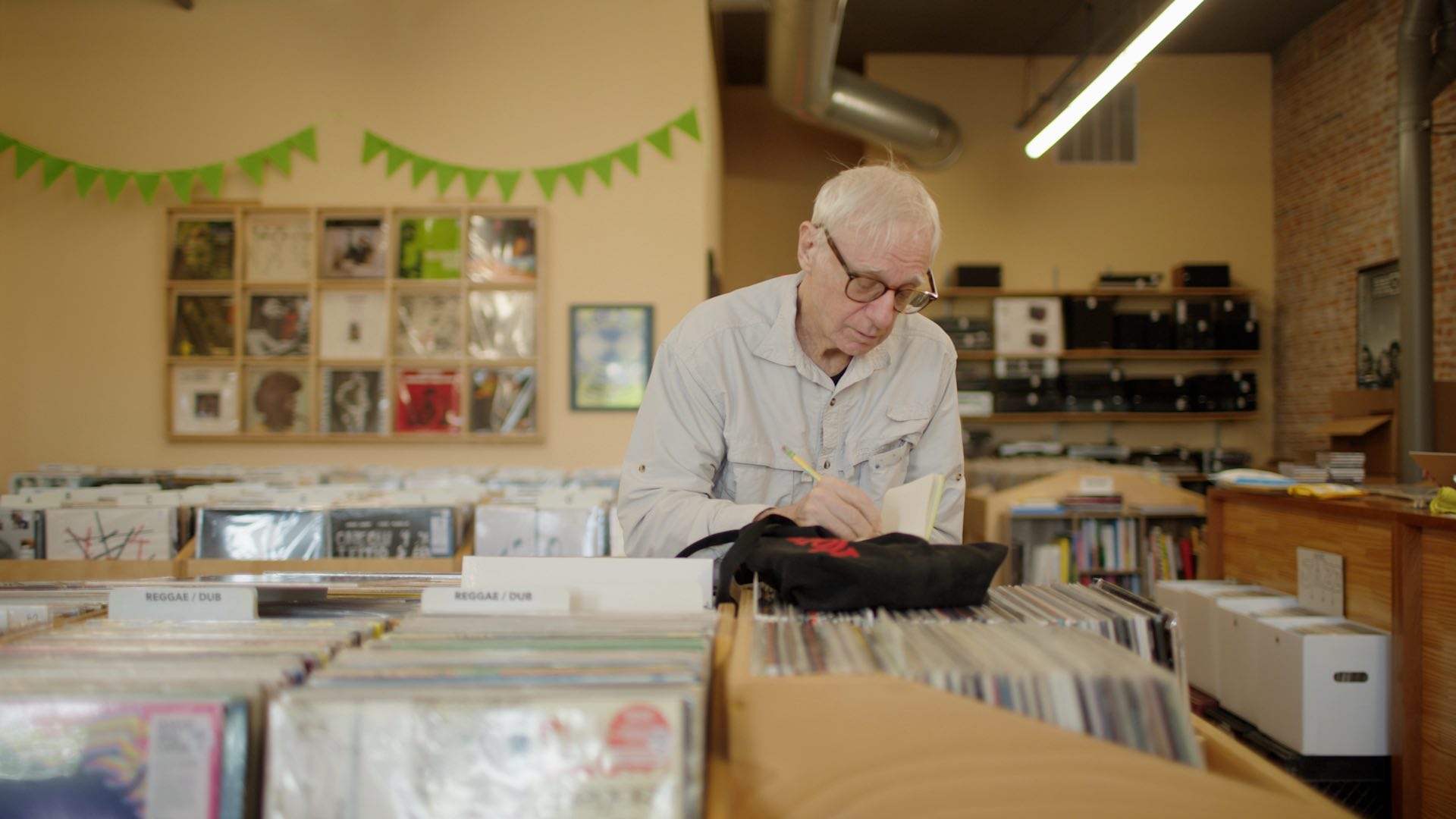


Filmmaker Matty Wishnow wasn’t the least bit surprised by the aesthetic state of music critic Robert Christgau’s home office when he first set his eyes on it. Described by Christgau’s editor Joe Levy as a “living sculpture,” every inch of space is taken up by reinforced shelves and stacks of books, records, cassettes, CDs, and assorted bits of ephemera. “‘Cluttered’ is the wrong word,” he says of the location. “It’s jam packed.” More or less meeting—if not exceeding—what Wishnow’s expectation of what he pictured it to be, he still had to figure out a way of capturing Christgau in his natural habitat. “I was like, ‘Oh my God, how are we going to film in here? There’s no space and there’s very little natural light. We’re screwed.’ But I’m a big believer that art is made out of the constraints you set. And in this case, one of the constraints was, ‘OK, we’re going to have to shoot in a few hundred square feet where if we move the wrong way, we knock down 4,000 records.’”
Inspired by what he calls a series of “masters in sunset” documentaries and his own lifelong fascination with the self-proclaimed Dean of American Rock Criticism, Wishnow gathered over a hundred hours of footage to make his debut film The Last Critic, an intimate exploration of how Christgau (now in his eighties) continues to deliver his signature short-form assessments, and how his legacy as a writer and editor remains a lodestar for some of the best critics and essayists working today. “I was interested in him as this sort of man who heard too much, this person who almost inarguably has listened to more music than any human being ever,” says Wishnow. “It’s a strange thing to think about.”
Breaking down his forthcoming film, Wishnow speaks about what Christgau means to him, the potential cost of constantly listening to new music, and why Christgau’s wife Carola may be the real star of the movie.
What is it about Christgau that you found so compelling as a subject?
I discovered him like I think a lot of people did in the ’80s: by buying the Consumer Guide book. I wasn’t an avid reader—I was probably a reluctant reader—but I did love music. My musical universe was probably defined by what was on the radio and maybe a few friends who had big brothers. Bob’s book did several things for me. Number one, it opened up the universe of what was popular and sub-popular music. Even the concept of “sub-popular,” which he defined, I was like, “Oh my goodness, there’s more to this than what I’m hearing on WPLJ or KROCK.” That was mind-expanding. The second thing it did was it made me interested in reading, because their reviews were very short. But then they also were so confounding—like, I could only grasp parts of them, so they made me want to learn more.
And then the last thing is that Bob organized things that I thought were not organizable. The musical universe is infinite, but Bob’s reviews, on some level, were able to tame it—not just through a grading system, but I could also see how artists were related to one another. He had intertextual references; I began to understand that funk music relates to Parliament relates to James Brown relates to early rap, stuff like that. I had a personal affection and was deeply interested in this idea of a true obsessive master who’s still doing the same thing in his eighties, but also has decades of wisdom and practice reps to reflect on it.
And this might sound morbid, but he’s not going to live forever. Even though he had written a memoir, it ends functionally in, like, his forties. I was more interested in everything that happened after that.
“I’d never really thought of the tragedy of someone who loves music more than anyone, but that the music he loves the most he has to say goodbye to constantly. It’s like Groundhog Day for him.”
Through the course of making this film, what differences did you find between Christgau the critic and Christgau the man?
I think there’s a pretty direct correlation between his writing, his persona, and the man. In other words, he has sharp elbows, he’s extremely erudite, he’s wildly well-read. He loves big words. He loves arguing. All of that is true. For the people who don’t know him, the only thing that I think Bob loves more than music is his wife and his marriage. He’s written more articulately than anyone I know about monogamous love. And I bring that up because I sort of asked the question, how does he do what he does? The answer is that he’s married to an intellectual, creative, esthetic partner who makes it possible. Not only does she edit him, but her response to albums is a major tell for him as to whether he should go further into it. Seeing Bob in real life—in his marriage, in the world—he’s much more complicated and much more nuanced and wildly romantic. Fifty-plus years into marriage, he’s deeply in love. Carola is just an extraordinary partner. I think she’s secretly the star of the movie.
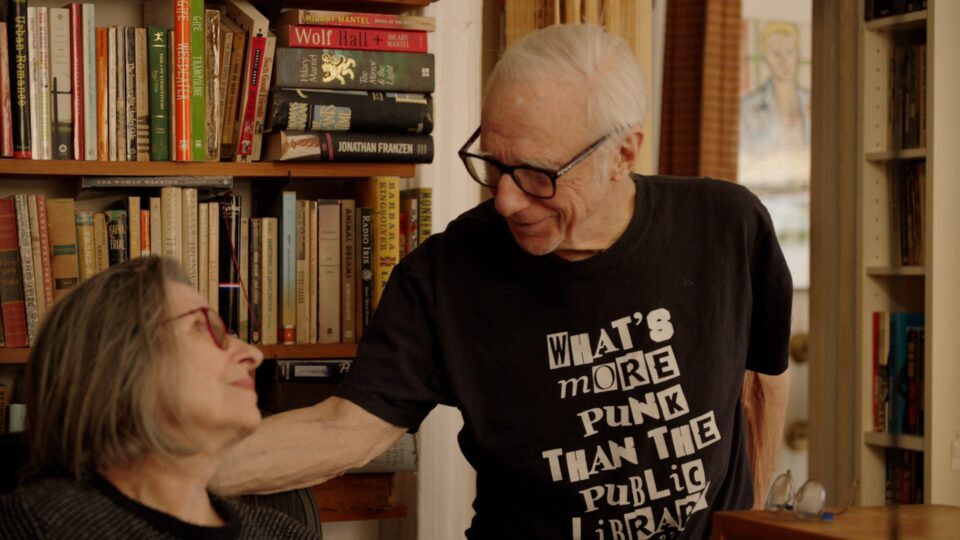
As a writer, Christgau is best known for his capsule reviews. What’s your take on his ability to condense what could take 1,500 words for many critics into just 150?
When Bob’s reviews land, they’re perfect—they really are like little poems. But even when they don’t land for me, what he’s able to do between getting at a very important idea to him, getting at what the artist signifies, and then ideally getting at what the music sounds like…it’s astounding how often he does that, even when I either disagree with the critique or I’m just like, “This is very hard to digest.”
Were you able to get anything out of him in terms of how he’s able to experience music with any kind of longevity?
Bob has graded however many records an A+. It’s a small number. I think it’s under 100. It’s very likely that he hasn’t listened to any of those A+ records in the last five years, even though, theoretically, he rates these the greatest albums of all time. In my mind, 10 to 20 years ago I thought, probably naively, “Oh, he’s just sitting there listening to Al Green and the New York Dolls and Television.” But that’s not the case at all, because he’s on deadline for next Consumer Guide. I’d never really thought of the tragedy of someone who loves music as much as—if not more than—anyone, but that the music he loves the most he has to say goodbye to constantly. It’s like Groundhog Day for him. For someone like you and I, if we love a record, we can either just go to Spotify or go to our record collection and put it on. Bob doesn’t have that luxury, because he’s got to get 15 reviews out in two weeks. That’s something I wish I’d addressed in the movie, because there’s something beautiful but tragic about that.
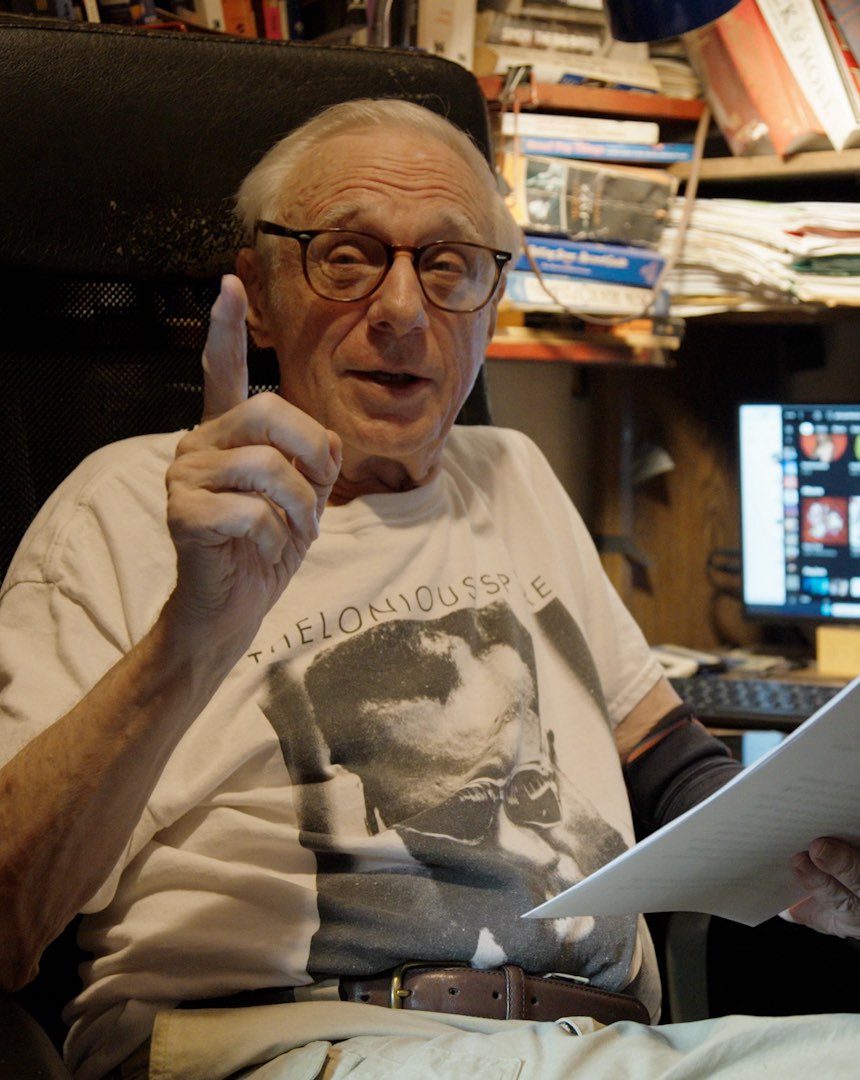
“The musical universe is infinite, but Bob’s reviews, on some level, were able to tame it—not just through a grading system, but I could also see how artists were related to one another.”
Has Bob seen the film?
We watched it in their apartment just a couple weeks ago. Bob was thrilled, and he was especially thrilled that we paid the right attention to the people that were most important to him, namely Carola. But I told him, “This is not a biography of you. This is a picture of you in your eighties, and I’m trying to paint a picture backward of how you do what you do.” And I think he appreciated that. He was an incredibly generous subject.
How did it feel showing something to someone whose entire livelihood and expertise is in critiquing the work of others?
It’s scary. I’d never made a movie before. It’s not like we had a big team of people, so I couldn’t push the blame aside. This was, like, a three-person project and ultimately all of the decisions land squarely on my shoulders. But yes, to show it to someone who’s a legendary critic, legendarily opinionated, argumentative…yeah, it was scary.
Did he give you a grade?
No, he didn’t. I think he needs to see it in a theater first. FL
