
Dälek
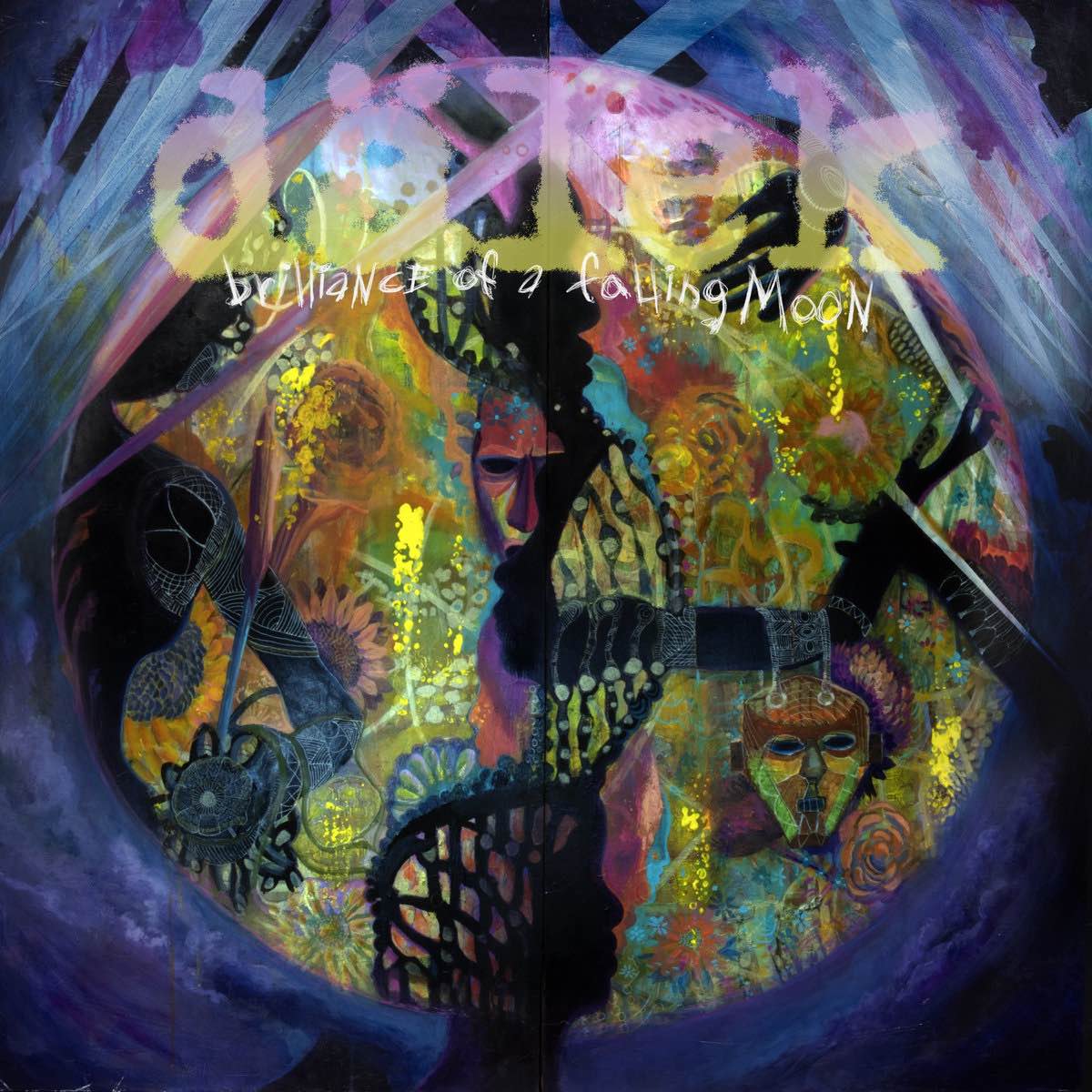
Brilliance of a Falling Moon
IPECAC
Given that they’ve produced music through a heavily political lens on a regular basis for nearly 30 years, it makes sense that Dälek would view the current Trump regime as a sort of Bat Signal requesting the presence of their hard-hitting industrial hip-hop dirges and equally hard-hitting lines shedding light on the harsh realities of our present national situation. Press materials for their new album Brilliance of a Falling Moon contextualize the project as a response to a sense of US-instigated global chaos that’s miraculously taken our attention away from the biggest, most nauseating political scandal this nation has ever seen, with emcee Will Brooks pointing toward the ICE raids in particular as a historic evil rivaling the tumult of the racism that would give rise to the civil rights movement. The album title itself was pulled from Erik Larsen’s non-fiction book In the Garden of Beasts, an account of an American family embedded deep in Nazi Germany.
What these press materials fail to mention, though, is the fact that Brilliance of a Falling Moon hardly sounds any different from the group’s breakout 2002 album From Filthy Tongue of Gods and Griots, nor any of the seven other albums they’ve dropped on a fairly consistent basis since then. And I don’t mean that as a dig at the group’s inability to push their sound forward—as far back as 1998 they were invoking images of the dystopian psychocapitalist reality we’re still witnessing come into sharper, horrifying focus. The 21st century has been a bumpy road thus far, and Dälek have been abundantly conscious of that fact from the nu-metal era up through the various periods defined by dance-punk, synth-pop, and other increasingly hedonistic genres that defined the Obama years. They even dropped an album the week after his first inauguration that opened with a song called “Blessed Are They Who Bash Your Children’s Heads Against a Rock,” while Biden’s term was addressed with just as much skepticism on 2022’s Precipice.
Just as Dälek have never been tourists within the lane of industrial rap as it’s gone in and out of fashion, Brooks’ lyrical focus on class war and normalized tragedy remains steadfast. “I, for one, never numb to brutality,” he raps at one point on Falling Moon, later claiming he’s “been prepared to spill blood for my culture” and that “the struggle won’t stop ’til we equal.” In each case, the emphasis lies in the past and future as much as the present, and he obviously has three decades’ worth of receipts to back him up. “I’ve always looked at each album as capturing a moment in time,” he shared with us a few years ago when discussing his ability to maintain a sense of continuity to Dälek even amidst lineup changes while doing press for Precipice, an album that dropped a year before the US-backed genocide on Gaza would go into hyperdrive. While he may be capturing a different political moment on Falling Moon, the focus never seems to be on colonial violence itself—a constant—but rather the changing perception of it, as the Trump administration forces more Americans to confront the evils unfolding in our name.
All eight songs on Falling Moon are their own monolith of sound: five minutes of unchanging, low-end-heavy beats touting zero features, with the sense of thumping repetition creating a sort of psychedelic malaise in the listener akin to watching the 24-hour news cycle drone on. Opener “Better Than” introduces Dälek’s familiar take on end-times hip-hop by presenting a boom-bap instrumental increasingly drowned out by threats both lyrical and aural: “The world you built could be dismantled in seconds,” Brooks raps over increasing levels of industrial noise, suggesting a music genre popular since the ’80s running on fumes. As he proved just four months ago via his album-length experiment with This Heat’s Charles Hayward, there is a future for hip-hop, though Dälek’s massive influence on the genre has always seemed to be of secondary importance. “I think all my music has always contained a twinge of hope,” Brooks said later in the aforementioned piece. “Otherwise, what’s the point? My music is about the struggle—it’s about remembering—but it’s also about building.”
