
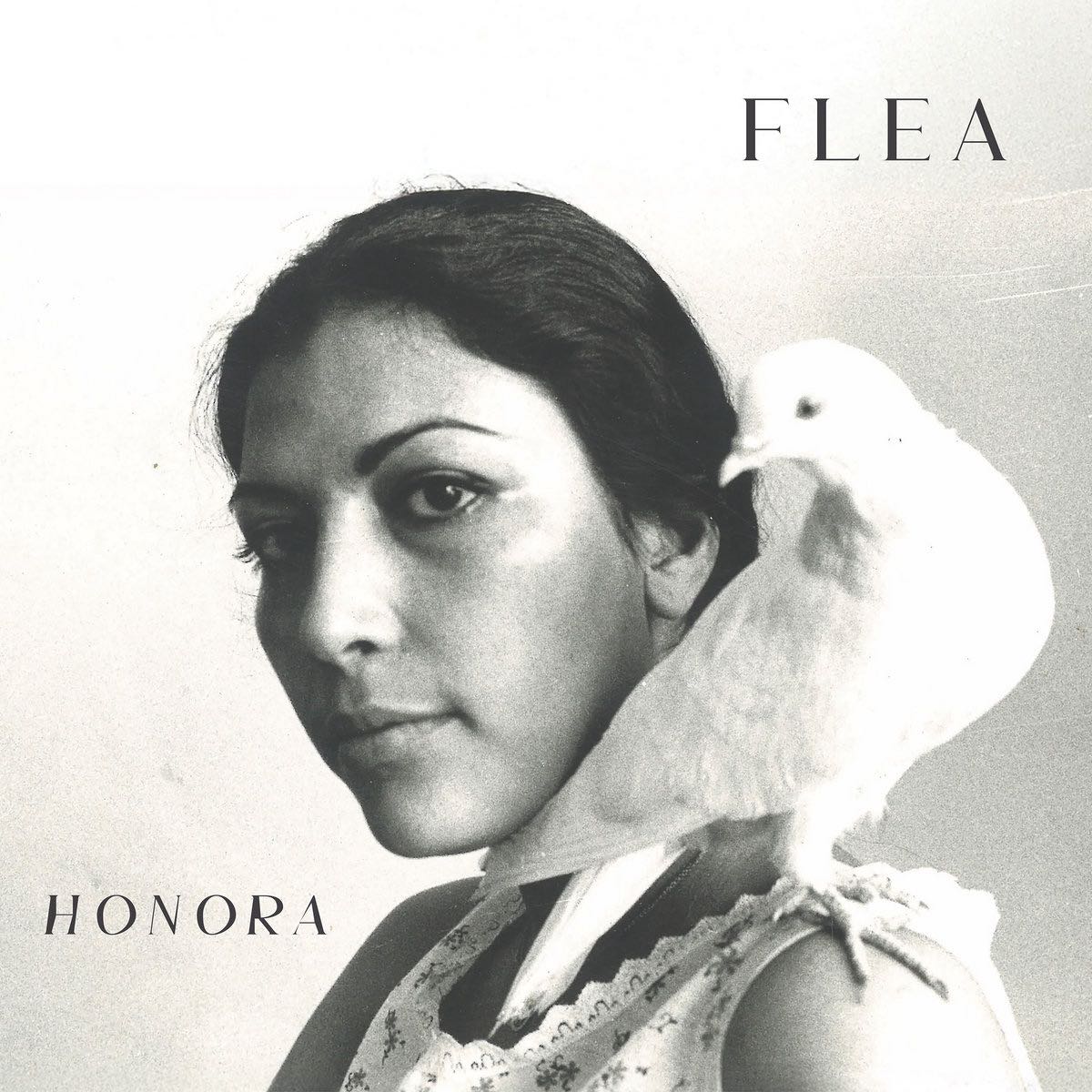

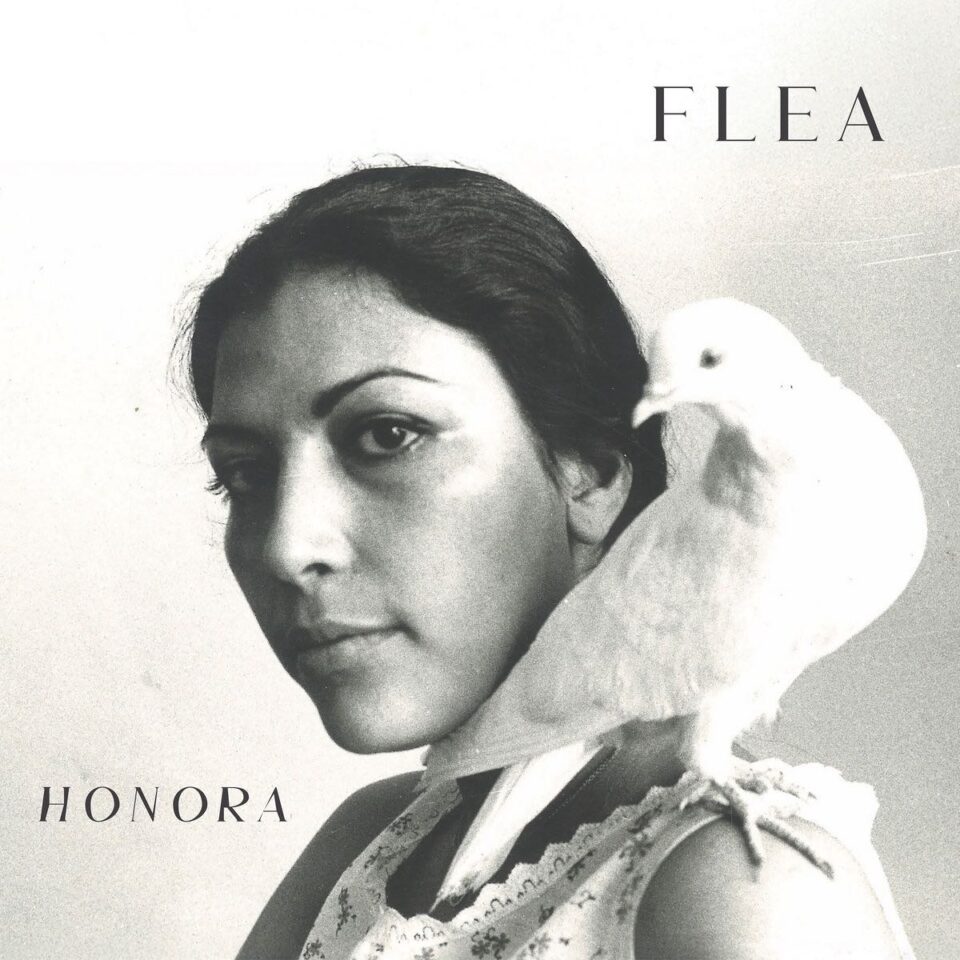

Flea
Honora
NONESUCH
There’s been a dismaying revival of jazz amateurism in recent years. Its most prominent practitioner is André 3000, the erstwhile rapper whose instrumental dabbling has resulted in a half-decent jazz flute record, followed by an abyssal piano one. Let it be known from the outset that Flea has been interested in making a proper jazz record for decades, percolating a dream of exploratory and groove-based music for about as long as he’s been a Red Hot Chili Pepper. He took the making of Honora seriously—not only by devoting a couple of years to formal trumpet instruction after studying the instrument on and off since childhood, but also by recruiting a team of studio ringers including next-gen jazz luminaries like guitarist Jeff Parker, bassist Anna Butterss, sax player Josh Johnson, and drummer Deantoni Parks.
Such an illustrious team of session players provides Honora with some jazz bona fides, and Flea himself is no slouch. He sounds most effortless when he’s rocking his bass, but the trumpet playing is more than passable, whether he’s ringing out clarion melodies (“Thinkin Bout You,” a gorgeous Frank Ocean cover) or cranking out nimble bebop riffs (“Morning Cry,” a persuasive original). The overall sound of the record is smooth, lyrical, and thoughtfully textured. It gathers some steam on a couple of knottier grooves (“Morning Cry” again, but also “Traffic Lights,” a slippery funk number with vocals from Thom Yorke), but just as often sounds pensive (“Willow Weep for Me,” awash in synth effects).
If anything, the album is too pensive, its measured tone sometimes undercutting the urgency of Flea’s messaging. An early-album original called “A Plea” champions humanism and basic decency in broad terms, while a cover of Funkadelic’s “Maggot Brain” nods to environmental concerns—well-intentioned gestures that suggest what a personal passion project this is for its auteur. And while Honora can occasionally be a little too middlebrow, it’s never anything less than heartfelt. This is a guy whose respect for jazz tradition is evident, and whose quest for beauty is plain from the album’s lyrical playing and tuneful delicacy. There’s no reason to include a stately cover of “Wichita Lineman” here except for the sheer pleasure of hearing guest vocalist Nick Cave inhabit such an enduring old tune, and ultimately that’s reason enough.
This is only Flea’s first recorded foray into jazz idioms, so the amateurism charges may be hard to beat. But he’s approached this music from a place of love and respect; he’s done the work to make a record that feels personal to who he is, but also creditable as an entry into a broader tradition. That’s a real accomplishment, and it makes Honora feel like far more than a busman’s holiday.
