

Maya Hawke
Maitreya Corso
MOM + POP
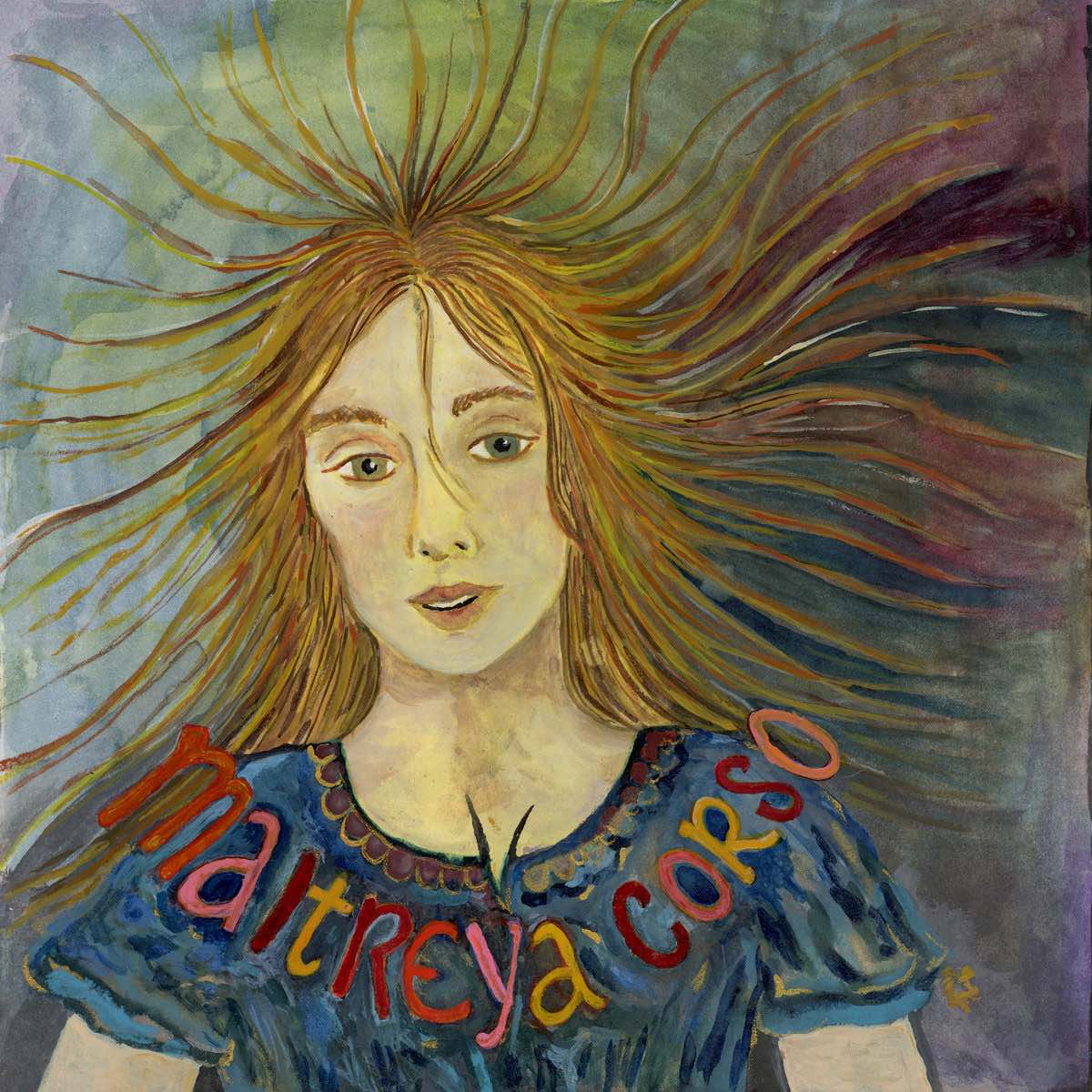
If Maya Hawke’s third album Chaos Angel was a poetic coming-of-age faux-pas-folk-pop album from a young woman feeling her way through the oddities of fame and the dreams of easy self-positivism, Maitreya Corso is its barely older, mostly wiser, and more wearily symbolic follow-up involving the sketchy commitments to love that marriage brings and the stretching of one’s self beyond the boundaries of the usual big ideas. After all, nobody pays tribute to Beat-Gen icon and hipster saint Gregory Corso and his lyrical, humorous verse and gets out of it without trying to elevate their ideas into a dream-like wordiness.
To that end, Hawke’s literal voice is a little bit gruffer and less cool than it was on Chaos Angel—even if Maitreya Corso’s musical arrangements and production values are ever so slightly sleeker—as she approaches self-satisfaction, coupled-up solidarity, and hope with bristling guitars on “Love of My Life.” The poptimistic homily “Dream House,” sung in tandem with longtime collaborator (and now husband) Christian Lee Hutson, keeps hope alive to the point of being downright perky. And all that’s chipper aside, it’s Hawke’s figurative voice that leaves room for doubt when it comes to gleeful exuberance throughout Maitreya Corso. No one who’s both an actor and a writer likely turns one side off for the other, and so on something such as the lo-fi electro-fiddle folksy “Lioness,” it’s unclear what side of the bicameral mindset she’s leaning into: the “fuck with me and find out” face or her less confident “tell me who I am” cheek.
Is Hawke playing a character or reaching into and reciting from (then inciting) her heart strings? More berceuse moments such as “Bring Home My Man” will also keep you guessing as to whether or not it’s the Madonna or the whore who’s shown up for the party. In many ways, that guessing game—the playfully melodious, often black-comic qualities of Maitreya Corso and its is-she-or-isn’t-she wordiness and sing-songiness—is what makes this album Hawke’s most intriguing yet.
