
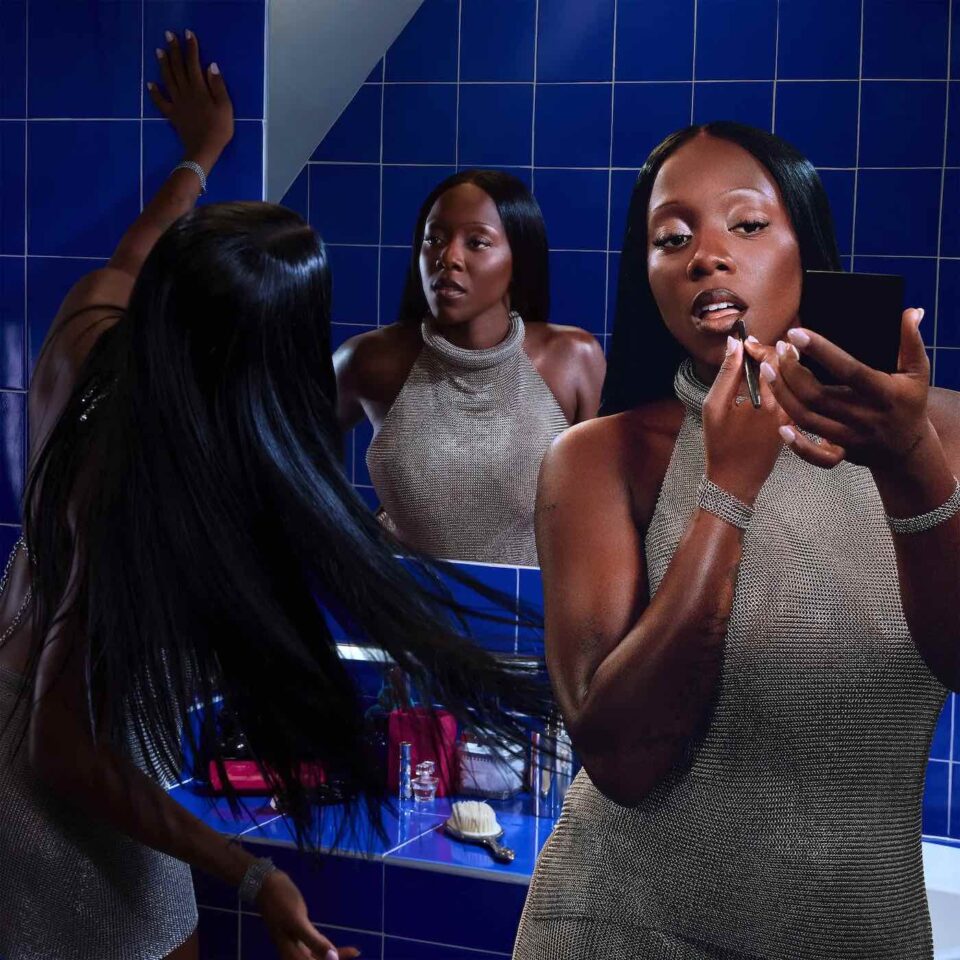
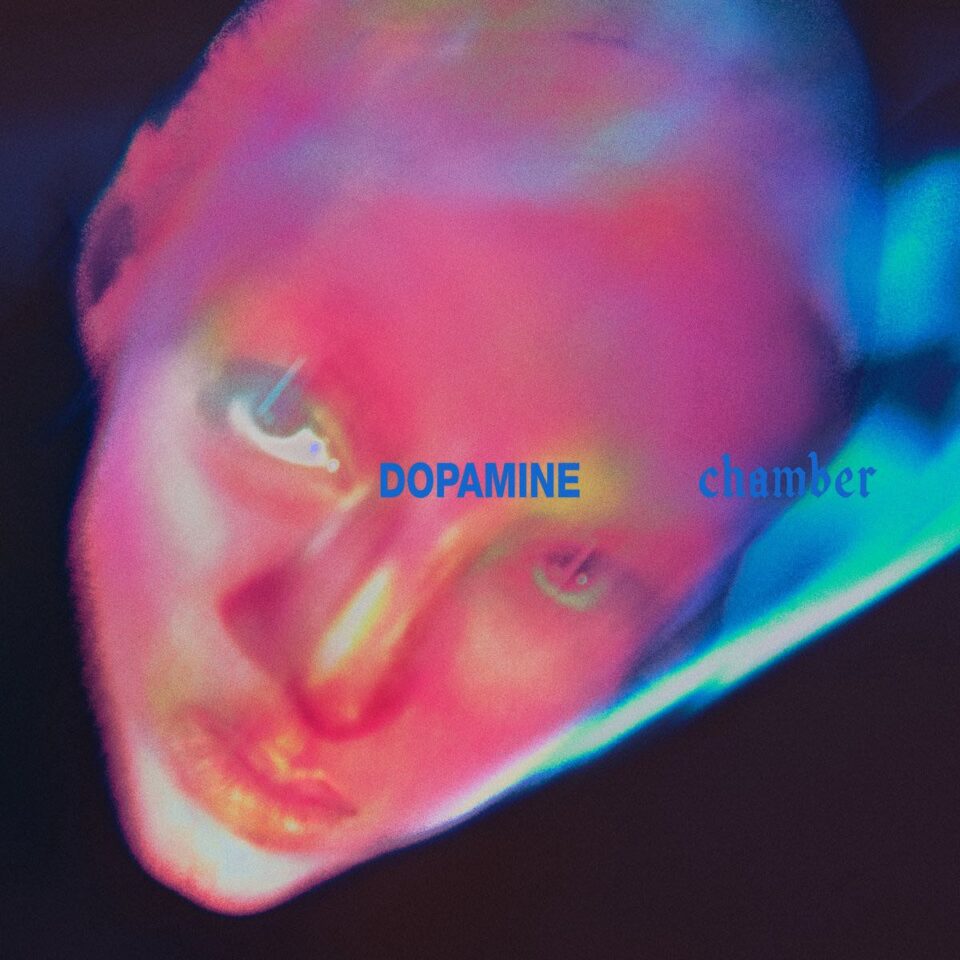
Back in March, jazz poet aja monet returned with news of her guest-filled second album the color of rain with Georgia Anne Muldrow, Meshell Ndegeocello, and Novena Carmel all joining her on the lead single alone. With Vic Mensa, Mick Jenkins, Brandee Younger, and others featured throughout the project’s additional 14 tracks, it’s obviously a collection of songs that are deeply rooted in a sense of community—whether it’s the long list of collaborators who helped bring the LP to fruition or the broader global community of working-class musicians striving to follow their dreams at a time when touring is not only not lucrative, but often costly to the artist or otherwise majorly inconvenient.
It’s this subject matter that monet addresses directly on “Working Class Musicians,” a curiously upbeat number built upon handclaps, unpredictable percussion, and a double bass line weaving through the poet’s unflappable account of tough working conditions for gigging musicians—and, of course, the payoff that comes with fully dedicating oneself to creative expression. “The feeling of despair, though valid, is not all there is to our story,” monet explains. “Some of us still hold sacred the ceremony of now. The improvisation of presence and the ability to co-create a moment that can’t be captured on a screen. Live music is a real frontier of our spiritual struggle with ideas and ways of being.”
Alongside the release of the color of rain today, monet is sharing an animated music video for “Working Class Musicians” created by Brandon Ray and Paper Brain Productions that illustrates the song’s lyrics via a cut-out animation style that soothes the anxieties of TSA checks and spares crowds with a sense of Gondry-esque whimsy. Check that out below, listen to the new record here, and read on for a brief Q&A with monet.
Was there a particular experience that inspired the lyrics to this song?
There’s many. The pre-dawn lobby calls, the near-missed trains and flights, the inconsistent hospitality. Experiencing life as a touring band leader these past three years inspired the song, as well as being in an intimate relationship with a musician, the day-to-day motions of just trying to make a living through late-night club capitalism, where everyone’s making money off the labor of the musicians before we do off of our own work. All the expenses people don’t see that come with doing a gig.
There’s the physical labor of just trying to make it to the gig in a hyper-surveillance state, where TSA has the license to interrogate and harass the international working class, how the airline companies take advantage of our need for movement between borders and state lines. And then the actual physical labor of performing. The depletion of energy and the need to replenish. The poem was written while on tour, and we ran into other touring musicians on the road often talking about the conditions of doing music in a world that doesn’t often see what you do as critical work. physical and spiritual.
How do you view the song’s message within the broader context of the album, including its more lyrically confrontational moments?
I think the first line of the poem encapsulates the whole energy of the poem: “Though it be a labor of love, a labor it is.” No matter where you go in the world it’s working class people who connect to what we’re doing with music and poems. The poems exist out of the life I’ve lived. I make art against exploitative conditions that are normalized in our culture. But I’d be creating poems whether anybody cared.
It’s important as poets and musicians that we name and define our allegiance to working-class people across the globe. While we all struggle to meet our material needs, there are immaterial needs we have that are just as critical to our survival. Poetry, music, and art are essential work. They are a service. We are often tokenized to sell, promote, bring awareness to everyone’s cause, brand, or project. But when it comes to confronting the conditions of the average artist in society, it’s rarely addressed, because people don’t see all the many other jobs you hold just to afford the one you love most. Many don’t see it as work. No one in this economy can survive on one job, and I don’t trust a musician or artist that doesn’t have a relationship to the working class beyond trying to sell them things.
The song feels very glass-half-full, considering its sense of endurance in spite of the music industry. How do you stay positive as a creative individual in a world that feels increasingly hostile toward human creativity?
I’m not sure if the song is very glass-half-full at all. It’s telling the story of our lives. It’s hard work to shed yourself in front of people who don’t know you intimately over and over and over again, and to yearn the intimacy of compassion or understanding when many don’t believe you deserve it. That’s not unique to us. It’s the story of most third-world people everywhere. Who do we afford compassion to?
But it’s beautiful to bring art into being where it wasn’t before. And yet it’s becoming increasingly more embarrassing and dehumanizing when social media has replaced third spaces and cultural institutions. The intuitive will people once had to be outside and together, to be curious. There’s an apathy for life that we are struggling up against right now. The feeling of despair, though valid, is not all there is to our story. Some of us still hold sacred the ceremony of now. The improvisation of presence and the ability to co-create a moment that can’t be captured on a screen. Live music is a real frontier of our spiritual struggle with ideas and ways of being. And I haven’t even touched on the corporations exploiting the ticket fees and venues.
Even in 2026 people seem surprised to learn just how financially impractical touring has become for most artists. How often are you met with that sort of reaction when you aren’t on the road, and—outside of writing songs about it, of course—how much of a duty do you feel to inform folks that it can be a struggle for working-class musicians?
Now as a touring band leader, my duty is to the musicians I play with and the community I write to. You feel a responsibility, but also I’ve been taken advantage of and mistreated—especially as a Black woman artist. I see it because I watch how male musicians even treat other men, but when it comes to women, they don’t like to take leadership or they don’t take your seriously—or worse, they try to tax you more than men, because they’re more concerned with the optics and clout of being associated with certain men, which is currency to some.
We struggle with ideas and the social norms we’re all existing with. That don’t change because you’re a musician, it just shows up in varied ways. With agents, with promoters, with cultural institutions to value and better distribute resources among us. I think more artists and musicians need to talk to each other and be transparent about what they’re going through. Especially in a hyper-toxic masculine environment, the assumption that everything is all together is killing us and it’s harming our relationships, because people see one another as a transaction rather than as a meaningful relationship to protect and co-define.
Who are some of your biggest influences among musicians who are outspoken about being working-class?
I don’t hear many, to be honest. But I know there are lots. Seun Kuti is one that first comes to mind. But I’m hoping this song will help encourage more discussions about it, and hopefully we start organizing a cultural revolution across the live music ecosystem. We need one another.
