
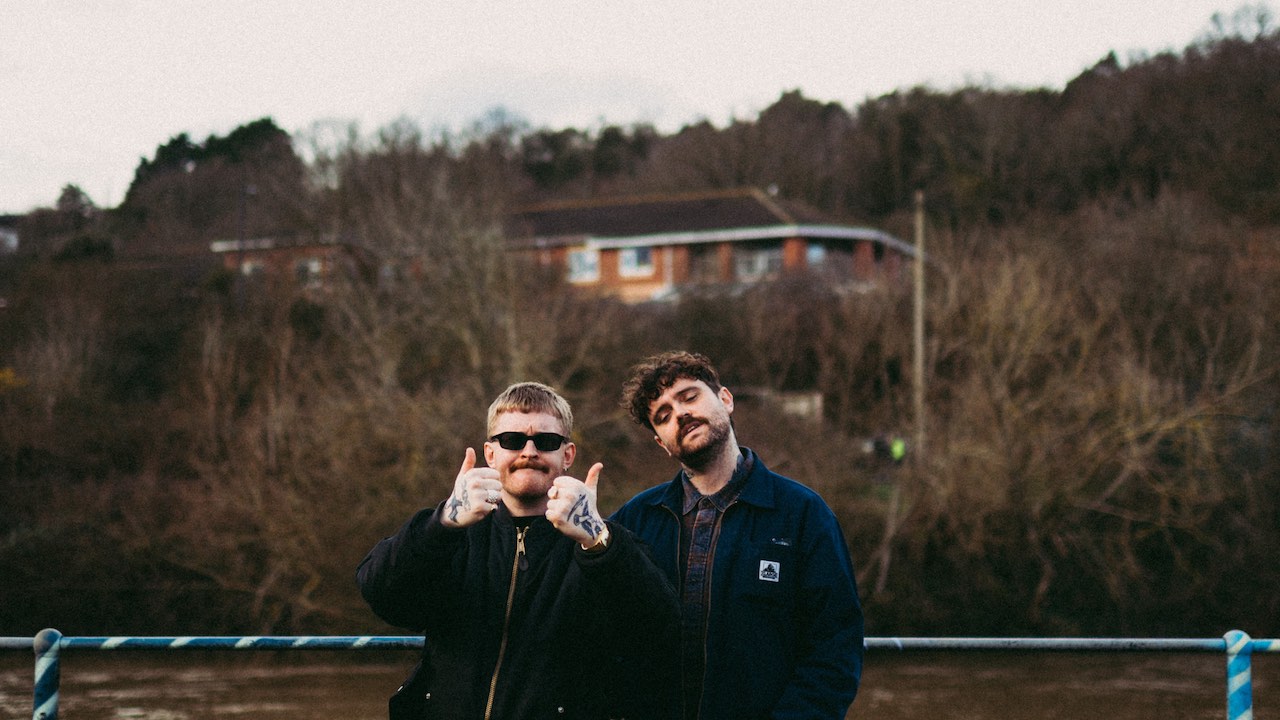
Vocalist Joe Hicklin and drummer Callum Moloney met when they were 17, more than a decade before they formed Big Special in the midst of the COVID lockdowns. The project soon grew into something, well, special. The UK-based duo has now released two albums: 2024’s Postindustrial Hometown Blues and 2025’s National Average. Both are sharp, catchy assessments of the state of the world that combine spoken (and shouted) word with experimental but accessible backing tracks that veer between soulful post-punk and more avant-garde soundscapes.
On record, it’s captivating and mesmerizing; in person, it’s even more so. Just the two of them with a backing track, their music is a powerful reflection of a world gone wrong, and becomes a truly immersive experience in a live setting. The band’s latest EP, O’Joy!, is actually 10 tracks long, but, as the pair explain to me, they don’t consider it a proper album because it’s made up of offcuts from their first two records. Not that you can tell. It’s a fully formed piece of work that, once again, demonstrates how vital and important their voice is in these trying times.
Ahead of the EP’s release this Friday, Hicklin and Moloney share how the collection came together and how they approach political subject matter within their music.
O’Joy! sounds incredibly cohesive, but it’s actually a collection of odds and ends, right?
Joe Hicklin: It could’ve easily been just a [typical] collection of odds and ends, so we took most of what we had and went back to the studio with it and tried to make a cohesive piece out of it all, to make it just another record in our repertoire.
Callum Moloney: When we normally set out to write a record, we write a specific amount of songs and we write it top to bottom. This was sort of reimagining and reworking songs we’d had for a long time to make a bit more of a flow. It was a fun process and definitely different from how we do normal albums.
Do you see it as an extension of them?
Hicklin: Yeah, because it’s made up songs written for both the albums, so it’s from the same place. But it’s like a confused little version of them, and we tried to make it its own thing. It’s like a little extra lore to the first two albums.
Moloney: It’s definitely drawing a line under the first era of Big Special: Here’s all the songs we have on our hard drive. From here on out, it’s all about writing the next thing. We’ve emptied the clip, so we’ve got to reload.
Does being just the two of you mean there’s more freedom in what you can do and how? It’s a huge sound for two people.
Moloney: From the very beginning, the idea was that it would be just us two on stage and a track player. But we’ve always wanted the experience you get from the album to be the same experience live—just extended, because of the energy that’s there, so it turns into much more of a visceral experience. And playing to track gives us so much more room—the way we run it, we’ve got, like, eight invisible members on stage.
Your music is obviously very political—there’s a lot about the struggles of the working class, and it’s about living in these terrible times right now. Do you want it stand as a kind of political manifesto?
Hicklin: We’re just trying to be honest about our place in time. We don’t claim to have any answers. We’ve got our beliefs and stuff, and we wear them on our sleeves and put them in our music, but the main thing is for people to feel the honesty in it. We try to be honest, even if it’s a bit uncomfortable, and we just hope that that’s heard and appreciated—like the music we’ve listened to from people who’ve done the same thing and it’s made us feel less alone in the world.
Moloney: Sometimes I think we’re closer to observational comedy—or observational tragedy. I think our role in this play is to put our hands up and go, “Fucking hell, everyone, ain’t this a bit shit, eh?” It’s not our role to say, “Now go and do this,” because we’d be hypocrites.
Are you worried about playing your songs in America at the moment?
Hicklin: Not really. It can happen anywhere. It’s mad over here [in the UK] politically, as well. We say some political things at gigs, and we’ve had some people shout back the opposite view, and we’ve been a bit baffled by it, thinking, “Have you never heard our music? What got you to listen to us, buy a ticket, come here, get a babysitter or whatever, and then go ‘nah’?” We said “free Palestine” and he went “fuck Palestine.” I don’t get that at all. But so much of the stuff you see is made to make you feel scared and worried. It’s important for people to have spaces where you can get together and just be like, “Fuck all this shit.”
