
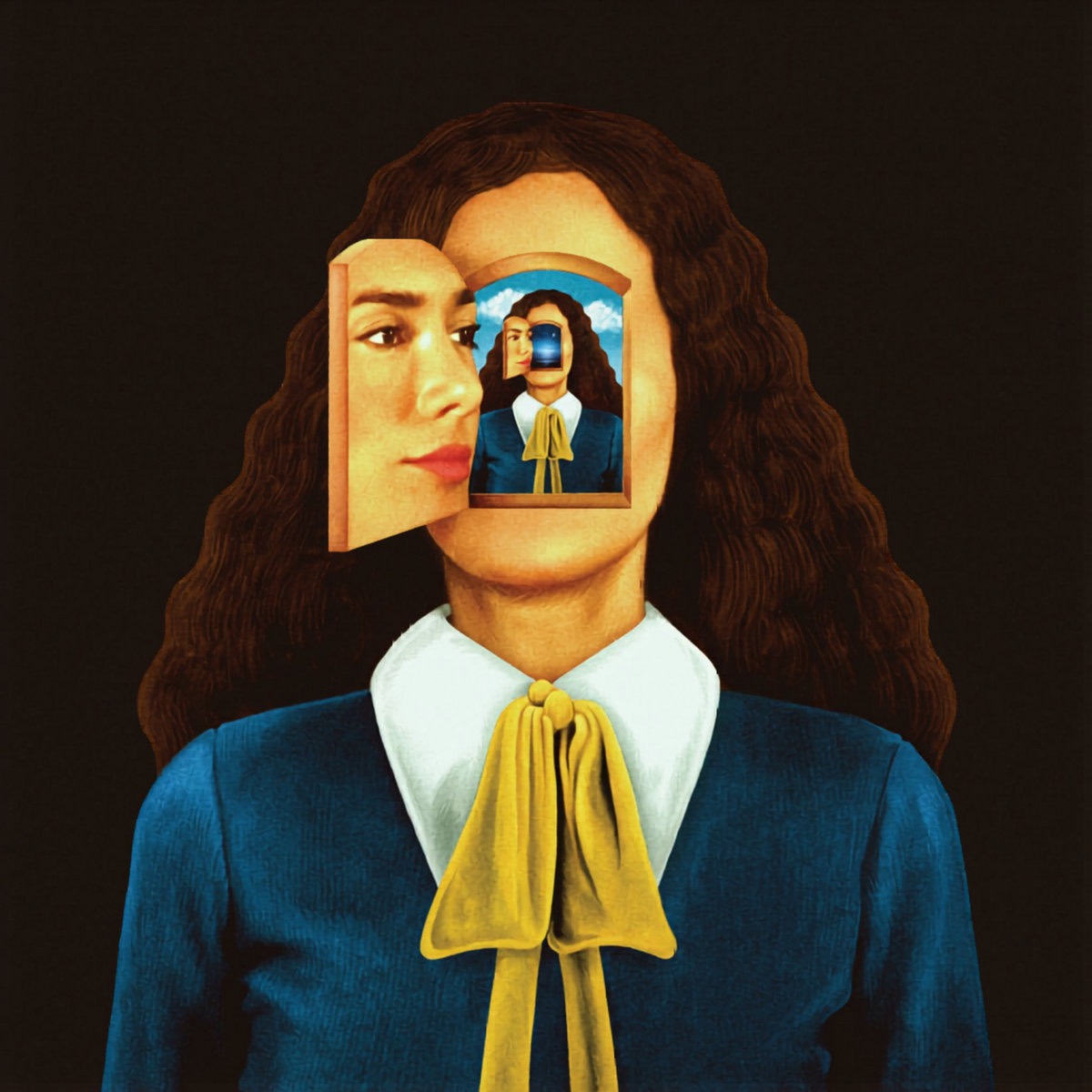




Bedouine
Neon Skin Summer
THIRTY TIGERS
Whether facing the cruel silence that trails a lover’s departure or haunted by distant memories, Bedouine’s albums should be queued up as soon as you’re left alone in the house. The opening tracks to her two most recent albums—2021’s Waysides and her new LP, Neon Skin Summer—serve as balms for solitude, fostering the illusion that the gap between records couldn’t have lasted more than one seasonal cycle. “On My Own” may have only been written in recent years, but it belongs on any playlist containing Gilbert O'Sullivan’s “Alone Again (Naturally),” a classic song about the strange comfort of recurring loneliness that Sofia Coppola’s The Virgin Suicides famously tied to “the imprisonment of being a girl, the way it made your mind active and dreamy.” Bedouine’s music has always had a timeless feel (“retro” would be the cheapening term), and the introduction to her stunning new record has that animating effect, dusting up a world of childhood innocence.
That’s part of how Neon Skin Summer diverges not just from the tradition of folk-pop, whose lonesomeness has a lovelorn intensity, but from Azniv Korkejian’s own past work. It’s the LA-based, Syria-born artist’s fourth LP, flowing out of a period of unprecedented stillness in her life and a maturity that breeds lines like, “It’s not that I’m stronger, just been here a little bit longer.” While many songwriters’ early work is buoyed by the possibilities of success, love, and independence—Korkejian’s included—this time around she found herself more preoccupied by the things now rendered impossible, namely going home again. She started working on the album while visiting her parents in Saudi Arabia, correctly assuming it would be her last trip there as her family was retiring to Armenia. Applying the tender care that marks all her records, Korkejian makes no sweeping attempt to tell her family’s story or offer a timeline of their migration.
Instead, her curiosity about an intimate detail of her mother’s life—being placed in an orphanage as a way of escaping her abusive father—becomes, in the form of a recorded conversation that leads into album highlight “Canopies,” a central part of the record (it’s also a kind of turning point, clearing the air for a couple of bossa-inflected tracks, including a non-English one). On an even more personal level, she processes her displacement in ways that are mournful, yes (“I swear it wasn’t long / That I was just someone’s little fool / Stepping out the pool,” she sings on the title track), but also playfully expressive. She revisits her first instrument, the piano, to ground the trio of hazy, lilting ballads that kick off the album, and even plays her second instrument, the trumpet—along with an array of others—on the title track, writing brass parts like the ones coloring the lyric “Chalky eyes still blushing from the chlorine” with the wonderful specificity of the line itself.
Korkejian is rarely alone in those memories, and she wasn’t alone in the making of the record. In a funny concurrence, she remembers her brothers fighting in “On My Own,” a song featuring Brian and Michael D’Addario, the melodically prodigious sibling duo behind The Lemon Twigs. With co-producer Gus Seyffert, she rekindles Bedouine’s inviting warmth while leaving space for wobbly experimentation on the penultimate “White Patent Leather” (and that’s Drew Erickson, string arrangement magician behind recent records by Lana Del Rey and Mitski, playing the solo rendition of “Canopies” at the very end of the record). But the most distinctive feature of Neon Summer Skin isn’t how Bedouine lets other people into her music; it’s the patience with which she treats these songs, letting most of them unspool longer than she’s used to. “Aren’t we always waiting for the paint to dry?” she sings on “Na Na Na,” “Just so that we can peel it back?”
