


Bomb the Music Industry! were so frickin’ punk, they dared to quibble with Fugazi—the band many would point to as typifying anti-corporate ethics. “Every Fugazi record has a catalog number and a price tag and every independent label is selling you another goddamn product,” ran one breathless line from the band’s “Side Projects Are Never Successful.”
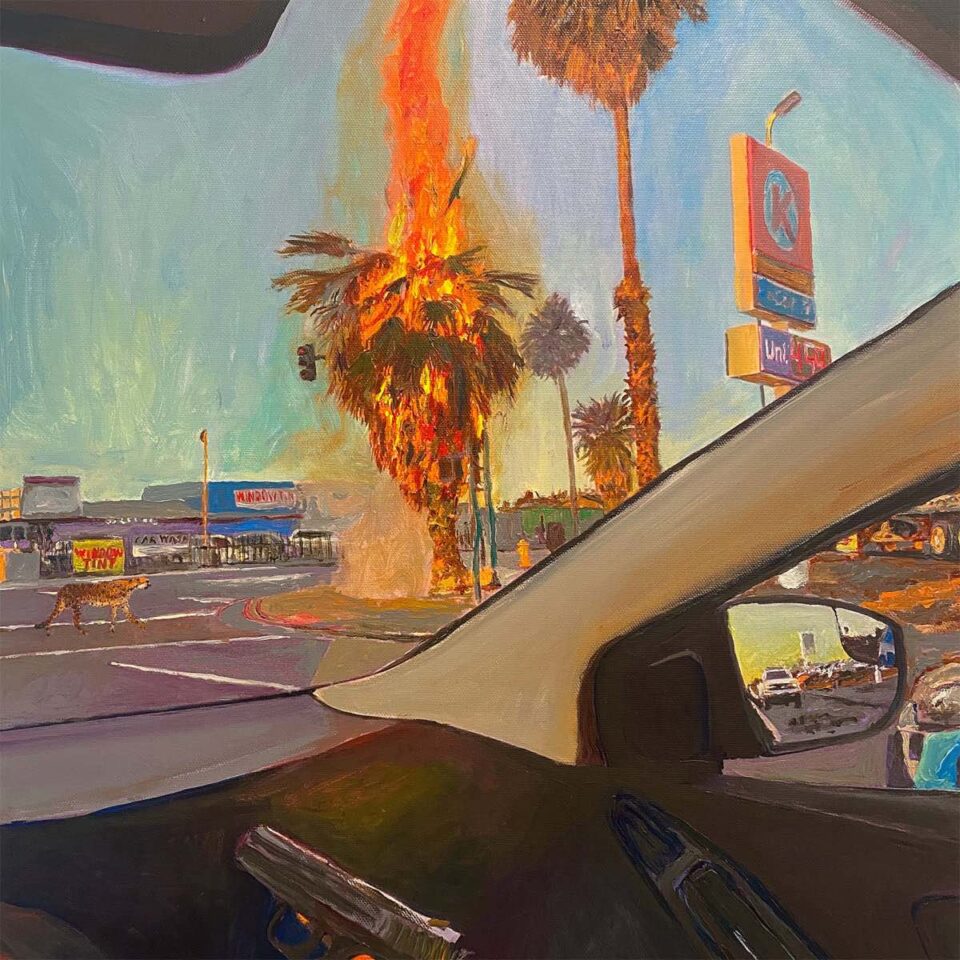
Like OPM mangled by Fat Mike in cahoots with Melt-Banana, it’s a bombastic standout from their bombastic, standout 2006 album Goodbye Cool World!. “I don’t know what the fuck I was talking about 20 years ago,” Jeff Rosenstock laughs, reflecting on Bomb’s third record on the week of its anniversary, as self-deprecating as it was ready to lampoon everything from Alternative Press to Neutral Milk Hotel. “It’s probably similar to how I feel now, which is that there’s good people out there trying to do things independently, community- or friend-oriented things. Not career-minded. Then on the other side you have a behemoth who wants to extract as much money or screen time from a fanbase.”
Formed in 2004, Rosenstock’s punk collective shunned the McMusic industry from the get-go in favor of laptop-punk freneticism and DIY tactics that strove to push further than Fugazi and faster than their peers. A year before Radiohead did it, he launched “the first-ever donation-based record label.” Quote Unquote Records’ original website is kept updated to this day; with a pay-what-you-want contribution, you can own Bomb’s catalog and crates of other music, from Bomb-members-gone-solo like Laura Stevenson to tour mates like O Pioneers!!!.

That everyone-mucking-in ethos went for Bomb’s legendary live shows, too, where anyone with an instrument and a will was welcome. Twenty bodies onstage was typical, lairy saxes arguing with clacky upstroked guitars—like Operation Ivy or Suicide Machines cuts performed by an amateur kickball team several margaritas deep. “There’s a video of a show where somebody showed up with a drum set and played a full set with us,” Rosenstock remembers of one run where he went out with an iPod and one pal, Rick Johnson. “Bring a T-shirt—we’ll spray paint your shirt. Bring a CD-R—we’ll burn you all the songs,” he adds of their merch philosophy. “Throw some money if you can. That was the vibe. People seemed really psyched about it. I wanted to create this environment that wasn’t a shopping mall, but a punk show. I felt such a need to do an anti-commercial thing. But it was also putting trust in the audience: If you want this thing to continue, you’ll help fund it a little. And it was working.”
Before Bomb took off, Rosenstock fronted the Long Island ska-punk sextet The Arrogant Sons of Bitches. Despite the Bitches’ DIY outlook, he became frustrated by the money and time they’d lose trying to tour and record. He craved cheap, instant results that removed traditional barriers. “I could just make music on my own, on my computer,” came the realization. For Cool World!, he’d howl into a microphone during half-hour windows when his roommates were out. The record’s drums are mostly “fake,” but didn’t seem it—apart from when they went so fast and chaotic that it sounded like one of the laptop keys had jammed, or when they were actually just a bag of pasta smashed against a box of couscous, as is the case on one song. The guitars and horns landed hairy and punchy, and the synths alternately fuzzy, gooey, and in faux-piano mode. “That’s why the first three records and a bunch of B-sides came out within a year and a half,” he says of the home-recording epiphany.

“I wanted to create this environment that wasn’t a shopping mall, but a punk show. I felt such a need to do an anti-commercial thing.”

The goal for Rosenstock around this prolific moment was: “How can I do this while paying my rent and bills and shit, and being able to move out of my parents’ house?” He put together Goodbye Cool World! in his Forest Hills apartment at a time when the Queens neighborhood seemed largely populated by pensioners, the album title a reference to leaving behind more happening enclaves. “We were young and a lot of our friends found good jobs,” he says. “I couldn’t find a good job out of school. They were all living in Williamsburg and Clinton Hill.” He’d traverse the city for temp jobs—always keeping a Myspace tab open to book shows—and to hang at his friend’s bar. “At 2 a.m., I’d get on a subway, take this super-long commute back with Botch and Dillinger Escape Plan at full volume on my headphones, trying not to pass out and miss my stop,” he remembers. “Then, waking up at 7 a.m. and going out to Long Island and trying to show up to this job. That’s the mindset of this record.”
Side B opener “It’s Official! We’re Booooorrrrring!” is a straight-shooting reprimand to get off your ass and effect change by creating something instead of moaning about the status quo. “We talk but don’t act, and then nothing will change / We’re so hellbent on destruction we forgot how to create,” Rosenstock bellows as the track careens into a goofy, euphoric brass frenzy. The muggy side A closer “Sorry, Brooklyn, Dancing Won’t Solve Anything” is far milder, a slo-mo rocksteady groover reminiscent of The Specials. Woozy trombone lines blur into Rosenstock’s soapboxing about making space for action alongside escapism.
The songs came easiest when he’d write about being twenty-something in a city that felt like it was leaving him behind. An overarching theme is feeling out-of-step with your cohort. The comically erratic opener “Old and Unprofessional” confirms this with its yuppie-inverting title. “Would you like me if I stayed forever young?” is the hook of “Even Winning Feels Bad,” whose in-the-red synths compete with gnarly growling bass. “Grudge Report” sees him admit that “I felt old a long time ago, but now the rest of the world’s gotten older than me.” The whole thing kicks off with an Arrested Development snippet. “The shows we played were to people in high school or college,” Rosenstock says of Bomb’s earlier performances. “I felt out of place—a “hey, fellow kids” kind of vibe—even though in hindsight I wasn’t that much older than anybody. At the same time, friends were getting their shit together very quickly after graduating. If I could’ve understood that I’d have a non-traditional path in life a little earlier, it probably would have done wonders for me.”
“I was playing this mecca that I’d built up in my mind, but I was just like, ‘Wow, I’m here, and I’m a failure.’ I was in the street, probably with my shirt off, drunk and crying by the end of the night. Just a normal day on tour.”
There was also the punk-rock bucket list he’d started ticking through, often ending in puke-filled disappointment. Take the album’s opus “King of Minneapolis,” a four-parter that orbits the city’s Triple Rock Social Club, an iconic venue owned by Dillinger Four members. Rosenstock was gassed when Bomb booked a show: he saw it as a punk temple. Bar bands like The Hold Steady and The Replacements had their roots in town. He decided to follow their lead and get totally blasted. “There was, like, eight people there, so I was playing this mecca that I’d built up in my mind, but I was just like, ‘Wow, I’m here, and I’m a failure,’” he recalls. “I was wasted and played a really bad show. I was in the street, probably with my shirt off, drunk and crying by the end of the night. Just a normal day on tour.”
“Pt. 4” opens with the lyric “I know I’m not dead because I just threw up in my own mouth and swallowed back / This hangover ain’t that bad.” That’s actually the happy-ending part of the quadrilogy. “Why it’s a song that deserves to exist is that feeling of when you don’t meet the moment,” Rosenstock says. “The feeling of: you’re not supposed to be there. I got accepted into this fucking cool thing. I’m playing this venue that’s part of the story of punk. This is what it’s all about, and maybe I don’t fucking belong here.” It turned out there was more to the story. “None of that shit matters. You get in the van and you go to the next place, and your friends are there,” he says, finding liberation in making his own punk world. The scream-along outro goes, “I still have a home even if my home’s a van.”
Whenever friends were having a hard time, Bomb would invite them “home.” “‘Why don’t you come on tour with us for three weeks and see if you have a good time, maybe shake out whatever’s going on?’” Rosenstock says. One tagalong was Matt Kurz, a fellow NYC one-man-bander. It was on this tour that the concept for Quote Unquote emerged. Rosenstock suggested putting out Kurz’s cassette If You Can’t Join ’Em... Beat ‘Em as the label’s first release, alongside the three Bomb records. It snowballed from there. Pegasuses-XL, Chotto Ghetto—his friends’ bands wanted in. “Very quickly it was like, ‘We’re all buds, and we’re all putting this thing up here, and it’s all free.’ It was exciting.”
“If I could’ve understood that I’d have a non-traditional path in life a little earlier, it probably would have done wonders for me.”

Twenty years later, he wants to make the label less of an archive and closer to the frontline of anti-corporate music engagement. “I need to get with a programming friend and update it for modern times,” he says. “For a while I was like, ‘What’s the point of this if streaming exists?’ But now we’re being given plenty of reasons to not give money to these people—not to give away our data so they can make AI music, or Daniel Ek putting $500 million into AI warfare. People are looking for things that are removed from evil, which is harder and harder to find.”
After Cool World!, Rosenstock’s landlord wanted his room back. A houseshare with his kickball team fell through. The next Bomb album had the working title No No New York before finding a positive inversion: Get Warmer. He and his now-wife headed south to Athens, Georgia, where living was cheap and the music scene punched above its weight. “Being around all of those people in Athens, you see that you can be an adult doing these things—it doesn’t mean you’re not a real person,” he says of making art in a world that doesn’t want you to. He’s grateful for where he’s ended up—beloved solo work, composing for Cartoon Network’s Craig of the Creek, having a book named after his song. “It’s wild that Quote Unquote survived for such a long time out of this and a lot of stuff came out of this record, because this is a fucking crazy record.”
It is a crazy record: the musical equivalent of bumper cars slamming into you from every direction. But it’s also endlessly introspective. It concludes with a batshit yet earnest rendition of Tom Waits’ “Anywhere I Lay My Head”—a thematically perfect coda to the fist in the air that is “King of Minneapolis.” But before those two is “Grudge Report” and one line of timeless advice that Rosenstock committed to heart long ago: “Don’t give up on the first thing you believe.” Twenty years later, the success of that theory is undeniable. FL
