
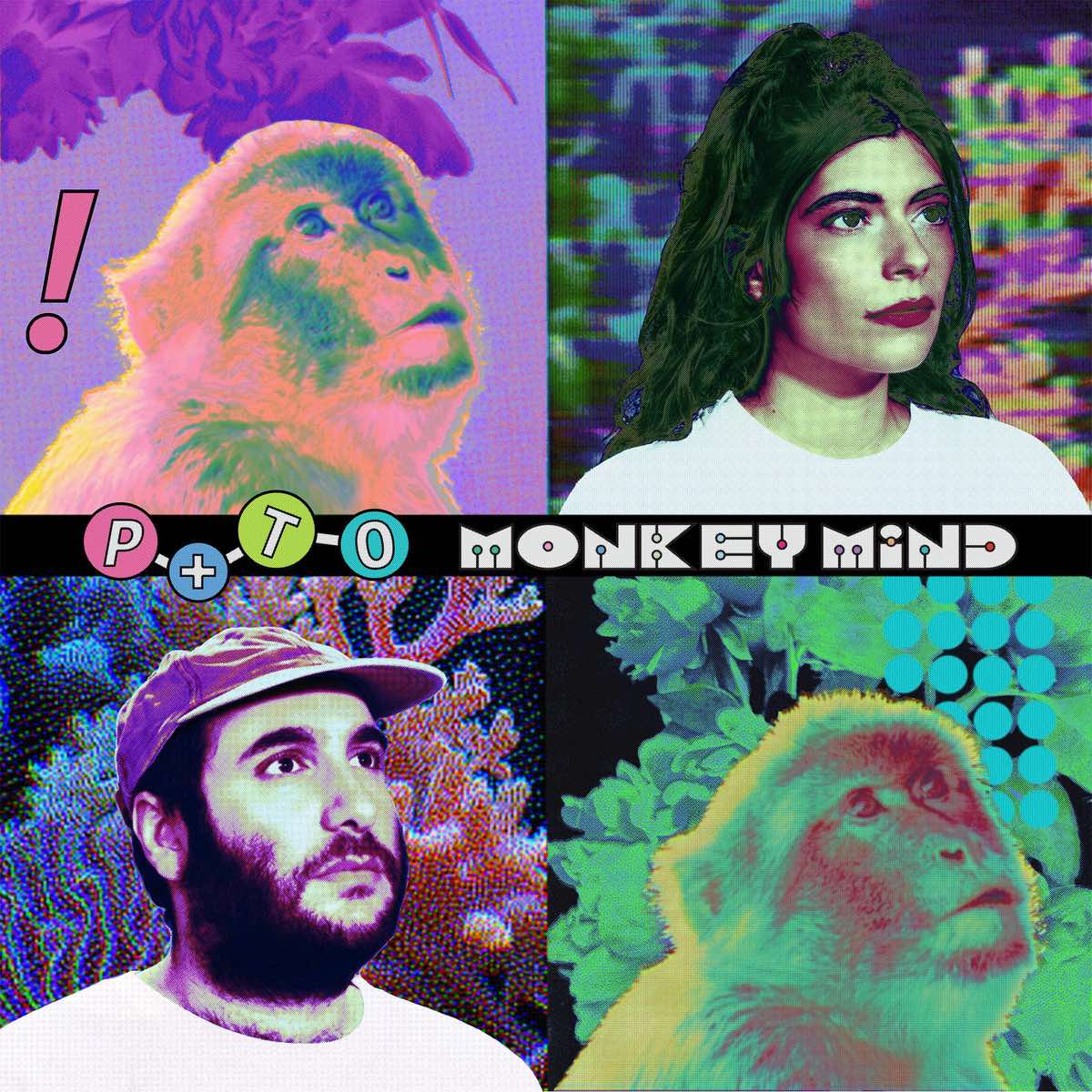

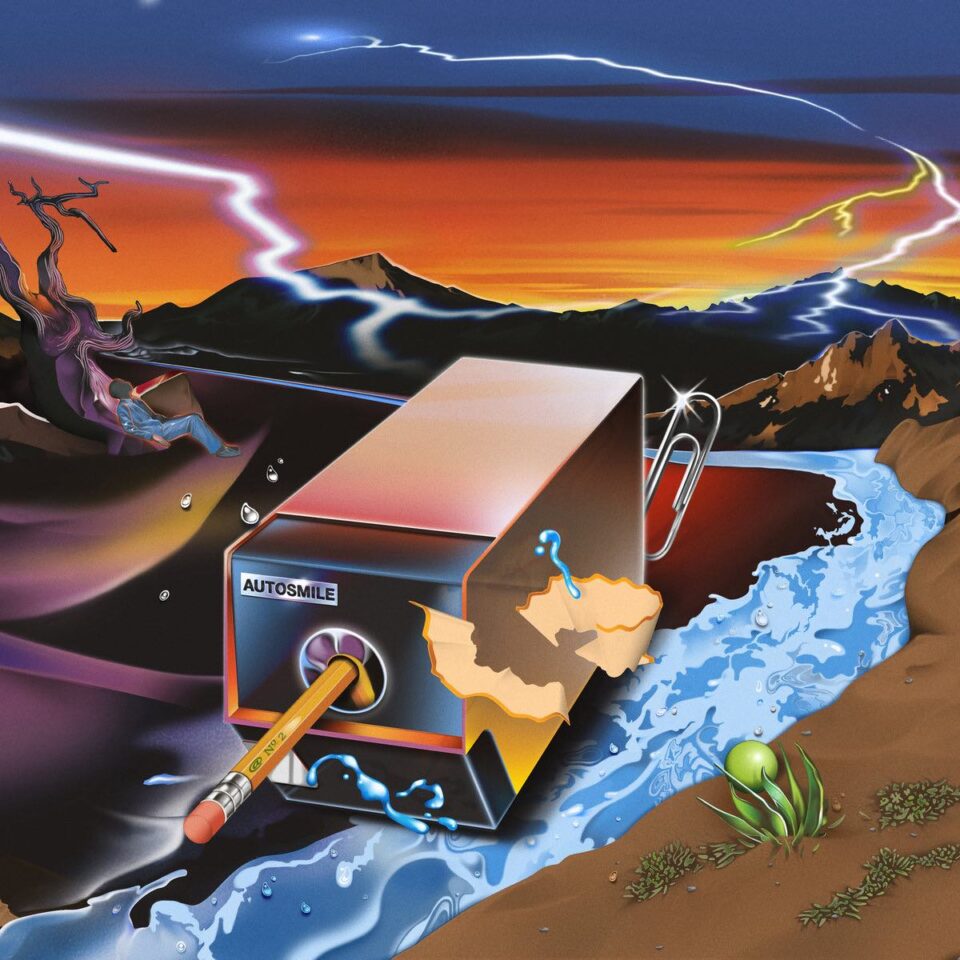
Pearl & the Oysters
Monkey Mind
STONES THROW
Let me save you a trip to Google: That instrument is called the flexatone. It’s the metal paddle with the wooden balls that makes a cartoonish wobble sound when you shake it, and I first learned its name by search-engine trial and error after seeing Pearl & the Oysters live. The flexatone isn’t the most prominent facet of the band’s retro-futurist jazz pop—it may only appear on one song per album—but it might be the most emblematic of their irrepressible whimsy. Though the band touts their sixth album Monkey Mind as being recorded live to tape with minimal overdubs, they still make room on “Stratford & 52” for a treasure hoard of musical trinkets: flute, triangle, and, in a cosmic wavepool of reverb, flexatone. This wouldn’t be a Pearl & the Oysters album otherwise.
According to their Bandcamp page, multi-instrumentalists Juliette Pearl Davis and Joachim Polack formed their “joyous society of galactic gleaners” after “winning a free trip to the Ostereoid Asteroid Resort on the back of a dehydrated cereal box.” Accordingly, their sound is Burt Bacharach by way of Stereolab—stuff you’d expect to hear at the orbital Hilton from 2001: A Space Odyssey. Pearl & the Oysters have spent a decade in their loungey lane and remained a hidden undersea gem even as Laufey and Ginger Root have surfaced in both the mainstream and indie spheres. Even so, the Oysters have always attracted heavy-hitting collaborators: 2023’s Coast 2 Coast, for example, featured guest vocals by Laetitia Sadier herself. The new one—produced by Jonathan Rado—ends with a saxophone solo by Joey Dosik of Vulfpeck.
Six albums in, the band’s real biography shows more and more through the layer of outer-space escapism. Davis and Polack, who actually met as high school students in Paris and now live in Los Angeles, titled Monkey Mind after a Buddhist metaphor for the restlessness of a worried brain. They wrote the album in early 2025 amid the start of the second Trump administration and a season of Southern California wildfires. Flames lick at their ever-summery keyboard and cowbell grooves from the first line of the first proper song, “Wide Awake,” where Davis finds “no shut-eye in this seaside hell” and harmonized guitars blare like alarm bells. “Mandarin Moon” makes for an eerie ballad in spite of its sublime flute and synth melodies as Davis sighs: “Mandarin Moon, you look so gritty / Through all the raining ash.” As a hush falls at the end of the verse, you can hear the anxious hiss of the tape spooling away in stunned silence.
Pearl & the Oysters built Monkey Mind around the 24-hour cycle; it begins with an instrumental called “Sound Asleep,” jolts into action with “Wide Awake,” and ultimately drifts off from “Lights Out” back into “Sound Asleep (Reprise).” It’s not a topical album, but it does bend already-surreal daily life through the band’s heightened, psychedelic prism—whether in the jumpy funk of “Shinkansen,” with its phaser-blasted keys and double-time tambourine beat, or in the piano-driven ennui of “Solar Return.” On the latter, Davis plays the flugelhorn, once again proving that leaning into a more live-oriented sound doesn’t have to mean giving up the bells, whistles, or brass. Likewise, life in the 2020s feels grim, whether the world happens to be literally on fire or only figuratively. On Monkey Mind, Pearl & the Oysters prove their music can reflect that reality without sacrificing the whimsy that makes waking up worthwhile anyway.
