
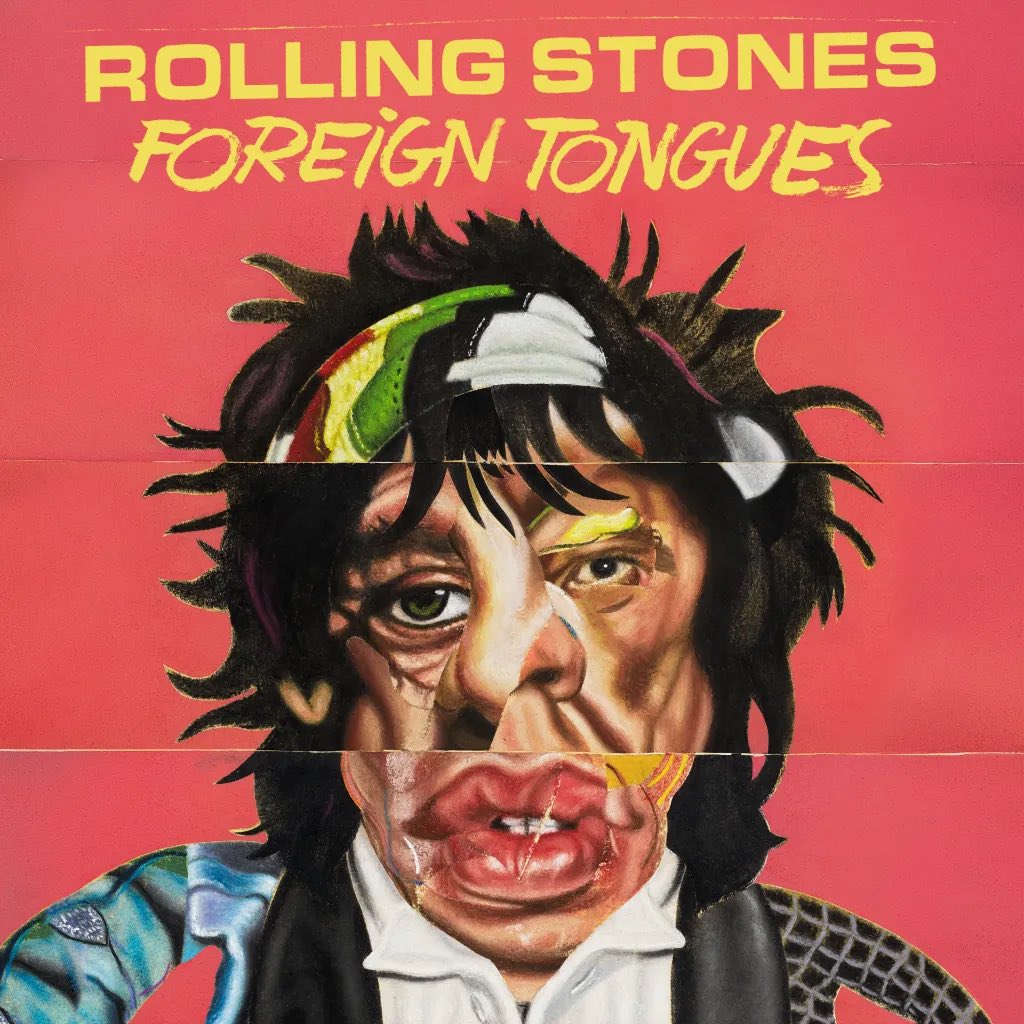


The Rolling Stones
Foreign Tongues
POLYDOR
Our Boomer icons are nearing the end of the line, and they all have their own ways of processing it. Bob Dylan has been musing on mortality as far back as Time Out of Mind—an album released some 30 years ago, when Bob was a spritely 56. Paul McCartney, on the other hand, prefers not to dwell on death but to chronicle his youth, something he does to stirring effect on the endearing The Boys of Dungeon Lane. And then there’s The Rolling Stones. If they’ve been elder statesmen for decades now, they’ve also proven stubbornly resistant to acknowledging their age or moving on from their youthful habits. Even as their albums have become more workmanlike and less surprising, they remain committed to the same brand of rock and roll decadence that’s been Mick ’n’ Keef’s stock in trade since the ’60s. The notion of them releasing their own Time Out of Mind, earnestly confronting their own frailty, is all but unthinkable.
On Foreign Tongues, their 25th album, they probably come as close as they ever will to reckoning with their twilight years—and if it isn’t as weighty as one of Dylan’s latter-day records, it’s certainly in character for Britain’s most enduring bad boys. “One of these days, gonna fall down dead / But it’ll go a lot quicker if you hit me in the head,” snarls Mick Jagger, age 82, over a breakneck garage-rock instrumental. If the options are a frank discussion about the ravages of age or simply receiving a lethal blow to the brain, well, Mick’s made his preference clear. Foreign Tongues is loaded with moments like this one, instances of the Stones owning up to how the world around them has changed, but doing so without ceding any of their customary attitude or defiance. It adds up to a surprisingly effective late-career blockbuster, one that finds the grizzled rock-and-roll veterans bringing a fresh spark to their signature sound.
Like nearly every album they’ve released this side of Some Girls, Tongues plays like a sampler platter of all the things the Stones do well: sleazy blues-rock (“Rough and Twisted”), slinky funk (“Jealous Lover”), monster arena-rock (“In the Stars”), spiky disco (“Divine Intervention”), gnarled country (“Ringing Hollow”). There’s a showcase for Keith Richards (“Some of Us”), and another chance for Jagger to indulge his fantasies of being in the world’s poshest punk band (“Hit Me in the Head”). The closest thing to a fresh wrinkle is the thumping take on Amy Winehouse’s “You Know I’m No Good,” a rare opportunity to hear the Stones cover something relatively contemporary. Jagger even plays the horn parts on his harmonica to bruisingly good effect.
It’s tempting to call Foreign Tongues another perfectly fine, pro forma Stones album, the latest in a long line to be heralded as their “best since Tattoo You.” But there’s equal risk in underselling just how good this one is. It feels more inspired than 2023’s Hackney Diamonds, less like the sound of a band shaking off its cobwebs and more like a band burrowing deeper into a rich creative vein. It's direct, punchy, and lean in a way that makes it more playable than A Bigger Bang. Part of what makes this one so satisfying is the presence of Andrew Watt, who also produced Hackney as well as the recent McCartney album. A self-described Stones superfan, Watt demonstrates a real gift for helping the Stones sound modern while remaining true to themselves. There are no concessions to trap beats or Auto-Tune here, but there’s just enough digital sheen to make Foreign Tongues sound full and appealing.
Several songs feature soulful harmony singers, an element that was critical to the Stones’ classic run and has been sadly absent ever since, while several others include other inspired accents (would you believe that “Divine Intervention” swells with a majestic horn section that feels lifted from a classic-era Springsteen album?). But another part of it is that the Stones simply sound like they’re ready to engage with the world as it is in a way they haven’t in a long time. Jagger alludes to age only a time or two, but he also declares his intentions to dance through the apocalypse; on “Mr. Charm,” he even takes a shot at Elon Musk. With “Ringing Hollow,” a tear-stained love letter to a vanished America, they provide one of their most effective political songs ever, largely because the song is animated less by rage than it is sincere, disappointed affection.
If Hackney Diamonds felt like a measured attempt at a vintage Stones album, Foreign Tongues has the feeling of a band that’s simply having fun. A lot of that comes from Jagger, who provides some of his wordiest songs in years, overstuffed with jokes and ad-libs. The gigolo’s anthem “Mr. Charm” might not appeal to fans who long for the darker themes of Sticky Fingers, but Jagger’s sheer perkiness is difficult to resist. At the same time, this feels less like a glorified solo album than Hackney did, with memorable guitar interplay abounding. In “Back in My Life,” Ronnie Wood lets rip a blistering solo, while Richards somehow finds new additions to his endless book of riffs. The Stones sound alive to the present moment, but never do they forget where they came from. Foul-mouthed opener “Rough and Twisted” recalls their youthful days drinking “muddy waters,” and the album ends, like the last one did, with a throwback to the music that first brought Mick and Keith together (in this case a crude cover of Chuck Berry’s “Beautiful Delilah”).
Foreign Tongues is an album that upholds the Rolling Stones legacy not through rote preservation, but meaningful extension. That’s enough to make it their most satisfying in a very long time.
