
This interview involves conversation about suicide. If you or someone you know is experiencing suicidal thoughts or a crisis, please reach out immediately to the Suicide Prevention Lifeline at 800-273-8255.
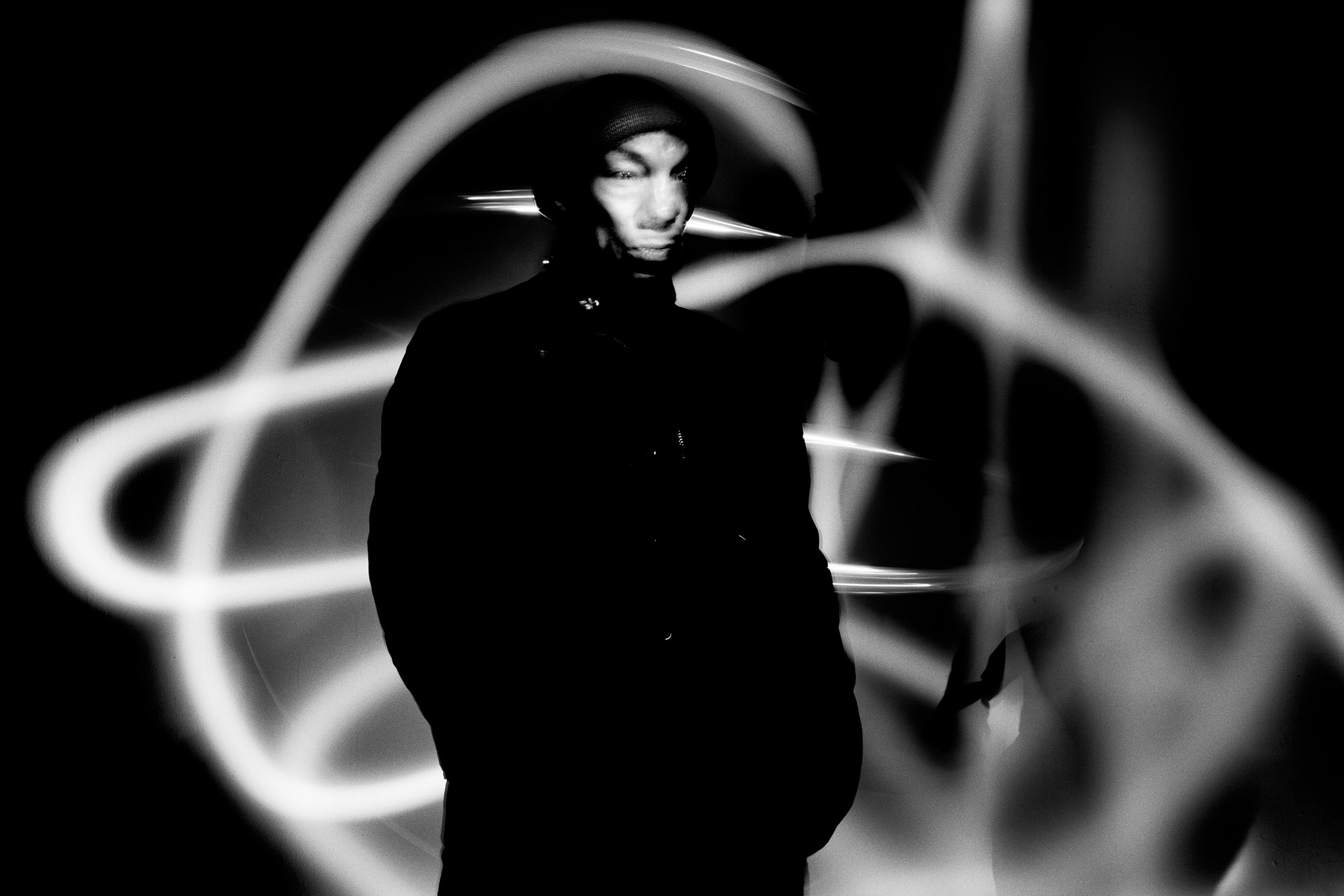
It’s not that trip-hop trailblazer Tricky has been idle for the six years since he released Fall to Pieces, his last studio album under his own name—in fact, he’s actually been quite prolific. But his work in the interim has come out under various other names: Lonely Guest and Theis Thaws, not to mention his work behind the boards for Polish vocalist Marta Złakowska on 2025’s Out the Way.
But when he created his darkly elegant new Different When It’s Silent LP, he knew it was time to present it as a Tricky album. It’s the 15th solo record he’s released since his acclaimed 1995 debut, Maxinquaye, which saw him splintering off from his work as a founding member of Massive Attack. The album was inspired by the death of his daughter Mina Topley-Bird—a.k.a. 404 Guild’s Mazy Mina—who passed away from suicide in 2019. After “hiding behind” those side-projects, his manager Alan McGee talked him into returning to the solo moniker in order to help launch a new chapter in his career. As on his previous releases, Tricky includes notable guest artists alongside his own performances on Different. This time out, he prominently features two vocalists: his longtime collaborator Złakowska and up-and-comer Mitch Sanders.
It’s also been several years since Tricky last toured North America, and he’ll rectify that when he kicks off an extensive series of shows here on September 18 at Riot Fest in Chicago. By then, he’ll certainly be well-rehearsed: For this interview, he’s calling from Sweden, where he’s halfway through an intensive run of 30-plus concerts across Europe and the UK. You can find his full list of shows here, and read on for our Q&A.
What made you decide to return to releasing music under your own name with this particular album?
I’d been hiding behind my side-projects and stuff, because my daughter died and I didn’t really want to face the world. When my manager heard the album, he was like, “Mate, this is a Tricky album,” and it made me realize I’ve got to get back to it. It’s good. It’s like the next chapter of my career.
Condolences on your daughter’s passing.
It’s the strangest thing. Nothing natural about it. Death is difficult as it is, but the way someone dies is even more…it’s unworldly. So unless people have been through it, they’ll never understand it.
It’s good that you’re pouring your grief into your art instead of doing something self-destructive.
Well, I did that for a while. I tried Valium, alcohol, drugs. And then I started going to therapy. I went to therapy for a year and a half, two years. I think that kind of helped. And then this is really helping me, getting back to my career. Traveling and touring is really helping me, as well.
You’ve always explored very different musical genres with your work, but it always still has your own distinctive sound running through it. How do you make sure you don’t stray too far?
Oh, it can’t stray too far because it’s me. My music and my lyrics are my life, and other people’s lives, as well. Watching the world. So it can’t stray too far because it’s really me, and I’m not doing things for success or radio [play] and stuff. So I’m fortunate enough to have my own sound, and whatever music I do is always going to be me.
“My music and my lyrics are my life, and other people’s lives, as well. Watching the world... I’m fortunate enough to have my own sound, and whatever music I do is always going to be me.”
Your lyrics are very evocative. How did you learn to write like that in the first place?
When my grandmother used to go to work, she used to leave me at my great grandmother’s—my great grandmother was alive until I was about 12, 13 years of age, so I was very lucky. When she used to drop me off, the entertainment was they’d sit you in the middle of the floor with a pen and paper. That was it. That was what you had to do. My great grandmother didn’t have a television until later on. So being there, the entertainment was the [coal fire] and a pen and paper. That’s how we entertained ourselves.
How do you decide who will collaborate with you?
I prefer the underdog—someone who doesn’t have the opportunity, someone who’s not known. I like working with well-known people, don’t get me wrong. But for my albums’ main vocals, I like to bring in people who are not known. I feel like as an artist, you’re supposed to introduce other artists. That’s the kind of culture I come from. This is the problem with [my hometown]: Bristol is so caught up in the past that there’s no new artists coming out of it. People talk about Massive Attack and Portishead, and they’re so into the past that the future can’t come through. So Mitch [Sanders], he’s from across the road where I grew up. He’s a lot younger than me, but he goes to the same pubs I went to when I was his age and is a real Bristol guy. But because he ain’t got no links to Massive Attack, it’s hard to come through. So I like to bring people through.
You’ve been so prolific through the years. How do you stay so inspired?
Because I love it. There ain’t such a thing as writer’s block. I don’t believe that. If you love what you’re doing, how can you be blocked? I could go into the studio today and make something. There’s touring and making music, that’s what I do. And I love being in the studio because you don’t have to deal with anything—I don’t have to deal with real life at all.
How did you know you should do this in the first place? Why be a musician at all?
Lack of being able to do anything else, to be honest. My uncles were all street guys; all my uncles were in prison. And I knew I wasn’t tough enough to be like that, because I’m not like my uncles. So there’s not many choices where I come from. Music was the only thing I had, really, and it kept me out of trouble.
It’s good that it worked out for you. Many people want to be a musician, but then they find out they don’t have what it takes to actually do it.
I think some people’s talent is misplaced by just wanting to be famous, or trying to sound like someone else—you can feel it and see right through it. So I think it’s knowing your talent and not really being misled by success. Success has got nothing to do with happiness. I’ve been a multi-millionaire, I’ve been successful, and I’ve not felt good. So I think success has got nothing to do with happiness at all, it’s two different things.
“For my albums’ main vocals, I like to bring in people who are not known. I feel like as an artist, you’re supposed to introduce other artists. That’s the kind of culture I come from.”
You have a lot of tour dates coming up here in North America in the fall. What can we expect when we come to one of your shows?
During my show, people either totally love it or don’t like it, because it’s just about the music—there ain’t no frills. If you’re just going for a party night out, you’re going to the wrong place. If you want to experience music, come to the show.
What do you think about the legacy that you’ve created so far?
I don’t really look back that much, so I’m not really that bothered about a legacy. When I’m dead, none of that will matter, so I don’t understand people who want legacies. People say to me, “You helped me through a very difficult time in my life,” so I realized it’s not about me or my legacy. I’m here for other people. When you realize that, everything becomes easy. FL