
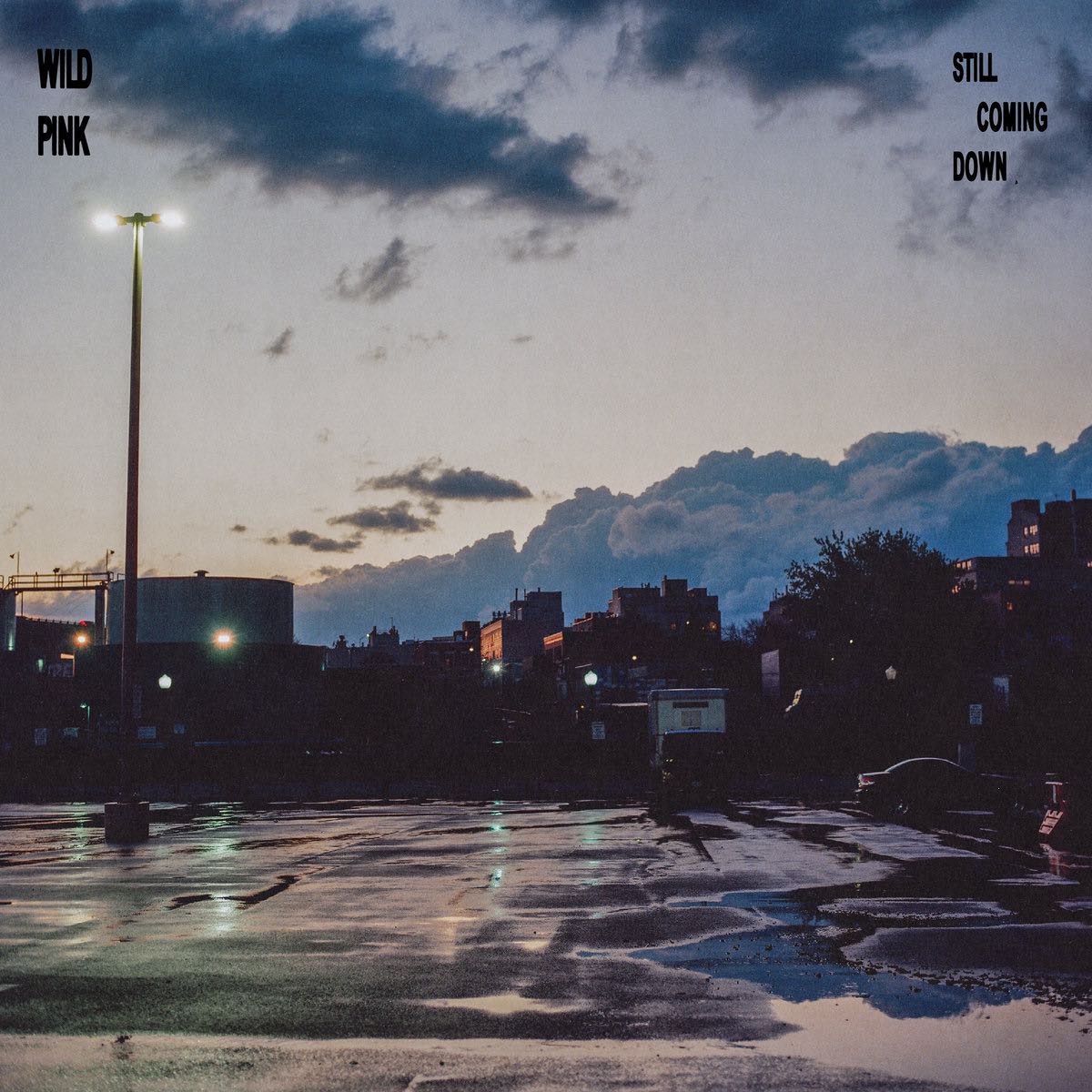

Wild Pink
Still Coming Down
FIRE TALK
Wild Pink materialized in 2015 and, in the marketing-saturated world of the music business, faced some challenges from the start. A modest project that technically qualified as a band despite fundamentally orbiting around majordomo John Ross, Wild Pink sheepishly slipped out a couple of EPs during its first two years before releasing their self-titled debut in 2017. Those who took notice may have confused them with Wild Flag, a punk supergroup diametrically opposed to Wild Pink in virtually every respect: They’d begun five years earlier in the Pacific Northwest as an offshoot of Sleater-Kinney, instantly gained a strong following, and had the whole world in their hands before disbanding the year before Wild Pink coalesced.
Ross chose a path of different resistance. Opting for a heartfelt, low-key, slow-tempo sensibility, Wild Pink very much identified itself as the turtle in the race against the hare. Over the course of the past 20 years, those who’ve kept tabs on the band have witnessed Ross maturing from a young man into an adult, not only through his performances but in the words he thoughtfully selects for the lyrics to each of his six albums to date. Our latest opportunity to get up to speed with Ross comes in the form of Still Coming Down—and there’s a lot of catching up to do. To the extent that Ross played it low-key on his band’s previous releases, he’s a transformed man. Which is perhaps unexpected for a musician this deep into his career, but entirely foreseeable and understandable when one is availed of the fact that he beat cancer and became a father for the first time. Whereas his last record, 2024’s Dulling the Horns, poignantly documented his struggle through the disease, Still Coming Down finds Ross re-embracing life—even if the album title would seem to contradict that assertion.
The evidence is found, where else, in the music itself. Under the direction of visionary producer Alex Farrar, harmonicas, horns, keys, pedal steel, and other instrumentation abound, as if sonically depicting a human being standing up in a field, stretching their arms open wide, and gazing at the sun. Yes, some of the stories Ross tells on Still Coming Down are of downtrodden strangers and lost souls (“500 Is the New 250” is a prime example), but the overarching message is that restoration and healing are within our grasp. “I feel like I’ve found my voice on this record,” Ross said in a statement tied to the project, a record whose complexity makes it all the more potent. Good luck finding a moment on Still Coming Down where that assertion doesn’t seem apparent.
