
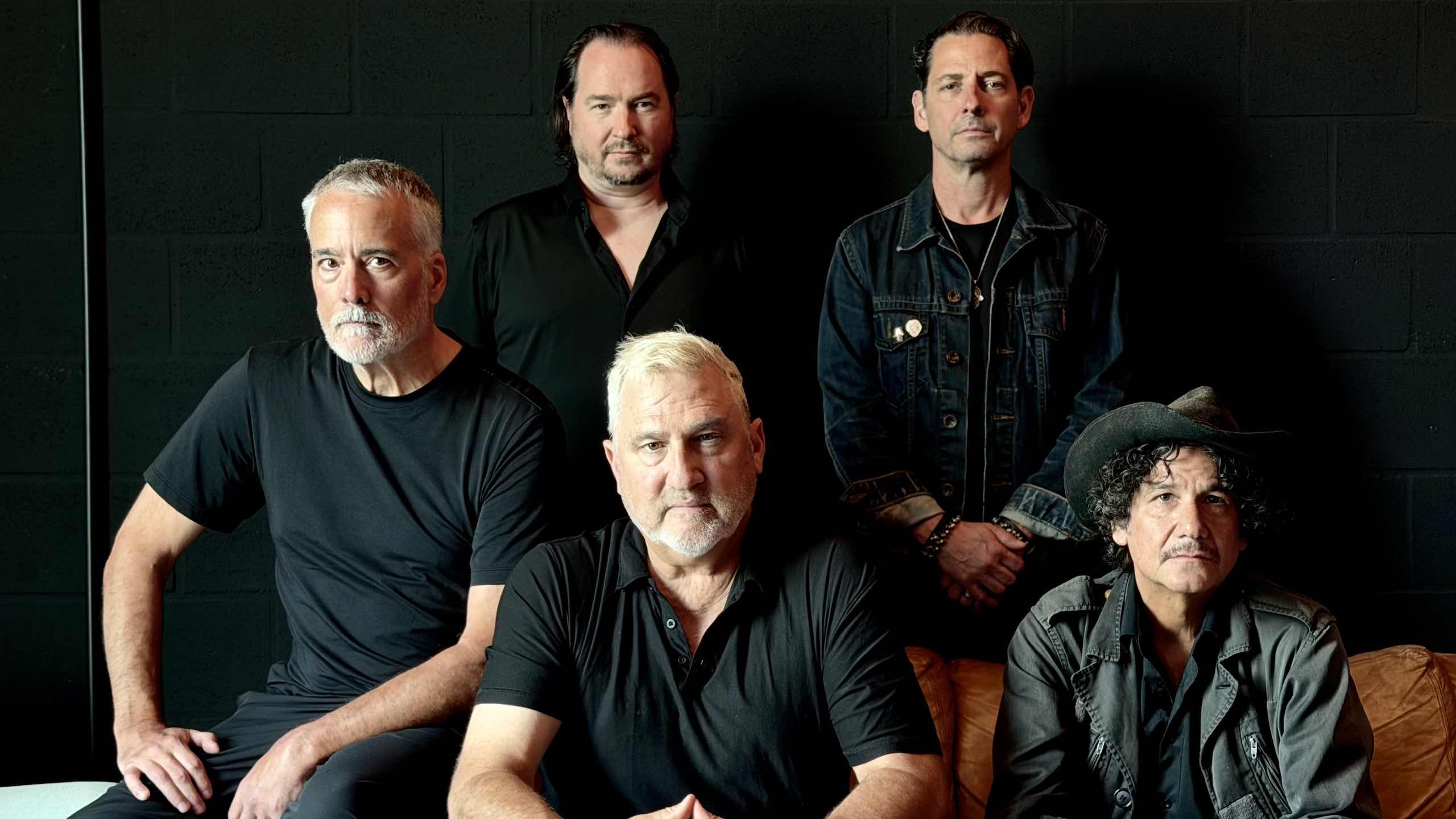


On their 10th studio album and follow-up to 2022’s How Do You Burn?, veteran alt-rockers The Afghan Whigs sound as inspired and focused as ever. Produced and mixed by frontman Greg Dulli and guitarist Christopher Thorn, and recorded between Joshua Tree, New Orleans, East Hollywood, and Cincinnati, Soft Control sees the band continue to push forward with some of the best music of their career. The four years in between releases afforded Dulli and company time to craft 22 new songs, of which they narrowed it down to to 10 for the final track list. At the age of 61, Dulli remains confident and inspired, showcasing the inner peace he’s found as of late across these songs. Throughout Soft Control, the frontman pushes himself both lyrically and vocally over some of the band’s strongest compositions.
With Soft Control out today, we spoke with Dulli, who broke down the stories and inspiration behind each of the album’s songs.
1. “Jungle Roux”
This was one of the earlier ones, and then it just kind of sat there for a minute. I brought in a friend of mine to play synthesizer, and he played the one part of the synthesizer that he made a mistake on, and that’s the beginning of the song. So that was a very, very happy accident there.
2. “House of I”
This song happened so fast. We were down in New Orleans, and I’d seen this performance on YouTube by some high school kids either in Pakistan or India. They were outdoors and there was a band on stage, and all of their classmates started playing this drumbeat. I’m like, “Oh my god, I love that drumbeat!” So I showed it to [drummer Patrick Keeler], and I was like, “Let’s do that,” and he did. I listened back to it, wrote that riff, and played it. That was the most ready-to-be-born song in my recent memory. That was one of the easiest songs I’ve ever written.
3. “Duvateen”
When I first wrote “Duvateen,” I wrote it on guitar and the working title was “Stones Throw,” because it sounded like a Keith Richards riff. It’s a completely different-sounding song, so it evolved in a very organic way. When I got to the vocals, I ended up pushing the falsetto a little bit and was going for Curtis Mayfield vibes. I remember somebody saying, “You should do that right after the first verse.” And I’m like, “No way, man, this isn’t a verse-chorus-verse song; this is a constantly building song.” It’s the spiritual lead of the record, and it’s one of my favorite songs that I’ve ever written.
4. “My Lover”
I was in New Orleans working on my solo record and my friend Mark McGuire, who plays in Emeralds, was putting guitar on some of my songs. We started thinking about David Bowie. I don’t know what made me think of this, but the best David Bowie song that David Bowie didn’t write was “A Girl Like You” by Edwyn Collins. I asked, “Have you ever heard that song?” And he said no, so we played it for him and he loved it. I made everybody stop, and before we left I put down a scratch vocal—and there’s the other super-fast song that came along. I didn’t put it on my solo record, and brought it back to the band so we could do it as a band.
5. “The Deepest Part of the Darkest Shadow”
I was back in Hamilton, Ohio playing golf with my cousin and my uncle, and I hit a ball ridge. The green was over the ridge, so I felt like I hit it well. I drove my cart over and I asked my cousin, who was already over there, “Did you see my ball?” And he said, “Yeah, it’s right there.” And I said, “Where?” And he said, “On the green,” and I said, “Where?” I couldn’t see it. He said, “In the deepest part of the darkest shadow.” I pulled my phone out and wrote that down in my notes immediately and then putted it in for par.
6. “Mariah Luster”
When I’m working on a song, I write the words last. So the engineer will inevitably say, “What do you call this one?” Most of the time, I never change what I call it. I was working on that song, and I went looking through my phone, and I had nothing. I kept scrolling, and then finally I saw the name Mariah Luster on a 1-800 number, and I said, “It’s called ‘Mariah Luster.’” He goes, “Who’s that?” and I said, “I don’t know, but there’s a phone number; let’s call it.” We called the phone number, and it was our insurance company. There’s someone named Mariah Luster who works for Mercury Insurance and now has a song named after her.
7. “Memphis, Texas”
Money Mark, myself, and Patrick Keeler were actively contemplating our own clothing company, and Mark came up with Memphis, Texas as the name. It never happened, so when Christopher asked me what this one was called, I said “Memphis, Texas,” since no one else was using it. That’s a Money Mark special right there. Petra Hayden came over and sang. The song is very road-trippy. Once I get songs in some kind of shape, I’ll drive around and I’ll sing along to them. That’s how I work out the lyrics on some of those songs, and that song in particular really benefited from the drive-around strategy,
8. “77”
I couldn’t put it any better than saying that it’s a cheeky reference. That’s exactly what it is. This one was also an earlier one; it was 77, and I never doubted it. I love the song.
9. “Loose Talk”
This was the song where, once I had it, I knew I had the record. “Loose Talk” was the song I was looking for, and also a fast one came along, and it wrote itself.
10. “A Simulation”
This song happened out of a jam. When I got the heartbeat-away part down, I started noticing the aching beauty it had. I asked Jon Skibic to do the ambient beginning, and then I had my doctor at the time, Dr. Pat—who’s an amazing pedal steel player—come over and play pedal steel. The atmosphere it created, leading into the song I’d written before, gave it that elegiac ending I’m always fond of. So it was very emotional, very moving, and very contemplative—the perfect way to end the story.
