


Ty Segall has become so frequently associated with the revival of garage rock that it can be difficult to remember that he’s his own person. After starting his solo career over 20 years ago, he’s put out more music than Genghis Khan spawned children; his solo releases are too heavy to carry with two arms, and at the same time, his resumé includes tenures with about a dozen bands and collaborations with, well, why are we even bothering to quantify his output anymore? You get the drift.
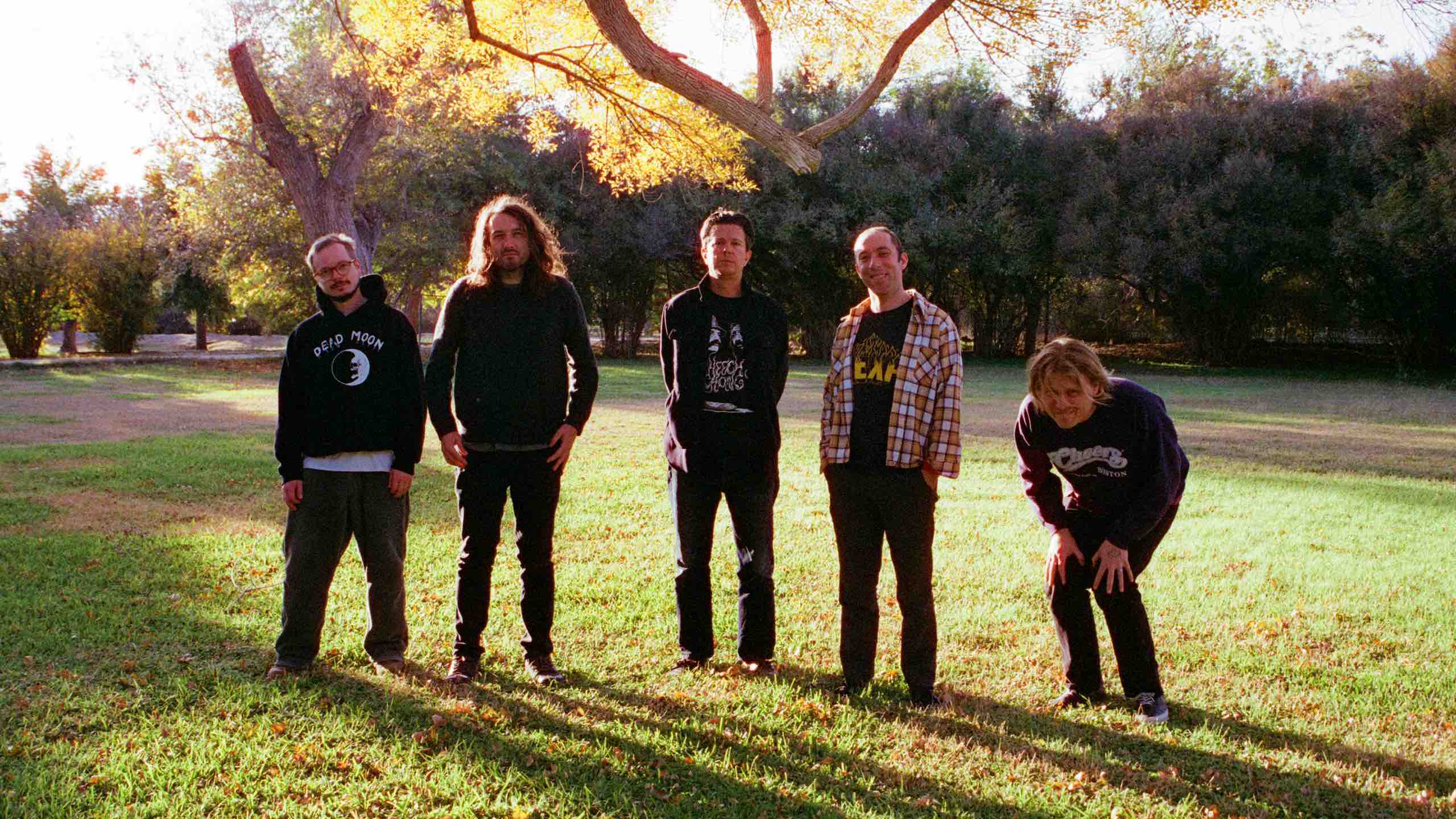
Now a family man, but no less busy pursuing his artistic endeavors, this week will see the release of his newest album, Chrome, through longtime label Drag City. This record is distinct in that it features Segall performing with a new band that features his longtime garage-rock revivalist abettors Mikal Cronin and Emmett Kelly on bass and guitar, along with more recent session peers Ben Boye on keys and Evan Burrows on drums. The joy and excitement Segall felt playing with the crew is palpable throughout the record, which captures the musician reinvigorated and appropriately ripping punk-pop numbers as a manifestation of that rebirth.
We recently caught up with Segall to ask him five questions to which, astonishingly, he provided five answers. Enjoy the read—and then pre-order Chrome, one of the stronger entries in Segall’s abundant oeuvre.
When you finished Chrome, did you feel any different than when you completed your other past releases?
Yeah, ’cause it was my first record with this lineup of this new band. Some of my albums are similar in terms of process, but this one was specific to the collaborative nature of working with the band. Also, I wrote a lot of songs with Evan, and I hadn’t done that before. I decided before doing this record that I wanted to do a collaborative thing. Sometimes it’s more natural and organic, sometimes it’s like, “No, we’re going to do this this way.” I didn’t want to sit in a room by myself and make all this stuff. The last two records are very introspective; I mean, there were collaborators, but on Possession I played everything, and I often recorded everything. But it’s cool to be in a studio playing with everyone, and I’m just playing the guitar and singing. There’s just one guitar overdub. That’s it. Everything else was live.
The press materials for Chrome say you were hearing voices after putting out Possession. Do you believe in exorcisms?
I don’t believe in exorcisms in the traditional sense, but I do believe in the power of belief and putting importance into something in a magical way, whether it’s superstition or luck. Even if it’s not real but you just believe it, it changes how people act and it changes the outcome of things. We need to believe in otherworldly things, and I think a lot of that has to do with hearing voices. It’s more of a reference to the inner conversation that we’re always having with ourselves. So this record has a lot, lyrically, to do with more of a subconscious, subversive conversation with that side of one’s self. It is a reflective conversation, which is a bit of a nod to the title Chrome.
Do you get tired of hearing the word “prolific” used in relation to your music?
Yeah. I know it’s a thing, and I appreciate it. It is hard for it to not feel like it’s a negative when it comes to putting out records, because I do spend time on things and I don’t think of my records as just stuff to sell at shows. They’re standalone things. They’re important to me. The question I get the most that I don’t like is, “Why are you so prolific?”
Do you have physical sanctuaries or places you find provocative in terms of creative inspiration?
In a room with people is always a good creative place. It doesn’t really matter where I am as long as I have time. My best creative time is in the morning. That’s when I’m less distracted and have a more pure “morning brain.” So that’s more of what it’s about for me: not really where I am, but the time of day. You almost don’t get caught up in worrying about what you’re doing in the morning. Later in the day, you’re almost too aware of what you’re doing, and it kind of can throw you off. .
You’re friends with Tim Heidecker—or you’ve appeared on his Office Hours podcast, at least. Do you have an anecdote you can share about a time you’ve spent with him?
I’ve only hung out with Tim a couple of times. He’s just a funny dude. One time I pitched a show to him. It was a musical comedy, and I played this shitty Casio and sang these insane songs—it was basically a tragedy about a clown just going about his day. He was like, “Cool, let’s do it.” But it just fell apart on my end. So I basically got a show green-lit but screwed it up. He was gonna produce it through Abso Lutely Productions. There’s no footage, but there’s a whole album of stuff written. It’s insane. Maybe one day it’ll see the light of day.
