
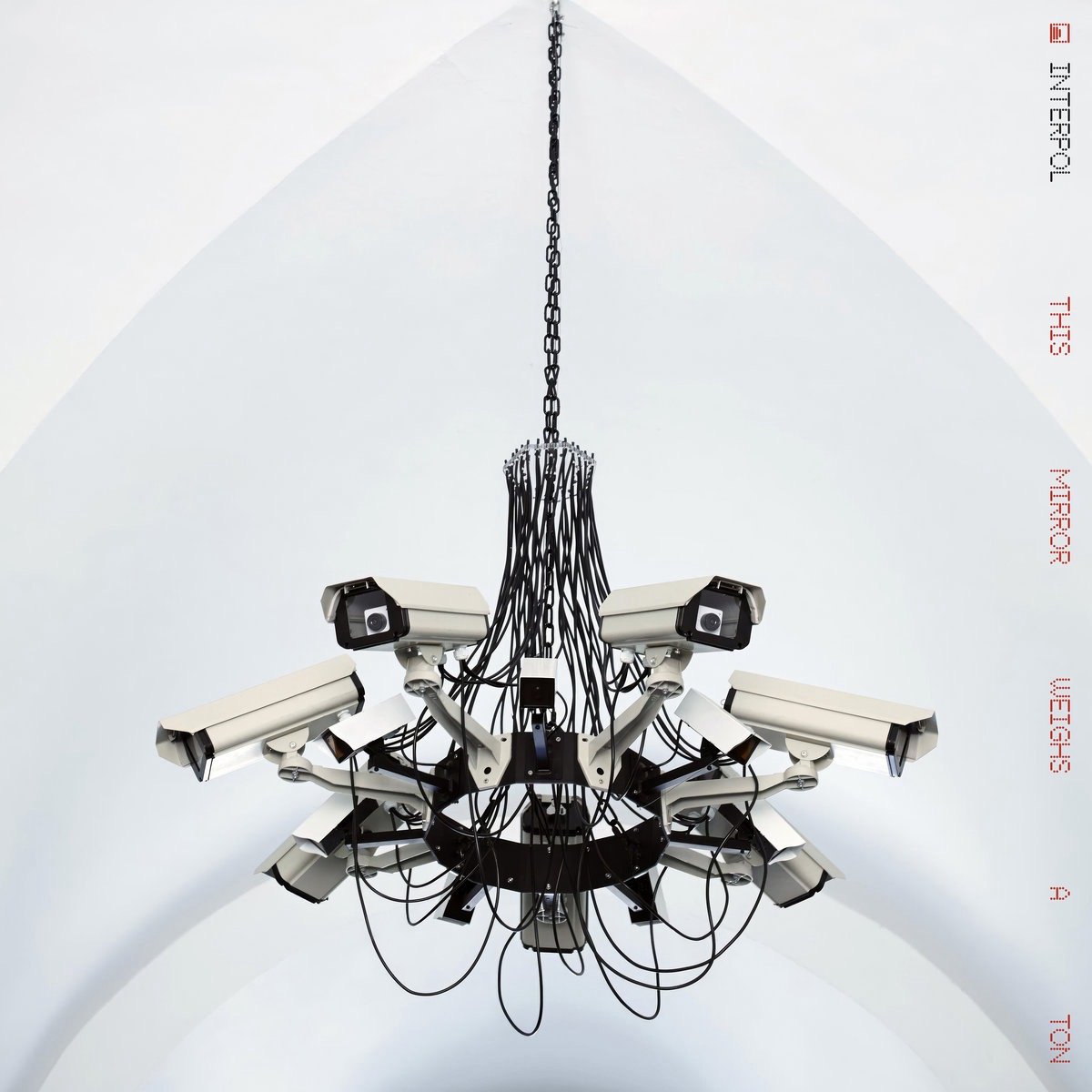



Interpol
This Mirror Weighs a Ton
PARTISAN
After helping to define the sound of the early-2000s post-punk revival in New York City, Interpol have hardly ventured outside of their own impeccably tailored shadows. The unwavering support from their fanbase seems to suggest that the flashes of brilliant darkwave and shoegaze experimentation hidden across their later albums—2014’s El Pintor, 2018’s Marauder—have only further solidified the already-high esteem the band garnered with their still-poignant debut album. It seems that in the nearly three decades of the band’s existence, their general narrative has remained fixed, bringing with it a distinctive weight from fighting against entropy: the illusion of staying the same.
Yet This Mirror Weighs a Ton shatters that stale framing. It’s a work of forced reinvention, with Paul Banks’ long-gestating tech-era anxieties and Daniel Kessler’s visceral sonic world-building colliding in a swirling romance. Rather than idealizing a reinforced sound, the band finds themselves prioritizing disillusionment, a disregard for their previous canon. They still sound like Interpol, to be clear; the familiar crooning and harrowing harmonic melodies are just expanded into alien new realms by Andrew Wyatt’s production, which wraps the precise sounds of their standard rock quartet in a silhouette of beckoning strings, ominous synths, tidal backing vocals, and other, less-definable warped sounds. All of which pairs well with the type of meditations on identity that have long provided the scaffolding to Interpol’s music as they shed some of their recent rigidity with this restless and vulnerable step forward.
Early single “See Out Loud” ties red string between past and present with its direct, propulsive surge of jagged guitar while complicating the formula through the rare lead vocal turn from Kessler on one verse. Banks demonstrates his part of the evolution here with his shift from stoic declarations to an uncanny fluidity in his delivery, addressing self-reflection with unprecedented emotional transparency. It’s an inversion of Interpol’s work as we’ve always known it, as well as a new take on the burden of self-isolation; where that onus may have once primarily stemmed from a sense of myopia within relationships, this mirror version of the band depicts a distorted sense of reality, one that parallels a society shrinking away behind its screens.
Interpol are intentional every step of the way as they turn away from the smooth path of past glory into untrodden new terrain full of artificial futures and outdated doctrines, giving us a thrilling soundtrack to a painful new epoch. We’ll still try to hold all that weight.
