
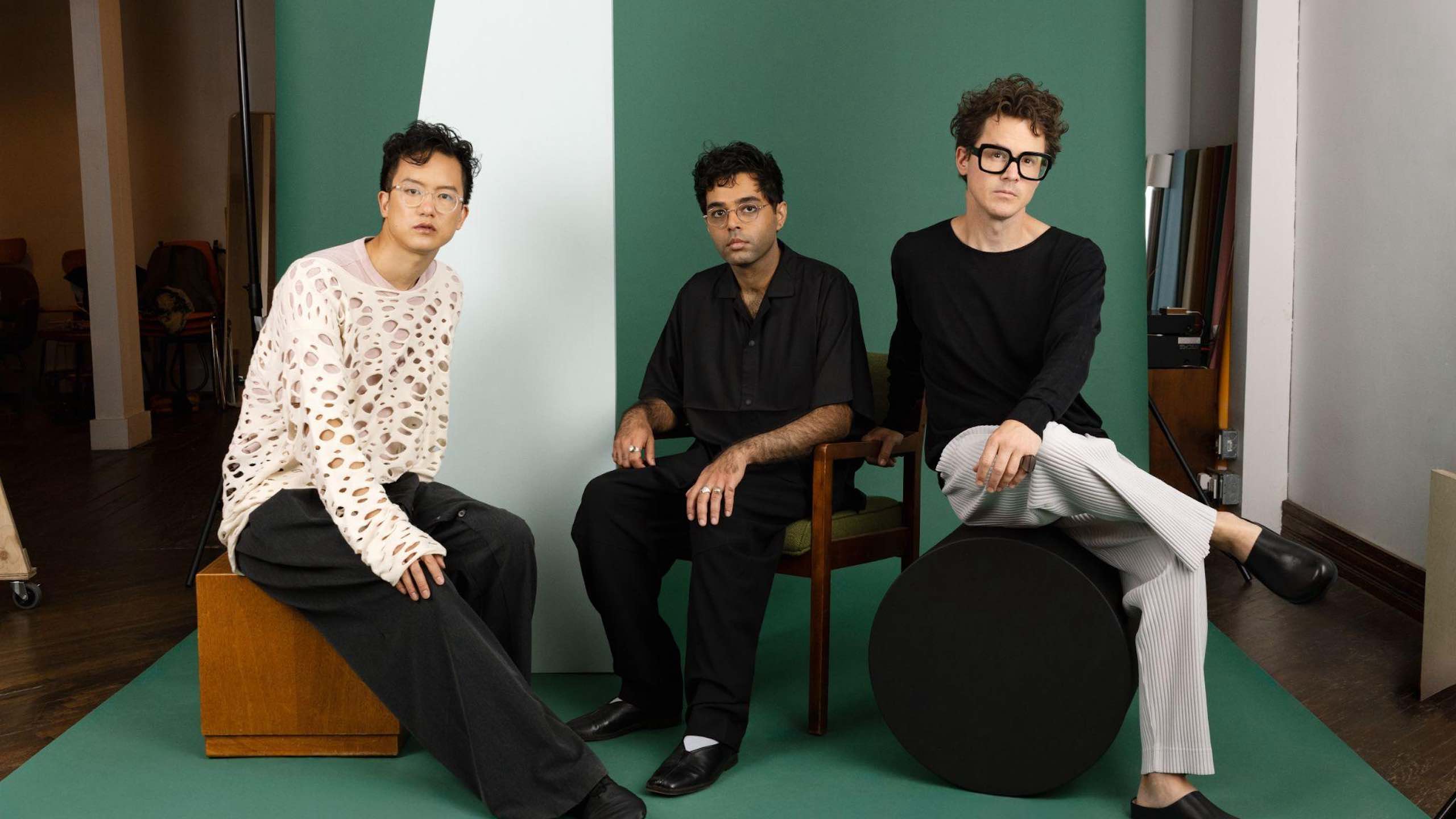


Growth seemed gradual for Son Lux over the past two decades until, suddenly, it wasn’t. The art-pop trio began drawing a broad audience back in 2013 with their album Lanterns, which gave way to various film score opportunities and ambient-pop projections of the sounds of tomorrow. Then, they were nominated for an Oscar for their score to Everything Everywhere All at Once, a movie that first provided them with the privilege to collaborate with David Byrne and Mitski, then kicked down the door to a new tier of work within mainstream film.
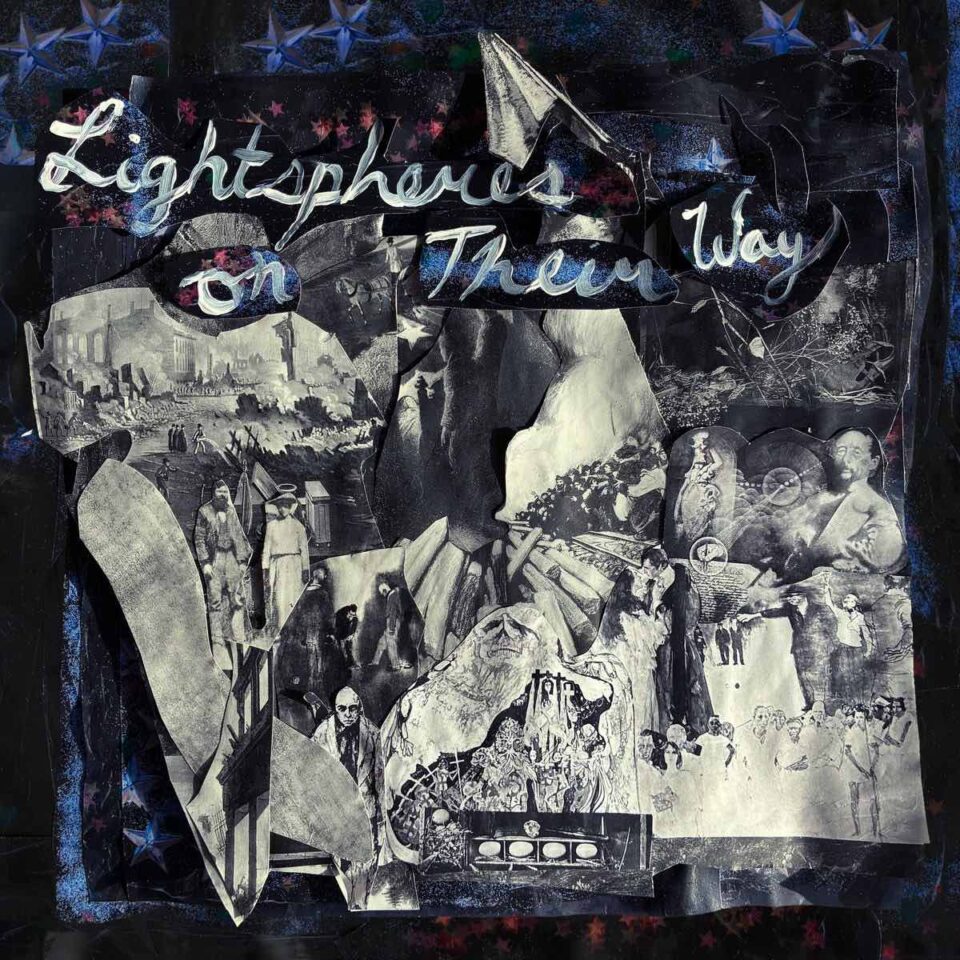
Yet ironically, their first new record since that breakout moment in 2022 sees them slowing down instead of continuing to gather momentum. Out Into marks the trio’s first conventional album since 2018, following a series of scores, remix collections, and the more modern-classical Tomorrows triptych. While each of these projects has helped hone the sound of this new material, it certainly hasn’t compounded it; as the band shares, the goal here was to trust their gut rather than pack on layers of ideas, “doing more with fewer ingredients.” The result is surprisingly minimal while displaying elements of nearly every chapter of their career dating back to their early days of trip-hop homage.
Before the album’s release this Friday, Ryan Lott, Rafiq Bhatia, and Ian Chang share five non-musical influences on Out Into, ranging from their experience in the realm of cinema to their passion for food. Perhaps it’s the immediacy of photography that provides the best metaphor for the band’s latest development: “rather than capturing sounds or simple performances and using them as building blocks,” they share, “we’ve found ourselves squeezing more information and dimension into our initial recordings.”
Read on for more, and pre-order Out Into here before it drops this Friday via This Is Meru/City Slang.
Slowing down
Our world feels increasingly frenzied and increasingly mechanized, and there is of course an overlap between these two conditions. It’s by slowing down that we can start to breathe more deeply, and remember and reclaim the experience of being, making, and relating as human beings. That involves experiencing the world through the full enervated architecture of our bodies instead of a few narrow, overwhelmed corridors of our minds.
We’ve often found that a given piece of music will almost always feel better a few clicks slower, and have frequently employed samplers to re-render a fragment of audio with the syrupy gravitas that a lower register can confer. But as a band, we’ve never so thoroughly explored slowing down (or, in a couple cases, speeding up) entire performances in the way we’ve begun while making this record. We sometimes worked backward from an intended tempo and register, playing the music higher and faster with the conscious intention of slowing it down later. The gooey textural effects are addictive, as is the feeling of elongated time. But above all, it’s the way that slowness magnifies the feeling of human intention and communication that makes it so alluring to us right now.
Becoming
A central lyrical thrust on the new album is the reality that we all exist in a state of change. We’re always exiting one reality and entering another, losing and rediscovering ourselves. Of course, accepting change as a human constant has implications beyond ourselves—it directly impacts on what it means to know one another, to love each other, to make commitments and maintain relationships. The intimacy and ephemeral nature of the musical performances on this album also ties into this idea in that it documents the band moving through a moment. While making it, we were rediscovering what it means to make songs together amid and after a season of scoring.
Erin O’Keefe
We discovered the work of photographer and architect Erin O’Keefe at some point during the process of making this album, and were immediately drawn to the way it scrambles our visual perception. Or, as the artist puts it, “our awareness of seeing becomes an opportunity for discovery and questioning.” By blurring the lines between what we perceive as two dimensional versus three dimensional, O’Keefe renders the seemingly graphic with an impossible depth.
It’s also stunning that Erin’s beguiling images come together essentially entirely in camera (as opposed to with manipulation in post). We’ve been exploring more of this in our own process—rather than capturing sounds or simple performances and using them as building blocks, we’ve found ourselves squeezing more information and dimension into our initial recordings.
Filmmaking
This may seem like an obvious one given our background in scoring, but there are a lot of non-musical ways in which filmmaking inspires us individually and collectively. It’s such a big ship with so many moving parts, and of course several of them—cinematography, editing and visual storytelling, sound design, VFX—could easily have their own subsections within this piece.
But one thing that never ceases to amaze us is something I first heard David Lynch describe, which is the principle that, when you have a big budget and ample resources, the project will almost always default to established processes and approaches. Over time, this unintentionally but inevitably contributes to the homogenization of the art form. But on the other hand, those who don’t have the means to do it the way everyone else does have no choice but to come up with a creative solution. As a result, facing those limitations can inspire a new generation toward finding their own techniques, their own insights, their own voices. We try to keep experimenting with new ways to use existing tools—including our respective instruments—and many of the sounds on Out Into emerge from that continued curiosity.
Food
What can we say? We love to eat. There are so many parallels between food and music: both can simultaneously communicate individuality and cultural memory, both can surprise and pull you in, both relay experiences that are ultimately multisensory. Both address a continuum between a warm hug and a fiery confrontation. Both provide a space rewarding high contrast, unlikely pairings, and juxtapositions. Each culture and community has its own classical and/or folk approach to both, and within each there are pioneers and innovators who bring the medium forward.
We are constantly talking about food, searching for interesting things to eat on the road or at home in our respective cities, and we frequently draw direct inspiration from what we discover. While there are great chefs who can really shape flavor on a molecular level, you also need to know when not to mess with something that’s already great. On Out Into, we’ve been doing more with fewer ingredients, presenting each sound or performance with enough space to perceive its particularities.
