


Agnes Obel
The Meaning of Flowers
DEUTSCHE GRAMMOPHON
An undying devotee of the power of the waltz, Danish songwriter, multi-instrumentalist, and producer Agnes Obel’s music falls into a blissful groove and hovers in the air. In her natural range during live performances, she typically sings within a focused soprano or mezzo-soprano range, her voice maintaining a breathy and delicate quality. On her records, she takes her ethereal timbre and plays with lower-register vocal manipulations, like a sonar signal modulated into a warbling waveform. A prime example of this is the lead single from her fifth album and first in six years, The Meaning of Flowers, one which builds on her gorgeous classical-pop, piano-forward series of records dating back to 2010’s Philharmonics: “Laymelli” is a skittering and ascendant song that was inspired by the life cycles of insects and Italian philosopher Emanuele Coccia’s works on metamorphosis. It sounds like a band of insects keeping time behind Obel.
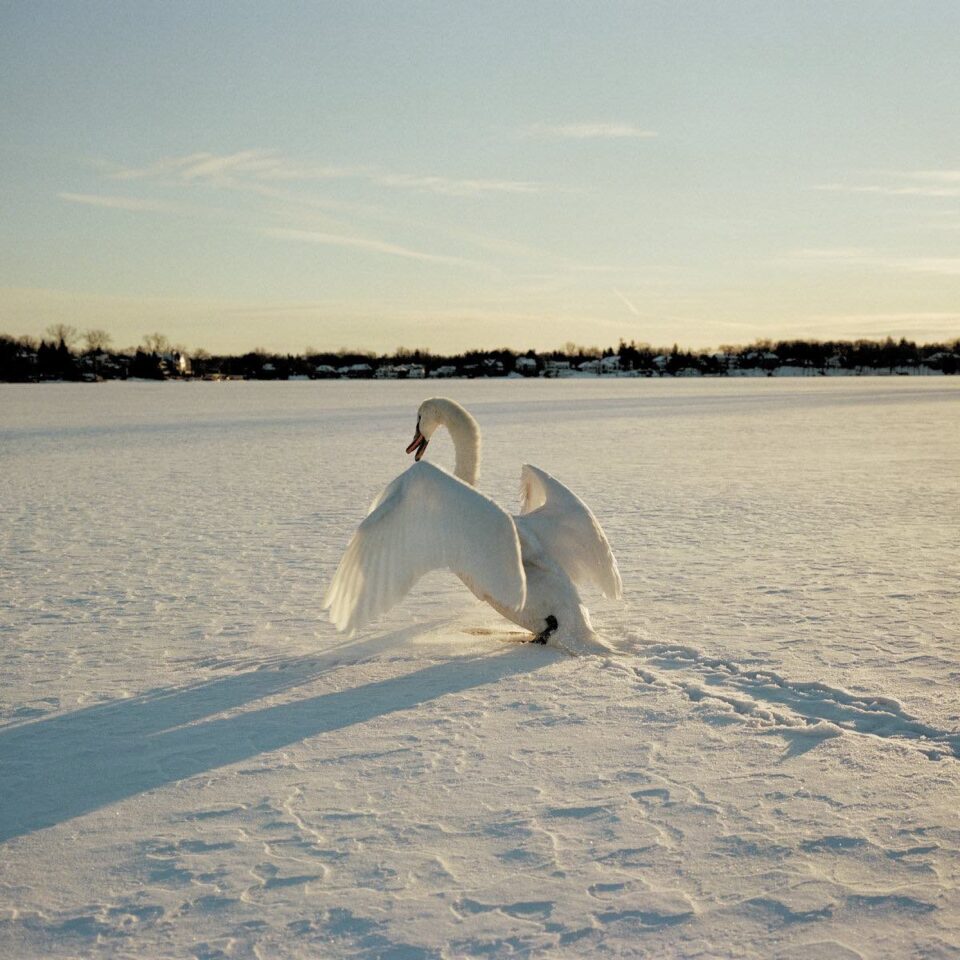
Beyond Coccia, a rich root system of sources inspired The Meaning of Flowers. Obel’s lyrics pull from poetry and literature (the album even has its own reading list), including the ancient poetry of Enheduanna and the humanist theories of Hannah Arendt—not to mention instrumental homage to the Danish pop scene of the ’80s and ’90s, as heard on “No Such Thing as Silence” and “Deem Me Now.” The watershed moment in her personal life that underpins the entire album was the birth of Obel’s first child. In a recent interview, she explained the feeling of a sudden revelation she had as she heard women screaming in the hospital. Once home, she enjoyed the peaceful quiet of watching new flowers sprout through the snow outside her window: “It’s like my brain expanded or broke open…and I got a sense of something very big, something miraculous,” Obel said.
Coccia noted in his writings that all of humanity is breathing in each other’s DNA, and that birth and death are not as clearly demarcated as we think—we merely take another form after we take our last breath, and the arpeggio of life transforms into a new key. You can’t help but think of these concepts while listening to “Jenn’s on the Way” and the album-closing “Faustian Deal,” which would both sound at home on Philip Glass’ minimalist scores for the Qatsi trilogy. Yet Obel’s bread and butter is still twinkling moonlight piano waltzes; “Beyond the Sun” and “Don’t Look Down” both have the haunting caliber of her early material, such as “Riverside” and “It’s Happening Again.” She also gets playful with her voice on “Never Been,” and floats above sax and piano in an arpeggio footrace during “Tangerine.”
Written, recorded, arranged, and produced by Obel in her Berlin studio, the 12-track album features Obel on vocals, all manner of keys, and samples, with guest musicians joining her on strings, bass, lap steel, sax, harmonium, flute, percussion, and backing vocals. The Meaning of Flowers sets up the birth of either a song or a baby as a beautiful way to fight evils in this world. It’s a concept that Arendt chewed on throughout her political theory book The Human Condition in the long shadow of World War II. Obel has grasped these concepts in a meditative and engrossing form.
