

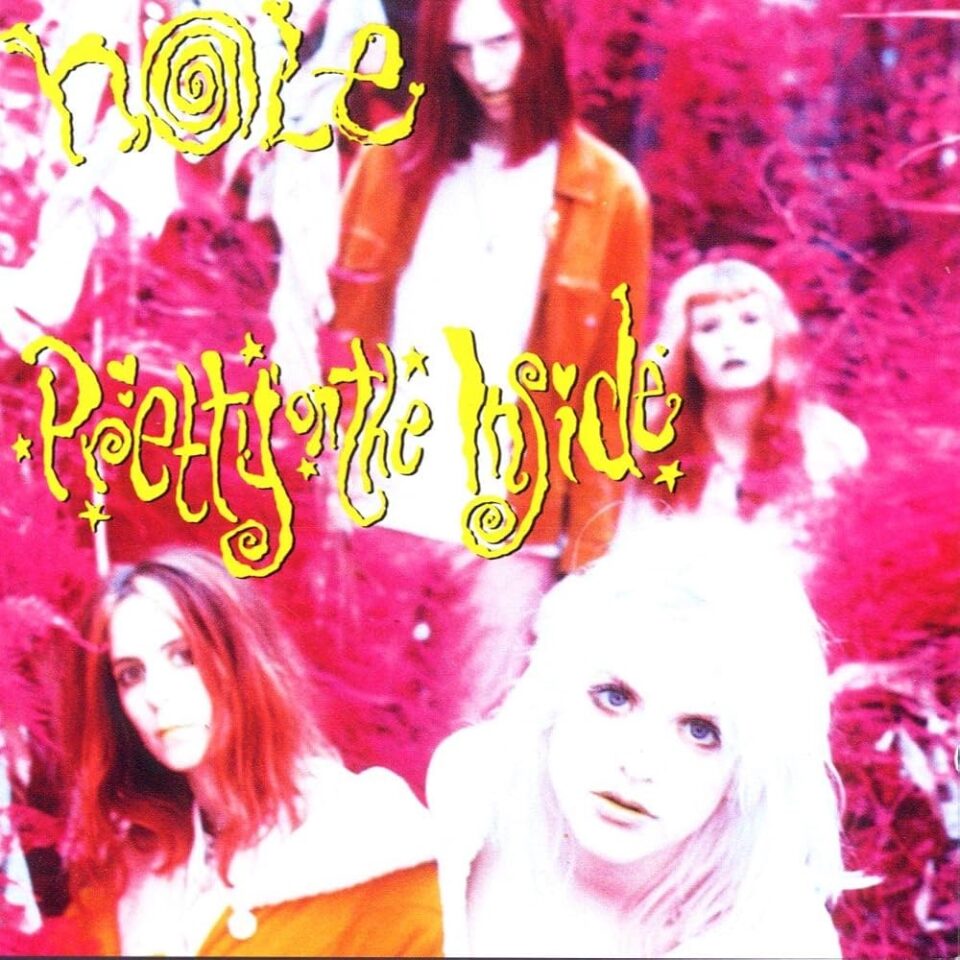

Frankie Rose managed to build a pretty solid legacy within the 21st century garage rock scene over the span of just a few years, when she sat in on drums for Vivian Girls, Crystal Stilts, Dum Dum Girls, and Beverly a decade and a half ago. Yet it was her solo work geared toward dream-pop and post-punk that she’s continued to build upon over the past decade and a half; following her indie-surf solo debut backed by The Outs, 2012’s Interstellar re-introduced the artist with a bit of a new-wave makeover, which led to forays into darkwave and gothic punk.
Yet Hila may be her darkest album yet, if not in sound then at least in subject matter. Creatively fueled by a recent tour with The Jesus and Mary Chain and the electro-industrial pulses of Skinny Puppy, the album also sees Rose working through various stages of grief, coping with the void left by loved ones, and—in her own words—“realizing my own limitations as a dumb, three-dimensional creature.” Although such morbid subject matter pairs well with those sonic influences, she also shares that Hila’s brighter synth lining takes cues from Vangelis and Tangerine Dream’s scores from the mid-’80s, as well as Julee Cruise’s collaborations with David Lynch on the unexpectedly uplifting closer.
With the record out today via Born Losers Records, stream along and read Rose’s track-by-track breakdown of Hila below. You can also grab a physical copy here.
1. “Olo”
This song title was almost the name of the record. Named after an “impossible color”—a hue generated inside human perception only after staring into a blinding light—“Olo” sets the threshold for the album. It maps the residual frequency left behind when a massive physical presence suddenly vanishes. This track frames loss as an afterimage: an unseen spectrum glowing in a dark space where someone used to be.
2. “Can’t Be Wrong”
A portrait of the mind in endless argument with itself, refusing to accept the absolute finality of loss. This track turns my denial into a form of logic—the instinctual belief that an essence cannot simply vanish, and that the permanence of death must somehow be a mistake. It’s about bargaining, and it channels one of the album’s central threads.
3. “Return to Dust”
This song explores my quiet frustration with searching for signs from “the other side” while realizing my own limitations as a dumb, three-dimensional creature. It’s about the tension between wanting to feel a presence and knowing that, if a message were sent, my sensory world might simply be too dim to perceive it. The song frames loss as a translation barrier.
4. “Shadow Twin”
A very personal song for me, this is about my brother who passed. It’s about physical inheritance and living memory. The track traces the realization that a lost loved one remains embedded in your own body—in your DNA, in a familiar gait, or in the way you sit. My brother is my twin “in shadow,” and the song is a reflection on the feeling of being left behind. I am proof that even in physical absence, half of the portrait is still alive and carrying the other forward.
5. “Rain Man”
This is a soundscape, and you’ll have to love the saxophone to like this one. I wanted to make something that felt like a Michael Mann/Vangelis soundtrack. It’s less about a specific narrative and more about encapsulating a feeling for me.
6. “Hila”
“Hila” flips the perspective completely, looking at death from the perspective of the dead. Are they listening in on my loss, wondering if I cried or bargained? “Hila” also means spirit, glow, or halo—like the aura of an angel.
7. “Manifest”
This song is a tongue-in-cheek way of making fun of the idea that humans can control our fate through manifestation, or that you can somehow wield enough power to make things go your way. I know it’s cynical. What can I say? In the song, I try to manifest something, but instead of anything good happening, the chaos of the universe takes its revenge and my world falls apart.
8. “Best of Times”
File this under Michael Mann soundtrack. The song is based on a recurring lucid dream I have about busting through my ceiling and flying into space looking for someone.
9. “TV Star”
This song is sort of a meditation on a tragedy I experienced. I’m not really sure I can find the words to talk about this one, to be honest.
10. “Velvet Refrain”
The idea was for it to feel a little Julee Cruise–inspired. I wrote it around the same time Lynch passed. It’s the first time I’ve written an album with a somewhat positive-sounding exit.
