

Forty-five years ago, Marc Almond and Dave Ball journeyed from Northern England to pre-Giuliani NYC to record Soft Cell’s debut album. “Nothing prepared us for New York at that time,” Almond chucklingly recalls over Zoom. “We thought that after five years at art college, we’d seen it all! We were city people! But this was a real awakening.” The result was the decadent disco of Non-Stop Erotic Cabaret, a red-lit, ecstasy-fueled joyride—in a gold Rolls driven by a dumb chauffeur, of course—across an urban sprawl of sex shops, burlesque theaters, leather bars, and sweaty speakeasies.
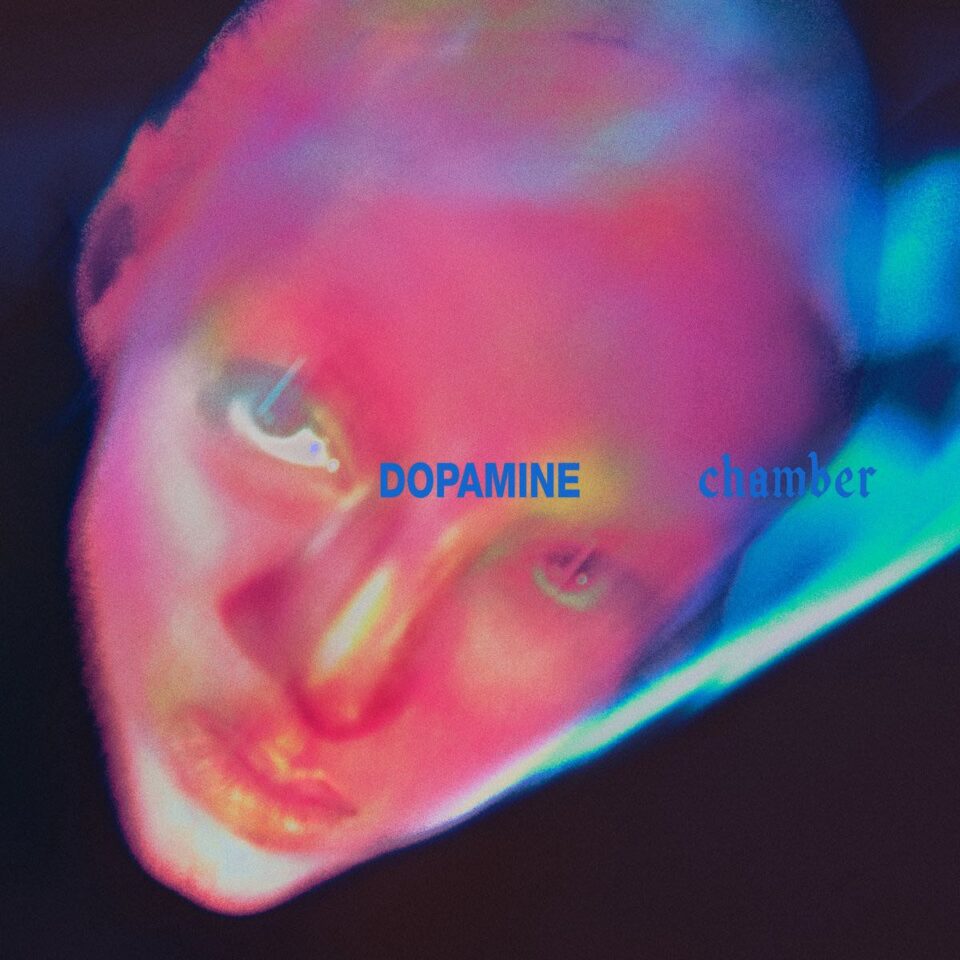
But by 1984, the party was over for Soft Cell, at least until their reunion 18 years later. Wearied by the unexpectedly seismic success of their clubby, coked-up remake of Gloria Jones’s semi-obscure “Tainted Love,” the synthpop provocateurs released the willfully uncommercial and fittingly titled swan song, This Last Night in Sodom—signing off in its hand-scrawled liner notes with, “To s***s everywhere, f*** off and die.” Now Soft Cell are unleashing what is truly their final studio album, as it was recorded right before Ball died in October 2025. And this time, Danceteria—named after the legendary discotheque where Almond and Ball once spent so many all-nighters—is a much fonder farewell, as Soft Cell start the nightlife over again.

photo by Peter Ashcroft
“It’s so rare that Dave and I come together to do a record, and every time we did, I kind of thought, ‘This could be our last time,’” Almond reflects. “I always approached it with that frame of mind—especially with this one, because David had been ill for a while. But then he recovered and was back in the studio, and suddenly I got this file from him. I was always excited to get music from Dave, because of everyone I’ve ever worked with, he and I had the most fantastic chemistry. I wanted to bring everything around full-circle and go back to early-’80s New York, the whole vibe of the city at that time. I wanted to write about us going there in 1981 and how it changed us as people, how it changed us as musicians. That’s what made Soft Cell.”
Below, Almond opens up about the Manhattan misadventures that inspired Soft Cell’s first and last albums, his final performance and conversations with Ball, and how he feels about fellow former NYC club kid Madonna also taking inspiration from the Danceteria era.
Since “Tainted Love” helped kickstart the 1980s’ Second British Invasion, many people probably were unaware of just how much New York City shaped your sound. What was your first impression of the city’s club scene?
I think the second night I was there, I was taken to Studio 54. I remember dancing to “You Make Me Feel Mighty Real” by Sylvester, and there was the moon with the coke spoon still there, and I was overwhelmed by the whole thing. I remember having my drink spiked, and sitting on the pavement talking to two girls who were comforting me while I was crying my eyes out: “Where am I?” But the next club we were taken to was Danceteria, and that was another experience altogether. I just felt, “I’ve come home, New York is where I should be.” Danceteria was where I spent most of my early time in New York, so that’s why I wanted to have that as the setting for this more celebratory album. It’s not just a reference to the club, but also about how we dance our way through life. Life is a Danceteria.
It’s interesting that Madonna had that era on the brain, too, recently. And you even mention Madonna on Danceteria’s title track!
She felt it was part of her legacy, too. It was in the zeitgeist. And I think it’s great, because I’m actually a massive fan of Madonna. I kind of feel that she’s the female David Bowie—the way she’s reinvented herself, the way she looks at things, the way she’s so clued into what’s happening. She’s more than just a pop performer; she’s a phenomenon and icon. I’ve always admired her, so I’m kind of thrilled that we’ve both done a song called “Danceteria.”
Did you know Madonna back then?
We had a brief connection. I saw her live very early on. She was performing “Everybody” with a couple of dancers, and I was talking to Seymour Stein, who was the head of Sire Records at that time. He said, “See that girl up on that stage? I just signed her, and she’s going to be absolutely huge.” I took everything he said seriously, so I thought, “Wow, if Seymour Stein says she’s going to be huge, then she is going to be huge!” But nobody ever thought she was going to become a cultural phenomenon for decades.

photo by Peter Ashworth
“I’ve always loved writing about city life, but cities are amorphous—places close, people change. You can’t hold onto it forever.”

Soft Cell – padded cell frame15 from backstage at Leeds gig, back in around 1980
Speaking of legendary nightlife people, didn’t you meet your collaborator Cindy Ecstasy in the ’80s New York scene?
Yes, and we named her that, actually. I took a couple of the girls who had rescued me that night during the dying days of Studio 54 to Danceteria, and Cindy was one of them. We had a great rapport. She invited me over to her house in Brooklyn and said, “There’s this new thing in New York called ecstasy, would you like to try it?” She gave me this drug and I remember I thought I was going to be sick at first. But then, suddenly, something happened. “All Cats Are Grey” by The Cure was on the record player, and I had this moment of epiphany: “This is the best record I’ve ever heard in my entire life!” Not many people had even heard very much about MDMA in those days, but we would go out to the clubs and all take ecstasy, so we named her “Cindy Ecstasy.” And yes, she even ended up rapping on some of our records.
I must ask you about the epic “Non-Stop Ecstatic Dancing” record release party you threw at Danceteria. It sounds like it was just about as debauched as Queen’s New Orleans soiree for their Jazz album in 1978.
Oh, it was wild. They brought sex workers in to perform, all this booze—I just wish I could remember more! There are a couple photos online from it. There’s a great shot of Dave with all these girls dancing behind him.
There’s also an amazing photograph of you meeting Andy Warhol.
We were taken to meet Andy at Danceteria, and later I even filmed a bit for his TV show there—there’s actually a clip from that in The Andy Warhol Diaries on Netflix. It was weird because when you met Andy, he didn’t look at you; he looked ahead of you and through you. I carried a Polaroid camera with me all the time back then, so he was filming me on Super 8 while I was taking Polaroids of him.

photo by Andrew Whitton
“It’s not just a reference to the club, but also about how we dance our way through life. Life is a Danceteria.”
The gritty New York City that you bring to such vivid life again on Danceteria is long gone now, sadly.
On 8th Avenue there were two porno cinemas, the Eros and the Venus. My friend Scott was riding past there one day when they were pulling down the neon signs and putting them in a dumpster, and he rescued them. He took the Venus and gave me the Eros. I dragged that eight-foot-long neon sign from place to place, year in, year out! Eventually I lent it to a neon museum in the UK. But that was symbolic of New York being torn down. Times Square disappeared. 42nd Street disappeared. This always happens when the gentrification people move in: they want a piece of that other side of life, but then they change it. I’ve always loved writing about city life, but cities are amorphous—places close, people change. You can’t hold onto it forever. But I still find that excitement whenever I go to New York. It still holds that thrill for me.
Soft Cell championed sex workers early on, like when you hired them for your notorious “Sex Dwarf” video. Sex work is a bit more respected now as a legitimate profession, but that definitely wasn’t the case in the early ’80s.
I’ve always loved those people. There’s a track on Danceteria called “The Space Inside” that was inspired by being around 14th Street and 9th Street in 1981. It was a lot of trans sex workers and leather bars in the Meat Packing District; now it’s a high-fashion area, but back then it was the darkest area in New York. I’ve just always gravitated toward people who are out there on the alternate side of life, being judged but looking for their own space and their own way of expressing themselves. I’ve known many sex workers in my time, and to me, they’re the ultimate heroes of life. That’s what Soft Cell always wanted to write about: what goes on behind the door, as opposed to in front of it.
Can we talk about the “Sex Dwarf” video? It’s still shocking more than 40 years later.
It really is! We’d always tried to see what we could get away with, because we were these belligerent art students with our own way of wanting to do things, and then we were thrust onto the promotional circuit. We were never comfortable with that, so we were behaving like an underground band in a mainstream pop world. Maybe we went a little too far with “Sex Dwarf.” To us it was just an art performance—you know, running around half-naked in jock-straps, with [video director] Tim Pope throwing maggots all over us and a bunch of trans sex workers, things like that. But we got in a lot of trouble for making that video. We had the police on our back, the newspapers on our back—it was weird how the mainstream press was always trying to catch us and do stories on us.
The press even got hold of the guy who was, shall I say, the vertically challenged person in the video, and he became a star in his own right. He was interviewed by the newspapers and he lied and told them, “I was drugged and made to do these horrible things!” It got quite scary and out-of-hand: “Marc Almond Ties Up Girls in a Hotel Room with Sex Dwarf.” We’d written a song about a tabloid headline we’d seen, “Sex Dwarf Lures Disco Dollies to a Life of Vice,” and then we became a tabloid headline. We wrote about tabloid culture, and then we became the tabloid stars they were writing about.
Going back to Danceteria, are all of its tracks based on your real-life experiences? It almost feels like a concept album.
I did kind of write it as a night through New York, starting off in a cafeteria in the nightclub. “Times Square” is a true story about me and my friend going to a 42nd Street sleazy cinema and watching a slasher movie, and then going out in the rain and dancing without our shoes on. “The Rainbow Room” is about my birthday party. It’s a romantic story, having dinner with a friend, but it’s a weird look to the future. And then the album ends up in the drugginess of “Losing Yourself” and “What Is Your Morality” and “Crackland,” and then you wake up the next morning with a cup of coffee and it’s “Wave to America.” And then we go back to the nightclub with “Out Come the Freaks.”
I wanted it to go in a circle. Non-Stop Erotic Cabaret was a kind of narrative, as well. I was really happy when I was having dinner with Neil Tennant from the Pet Shop Boys once and Neil said, “Non-Stop Erotic Cabaret is a musical, isn’t it?” And yes, it’s about this guy with his boring suburban life who goes out to find the wildness in Soho and meets up with people on the peripheries of life, this red-light life. And he meets a sex worker and has an affair with her, but eventually it’s “Say Hello, Wave Goodbye.” He goes back to his wife, but he’s had this adventure that he can look back on. I’m glad Neil picked up on that. And Danceteria is like that, too.

photo by Peter Ashworth
There are so many layers of sentimentality to Danceteria, not only because it’s a musical diary of your youth, but because it’s the last record you made with Dave.
We actually finished it two days before he passed. We said, “Are you happy with the record?” He said, “I’m absolutely happy, I don’t think we can do anything else.” I asked him if he felt up to doing some dates, but that never happened. Because of his health he could never [tour internationally], but he’d always perform in the UK, even though it was incredibly hard for him sometimes. About four weeks before he did pass, we played what was to be our last show together. We were headlining the Rewind Festival and Dave turned up, and I could see he was in really bad shape. I said to his manager, “Do you really think this is a good idea? Does Dave really want to go onstage?” But he said, “Dave really wants to do this.” So we did the show. I had to keep looking at people at the side, going, “Is Dave OK?” But it was all great, and the fans loved it because it was authentic. That was the last thing we ever did live. Then we finished the album and Dave told me, “Do me one favor: Don’t chop the album to pieces. This is how I want it to be.”
“We wrote about tabloid culture, and then we became the tabloid stars they were writing about.”
I’m glad your final album with Dave was such a positive experience, after everything you two went through.
We really had an adventure together, this 50-year thing that we shared. It was a weird relationship. We were never close friends. Well, we were when we first came together at art college and grew out of that whole electronic music scene that was happening in the north of England, but those first five years of Soft Cell were so intense, and as time went on, success drove us apart. When we came to New York, we found ourselves as a band, but we were out exploring different New Yorks, gravitating to our own groups of people, having different experiences, and that started a slow kind of separation. And eventually we went away and didn’t see or speak to each other for 10 years. But we always had enough love and affection and respect for each other to come back. FL

photo by Mike Owen
