
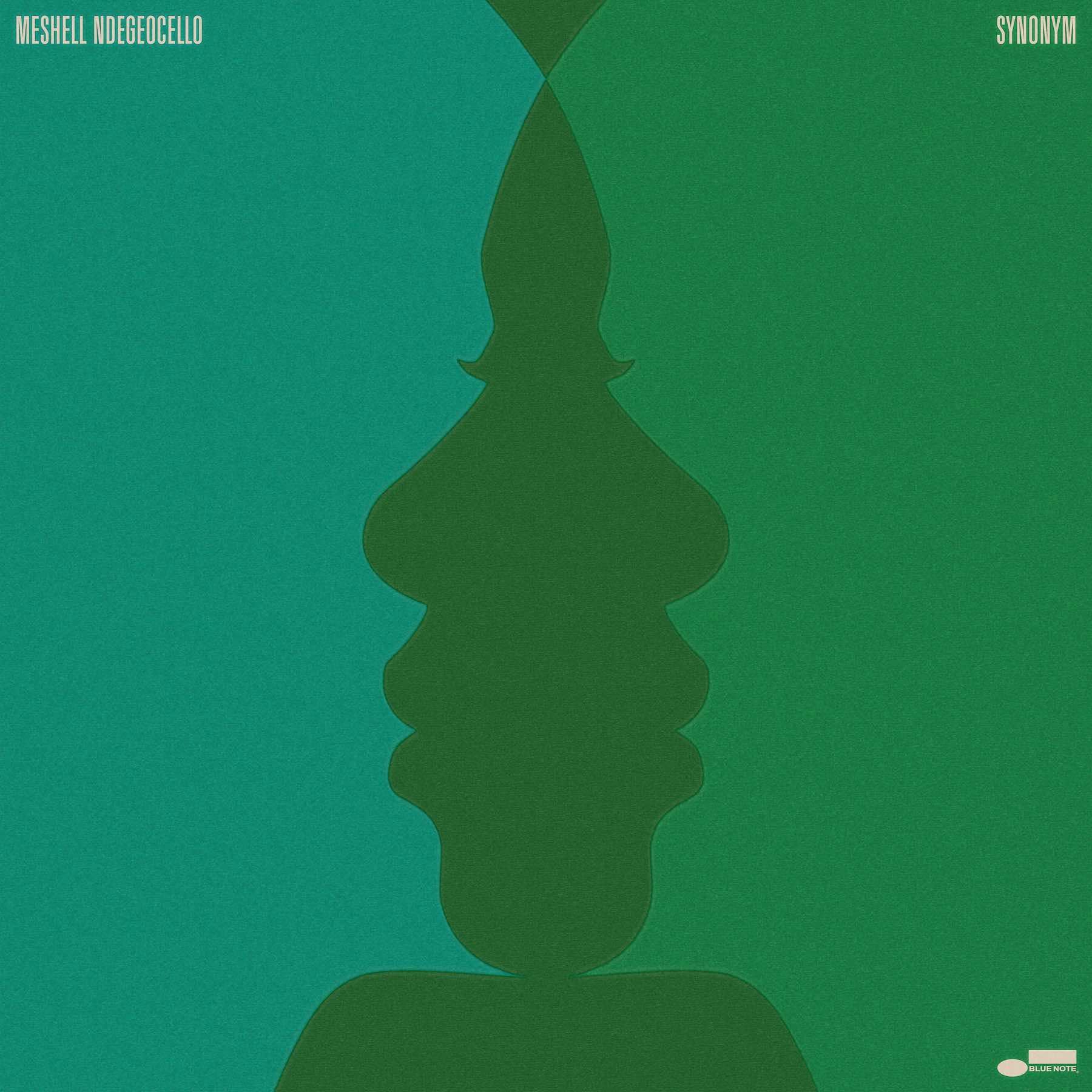


Meshell Ndegeocello
Synonym
BLUE NOTE
One of the more tiresome trends in movie trailer design is the rise of old ’80s and ’90s pop nuggets, slowed down and played with a grim ponderousness. On her new album, Meshell Ndegeocello isn’t doing quite that—thankfully, her aspirations are more ambitious and her execution more graceful—but it’s not terribly far off, either. Comprised entirely of covers, Synonym draws mostly from music that’s been regarded as breezy, ephemeral; in a word, as pop. Surrounded by an all-star team of collaborators, Ndgeocello imbues these once-featherweight tunes with a sense of weightiness and grit.
But there’s more to it than just a reimagined canon: Ndegeoccello also designed Synonym to be a commentary on queerness. To achieve that end, these songs were mostly originated as male-female duets, and they’re mostly reimagined here as duets between women and/or nonbinary singers (though there are exceptions to both of these rules). This isn’t only an aesthetic difference, but a philosophical one: songs that were initially meant to highlight differences are now rendered to highlight commonality. The lyrics aren’t changed, but the subtext certainly is. It adds up to another daring, immersive, and sprawling album from Ndegeocello, whose run on the Blue Note label has drawn out her maximalist streak.
Like 2023’s jazz-funk fantasia The Omnichord Real Book and 2024’s No More Water: The Gospel of James Baldwin, this album uses its expansive canvas and genre ambivalence to tackle big ideas, dart down rabbit trails, and keep listeners destabilized for more than an hour of imagination and experimentation. The difference here is that Ndegeocello is playing songs you know by heart, with some of her recreations naturally work better than others. Duetting with Brandi Carlile on “Golden Ring,” a George Jones and Tammy Wynette classic, Ndegeocello sticks to a Southern-fried jauntiness, while a cosmic take on the Bee Gees’ “Guilty,” performed with the singer/songwriter Ink, offers a spare, photo-negative version of disco. Songs like these honor the spirit of the originals without sounding rote or reverential.
The album is less effective when Ndegeocello tries adding gravity to pop songs that have long been associated either with camp or simply with fizzy, effervescent fun. New takes on the George Michael/Aretha Franklin classic “I Knew You Were Waiting (For Me)” (with Synthia Erivo), Dolly Parton and Kenny Rogers’ “Islands in the Stream” (with Chaka Khan), and Yarborough and Peoples’ “Don’t Stop the Music” (with Robert Glasper and Nick Hakim) all turn slower and more pensive. They’re not bad performances, but they pivot from the qualities that made the originals so charming.
It’s probably for the best that Ndegeocello frequently wanders from her stated themes, not only because it gives the album more dimension but also because it makes space for curveballs like “With God on Our Side,” a Bob Dylan cover performed with Bill Callahan and Chris Thile. Its presence here is a token of Ndegeocello’s omnivorous taste and expansive vision; even if not every path proves fruitful, she’s made another album worth getting lost in.
