
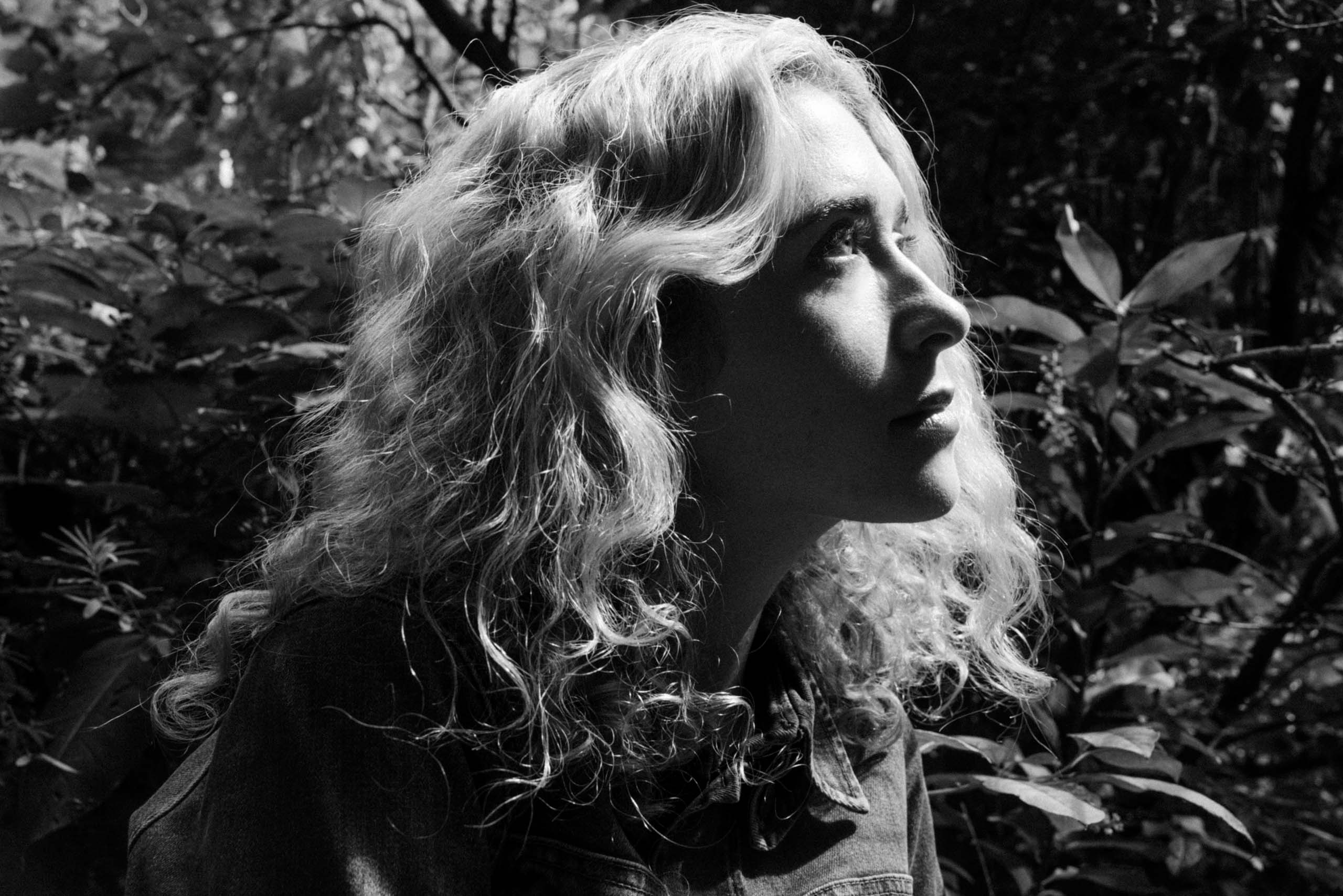

Sabrina Teitelbaum should be curled up in the shadowy corner of a cozy Lower East Side coffee shop right now, some overpriced artisanal latte or herbal tea steaming on the worn, wooden table in front of her. I imagine the songwriter behind the Blondshell moniker would probably be wearing a vintage jacket over a silky slip dress, accessorized by a pair of chunky boots and a pop of dusty rose blush on her cheeks—an alt-rock fantasy, all effortlessly cool and chic. Alas, I know better than to risk spreading my sore throat to a musician, especially days before the release of her new album. Instead, Teitelbaum, wearing a loose black T-shirt, meets me casually over Zoom, the honey-hued waves that match her stage name pulled away from her face in a neat, low bun. Before we begin our interview, she empathetically puts me onto the Chinese herbal remedy she swears by when she’s sick.
Teitelbaum’s down-to-earth aura is no intentionally crafted public image; it comes quite naturally. Which isn’t to say that she hasn’t flirted with the concept of a stage persona in the past. In 2017, the now-29-year-old originally debuted under the name BAUM, through which she released a string of buzzy, synthy, alt-pop tracks. At this point, it feels almost ridiculous even mentioning this musical moniker from a decade ago. It’s part of her story, sure, but also so incredibly removed from the musician who confidently re-introduced herself as Blondshell in 2020. Her debut single, 2022’s bleak and pensive “Olympus,” drew from the diverse rock palette that she grew up listening to, indie and grunge sounds that felt more authentic to her post-coming-of-age point-of-view.

Teitelbaum has been at this music thing for a hot minute. “For a long time, things were really slow with my career. It was a lot of me trying to get work, trying to get on people’s tours, trying to get into writing sessions,” she admits. “For years I was sort of like, ‘Hello, please pay attention to me.’ Things started really picking up four and a half years ago when I put out ‘Olympus,’ but I never left that headspace of, ‘Please let me work.’ So I’m just constantly doing stuff.” She says she “pushes [herself] really hard,” and when asked how she finds time for herself, she admits that she doesn’t really “take a lot of breaks” when it comes to her professional life. It’s not surprising: As Blondshell, she’s been going non-stop for six years now, not including the musical groundwork she laid before then.
Teitelbaum signed with Partisan Records in 2022 off the strength of “Olympus” and a string of succeeding singles. A year later, after releasing her self-titled debut album, she joined Liz Phair on the icon’s Exile in Guyville 30th anniversary tour. Last year, she returned with her sophomore album, If You Asked for a Picture, and this past spring, she made her Coachella stage debut—a “dream” she’d had ever since poring over images of the festival on Tumblr as a teen. “It’s foreign to me to take time between albums,” she explains. “Once you put a record out, there’s this feeling of, ‘I’m good, I don’t have to turn anything in for a while.’ To have that freedom tends to be inspiring. It’s this weird paradox.”

“For a long time, things were really slow with my career. It was a lot of me trying to get work, trying to get on people’s tours, trying to get into writing sessions. Things started really picking up four and a half years ago when I put out ‘Olympus,’ but I never left that headspace of, ‘Please let me work.’”

Still, that doesn’t mean she hasn’t prioritized some semblance of balance between her music career and personal wellbeing: “I have figured out a lot more of my limitations. I can’t actually tour in the way that I toured in 2023, because that was just too much for me. It took doing it to figure that out. I’m not touring seven months out of a year. I’m gonna tour for, like, two months.” In 2023, she opened for Suki Waterhouse’s Coolest Place in the World Tour, just a year after properly debuting as Blondshell. It was a learning experience for Teitelbaum. “I hadn’t toured a lot before I did the Suki tour,” she says. “Doing that gave me the opportunity to do a headline tour because I got in front of a lot of new people, and I got a lot of fans that way. But actually being on the road was so crazy.”
Teitelbaum learned “a lot of habits around sleep” while out on the road, as well as that she doesn’t have the “physical constitution” to hang out in the green room until the end of the night, prioritizing rest and health instead. As for her performance style, she says she’s been able to “integrate my normal, I’m-hanging-out-with-my-friends-and-being-silly personality, which feels really good—even when the songs are serious, it doesn’t have to be one or the other.” She’s also realized that “being a performer when you’re introverted requires getting into a different headspace and viewing it in a particular way.”

Just as COVID-19 marked a broader societal turning point in so many peoples’ lives, the isolation necessitated by the pandemic brought a certain level of clarity to Teitelbaum’s trajectory. “I made my whole first record during COVID in the summer of 2021,” she says. “We were wearing masks in the studio, and people were in different rooms. I wrote all of my songs because I was so bored, because I wasn’t leaving my house. I lived alone and I didn’t have anything else to do. It had a big effect on me.” The half-decade since has been an exercise in solidifying Blondshell’s artistic identity and achieving musical autonomy—two paths toward a destination of self-actualized self-expression she draws closer than ever to with each release. “I feel proud of the music I’ve made recently. I don’t feel as much of a desire to look for other people’s validation or opinions,” Teitelbaum shares.
A few months ahead of her recently released third studio album, Violins, Teitelbaum wrote in an Instagram post that “each time I get to do this, the music ends up closer to what I intended.” Part of that progression has been the result of her own developing sense of independence as an artist: “I felt like things were so fragile when I was making the first record that I just didn’t feel as much agency. I didn’t feel as patient with the writing, or with the recording process, or the mixing process, or any of it, because I felt like it was a fluke; like maybe it would be the only batch of songs I would ever get. I was superstitious.” The expanded perspectives that come with getting older and more self-assured have also played a role in this transformation. “I’m thrilled to be exiting my twenties,” she says, laughing. “I’m still here for another year, and then I’m thrilled to never be in my twenties again. That’s a dream come true.” It’s refreshing to hear, considering society’s weird obsession with women who dare to embrace aging. “It’s gross, like, why do they want us to be so young?” she scoffs.

“I feel proud of the music I’ve made recently. I don’t feel as much of a desire to look for other people’s validation or opinions.”

“Being five years older, there’s a different sort of knowing that I belong,” Teitelbaum continues, speaking to the drastically different conditions under which her first and most recent records were made. “At first I didn’t know enough—like, that I could ask for other women to be in the studio and be part of my recording process. So it was just me and a lot of dudes. Knowing things like that now, knowing what to ask for, and knowing that I belong in studio spaces, provides a different energy to the music itself.” Of course, Teitelbaum has long been able to let her guard down with producer Yves Rothman, something that’s created a safe zone for exploration. The pair, who started working together pre-Blondshell, extended their ongoing collaboration to Violins: “We just speak the same language.”
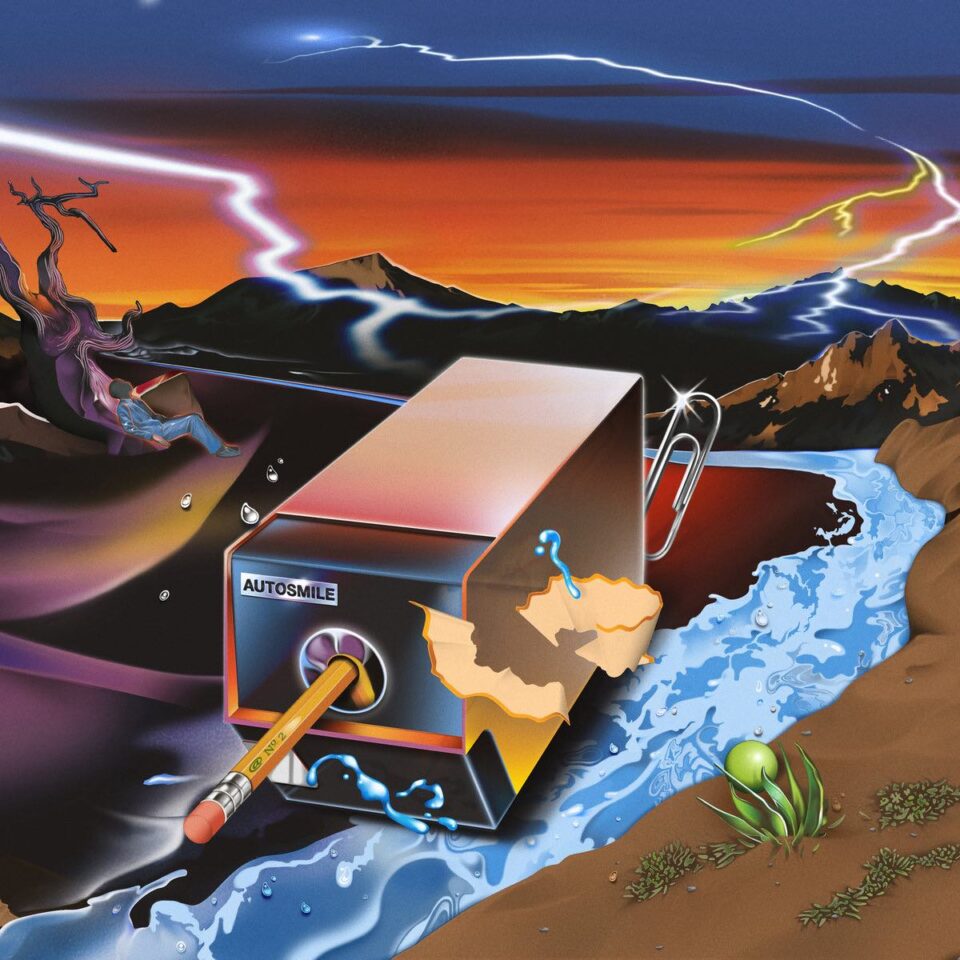
While the songwriting on Blondshell and If You Asked for a Picture was more literal as the musician found her footing, Violins leans much more visual with its insular sonic language. More poetic than diaristic, it seems Teitelbaum is finally trusting herself and her listeners to extrapolate each track’s multi-layered storytelling and meanings. Marking a shift in Blondshell’s evolution from the songwriter who once felt pressured to prove herself, the artist now finds herself deeply at peace with this bold new vulnerability. On the esoteric “Stone Fruit” she sings about “sifting through tall grass and through mud” over a driving alt-rock rhythm. On “Reinstall,” she croons the lines “Little drive out to Carmel / Little bowl of shrimp cocktail / You can’t sleep with the sound of seals / And I can’t sleep without sound at all” over folksy piano harmonies before an explosive bridge yanks the track toward a dramatic, fuzzed-out crescendo.

“This sounds so obvious, but I’m such a verbal person more than anything else,” Teitelbaum reveals. “I don’t have a lot of visual skills. I don’t know a lot about art history, I haven’t seen a lot of movies, so I didn’t explore that in the past. But with this record, I had a really good time letting the images do a lot of the heavy lifting and letting that be what the song is about more than explaining the ideas.”
In a way, Violins sounds bigger than Blondshell’s past records. It’s more expansive, more outward-looking, but still very much framed within Teitelbaum’s incisive introspection. The album’s broader themes stretch across violence, religion, misogyny, non-romantic relationships, and self-love, but there’s no broader narrative beyond a young woman examining the things that mean something to her at this stage in her life. Violins never over-explains itself. It’s almost like an anti-concept album—the full package isn’t the point, but rather how each moment informs the next or reshapes the previous. “I never think about themes, messaging, or ideas beforehand,” Teitelbaum ruminates. “It’s all just the stuff that came out, though you can look back and be like, ‘Oh yeah, we’re connecting the dots.’ But it wasn’t intentional. I was just writing, and these were the things that I was thinking about at the time.”

“At first I didn’t know that I could ask for other women to be in the studio. Knowing things like that now provides a different energy to the music itself.”

Teitelbaum was admittedly surprised when religion found its way onto the album. “Sea Legs,” a mellow, Cocteau Twins–esque slice of dream-pop written at the very end of the recording process, finds the artist grappling with existentialism and spirituality. “I have a lot of criticisms toward organized religion,” she shares. “I think there’s a lot of stuff that gets put in the place of spirituality if you don’t have it, like the belief that a romantic relationship is gonna bring you closer to the feeling of divinity. The song is about trying to find spirituality and trying to find belief in something like God—which I’m very uncomfortable with and don’t have—and falling short, because what you find is science and things like that.”
Over a distorted, industrial-lite soundscape, Teitelbaum waxes poetic about the toxic push and pull of a codependent friendship on “Heart Has to Work So Hard”: “I’m screaming in your face that I hate you / When I’m waking up I turn to face you first.” According to the artist, “friendship can be just as heartbreaking and complex as anything else.” Elsewhere on the album, “New Shape” references that same longtime friend again through the lens of betrayal over tender, acoustic strumming. “It’s very rare for me to cut someone off. I really don’t throw people away.”

Blondshell’s first two records largely found the musician probing her messy love life, but her view on romance has shifted considerably in recent years thanks to the comfort and ease she’s found within her current relationship. She credits this new perspective with changing the way she approached songwriting this time around: “Writing-wise, I was able to be more observational than I have in the past. When you’re not in a good relationship, it can feel like your perspective is a bit suffocated.” If Blondshell’s debut album was in part about doing things for a man’s validation in a relationship, and her sophomore record was about getting that validation and realizing it doesn’t mean what she’d hoped, Violins is about rejecting it entirely. “I don’t give a fuck about men’s validation,” she gleefully declares. “I don’t care! I don’t want it. Take it back. I can feel my own sexuality and enjoy showing it and living in it, but I don’t want to be sexualized by you.”
With its jangly guitars and deadpan vocals, “New Age Trojan Horse” captures Teitelbaum’s flippancy toward the patriarchy with a grungy, light-hearted edge as she sings about men’s squeamishness toward periods and old fashioned sexism disguised as something progressive. “It’s not really about the heavy dangers of misogyny that are in other songs,” the artist explains of one of the album’s toothiest tracks. “It’s about the annoyingness of somebody being so performative—like, carrying around your tote bag. It’s kind of a fuck-you song. There’s a lot worse things men can do than pretend to be intellectual, but we see what you’re doing. We’re not falling for it.”

“With this record, I had a really good time letting the images do a lot of the heavy lifting and letting that be what the song is about more than explaining the ideas.”

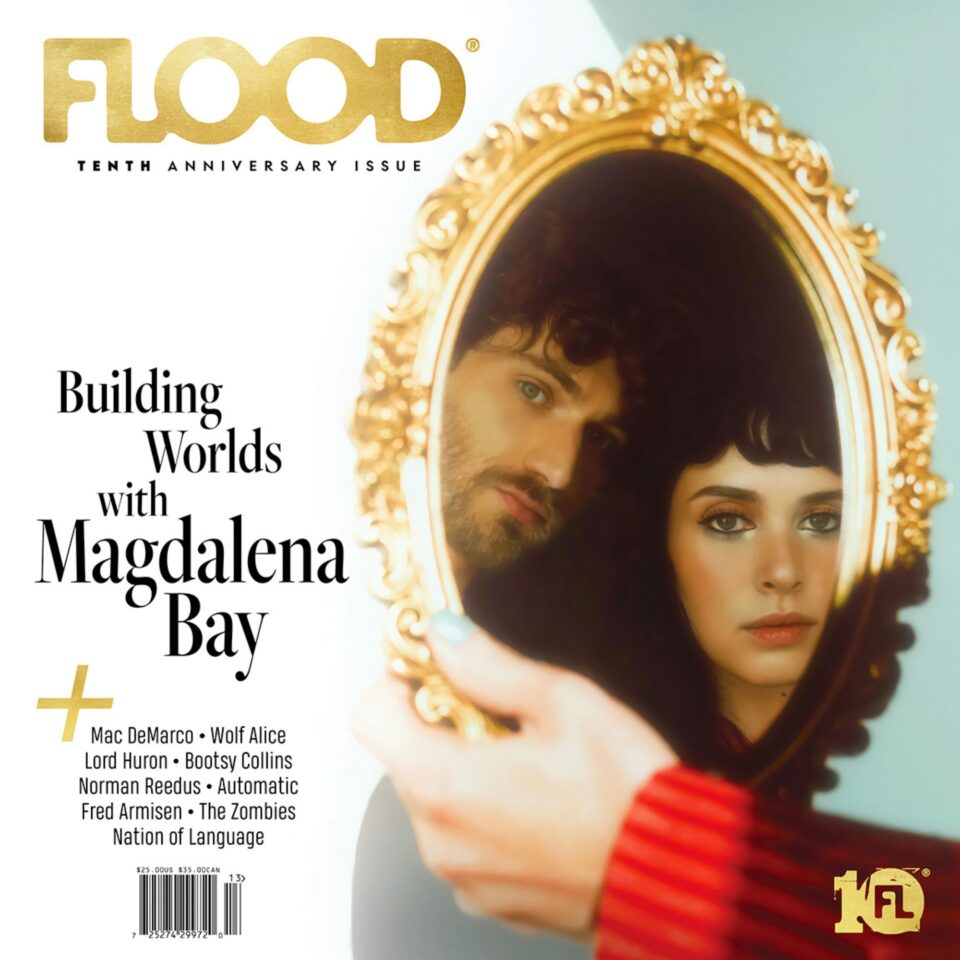
Last year, Teitelbaum told FLOOD that her sophomore record was “not really a light album.” There was an emotional heaviness to If You Asked for a Picture, but Violins, which cleverly doubles as a near-homonym for “violence,” is weighty, too. “I think it might be the heaviest record, actually, of the three. It’s complicated,” she says, furrowing her brow as she brushes away a curly strand that’s come loose. “When you’re choosing the types of relationships that I was singing about on the first two records, there’s a lot under the surface. It’s not actually about that person; it’s about much more. It’s about your value of yourself and your hope—or lack thereof—for something better. I think by writing about those relationships, in a way, I was staying on the surface. By being in a solid relationship that’s not really a hotbed of drama, I don’t have that as a crutch for writing. I actually have to talk about the real issues, like my actual self-worth and my relationship with the fact that there is violence for everybody in the world. In that way it’s the heaviest record, but I also think there’s peace in this record that isn’t present in the other ones.”
The album might be her heaviest thematically, but it’s rife with joy and the hard-earned lessons that come with learning not to give so much of a damn what others think. “Look at how my house has grown / Covered it in testosterone / Showing off two fried eggs / I think I like my legs,” she sings on the playful, Samia-co-written “Two Fried,” a quippy song about positive body image that sees her take full ownership over how she views herself. “Having that moment of lightness on a record is so new to me,” Teitelbaum says. “Everything has been so deathly serious in the past, so having a moment to be like, ‘Look at how this house has grown, bitch. Look at the fact that I like my legs for the first time in my life. Look at the fact that I see my body differently’—that rocks.”

“Lucky” lands somewhere in the middle of Violin’s thematic spectrum. It’s a forced smile of a song, as Teitelbum flitters between sincerity and sarcasm while listing off her many supposed blessings amid less upbeat observations. “I think people might hear it as totally genuine,” she confesses. “Sometimes I do feel lucky and beautiful and rested and all these things [I sing about on the track], but I definitely didn’t feel beautiful and rested when I wrote this song. It’s a lot about being exposed to violent imagery.”
Teitelbaum hesitates when I ask if the album’s closer “Fur Elise,” which touches on the half-formed fantasies we develop when imagining how life may unfold, and which synthesizes where she’s currently at in her own life. After considering the question for a moment, she says she never wants to have a song that “sums everything up” because, to her, an album is “so much just about the pieces themselves, rather than the whole.” Instead, she says the track “is about saying stuff out loud, saying the things that you want, and doing that as a way of figuring out what you want in the first place. It’s nice to end things with a little bit of hope.”
“I don’t give a fuck about men’s validation. I don’t care! I don’t want it. Take it back. I can feel my own sexuality and enjoy showing it and living in it, but I don’t want to be sexualized by you.”
As our conversation winds down, I notice Teitelbaum’s hair has come undone from its once-tidy bun. Her airy curls now cascade wildly around her face like a golden halo, free from whatever elastic band or clip previously contained them. I’m struck by the imagery’s symbolic resonance with Blondshell’s blossoming discovery of loose, raw creative freedom. “With the first and second record, I really, really just wanted the songs to happen,” she admits. “With this new album, I felt more like the songs would just come to me, like I was no longer trying to force anything. I used to be like, ‘Oh my God, I haven’t written a song in three months, what if I never write a song again?’ Now, I’m not scared of not writing for six months. I just don’t feel that way anymore.” FL

