
Before streaming and social media flattened our airwaves, Los Angeles had KBLT. Broadcasting from a tiny Silver Lake closet in the late ’90s, Sue Carpenter’s illegal 40-watt pirate radio station was an unpredictable nexus for DIY rebellion and underground rock. Executive produced by Jack Black, the new documentary 40 Watts From Nowhere immortalizes that era of untethered grit. Based on Carpenter’s 2004 book of the same name, both are love letters to the indie spirit of the 1990s.
Capturing that hyper-specific cultural lightning required assembling a gigantic soundtrack of over 140 tracks—a Herculean licensing feat demanding genuine connections and credentials. That’s where veteran music supervisor Mara Kuge comes into the picture. We caught up with Kuge to discuss navigating major-label red tape, hunting down defunct (and quarreling) local bands, and finessing contracts with massive acts like Rage Against the Machine on an indie budget. Stream the film here, and read on for our brief Q&A.
What’s your background in music history, and how did you carve your unique path?
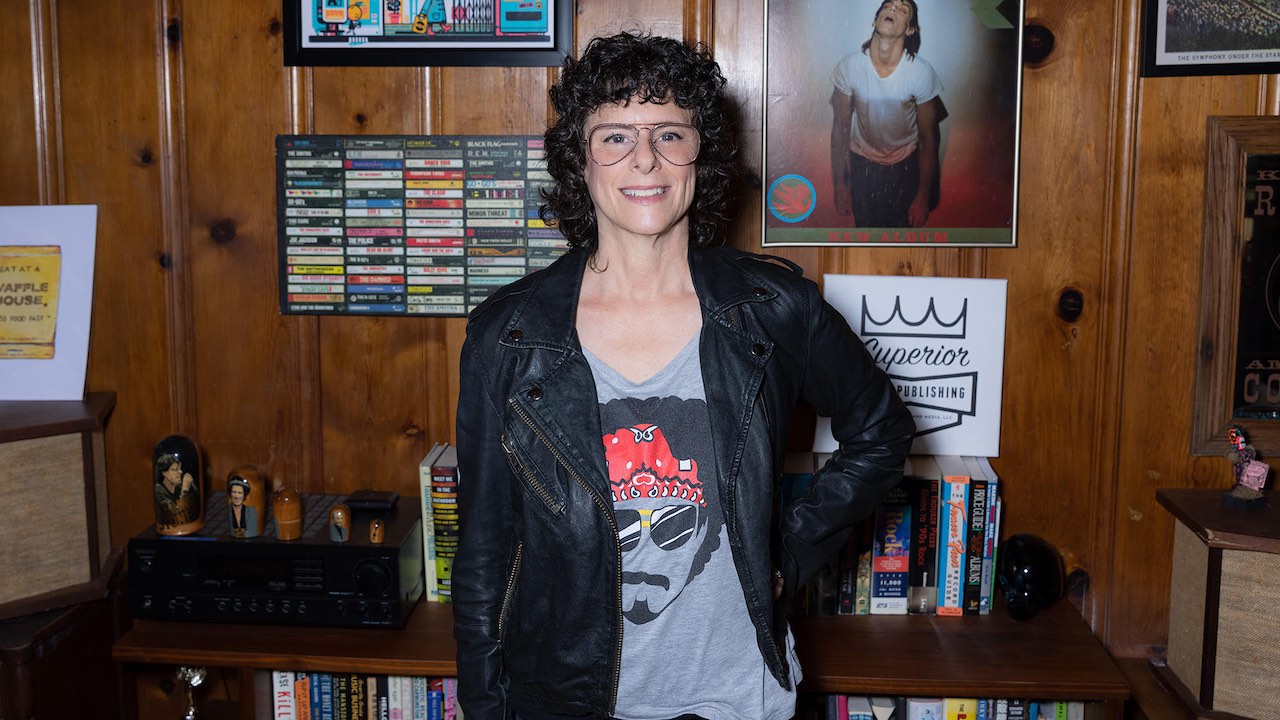
I’ve known Brandon Jay—the producer of 40 Watts From Nowhere—since the ’90s, when the documentary was filmed. When Brandon and producer/director Susan Carpenter realized they needed help with clearing a huge volume of songs, I was one of the few people in the industry who not only knew how to license music for film, but also had been part of the ’90s music scene, and already knew many of the musicians and the politics and sensitivities involved.
How did you successfully pitch an MFN licensing agreement to massive acts like Rage Against the Machine and Red Hot Chili Peppers so that they accepted the same terms as local indie bands?
In both cases, band members were involved in the film: Tom Morello, the guitarist for Rage Against the Machine, was interviewed, and the Red Hot Chili Peppers had played on the station. But many bigger artists were amenable because of the cool factor of KBLT when it was around. Who wouldn’t want to talk about the time their band was featured on a ’90s underground pirate radio station? It was like a real-life Pump Up the Volume with a heavy dose of indie rock and girl power. It was the definition of IYKYK before that was a thing.
Which elements struck you the most about Sue Carpenter’s vision and execution for KBLT?
Back in the day, I had visited and DJ’d on KBLT several times, and I could not believe that a twenty-something woman was living in a one-bedroom apartment alone with her cat and an illegal radio station broadcasting 24/7 from her closet. The amount of fortitude it must have taken to create this—and this is portrayed in the film—was just astonishing. Since she managed to pull that off for three years, I was pretty confident she’d be able to get this documentary to the finish line.
Out of the 140-plus licenses secured, which obscure ’90s song required the most intense detective work to track down its original rights holders?
We licensed quite a lot of indie bands, and there was an assumption they’d be the easiest to clear, since they were often self-released and not on major labels. But in the ’90s, bands sold CDs on the road with their only financial goal being to make enough money to pay for gas—and maybe some Taco Bell. Few of them thought about music rights, or deciding who owned masters or wrote what. Now, in 2026, that needed to be sorted out so we could use their music in the film. But in the intervening 30 years, band members had gotten divorced, people weren’t speaking to each other or had lost touch, and in many cases people just had no idea how to divide up the rights. It took a gentle touch to get some bands back on the same page, and I heard some gnarly road stories that I’ve been sworn to secrecy about.
What are some of your favorite memories from working on 40 Watts From Nowhere that you’ll take with you to your upcoming projects?
Working on this was like a gigantic Jenga game, where I had to move 140 pieces in exactly the right order or the whole thing could collapse. I did enjoy the opportunity to get back in touch with many Silver Lake bands I love that were most active in the ’90s: Touchcandy, Glue, Lutefisk, Possum Dixon, and so many others. The whole project was a very ’90s Silver Lake experience, because most of us who worked on it were also around back then. I’ve got a few music supervision projects coming up that involve music in varying degrees, from pretty mainstream to super obscure demo tapes found in libraries. These projects will probably involve [fewer] songs than 40 Watts, though. I don’t think it’s possible to squeeze in any more songs than that.
