
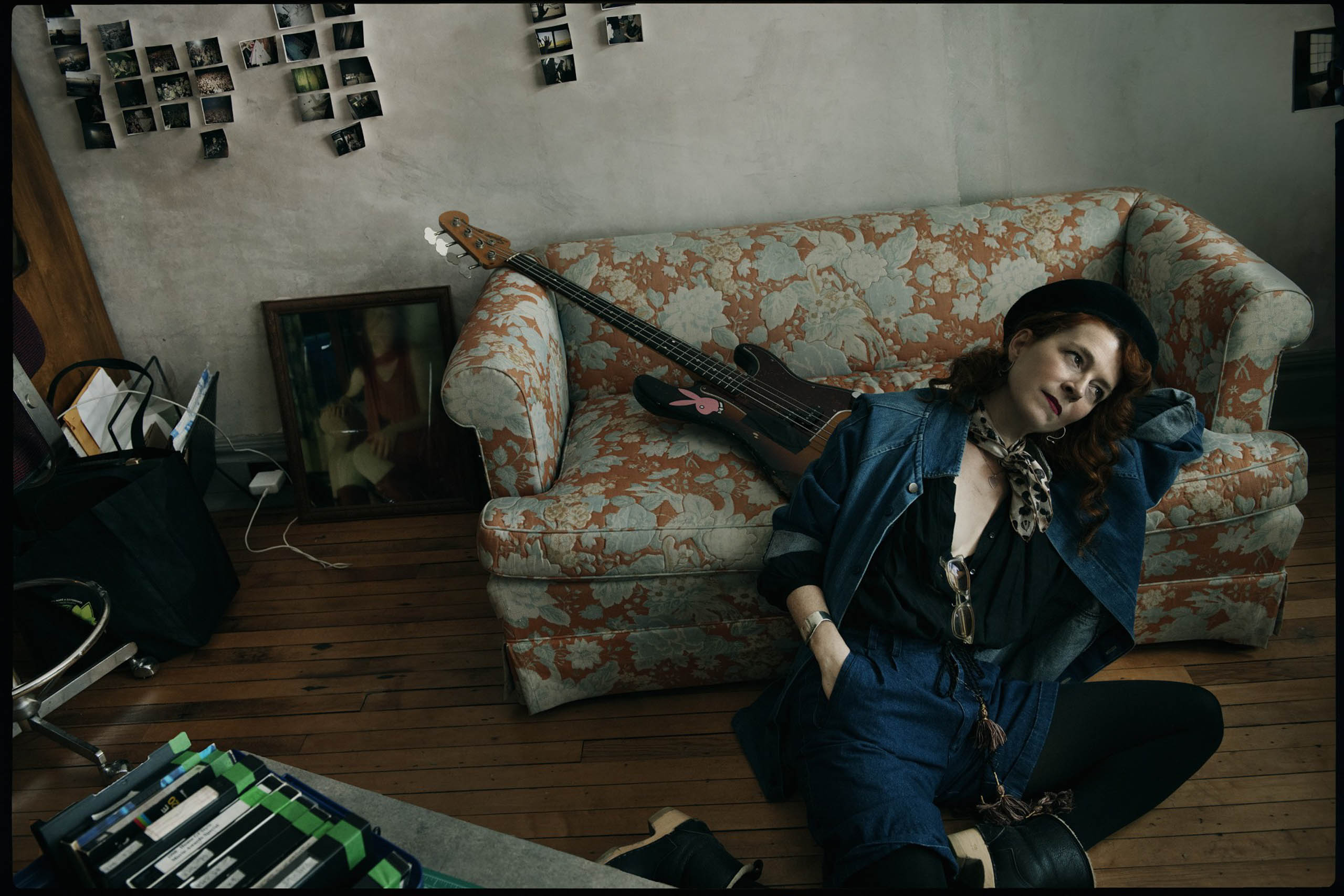



Melissa Auf der Maur had a plan for herself early in the ’90s. Long before she was swept into the mad swirl of alt-rock stardom, she was an art student in Montreal playing in the fledgling indie-rock band Tinker. But she was devoted to photography—a passion since her early teens—and was certain fine-art photography was her future. Then, in 1994, everything changed when her musical pursuits led to an inexplicable invitation to join Courtney Love in Hole. Bass guitar in hand, she left family and friends behind and plugged into the exploding pop-culture maelstrom surrounding the band at the height of grunge.
Auf der Maur also brought her camera and began documenting her new life amid the crazed international scene. Shooting pictures, she says now, was a way to hold on to who she had been before joining Hole, incorporating a photography habit into her daily life on the road. With a Nikon point-and-shoot camera, she documented her world onstage and backstage, while also probing self-portraiture when alone in her hotel rooms. Somehow, the young bassist wasn’t overwhelmed. From her first moments as a member of Hole, “I found comfort in that chaos,” she wrote in her memoir Even the Good Girls Will Cry, released earlier this year.
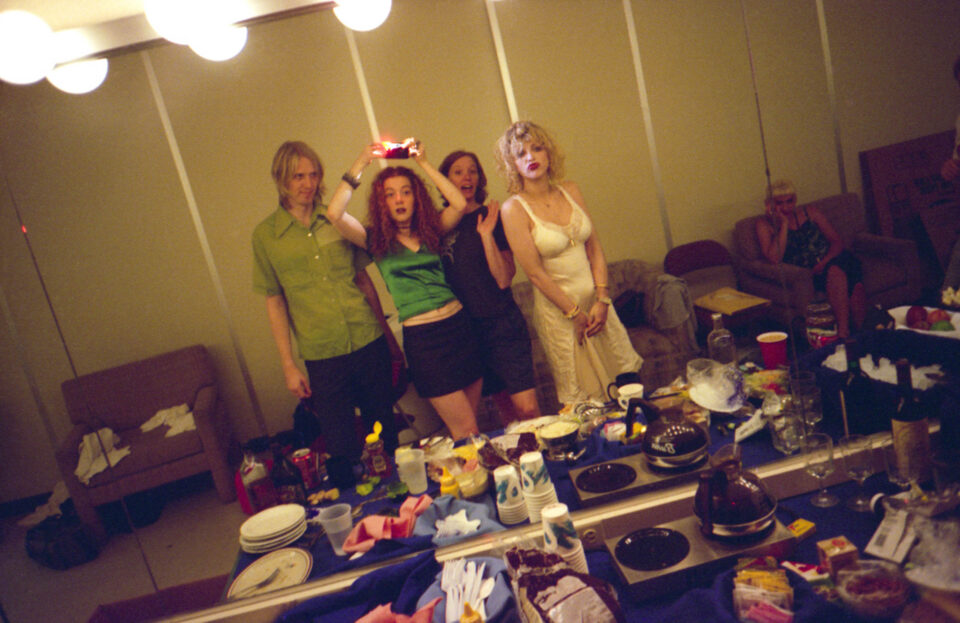
Self-Portrait in Mirror with Hole, Backstage, Lollapalooza, USA, 1995
Lollapalooza 1995
She’s since followed that book up with an accompanying visual history, My ’90s Rock Photographs. Together, they recount her times as a member of Hole and, later, The Smashing Pumpkins. The two projects have been like stepping out of what she calls a “15-year cocoon” after pausing her solo music career for marriage, family, and to create the arts mecca Basilica Hudson in upstate New York. “What I didn’t realize is that losing a creative outlet would really take a toll on me,” Auf der Maur tells me of her time away from the spotlight as we sit in a Santa Monica hotel restaurant, her hair still long and ginger. “So it was about 10 years in when I started writing this [memoir]—10 years into motherhood, 10 years into being a producer, promoter, curator of an art center—that I realized I had lost what some people call creative flow.”
Writing a memoir and digging through her photography archives reconnected her to the creative person she’d been in the ’90s. It’s a period she’s been calling “the last analog generation,” while lamenting “the arrival of the digital soul-destroying beast.” Yet her longing for the tactile mediums of film and tape isn’t nostalgia, she insists: “I don’t want to lose the magic potions that made us tick for so long.” The most physical side of her recent campaign has been the exhibition Melissa Auf der Maur: My ’90s Rock Photographs, on view at the Art Gallery of Ontario in Toronto through June 2027. The museum show is the result of curating her 15,000 photographs down to 220 final images. “Being able to present myself as an author and a fine art photographer is like the dream of a lifetime,” she says.
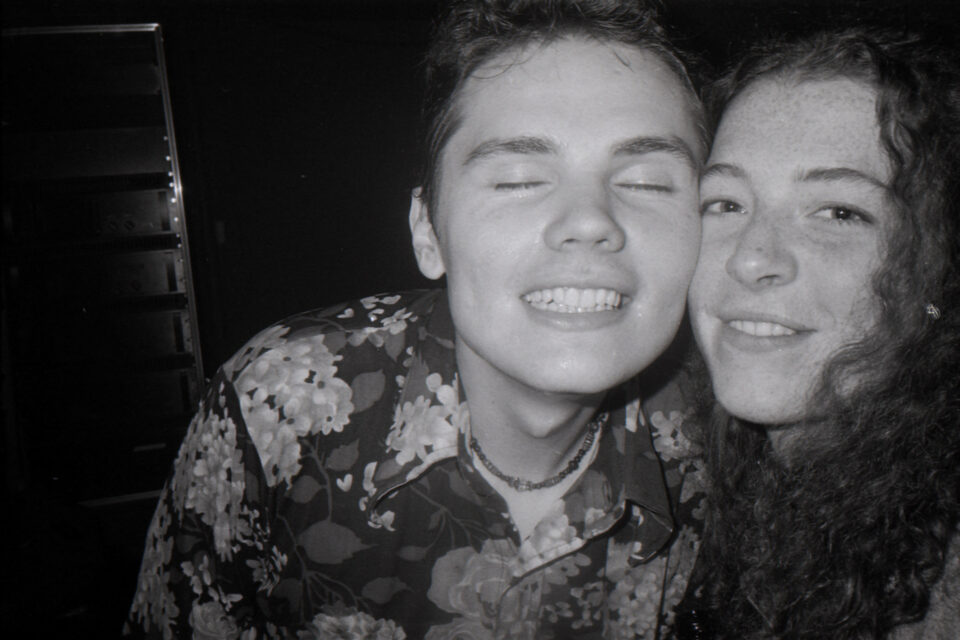
Self-Portrait with Billy Corgan, Side Stage, Siamese Dream tour, Club Metropolis, Montreal,1993.
Club Metropolis, Montreal, 1993
“Billy Corgan and Courtney Love have been so supportive—almost strangely, like proud parents who are, like, standing back saying, ‘How can we help?’”
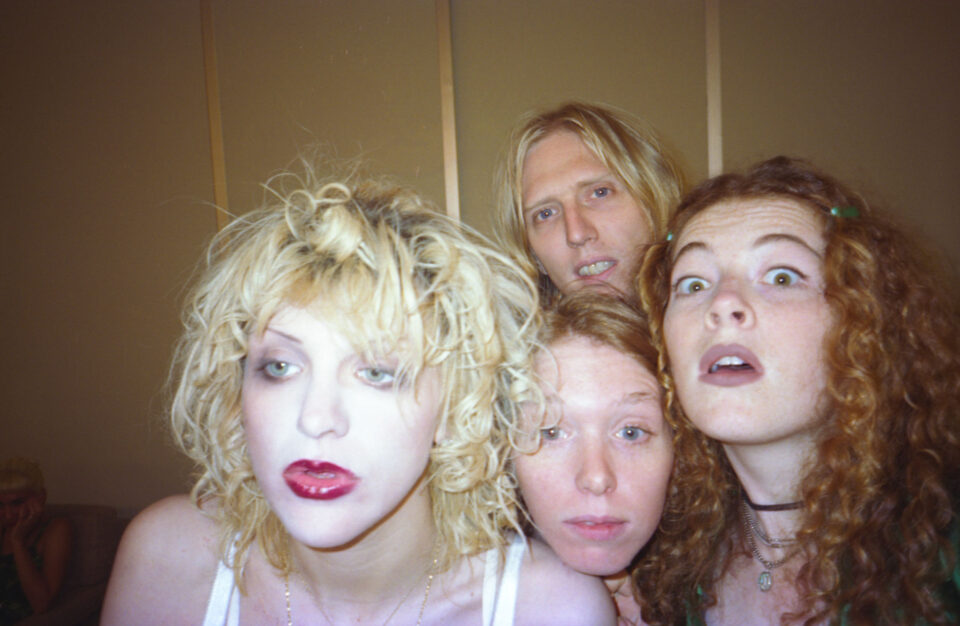
Self-Portrait with Hole, Lollapalooza, USA, 1995.
Lollapalooza 1995
Looking back, she doesn’t seem to regret stepping away from an active music career. After her years in “the brutal rat race” of the rock and roll business, and then working in a producer’s role for her husband’s films, she found the museum world a revelation of calm and considered choices. “Museums and publishing feel like a vacation in high intelligence and not obsessed with the bottom line,” she says. Between the memoir and the two books and sold-out exhibitions, the excited public response has caught her a little by surprise. “I’m actually quite overwhelmed with that,” she says. “The 20-year-olds who come into the show are like, ‘Do you have any advice?’ I’m like, ‘It’s the same as it’s always been: Find the other people who love what you do and make something out of it. Start a band, start a fanzine, go to shows. Just keep doing it.’”
At the end of October Auf der Maur appeared at the Los Angeles County Museum of Art, where she was interviewed onstage by Garbage vocalist Shirley Manson. There was a surprise appearance by Courtney Love, and at an earlier event in the city, she was joined by Billy Corgan. “Billy and Courtney have been so supportive—almost strangely, like proud parents who are, like, standing back saying, ‘How can we help?’ which has been so illuminating for me.” She pulls out her phone to look up Corgan’s text to her. She smiles and reads, “‘You did all the work to get here. It’s your time now.’” She looks up, “Yes, I work hard, that’s for sure.”
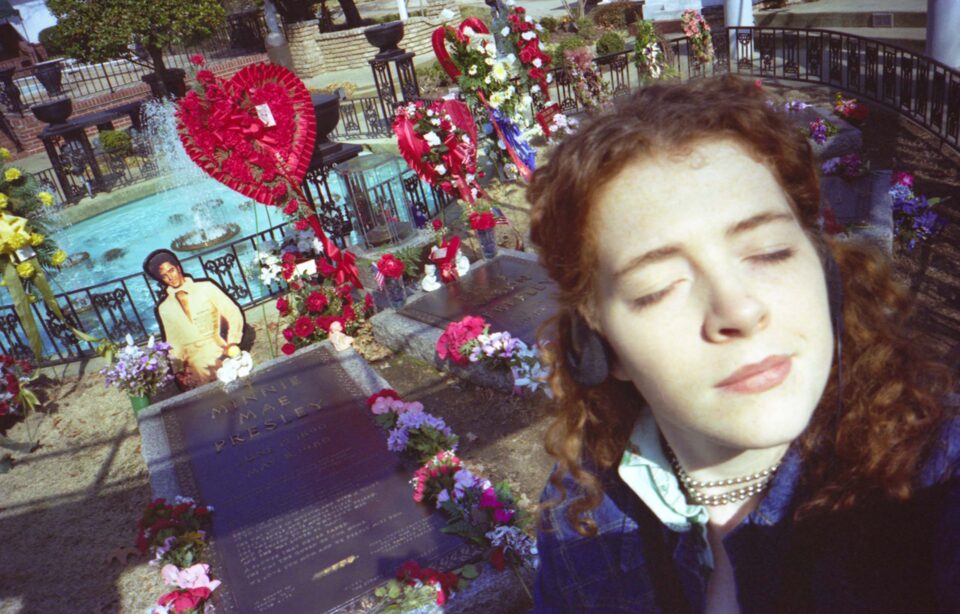
Self-Portrait at Elvis’s Grave, Graceland, Memphis,Tennessee, USA, 1995
Graceland, Memphis, Tennessee, 1995
On November 5, Auf der Maur is back in upstate New York for a public conversation with Michael Lindsay-Hogg, a rock filmmaker best known for his promotional work with The Beatles and The Rolling Stones. This moment reminds her of her first days with Hole and her first gig as the new girl at England’s massive Reading Festival. Her only previous experience was the six shows she played with Tinker back in Montreal, including one night opening for The Smashing Pumpkins. It was at that show that Corgan told her, “One day you’ll be in my band.”
It’s also been a season for reunions. In 2025, she went to see Beck play with the Boston Pops. They hadn’t seen each other since Lollapalooza in 1995, and she brought a newly unearthed photo of him from that tour. “He was like, ‘It was so cool that you always were taking photos. I remember thinking that’s so cool that she cares,’” Auf der Maur recalls of the moment she handed him the picture. “Because no one cared. I was like a tourist in my life. And Beck was a sweet, open-eyed person, too, but no one was being sentimental. I love that he remembered me with a camera.” Yet she wasn’t always shooting the rock stars around her. A chapter in the photo book called “Undivided Attention” turns the camera on the audience, the dedicated fans pushing toward the stage or waiting for a glimpse after the show. Many of the pictures are very raw, pure documentation of the exciting, sometimes dramatic world around her.
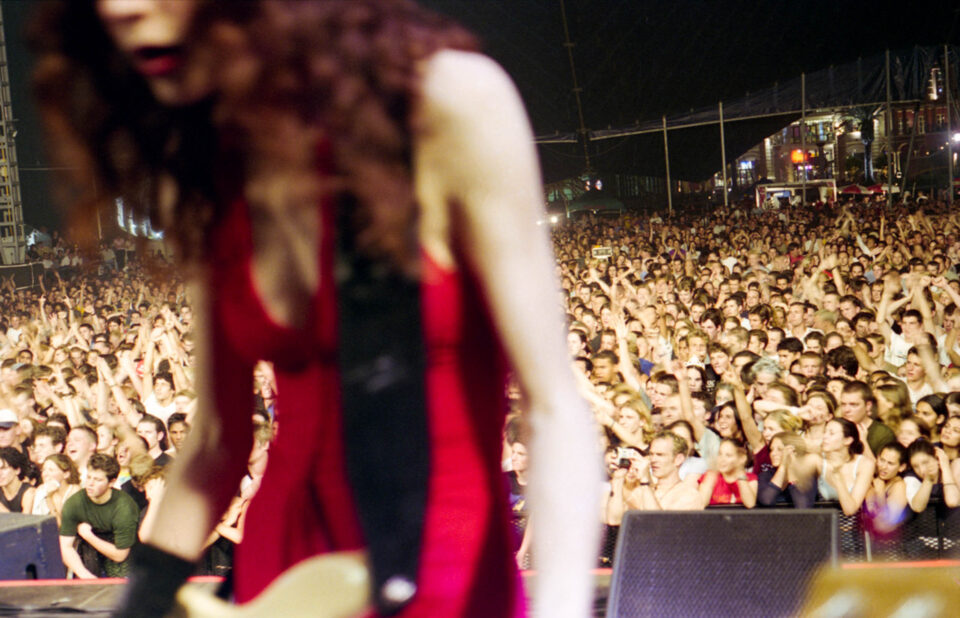
Self-portrait on stage with the Smashing Pumpkins, Cape Town, South Africa, 2000
Cape Town, South Africa, 2000
“Enough time has gone by in the world that my perspective might be of value to the cultural viewpoint of what our generation went through.”
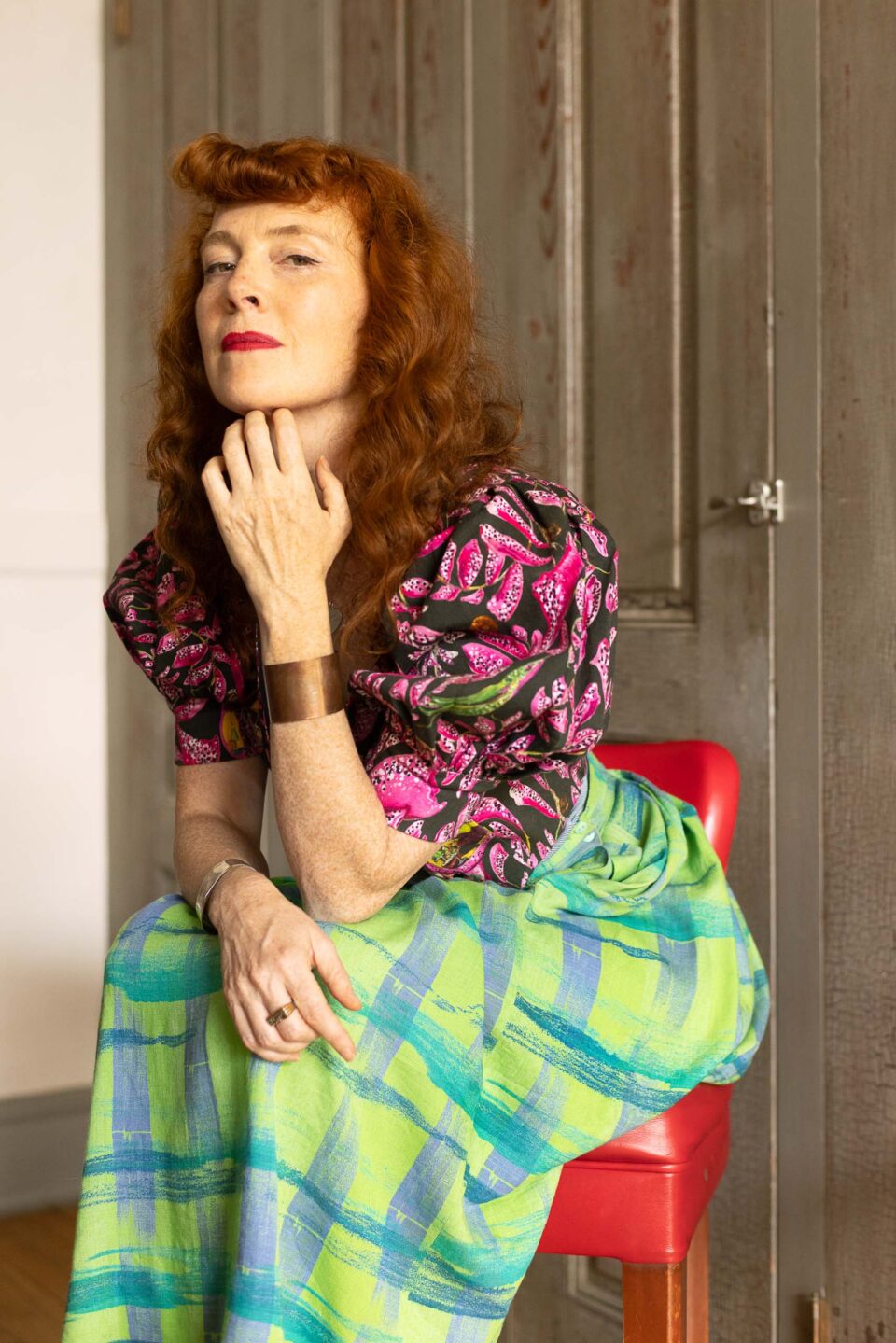
photo by Jessica Chappe
As she approached 50, Auf der Maur set out to work on these books. “I just had a realization that if I didn’t start unpacking, it would be a disservice to my daughter, who was going to become a teenager soon as I became, like, middle-aged,” she explains. “I did it for deeply personal reasons, but also recognize that enough time had gone by to give me some objectivity. Enough time has gone by that my perspective might be of value to the cultural viewpoint of what our generation went through. So I was doing it for both deeply personal [reasons] and also just [as a] contribution to cultural historic reflection.”
Even the Good Girls Will Cry tells a deeper story than just another musician’s tell-all of half-remembered adventures. It wasn’t dictated into an audio recorder and handed off to a ghostwriter to transcribe into light reading. When she decided to take on the memoir, she signed up for a demanding 12-month online writing course. Some of it was easy, leaning into her usual go-to stories of high-fashion, romantic comedy, and rock-and-roll hijinks that she’d shared at parties for years. But she knew she had to go deeper into the “the in-between stories and the flesh of the book.” Inspired by the memoirs of Patti Smith and photographer Sally Mann, she focused on her life up to 2001, when the book closes after her time in Hole and the Pumpkins was over.
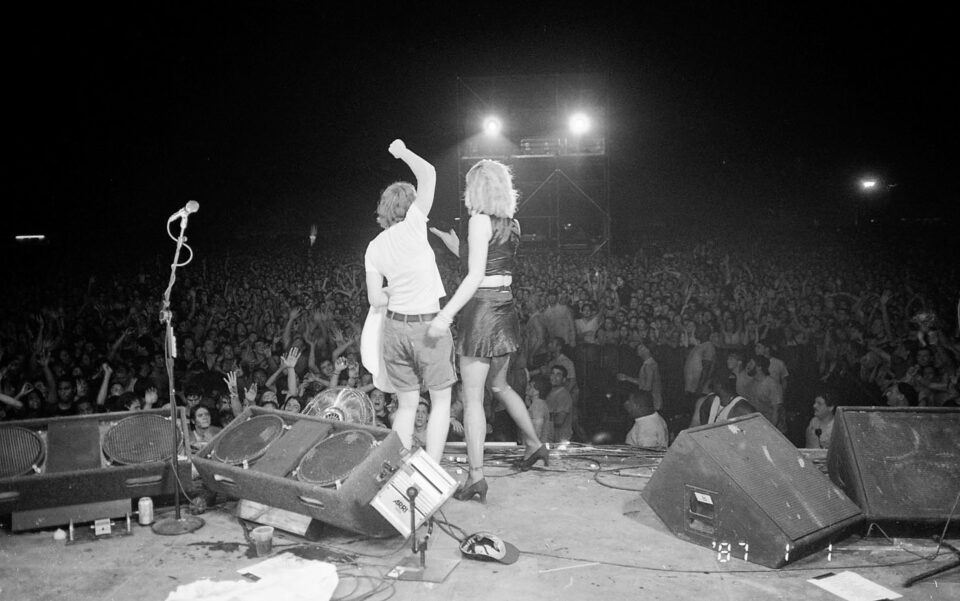
Patty Schemel and Courtney Love onstage, 1995 / Photo by Melissa Auf der Maur
“Yes, I obviously was a photographer trapped in a rock band, which is why I was taking photos every day, and making friends with the photographers.”
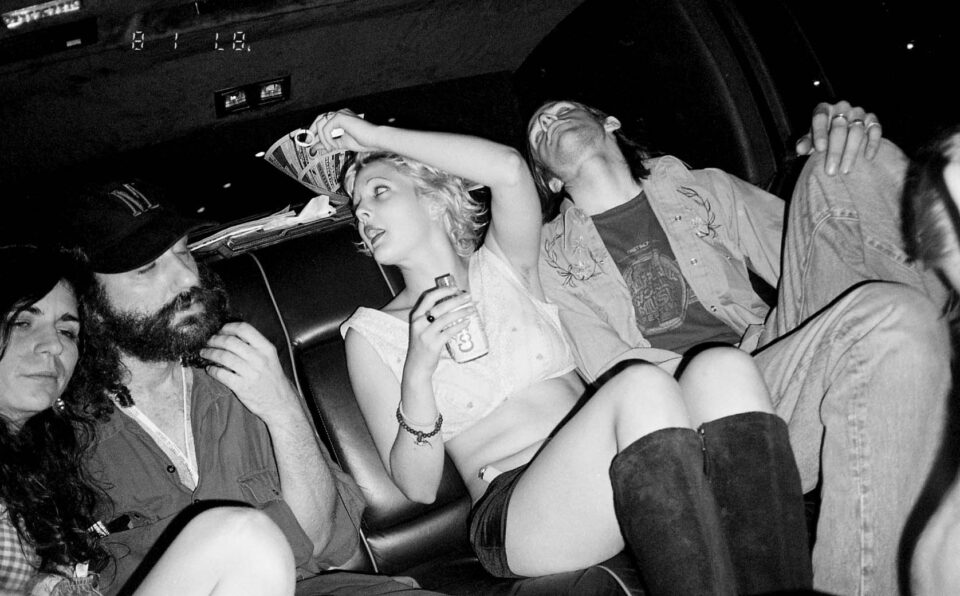
Hal Willner, Drew Barrymore, and friends in limo, NYC, 1995.
© Melissa Auf der Maur
NYC, 1995
The story begins in childhood, discovering her love for music. Her dad only listened to jazz and classical, but her mom, Linda Gaboriau, shared the record collection she’d had since her days as a music journalist and the first female DJ on Montreal’s rock station CHOM FM. As a girl, Auf der Maur was “seduced by her record collection, her enthusiasm for her generation. I was just determined to find, like, who are my people? She had hers, who are mine?” As a grown-up, photogenic, flame-haired member of a rock band, Auf der Maur also found herself being photographed frequently by some of the top magazine photographers of the day. She’d typically grab the sample Polaroids at the shoots, and some of them appear in her new books. “Yes, I obviously was a photographer trapped in a rock band,” she says with a laugh, “which is why I was taking photos every day, and making friends with the photographers.”
Hole, of course, was too mercurial, with a soaring comet-like leader, to last forever. The one studio album Auf der Maur made with Hole was 1998’s Celebrity Skin. While a different-flavored record than the growling, monumental Live Through This, it was a worthy follow-up. But the making of Celebrity Skin was marred by the betrayal of longtime drummer Patty Schemel after Love acquiesced to the demands of a producer with a history of replacing drummers with session players in the studio. In this case, it led to Schemel’s exit the year the record was released, and undermined Hole’s unity. “I now am very proud of it, but it took me 20 years to really appreciate that record because of the pain and the process,” Auf der Maur says. “I think there’s redemption coming for Courtney, which is key because she abandoned herself, abandoned music, abandoned the world—because, yes, the world had fucked her over. I think she’s going to have a very special moment right now, just like I guess I’m having my bass-player moment.”
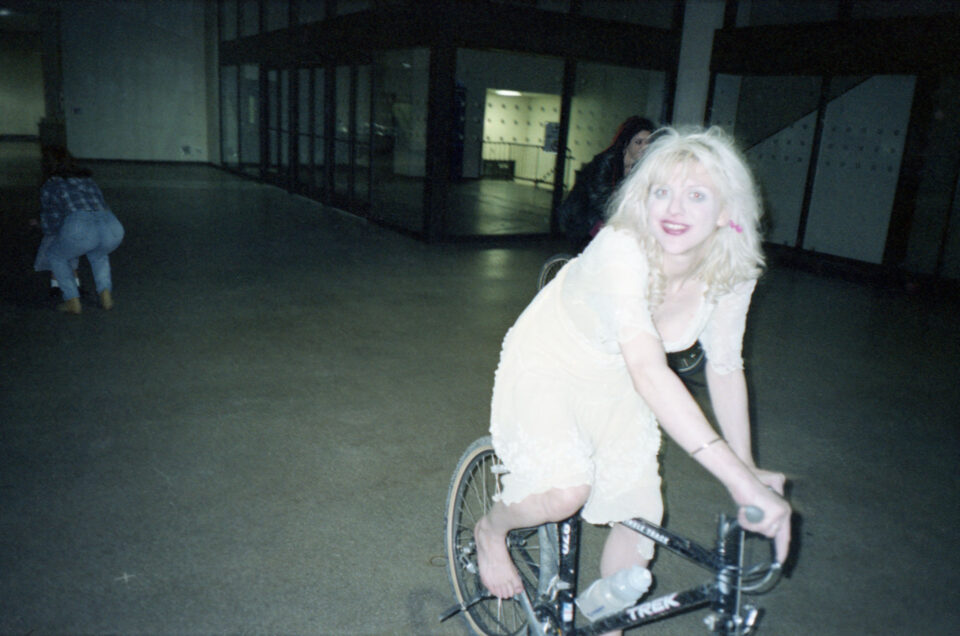
Courtney Love on bike, aackstage, “Self-Destruct” Nine Inch Nails tour, USA, 1994 / Photo by Melissa Auf der Maur,
USA, 1994
“I think there’s redemption coming for Courtney, which is key because she abandoned herself, abandoned music, abandoned the world—because, yes, the world had fucked her over.”
As part of that moment, she recorded vocals on Love’s upcoming album in London, their creative partnership rekindled. “I loved being the mermaid siren around her growl,” she says with a grin. “It was pretty frigging cool. And I didn’t realize how much I missed it.” They hadn’t really been in touch for 18 years after Auf der Maur left Hole, though there was one brief reunion in 2012 around the releases of the Schemel documentary Hit So Hard and Eric Erlandson’s memoir Letters to Kurt. They finally reconnected in a meaningful way when she had Love come to the Basilica to be honored in 2018. “I try very hard in the book to show a complex female relationship and a destined sisterhood. We didn’t speak for over a decade, but we’re closer than ever now. It’s something about the archetype of the virgin/whore thing that really locked into a cultural memory of two women who were definitely giving themselves to their music and to the people, [but also] to each other. Something about the combination of us left an impression.”
Now that she’s reemerged into the public, Auf der Maur is contemplating her next chapter. Part of that includes another memoir volume to cover the years after Even the Good Girls Will Cry, though it also involves choosing what film camera to adopt as her new weapon of choice. Using her phone, she’s been posting about her adventures, but it’s not the same. “I shoot with it all the time, but I don’t see it as, like, real,” she says. She’s looking forward to getting real again, picking up where she left off. “I’ll just start a new relationship with my camera,” she promises. “I’m going to start a new relationship with my bass. I’ll do it all.” FL
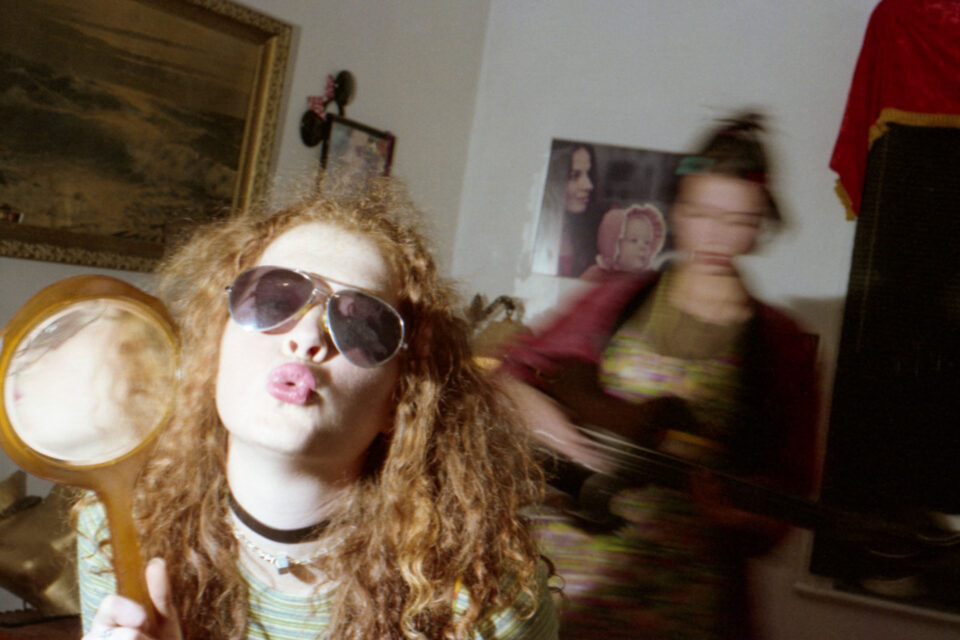
Melissa Auf der Maur, Mirror Kissing Girls, Montreal, 1993
Montreal, 1993
