


Historically, one of the most difficult things to capture in a feature film setting is the club—the sights, the vibe, the all-around spiritualized, ritualized sensation of what it means to come alive in an after-hours nightlife setting. There’s always a tenderness to portray along with the sleaze, the sensuality, and, of course, the sense of constant motion. You can throw on house music, vintage disco, or early new wave and maybe ape its sound or era—and, yes, you can toss around au courant drug names—but no film has truly, thoroughly captured what author Nik Cohn once titled the “the tribal rites of the new Saturday night” in what would become the spine of Saturday Night Fever—which also never came close to approximating the religiosity of the dance floor.
Party Monster didn’t do it. Party Girl didn’t do it. 54 didn’t do it. A Night at the Roxbury wasn’t all that funny as it attempted to do it, nor was The Last Days of Disco as dryly witty as it strove to be. 24 Hour Party People came close to its all-encompassing feel, but concentrated too much on Tony Wilson’s conceits rather than play to the club’s all-sexes, all-races, all-neuroses communal aspects and all of the tolerances and acceptances that come with it. Because promoters, DJs, and club owners are only as good as their crowds, devoted and familial. When Nile Rodgers and Bernard Edwards wrote the words “we are family,” they meant it.
As a one-time club promoter myself, the job is a 24-hour, seven-days-a-week, thoroughly selfless and ridiculously selfish service of selling a genuinely amorphous concept: transformation, ecstasy, the deconstruction and re-construction of the self, the uniting of souls and selves under the nurturing umbrella of the good groove. The fashion, the drugs, the sex, even the music—that was all secondary, even peripheral. A truly great—heck, even a good—party-thrower is a mother, a father, a lover, a psychologist, and a pimp hawking nothing less than complete and utter metamorphosis. With a bass line.
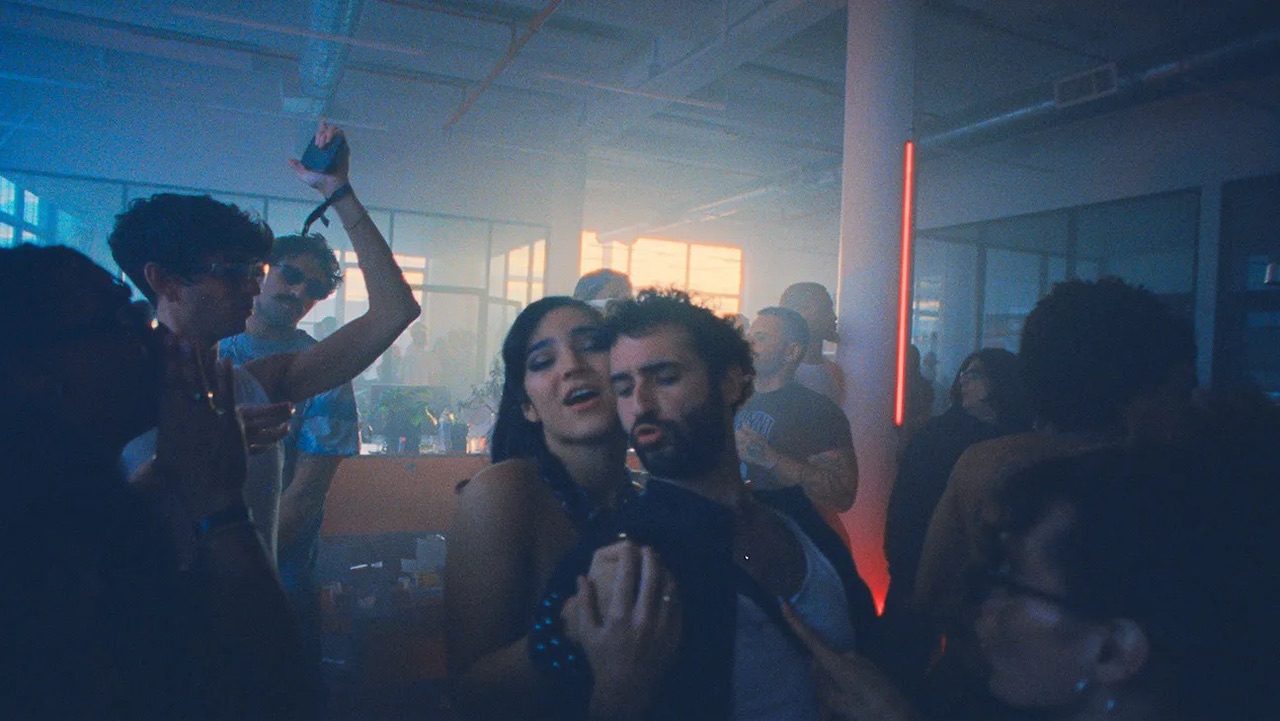
With all of that as criteria—along with a script featuring huge dollops of poignancy, smart humor, and the guts to look equal parts pathetic and heroic—Club Kid works. It works because writer/director/star Jordan Firstman is willing to play guile, is willing to play wretched yet heartbreaking, heartbroken, and messily so. He’s willing to play nice and not-so-nice with others, but with others, even bitchily, in close proximity, all steered by quirky, quicksilver absurdity, then vulnerability, as their diving rods.
Clud Kid may be Firstman’s debut film as director—like Citizen Kane if it was filmed while inhaling pink cocaine and GHB—but like Orson Welles’ masterpiece before it, Firstman emphasizes and electrifies the role of the ensemble in the life of his character (Peter, the club promoter) as well as the life of the story, one where a sexually active gay man randomly fucks a woman in a club when she becomes part of a quick bathroom tryst, only to find out a decade later that he has a son who must live with him. That premise is a bit hokey, but comes off with clarity because Firstman has talent and real cojones, and gave his film an emotional center rather than just let it tangle on the vine of molly and blowjobs, the hill that so many nightlife films die upon.
For Club Kid, Firstman and cinematographer Adam Newport-Berra turn Manhattan’s widescreen clubland (of both 2016 and 2026) into darkly intimate, cloistered environments where the same group of nightlife habitues—under the doting steerage of hard-partying, trusted co-promoters Peter and Cara Delevingne’s Sophie—carry on while carrying out the decadent, decorous art of fabulousness, with trans artisans played by Saturn Risin9 and Miss Benny as the best and brightest stars, and deeply felt comrades to Peter when he needs them. While Firstman and Newport-Berra create a dank yet desirable shadow world by night, by day you can feel the heat radiating off NYC’s parked cars, baking in the sun, yet equally aspirational in its lightness of being.
When Peter’s life of sex, drugs, and house music gets to be too much for the promoting pair’s expanding enterprise, the increasingly business-like Sophie cuts the zotzed-out Peter just in time for him to meet his new fate: an unexpected visitor in the guise of Arlo, a 10-year-old son from Great Britain that he never knew he had. Rather than drag this tired fish-out-of-water bit out forever, Firstman plays it lean and mean, allowing Peter’s own longtime self-loathing and loneliness to play into a desire to be a better person, as well as a better father.
Arlo is naturally cool in Peter’s eyes—the ultimate commodity in clubland. Through that currency, this father and son become fast friends, with Arlo becoming something of a celebrity as the city’s youngest nightclub DJ. Like Firstman, Reggie Absalom never overplays his cuteness or revels in the memes of rough childhood. Together, the pair make a silly parental trap seem both imaginable and likable. So much so that when things go south, and Firstman’s sly, quick humor drops off, you genuinely feel for the circumstance of the son and the father and look forward to a great resolve for all.
As both writer and performer, Firstman gets away with this hip and high-camp coming-of-age (and coming-to-grips) tale because he’s merged mercurial, hyper-specific humor that’s unflinchingly queer, sexual, and vain—somewhere between Gens Z and Alpha—with an old-school sense of self-deprecation that Albert Brooks showed at every turn of Lost in America and Modern Romance. In fact, nothing could be more modern-romantic than Club Kid’s touchingly hysterical, eccentrically and wrenchingly emotional relationship of a gay dad and his DJ son, both finding themselves in each other.
