BACKSTORY: A nature-loving bookworm finding refuge in a past filled with female jazz crooners and old-Hollywood film icons for a new-school brand of plinking theatrical pop filled with pink ukuleles, lithe vocal trilling, and smart lyricism
FROM: Seattle’s Cascade Mountain Range
YOU MIGHT KNOW HER FROM: Her fanciful doe-like cosmetics tutorials during COVID, or the raw demo for her ultra-romantic “Vegas Venetian” which originally made her a viral pop sensation
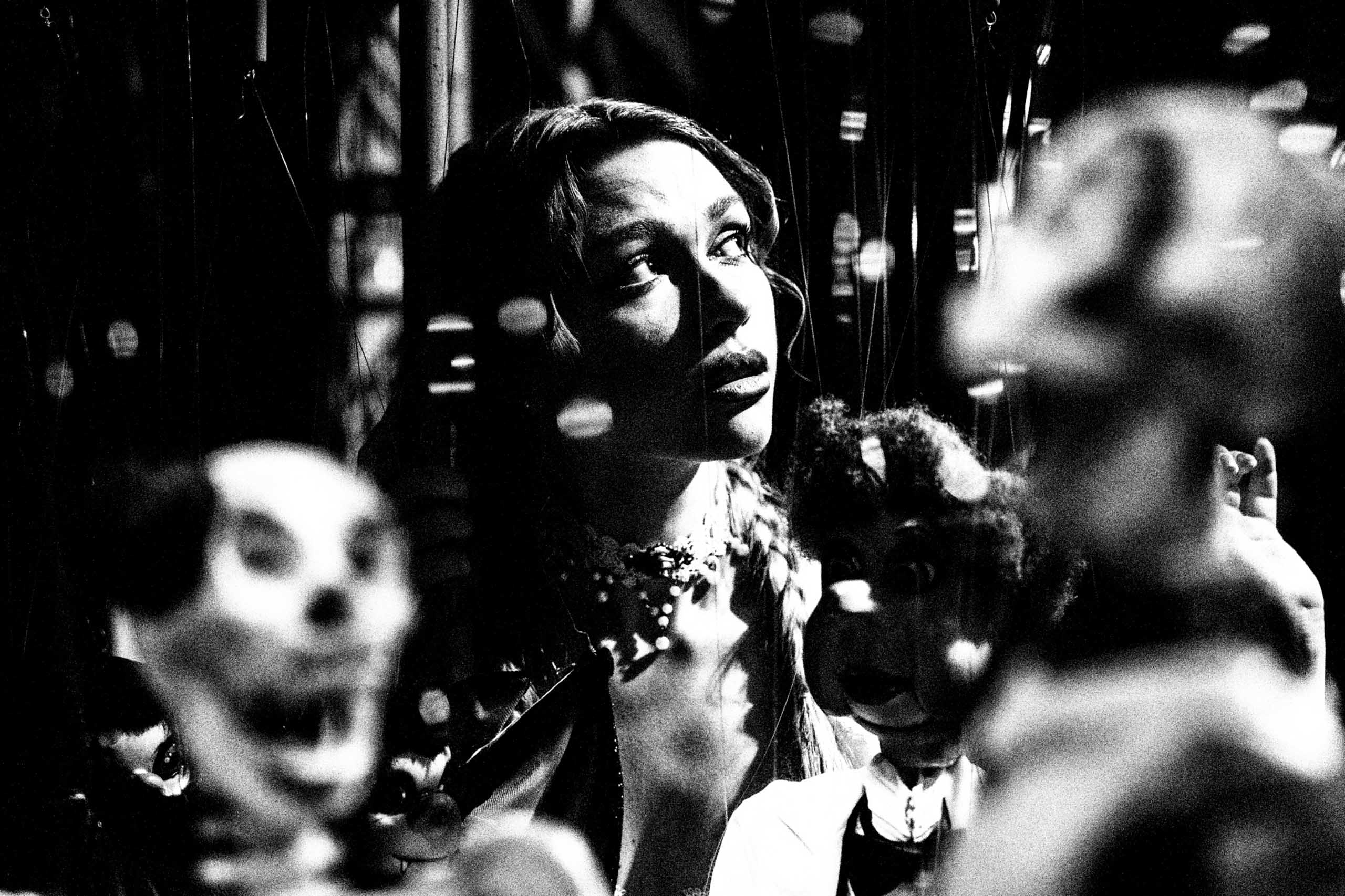
NOW: Newly signed to Capitol Records, Elizabeth has just released her second EP, People Pleaser, and is engaging on her first tour, which included a recent stop at LA’s Bob Baker Marionette Theater
If you were to have believed the hype, your first meeting with Mollie Elizabeth would’ve been filled with lacey dresses, hazy fantasy, and gauzy intention. So much of her legend—fresh as it may be, kicking off with the quick rise of her first demo drop, “Vegas Venetian,” circa 2024—is filled with elements of the arcane and the innocent, of pink ukuleles, dewy Pacific Northwestern hills, and songbird-filled capriccio. But if you begin the conversation with the jazz records she loves and the first books she read, you find that there’s more to her than imagination holds. That behind her big eyes is a racing mind and a quick wit touching on broken families and emotional trauma, spitting literarily laced lyrics and dropping visualizers that send up the feminine beauty mystique she briefly held to high standard.
“As a kid, I spent lots of time with myself in nature, and, yeah, I did have somewhat of a dysfunctional family,” she says in consideration of singles such as “Run Rabbit” and the hurt childhood she’s portrayed. “I found my own way of coping by finding ways to be creative, by reading and writing, by being something of a teacher’s pet in school. I even used to be something of a mathlete. I’m not much for calculus, but I still love algebra and do always appreciate a good puzzle.”
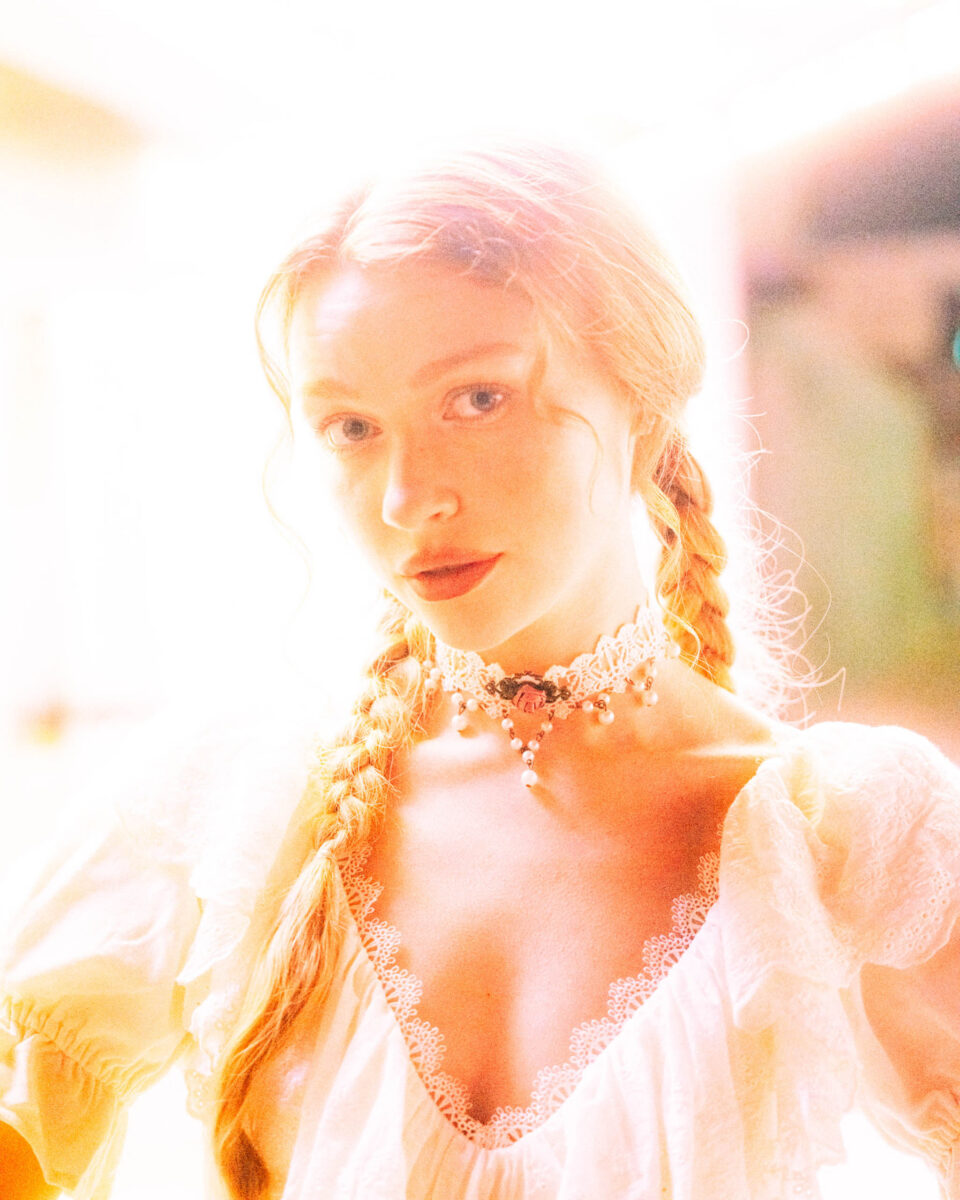
Thinking of herself as an introspective person who’d rather read, scribe lyrics, and spend more time with animals than people, it’s telling that among her favorite books is a mix of wild fantasy and apocalyptic fatalism: Harry Potter and Fahrenheit 451, the Brontës and Orwell. “I had a little Goosebumps phase around the same time that I was into Jane Austen,” she says with a laugh. “After finishing Kafka, I started reading The Odyssey and found that I’ve just wanted something lighter, more romantic in these chaotic times—I need some Twilight.”
Music, too, allowed Elizabeth to paint herself into a story and a sound of her own choosing, a world of pre-1960s songstresses such as Julie London and Rosemary Clooney that presented the young mathlete with an option. “As a kid, I heard those voices and thought that theirs was just a beautiful way of singing,” she says of these 20th-century standard bearers. “So much of that is lost in modern pop, though it does seem to be coming back, that jazzy style. I mean, in the early 2000s it was all just the Black Eyed Peas. Then I heard Doris Day, and knew that was how I wanted to sing. And yet there’s so much of a rose-colored lens on that earlier style of music. So many songs today are just about money, sex, and drugs. Not that songs in the past didn’t speak of that—they did, a lot—but those moments just happened to be painted as prettier pictures with real instruments. There was a warmer tone to the microphone that was just…reassuring.”
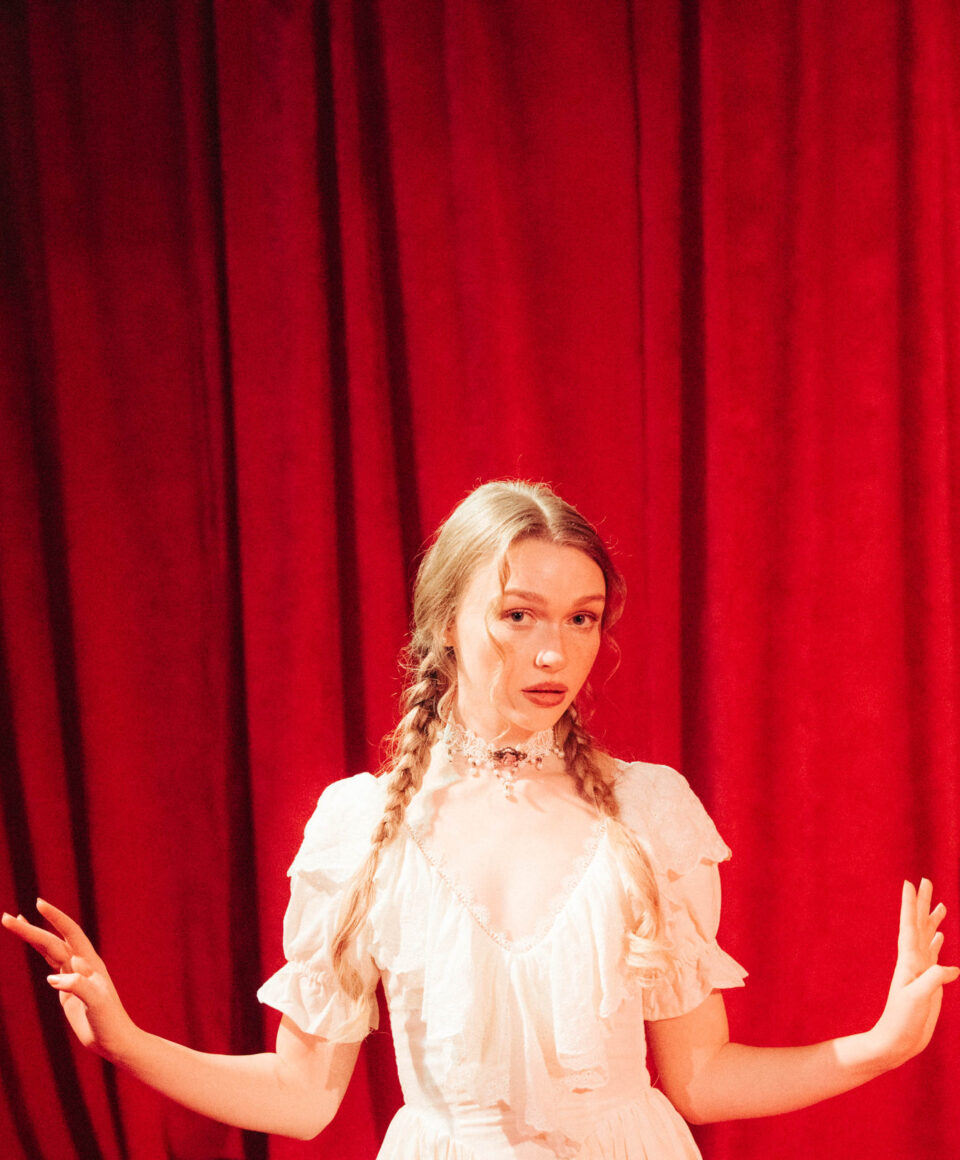
“There’s so much of a rose-colored lens on that earlier style of music... There was a warmer tone to the microphone that was just…reassuring.”
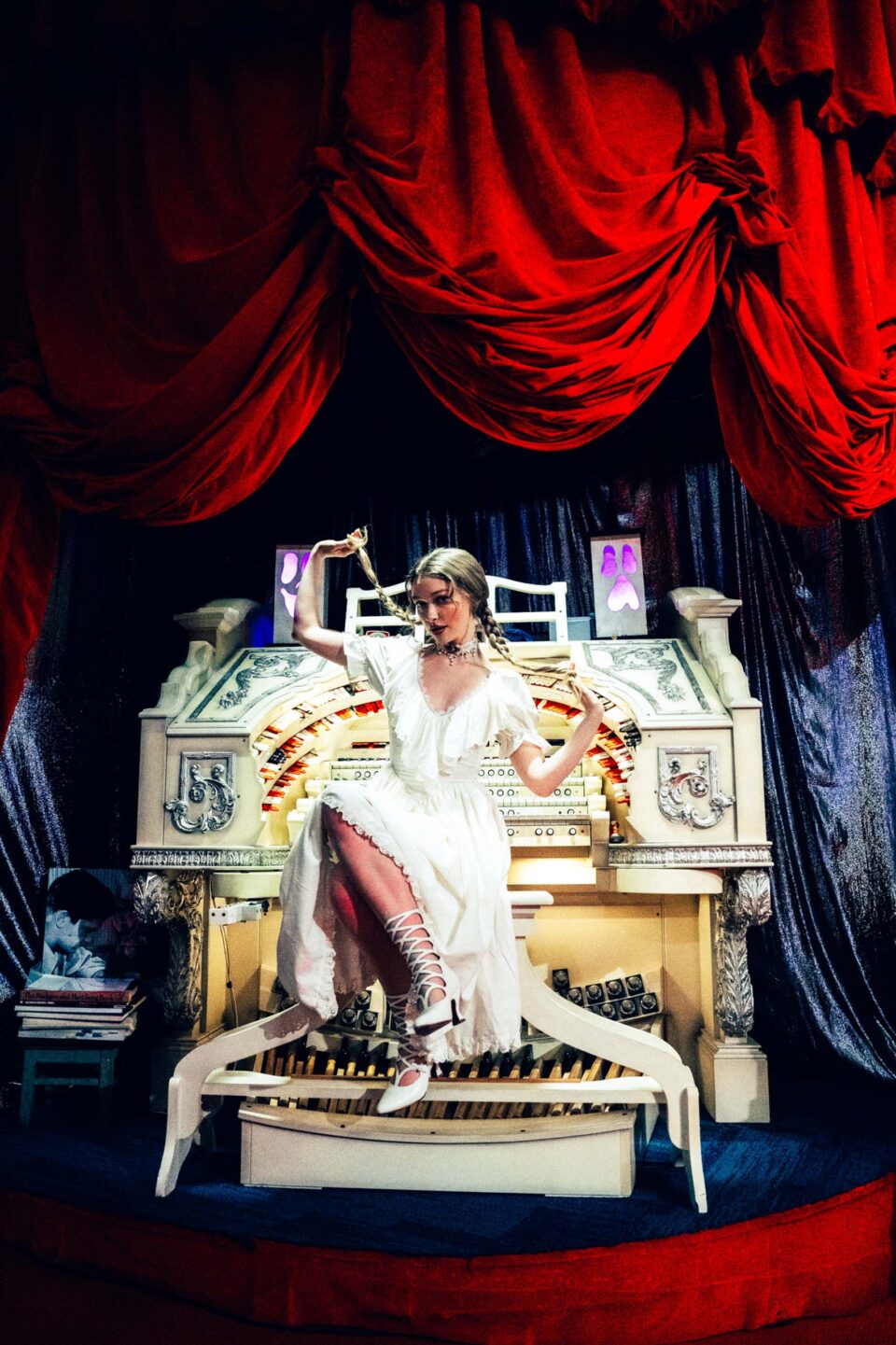
Attaching herself to the idea that she could write about existential crises and childhood trauma in a whimsical fashion gets to the very heart of what Mollie Elizabeth does best. In Julie Andrews’ terms, she serves up spoonfuls of sugar on songs such as “Dinner for One” and “Dog Eat Dog” so that the medicine goes down in most delightful ways. Though Elizabeth wrote songs throughout her childhood as a way of journaling, the small-town girl raised within a tech-head family was encouraged more toward commerce than aestheticism, and never considered a life in performance worthwhile. “I always thought that music was something I would do forever, but in my bedroom after I got home from work,” she says. “I mean, the week that ‘Vegas Venetian’ blew up—a song I wrote on GarageBand with a tiny keyboard—I was going to my community college and signing up for classes in marine biology.”
Before Elizabeth got to the song that brought her to the attention of music managers, labels like Neon Gold, and producers such as Dean Reid, Elizabeth spent time doing makeup tutorials via social media with a telling handle: doeyedfairie. Was this a character? Something as fantastical as the imagery filling the likes of her increasingly dramatic songs, such as “The Disappearing Girl” or the Lewis Carroll–like “The Mirror”? “I wish it was that whimsical,” she says. “TikTok was just beginning to blow up. I’m in high school. It’s COVID, and one of the beauty things on socials was, ‘Do you have cat eyes or do you have doe eyes?’ And from there, how to do that appropriate makeup. I definitely had doe eyes, and the ‘ie’ [in my handle] would be cute because that’s my name. So it stuck. Besides, there are many Mollie Elizabeths out there who don’t want me to have my handle on Instagram.”
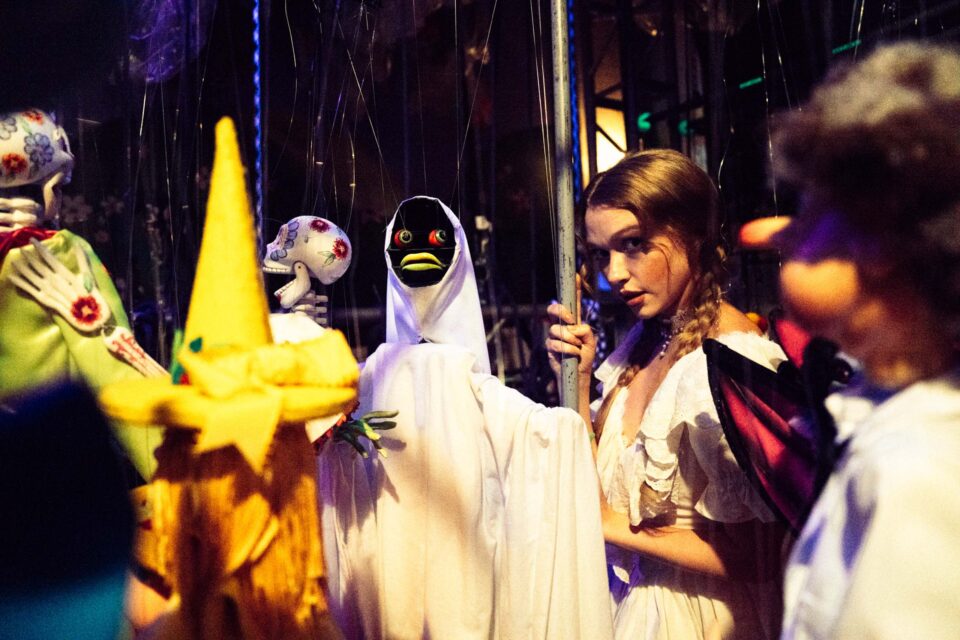
“I always thought that music was something I would do forever, but in my bedroom after I got home from work. The week that ‘Vegas Venetian’ blew up, I was going to my community college and signing up for classes in marine biology.”
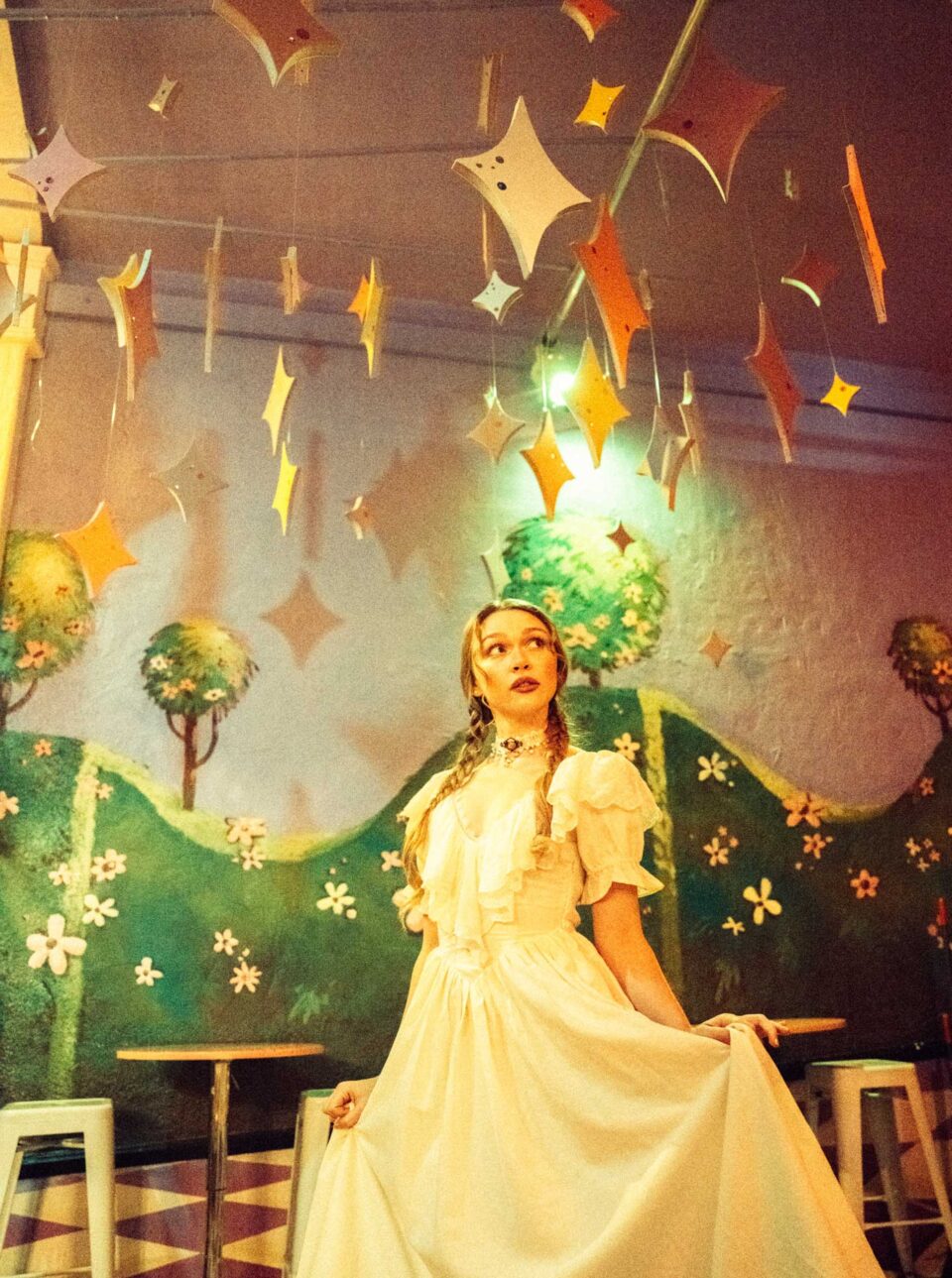
Now that each video of hers racks up views in the gazillions (“Anything more than the amount of people that could fit in my apartment hurts my brain,” she confesses), Elizabeth has had a rush of confidence that allows her to maintain the “weirdness” that got her signed in the first place, with a lushly spooky sound that’s ever-so-slightly more aggressive than her start, all touching—theatrically, quaveringly—on what it means to conform, to be commodified, to be beautiful, and to be lonely in the 21st century. “When I first got signed, I’d just been yanked from my parents’ basement,” she explains. “No one tells you what to do or how to make music. You just pick it up quickly. They fly you to LA, you sing the song, and that’s that. It took me a minute to realize that I could speak up for myself. Only recently did I start to find my voice during my sessions, because I’m such an outsider. I really had to learn to speak up.”
A fast songsmith who now saves the writing of her bridges until the last moment (“I can’t believe that songwriters work on one song for days or weeks, let alone months”), Elizabeth’s new People Pleaser EP is still pretty and witty. It’s also bigger, punchier, eerier, and even ballsier than Dirty Blonde due to this newfound skill of speaking up for herself. “When I started, I thought of what I did like a diary, like journaling, but in a different way,” she says of going from small to big, from her home studio in Washington to Capitol Records in LA. “So when I got this opportunity, I kind of instinctually wondered what it is people want. I actually thought that I had to get rid of that spooky little weird thing that I put in all of my music—until I had this meeting where the people around me said that what was missing was the creepiness that I first had when I was fresh out of Washington.
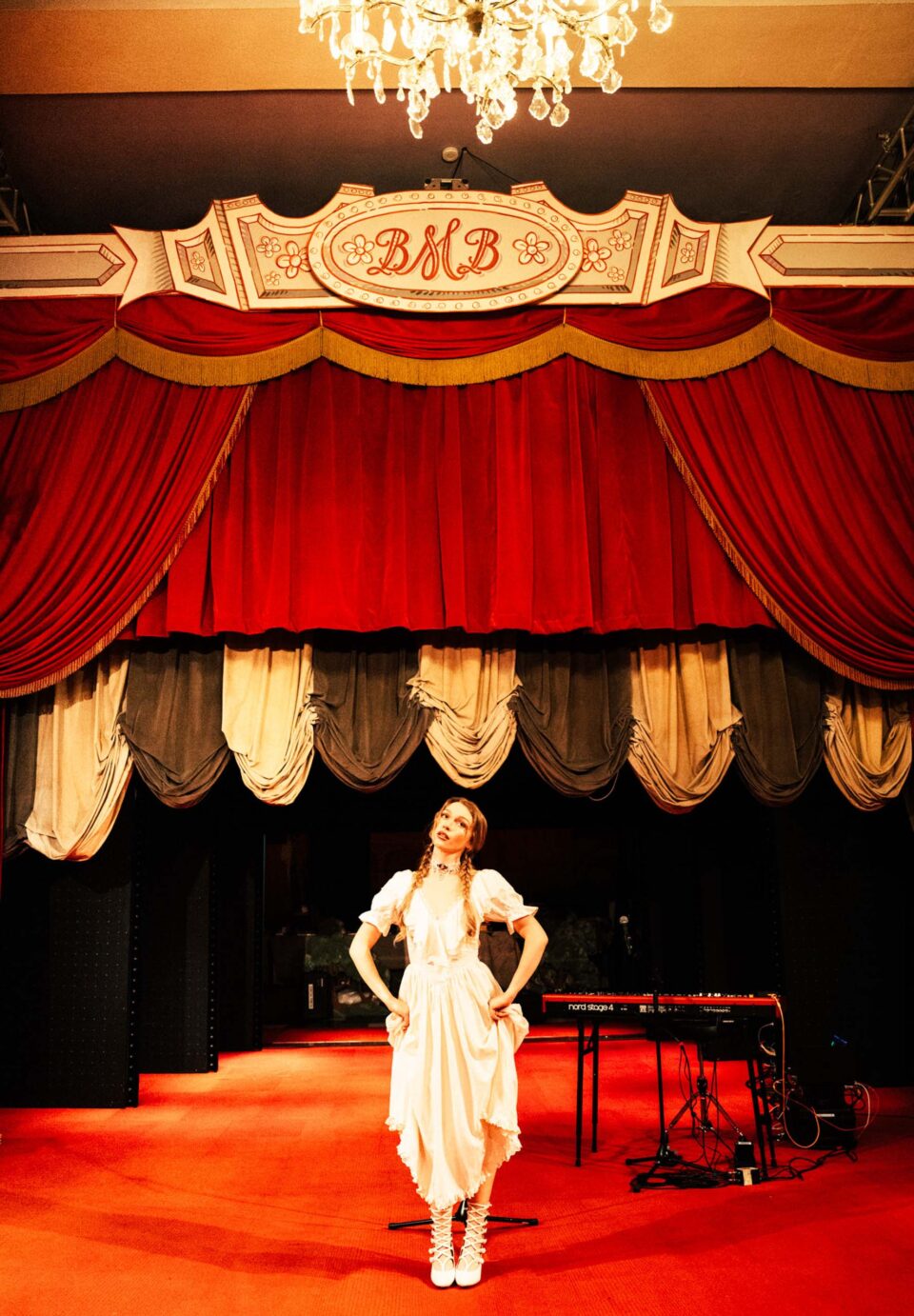
“And I was ecstatic,” she continues. “I love The Twilight Zone, the original series, and Tim Burton and Alice in Wonderland—and that’s when ‘Run Rabbit’ and the whole People Pleaser EP came to pass. Everyone wanted the strange stuff. And what I wanted was a story with a throughline, the realizations that I had about society and life after leaving Washington with obsessions about money on ‘Gimme More!,’ the obsession with looks and ‘Puppet Show,’ how women are not heard—ever—with ‘Petty Crimes,’ all tied together by its finale, a rebellious song like ‘Kiss the Ring,’ something so unlike my usual observances. Better still, [it was] the first song that I ever wrote that was all about me and what I deserved.”
Revved up and racing by interview’s conclusion, Mollie Elizabeth says that she wanted to end her newest EP on the least people-pleasing song of all. “And I think we got it,” she says. And now, so do you. FL