

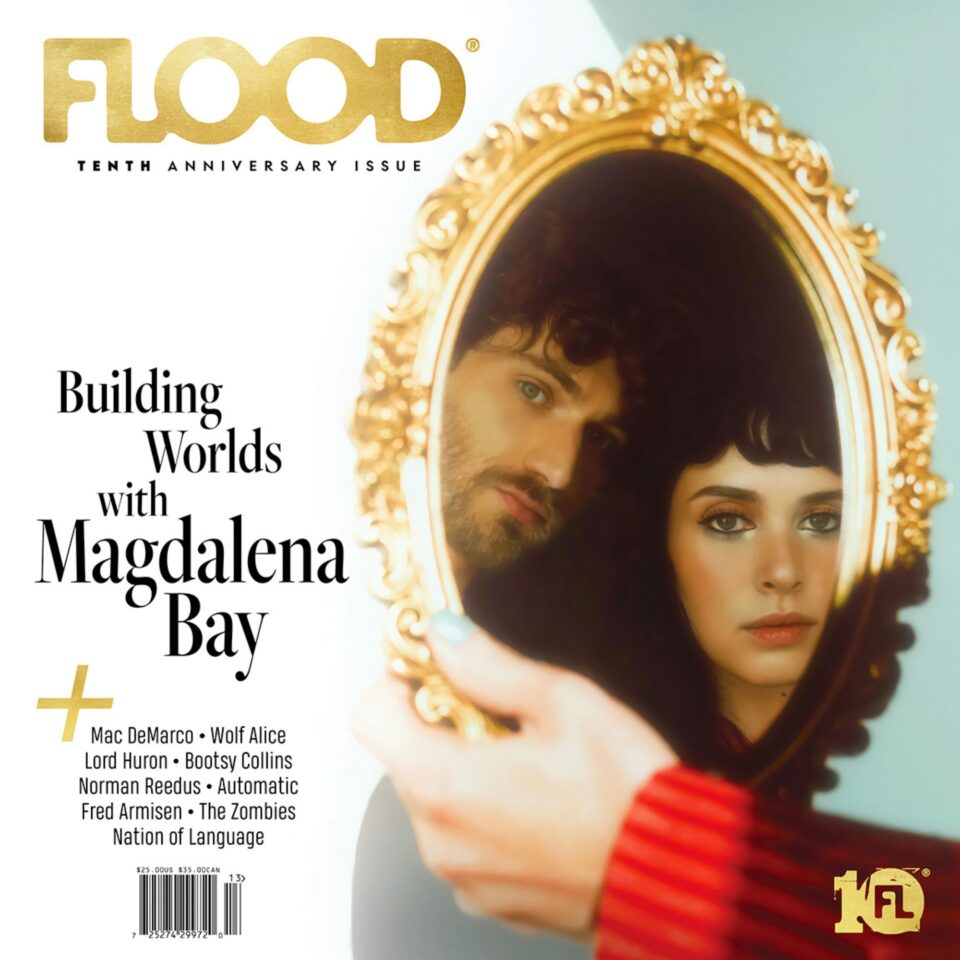
Celebrate our tenth anniversary with the biggest issue we’ve ever made. FLOOD 13 is deluxe, 252-page commemorative edition—a collectible, coffee-table-style volume in a 12″ x 12″ format—packed with dynamic graphic design, stunning photography and artwork, and dozens of amazing artists representing the past, present, and future of FLOOD’s editorial spectrum, while also looking back at key moments and events in our history. Inside, you’ll find in-depth cover stories on Gorillaz and Magdalena Bay, plus interviews with Mac DeMarco, Lord Huron, Wolf Alice, Norman Reedus, The Zombies, Nation of Language, Bootsy Collins, Fred Armisen, Jazz Is Dead, Automatic, Rocket, and many more.
Reviews
See All 

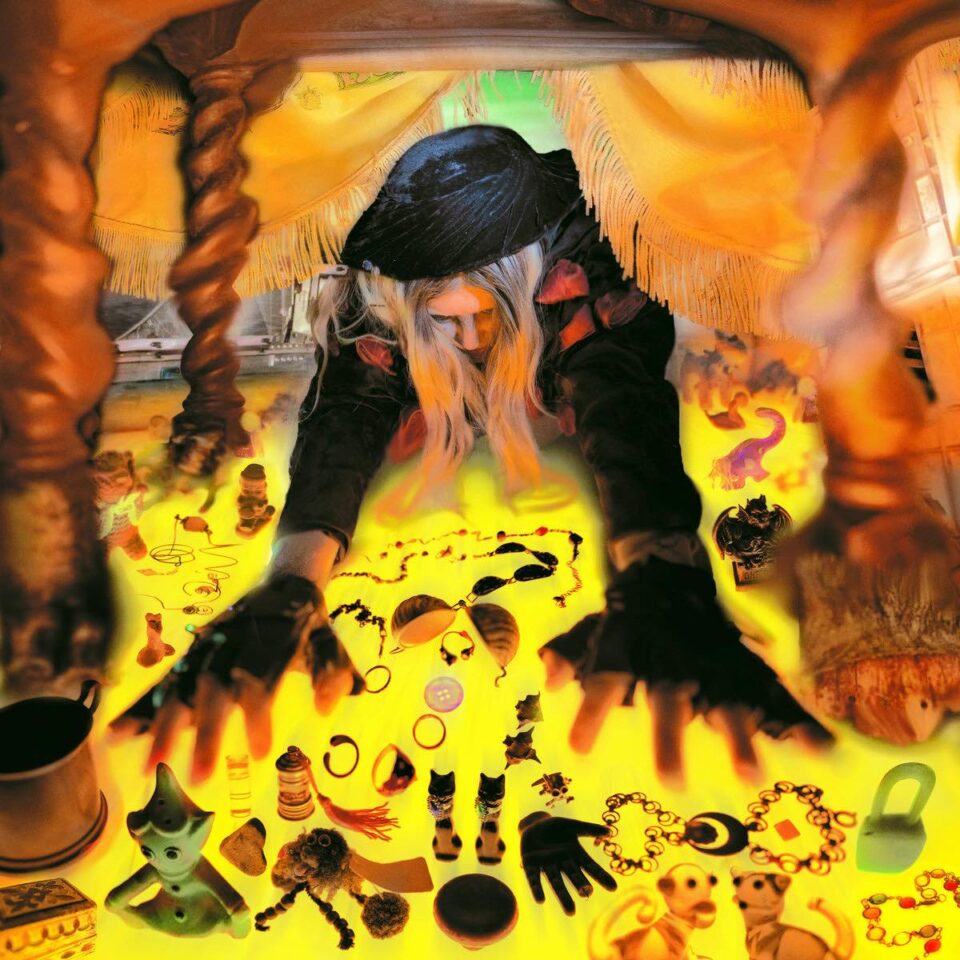
Caroline Rose, Gentling the Horse at the Walt Whitman Mall
Blending synthpop, alt-country, and punk, the songwriter’s surrealist vision of American suburbia in 2026 is fueled by tracks that rip and soak in the moments they depict.
Sour Widows, Sigil
The Bay Area duo confronts grief and cruelty while making space for necessary indulgence on their second LP, with producer Melina Duterte pushing them toward bolder arrangements.
Grumpy, Unfindable Ring
After a pair of EPs opened the door to shapeshifting unpredictability, Heaven Schmitt’s second LP leans into an emotive, purposefully fragmented sound that remains impossible to pin down.
Kyle Lemmon
Articles
See All 















Load More
Full of Time: The Magical Stories of Tom Waits, Kathleen Brennan, and Robert Wilson
Along with his friend and collaborator Wilson, we look back on 20 years of Waits’ conjoined-twin albums Alice and Blood Money.
October 07, 2022
Reviews
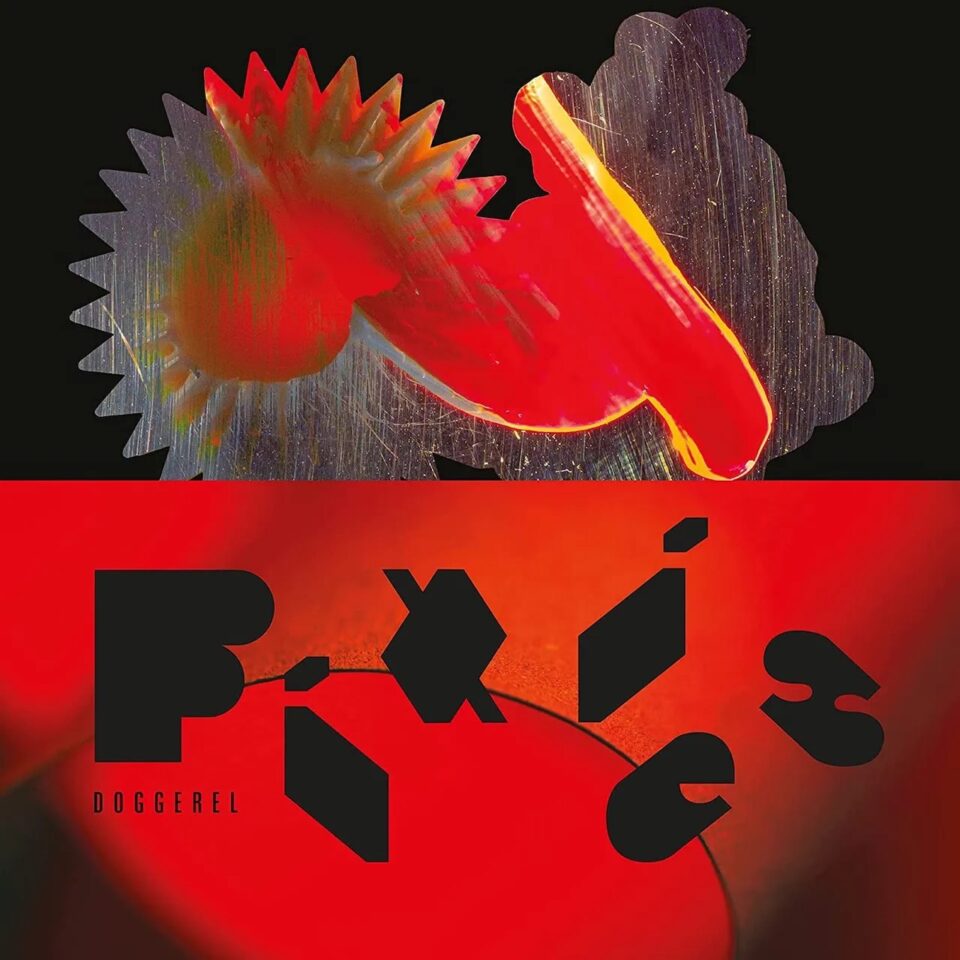
Pixies, “Doggerel”
The eighth studio album from the alt-rock vets mostly sticks to its promise of bigger, bolder tracks, providing a handful of fluttering highs among their near-four-decade discography.
September 29, 2022
In Conversation
Redefining Classic Rock with Built to Spill
Doug Martsch discusses keeping it fresh after 30 years, his reflective ninth album When the Wind Forgets Your Name, and a quarantine love for The Legend of Zelda: Breath of the Wild.
September 12, 2022
In Conversation
Hot Chip on Celebrating the Noisy Outer Limits of Dance-Pop with “Freakout/Release”
Joe Goddard discusses evolving the spectacle of their recorded output and refining their craft on the band’s eighth studio album.
August 18, 2022
Reviews
Danny Elfman, “Bigger. Messier.”
This remixed odds and ends collection is longer, denser, more disorderly, and less refined than the composer’s solo effort from last year.
August 11, 2022
Reviews
Panda Bear & Sonic Boom, “Reset”
These colorful, multilayered songs flow from Noah Lennox and Pete Kember as they avoid the prickliness of other pandemic releases.
August 10, 2022
Reviews
Jack White, “Entering Heaven Alive”
On his second album in less than four months, White leans into his softer side, oftentimes overshadowed by his blistering electric guitar solos.
July 20, 2022
Reviews
Black Midi, “Hellfire”
The London trio’s third album is full of hallucinogenic scenes where jazz, prog, electronic, and punk pretzel around each other until it looks like one musical gordian knot.
July 13, 2022
In Conversation
Zola Jesus Talks Reckoning with a Malevolent Society on “Arkhon”
Nika Roza Danilova also discusses getting to know herself in a new way through her latest collection of gothic songs.
July 06, 2022
Reviews
Martin Courtney, “Magic Sign”
The Real Estate vocalist’s second solo LP can coast by in one moment before jolting you back to bygone days with a sharp turn of phrase or instrumental U-turn.
June 23, 2022
Reviews
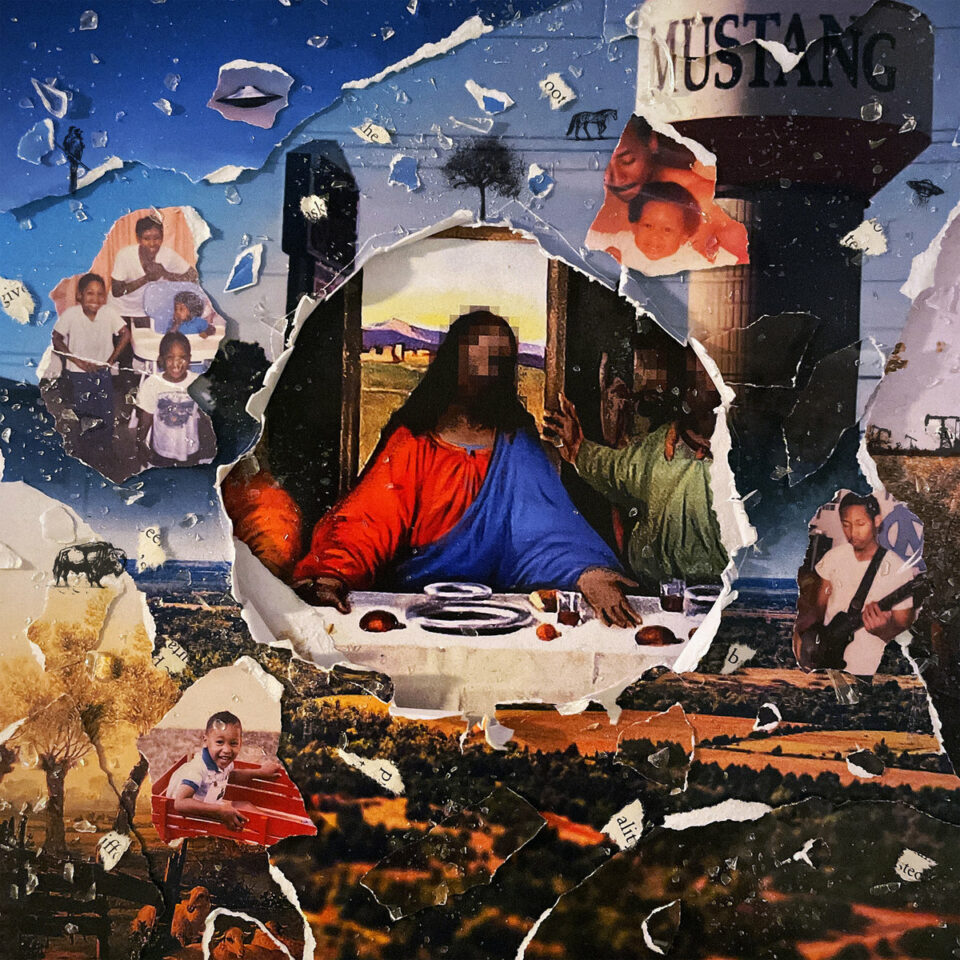
Bartees Strange, “Farm to Table”
On his intimate sophomore effort, Strange is thankfully still not settling into one particular style as he soundtracks self-examinations on pained familial histories.
June 17, 2022
Reviews
Lykke Li, “EYEYE”
By ramping down the production value, the Swedish songwriter puts a strict focus on the small, captured moments, akin to studying a lover’s face for context clues.
May 19, 2022
Reviews
Arcade Fire, “WE”
This sixth album often finds a veteran band charging atop vigorous, surging melodies and not being afraid to just lean into the groove again.
May 18, 2022
Reviews
Girlpool, “Forgiveness”
The duo’s fourth LP is a multitude of things at one time, and that’s both its downfall and its triumph.
May 03, 2022
Reviews
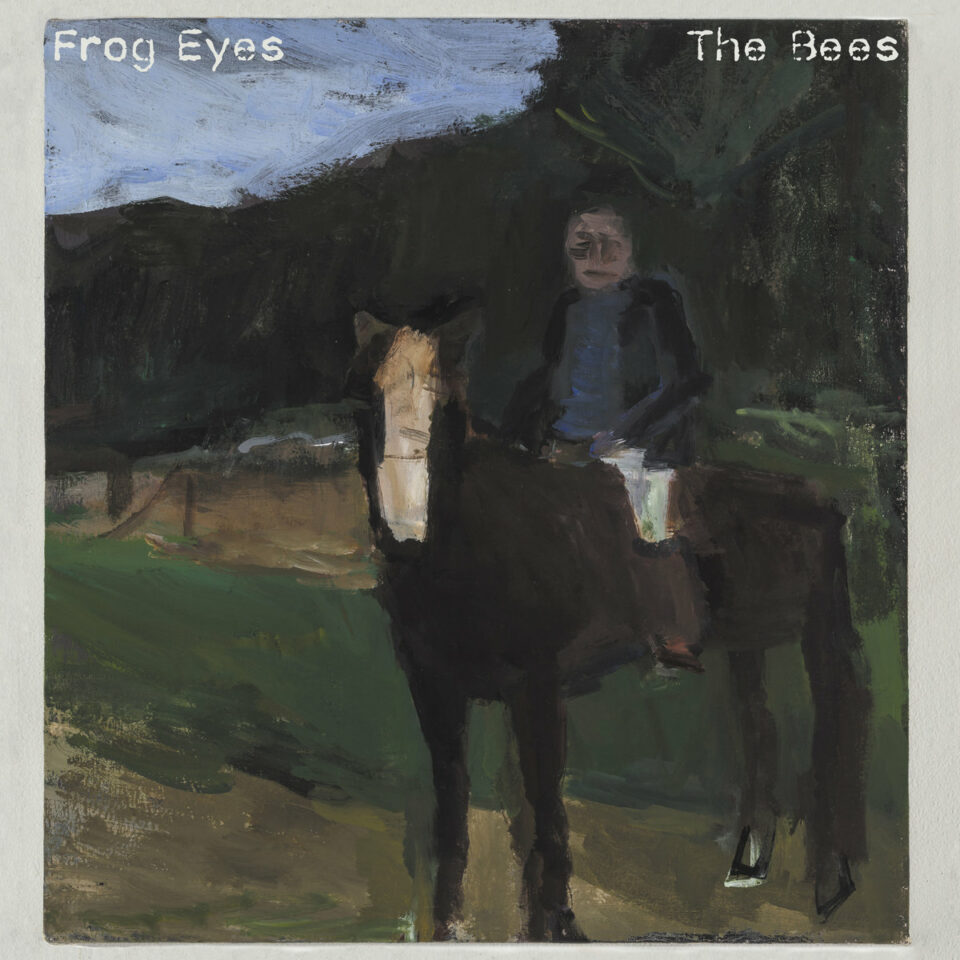
Frog Eyes, “The Bees”
Varying in length, tone, and setting, these 10 tracks sound like a new era for both Carey Mercer’s singing and his backing trio that have pushed him along.
April 27, 2022
Reviews
Destroyer, “LABYRINTHITIS”
Dan Bejar’s emotionally rumpled pandemic album wanders through a diverse set of genres, requiring the listener to look at it from all angles.
March 24, 2022
Reviews
Deafheaven, “Infinite Granite”
The metal experimentalists work ’90s alt rock and ambient space-rock experimentation into the mix on their fifth LP.
August 18, 2021
Reviews
The Flaming Lips, “The Soft Bulletin Companion”
The odd experiments, melodic dead ends, and other outtakes on this compilation are geared toward diehard fans of the monumental 1999 album.
July 21, 2021
Reviews
Clairo, “Sling”
Claire Cottrill’s sophomore effort is a strong footfall out of the music industry quicksand and a way to wash the past and online naysayers away.
July 16, 2021
Reviews
Kings of Convenience, “Peace or Love”
There’s nothing too shocking on the duo’s first album in a decade, and there are still plenty of cozy vibes.
June 29, 2021
