This story appears in FLOOD 13: The Tenth Anniversary Issue. You can purchase this deluxe, 252-page commemorative edition—a collectible, coffee-table-style volume in a 12" x 12" format—featuring Gorillaz, Magdalena Bay, Mac DeMarco, Lord Huron, Bootsy Collins, Wolf Alice, and much more here.
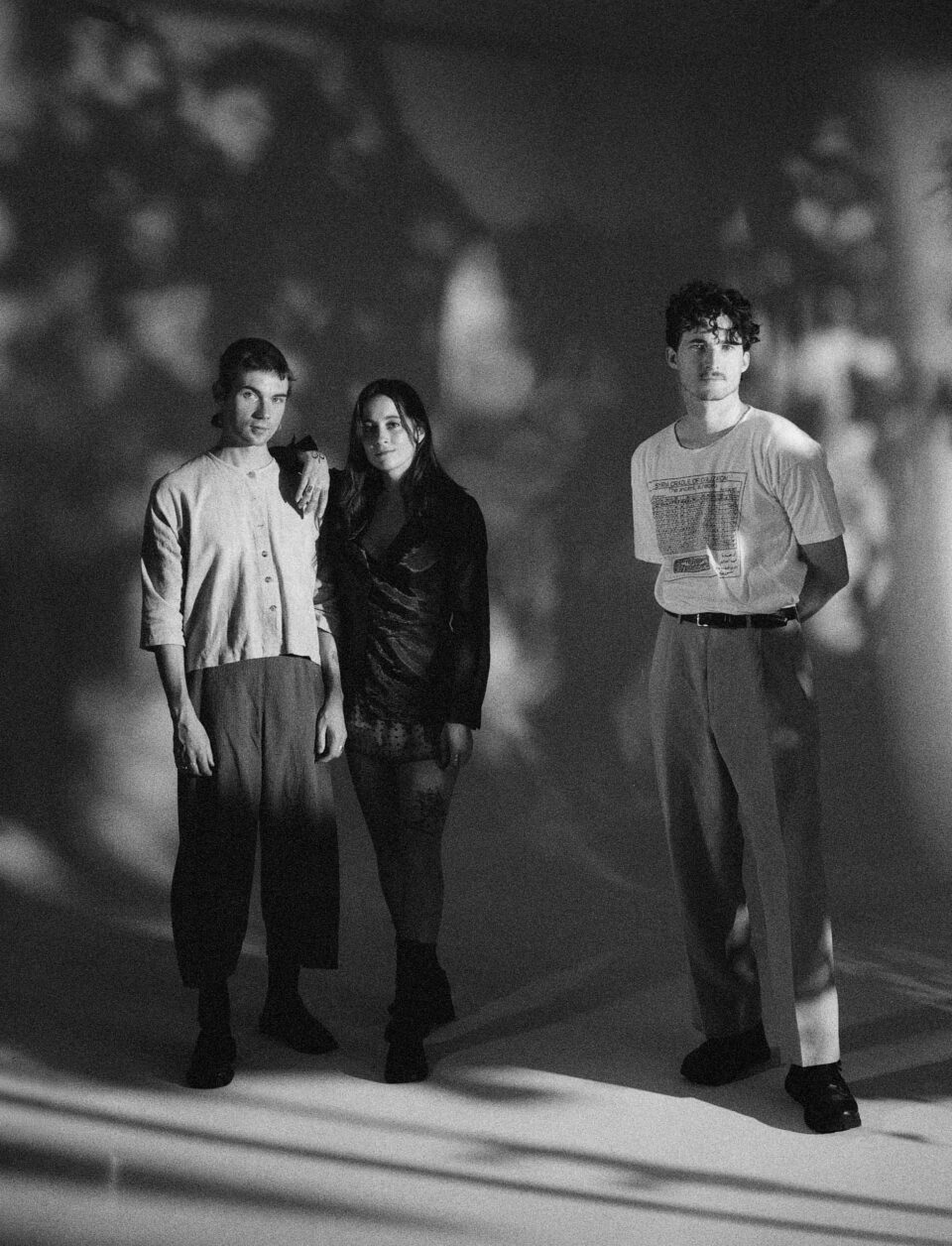
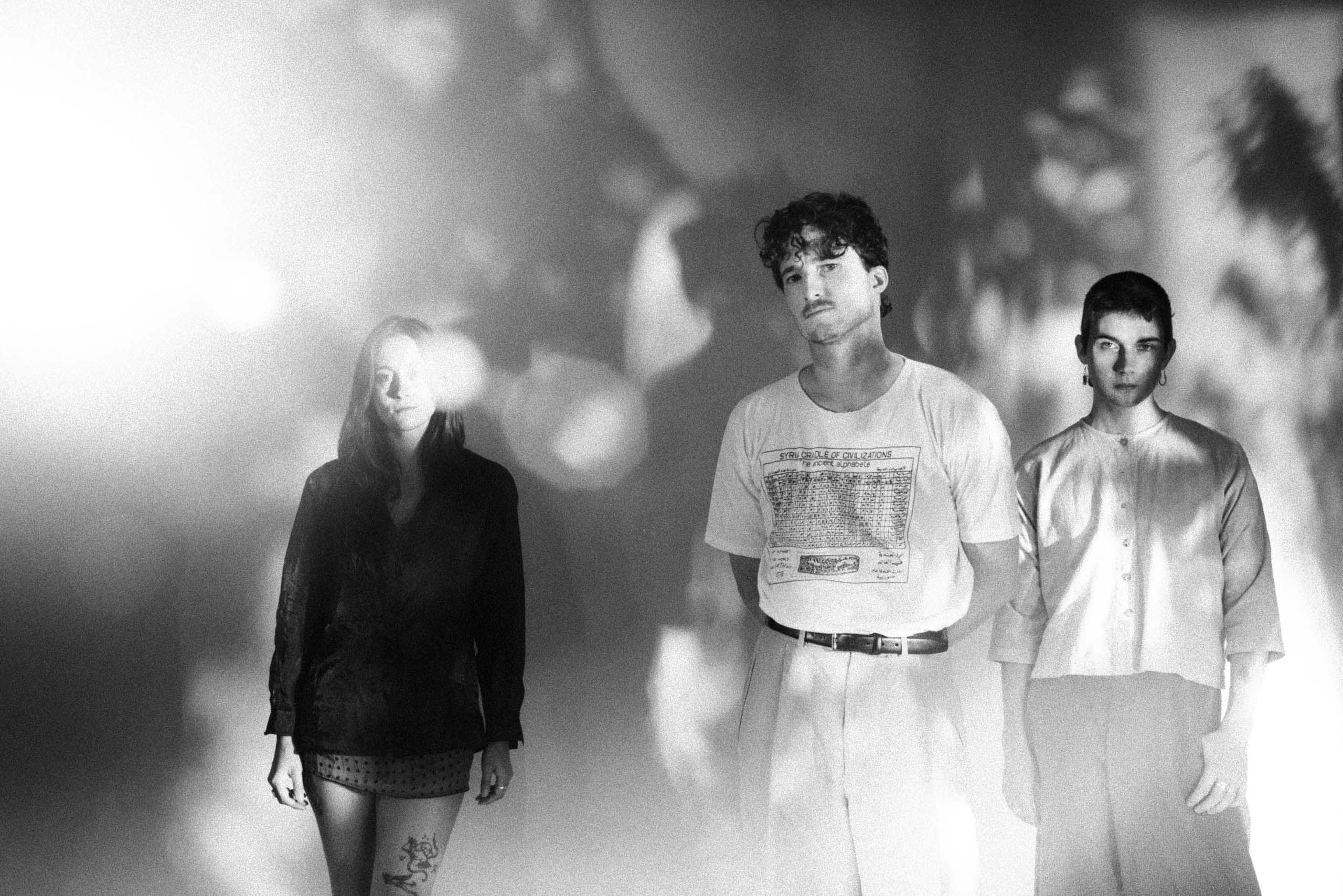
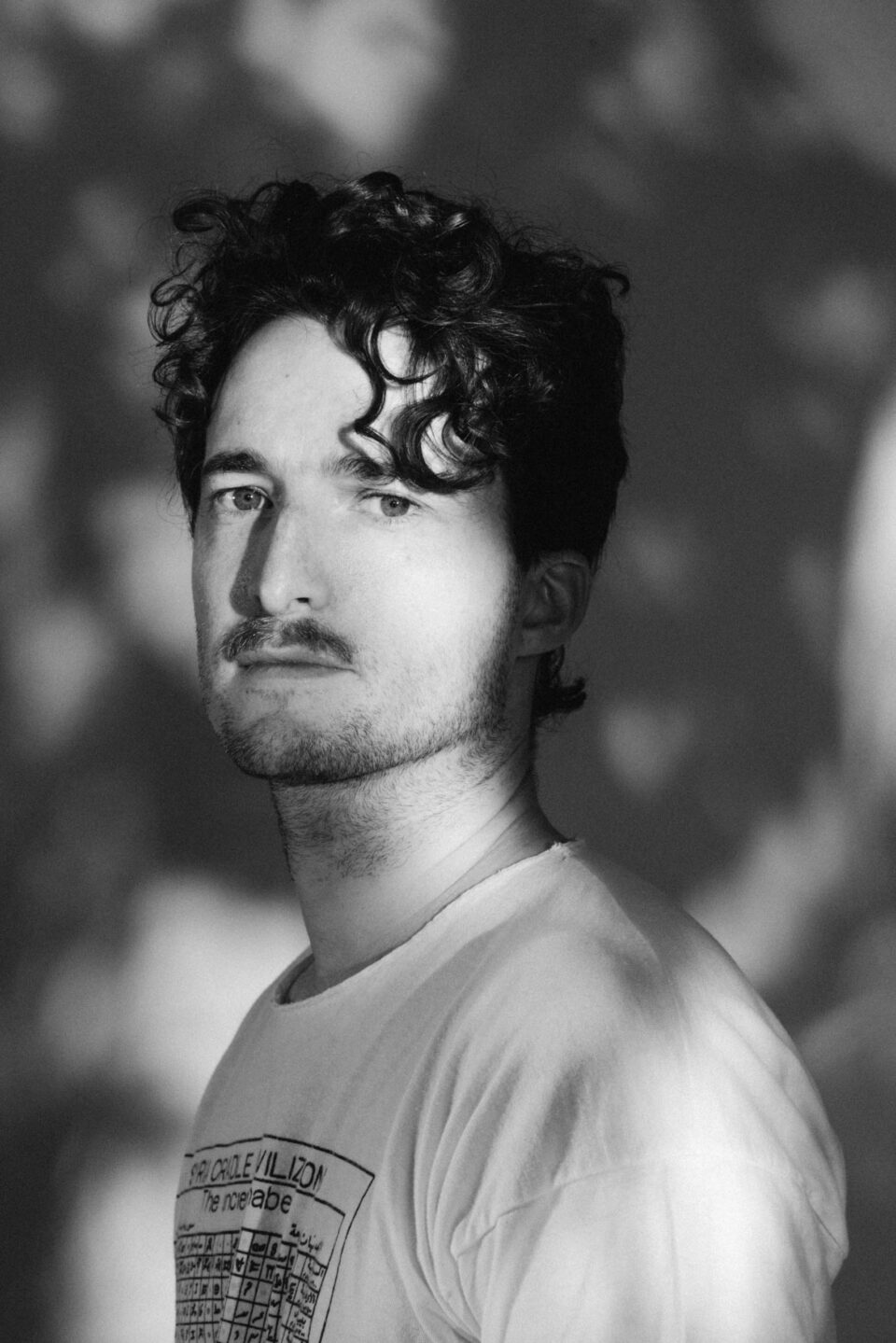
Brooklyn-based synth pop band Nation of Language loves film. With their newest album, Dance Called Memory, they’ve taken their cinematic influences and pushed them even further into their work. Their fourth studio effort finds the trio of frontman Ian Devaney, synth player Aidan Noell, and bassist Alex MacKay focusing on the complexity of day-to-day living, with Devaney citing Alice Rohrwacher’s 2023 film La Chimera as a central influence on the record. “I hold that film very close to this album, even though a lot of the album was written before it came into my life,” he says.
Upon the release of the film, Rohrwacher said something to the effect of not trying to make films that are perfect, but rather trying to make films that are alive—something that spoke to Devaney. “That’s pretty central to our mission statement, especially making synth music, which is so easy to make very rigid and cold,” he explains. “Our goal was always to bring as much humanity and warmth to the music that we’re making as possible. In the very early days, every mistake felt like the end of the world until we realized that it’s actually best when the crowd can see that the people on stage are striving and not always perfectly succeeding. We always say that the perfect is the enemy of the good.”

“Going to the movies is always a really inspiring thing to do. When we leave the theater, Ian’s like, ‘Let’s go home, I want to sit down and work on music.’” — Aidan Noell
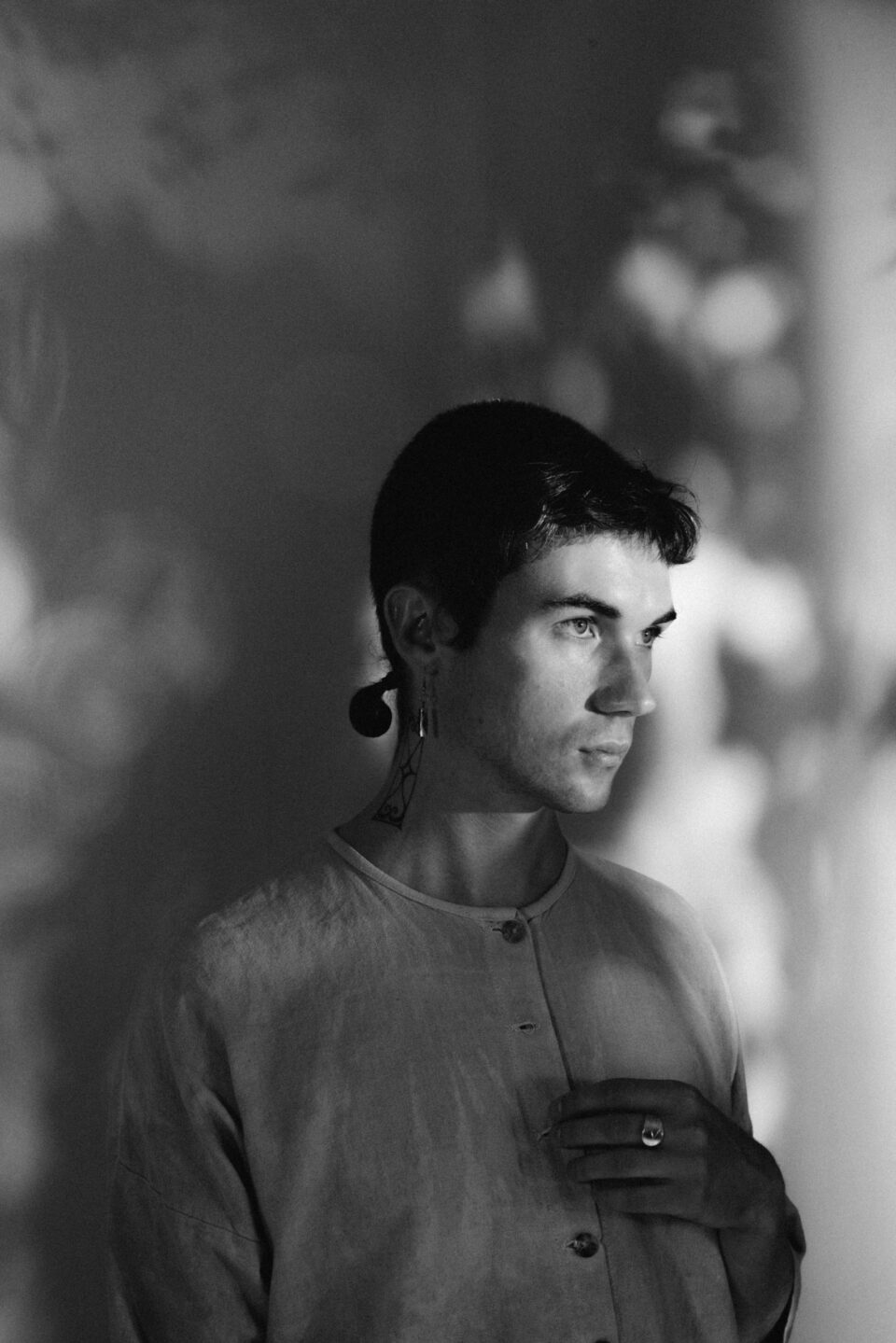
Even on a less philosophical level, film has become a part of the band’s routine: going to movies, talking about them obsessively, and finding overlap in each other’s tastes. “Going to the movies is always a really inspiring thing to do,” says Noell. “When we leave the theater, Ian’s like, ‘Let’s go home, I want to sit down and work on music.’”
We talked to Nation of Language about their top 10 movies of the last 10 years—an eclectic list of blockbuster and independent favorites, foreign cinema, and stories that balance aesthetics with emotional catharsis.
La Chimera dir. Alice Rohrwacher (2023)
Noell: I couldn’t stop thinking about this movie after I saw it for the first time. It’s just such a beautiful depiction of the relationship we have to objects as history and the relationship we have to people in our past, and how we try to cling to those people. How we try to make ourselves more important. The ravenous nature that they all have about these pieces of history, and how they act insane, it’s just such a perfect encapsulation of capitalism. And it has one of my favorite needle drops in any movie, when Kraftwerk’s “Spacelab” comes into that scene. It’s the perfect song.
Devaney: I also have come to appreciate how much I love a protagonist in a tattered suit. We rewatched Paris, Texas a little while ago, and then I’ve been rewatching Fitzcarraldo. There’s something about the person who wants to appear presentable in some way, but his life is in shambles. Despite the fact that they’re just an absolute wreck in so many ways, they’re still putting on the jacket, even though it’s covered in dirt.
Past Lives dir. Celine Song (2023)
Noell: This movie speaks so perfectly to the way that growing up in the Internet era affects interpersonal relationships. I’ve seen so many romance movies, so many what-if movies, so many will-they-won’t-they movies; but this one is just so specific to what I experienced as a teenager who had real relationships with people online and who still knows those people and still cares for those people. I haven’t seen it depicted so well and so heartbreakingly. I love that in the end, there is no perfect outcome. It’s just reality. They move in different directions. And as much as you may love someone from your past, it may never be the same again—you can still love each other, that just has to be the end of it.
MacKay: It’s a New York film, and it’s also something that’s very pertinent to people who grew up in our age range. Just hearing the Skype song brings you into a specific era. What you surrender as you get older and as your life moves on—there are certain things that you can’t bring with you, but there’s also a contradiction, because I think love has a boundlessness to it that’s hard to confine in a box. There’s a collision of this old desire and this new partnership, and how messy that can be, but also how beautiful that could be, and how the two of them could get along and understand and respect what had grown between the person that they loved and someone new.
Dune dir. Denis Villeneuve (2021)
Devaney: I think in all of the movies that I chose, you have someone dealing with something very heavy, and the way that manifests is that they commit themselves to something. Movies like the Before Trilogy, I’m never gonna watch that shit. I can’t do that to myself. It’s almost a testament to how good I perceive these movies to be. In film, the format is too long for me to sit with emotional devastation. I need a sense of agency or escape with books and movies; whereas with songs, I think I can totally listen to the most devastating song over and over again, because I know that it’s just four minutes long. Dune provided another world for me to step into, fully out of the one in which I live my daily life.
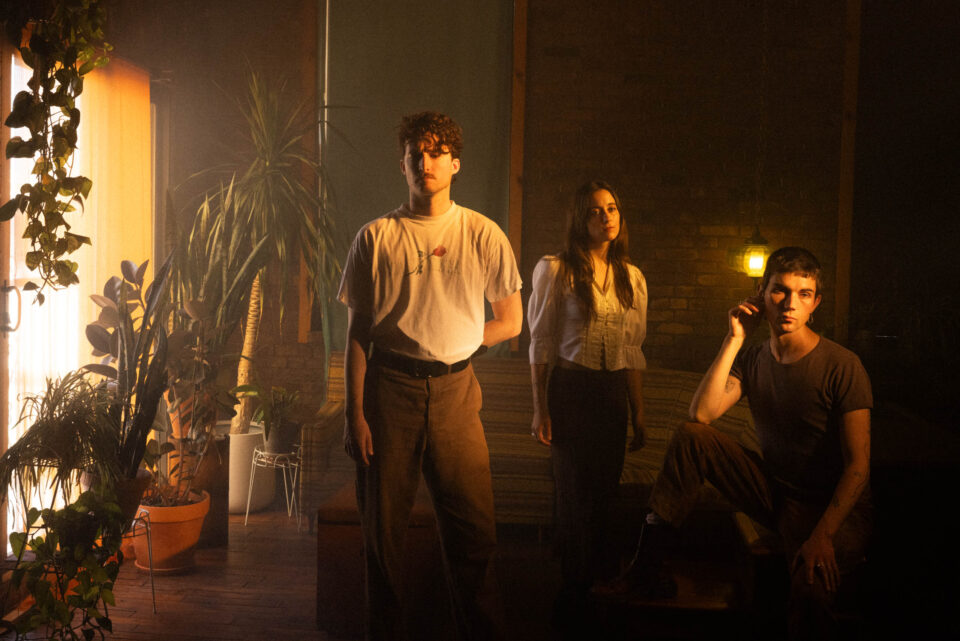
“In film, the format is too long for me to sit with emotional devastation. I need a sense of agency or escape with books and movies; whereas with songs, I think I can totally listen to the most devastating song over and over again, because I know that it’s just four minutes long.” — Ian Devaney
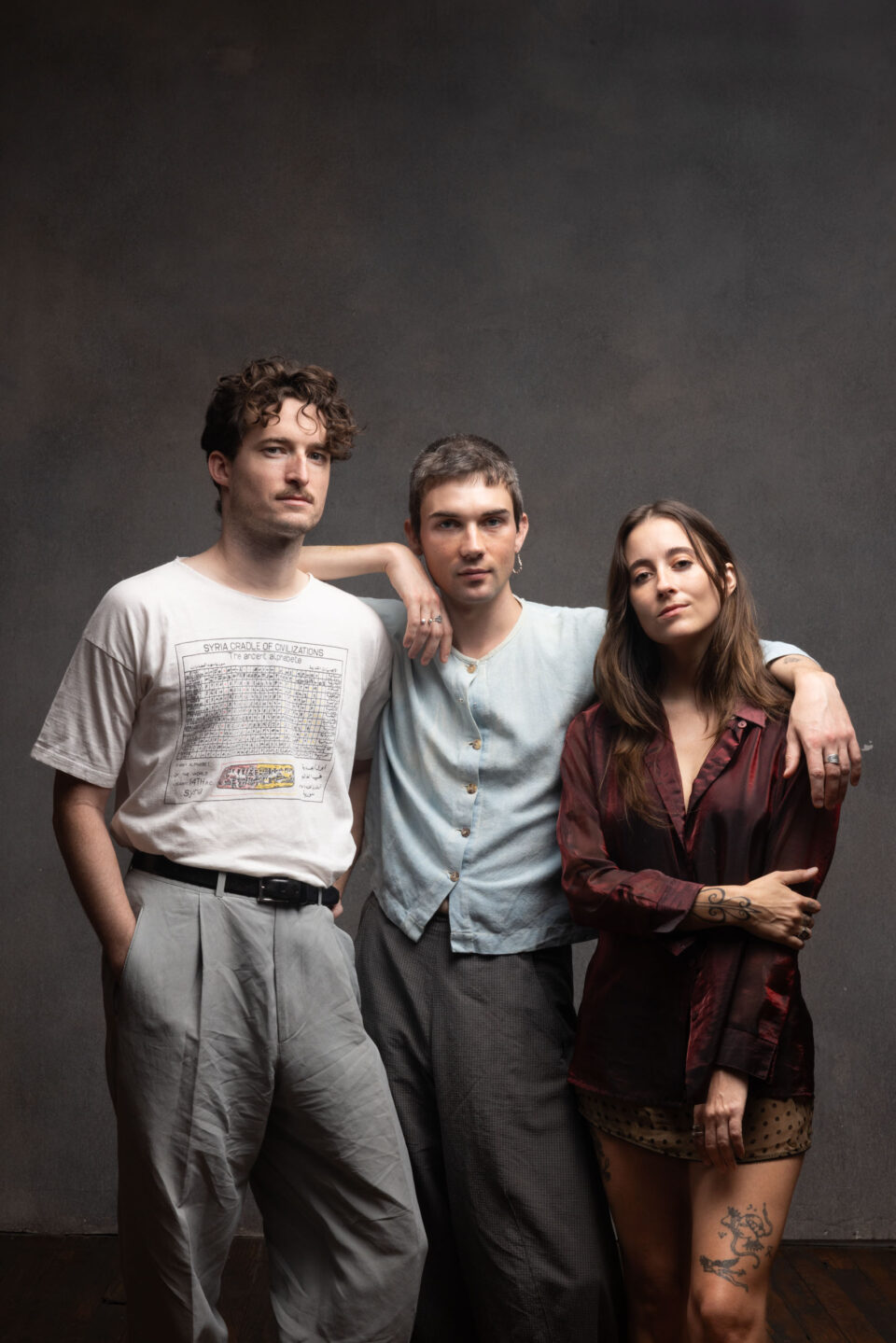
MacKay: The world-building was the thing that really stuck with me. You can feel that underneath the layer of research and planning, and that’s part of what gives you that immersive feeling. There’s an underlying reason that everything is presented the way that it is. I just find that whole universe to be so mesmerizing,
Devaney: They had an anti-AI revolution within the universe’s mythology. Men turned their thinking over to machines or something, thinking it would set them free, but it just enslaved them to the men who owned the machines. It’s so many decades ahead of its time. It’s so real that everyone’s just turning their brains over to Peter Thiel and the most evil fucking people in the world. I guess the only thing we can do is destroy all the computers.
Mandy dir. Panos Cosmatos (2018)
MacKay: Mandy is one of those movies that has a really distinct visual style, and a very dream-like quality, but it feels very much in service of the narrative. It’s this gonzo marriage of high and low culture. Obviously, an incredible performance from Nicolas Cage. This combination of darkness and humor is really fun to me, because you could watch it and it could feel really heavy, but in a different situation, with different people, you could watch it and it can be really funny. I think both of those interpretations are true, even though it’s dealing with really intense subject matter. It pushes things into a weird direction that feels almost otherworldly. It feels like an acid trip and like fighting through this murky, foggy, red landscape. I got really interested in metal imagery around the same time that I watched it, and so it dovetailed nicely with my visual interests.
RELATED: Read our essay on Mandy here.
Everything Everywhere All at Once dir. Daniel Scheinert and Daniel Kwan (2022)
Noell: This is a totally bonkers movie, but it’s so funny how my memory of it is distilled just to her relationship with her mom. All of the other stuff fell away to that core of the story. I love stories about family being the thing that gets us through this life. My other choice, which I ended up choosing this over, was the Marcel the Shell movie, which also totally fucked me up. I sobbed on an airplane.
Devaney: I was sitting next to her and one moment she would be cackling, and then she’d be weeping, and it was just back and forth for an hour and a half.
Noell: That’s basically how I felt in this movie, except it was a little more muted due to the absolute bananas nature of it. Our relationships to our parents can be very complicated. I love my parents, and I have a complicated relationship with them, but at the end of the day, I’m so grateful to them. I just relate to that storyline so much. It really fucked me up.
Devaney: Just the way that it’s rage consuming the daughter. We live in such an outrage-and-anger culture these days, and a lot of people—I wouldn’t exclude myself—have difficulty registering emotions.
Sugarcane dir. Julian Brave NoiseCat and Emily Kassie (2024)
MacKay: I was really blown away when I watched this for the first time, because it’s personal, but also really has to do with our shared histories of colonialism and subjugation and erasure. They didn’t have any idea what they would end up finding when they started making the documentary. It’s really endearing and sweet and just affected me so much. It really made waves when it came out, and I think it actually partially led to the government of Canada making an apology. Justin Trudeau had a press conference, and apologized about the legacy of these schools and the horrible abuses that occurred there. It was just an amazing narrative of truth-seeking and trying to find meaning and transmute trauma into something else. We can all identify with that in some way or another.
The Zone of Interest dir. Jonathan Glazer (2023)
Noell: This was the most impactful movie I have seen in the last 10 years. I think it really gets to the point of knowing that all of this stuff is happening—all this trauma, all this violence, all this evil—and yet we still go about our daily lives. And for the people in the film, they are part and parcel of the evil. So there’s a difference, but it’s still very reflective of the weird dissonance between the fact that we’re witnessing things like a genocide in Gaza, and yet all we do is make our breakfast, have a coffee, go on a walk, talk about movies with our friends, make music. It’s just a very odd but very poignant description of the banality of evil, better than I’d ever seen it. Everyone needs to see it, but the people who need to see it the most just won’t.
Devaney: One of Aidan’s grad school professors spent his whole life being an activist, getting arrested protesting the Iraq War, being a part of Occupy Wall Street, etc. Someone who we hold in high esteem, in these regards. Out of the blue, he just emailed Aidan and was like, “What you’re doing does matter.” I don’t know if I fully believe it, but it is nice for someone I’d think would be at the top of the list of people who would say that what we’re doing is fucking nonsense to be like, “No, it’s good, it’s important. People need music and art and community.”
Noell: At the end of the day, the only thing that can get you through the existential terror that is the world that we’re living in is community and making music and playing shows and meeting people.
Phantom Thread dir. Paul Thomas Anderson (2017)
Devaney: I remember the first time I watched this, I was confused about what I had seen. It moves in a different way. On the surface level, I think there’s something extremely calming to me about just someone quietly going about their work. So much of this movie is the silence of him eating breakfast and buttering toast. It’s a crass way to describe it, but I related to someone who’s a little bit of a workaholic. I related to the relief of when you get so sick that you just can’t work. You have to be a vegetable. She forces him to do that by poisoning him, because he won’t make that decision for himself. It allowed me to articulate something within my own mind. And I think everyone just acted the shit out of it.
RELATED: Read our interview with Vicky Krieps about Phantom Thread here.
Tangerine dir. Sean Baker (2015)
MacKay: This is the skeleton key for some of his later films. I find it to be a really entertaining and beautiful film, but also just so impressive how scrappy it is, with non-actors, shooting it all on an iPhone. You can just imagine them running around, shooting scenes together. I love it as a film, but I also love it as a reminder that you can make something really profound and cool and resonant without it needing to look perfect, without needing to do things the “proper” way. If you have a good story and you have compelling performances and you have a compelling idea, then you can make something amazing, and it may actually even be better for it. The same goes for music. You can make cool music cheaply a little bit more easily than you can make cool movies cheaply.
Perfect Days dir. Wim Wenders (2023)
MacKay: I found this to be a really beautiful and emotional film, subtle in ways that I don’t think you always see. It was really just about the underlying magic of the mundane. We’re just so focused on whatever is going on in our lives that we filter out all of the splendor that’s surrounding us all the time. And I found it really powerful to capture someone who, instead of being consumed by ambition or doubt or regret, really seems to be trying to just do the best they can at their modest job and finding ways to enjoy every moment that they have.
Devaney: One time we were sitting around and I said, “Hard work is its own reward.” And someone was like, “That really sounds like something a disappointed conservative dad would say.”
MacKay: There are all of the dragons that we try to slay in our lives, sometimes at the expense of recognizing what’s all around us.
Devaney: When I was working in the service industry, there would always be co-workers where their attitude was just, “This job sucks, this is a drag.” I didn’t always see a bright future for myself as a barista, but we’re just hanging out, we’re making some coffee. We don’t have to hate our stupid jobs. I had grand ambitions to be in a band and talk about movies, but that didn’t make me hate what I was doing. I still wanted to take some pride in how I conducted myself. FL