This feature appears in FLOOD 13: The Tenth Anniversary Issue. You can purchase this deluxe, 252-page commemorative edition—a collectible, coffee-table-style volume in a 12" x 12" format—featuring Gorillaz, Magdalena Bay, Lord Huron, Bootsy Collins, Wolf Alice, Nation of Language, and much more here or at Barnes & Noble stores across the US.
Mac DeMarco is a true follower of the DIY path. It’s where he’s always felt at home, making his songs of woozy, deeply felt, gently melodic indie rock, telling personal stories of heartbreak and life changes. He’s a Canadian prairie boy who did it all with a guitar and a reel-to-reel, rising to become a genuine lo-fi superhero, another voice for another generation.
Since he last released a conventional album back in 2019, the songwriter has taken that hands-on ethos even further, veering away from his usual musical obsessions to work with his hands—learning to fix motorcycles and work on houses from Los Angeles to the islands of British Columbia. As it turns out, he’s no slacker. DeMarco has collected a full set of tools, and is practically a general contractor now, schooled in the building trades from an endless supply of YouTube videos.
It’s been fun for him, but in time there also came a nagging feeling that his true purpose was elsewhere. The musical gifts that made his side-trips possible had been on the shelf long enough. DeMarco reflects on that time away on a typically understated but subversively distressed new song called “Punishment,” singing of surrender to his growing karmic debt: “You can have all of me, a pound of my flesh / ’Cause Mama, I was told that punishment will come to / Those of us who don’t do what we’re made to / But how on earth is anyone to know?” The song appears on his new album, Guitar, which marks his full return to the singer-songwriter role he’s been celebrated for since his 2012 solo debut. And it describes his feelings about the price paid for not flexing that talent. “I think you’re spiritually punished maybe,” he tells me. “It’s almost like a guilt thing.
“I feel good doing these other things,” DeMarco goes on of his outside pursuits, “but when I do the song thing, it’s that feeling where it’s almost like someone’s like, ‘Good, you’re doing it again. You’re supposed to.’ The satisfaction that I get from that— the craft that I’ve been doing for so long—is so different. It’s nice to make an engine run, but it’s not the same.” When he makes music, he says, “I get overcome with something.” DeMarco has talked about this feeling with his friend, the painter Ariana Papademetropoulos, and they agreed that “You can distract yourself, but it’s a beautiful thing if you can feel in this life that there’s something that you’re called to do,” he says.
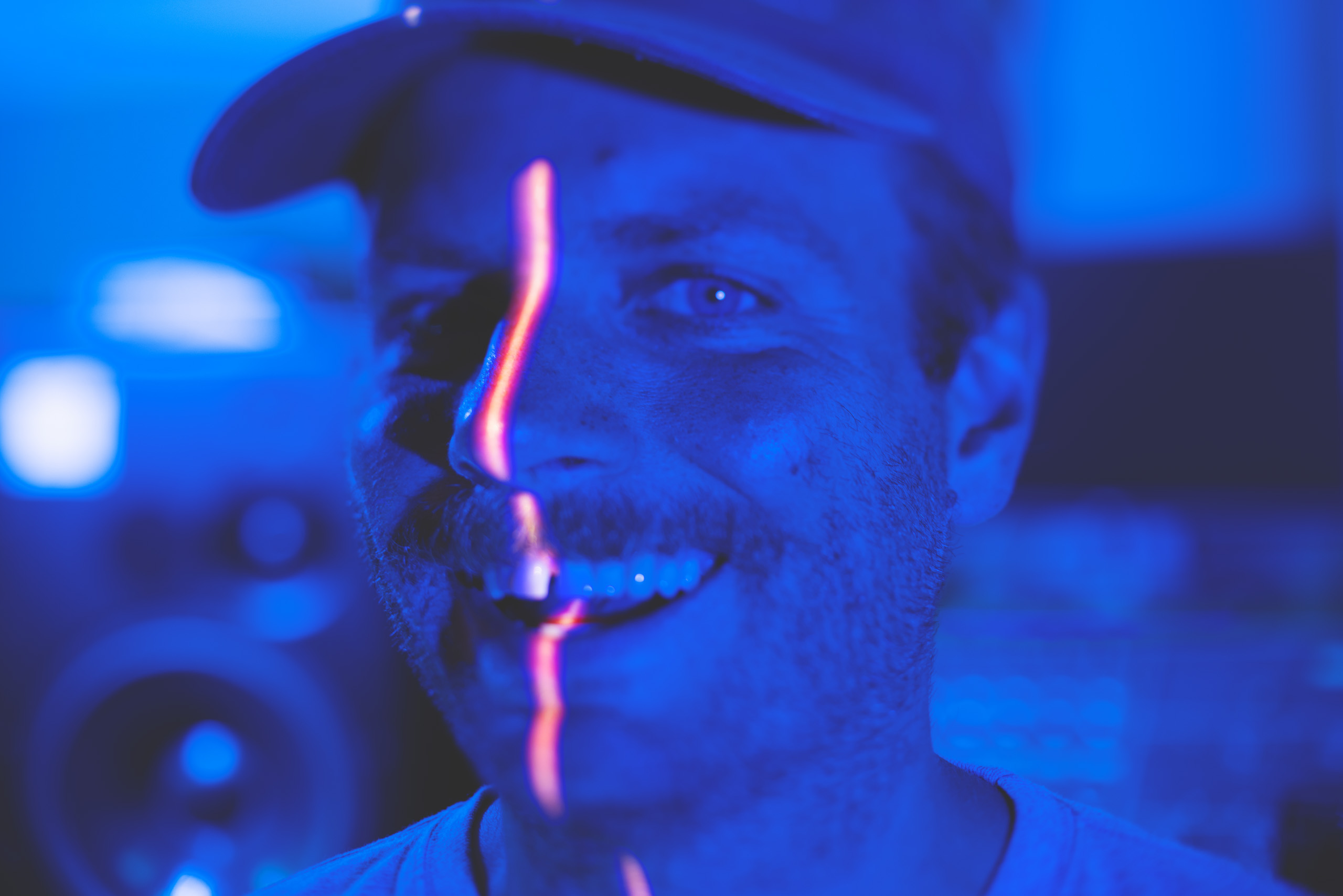
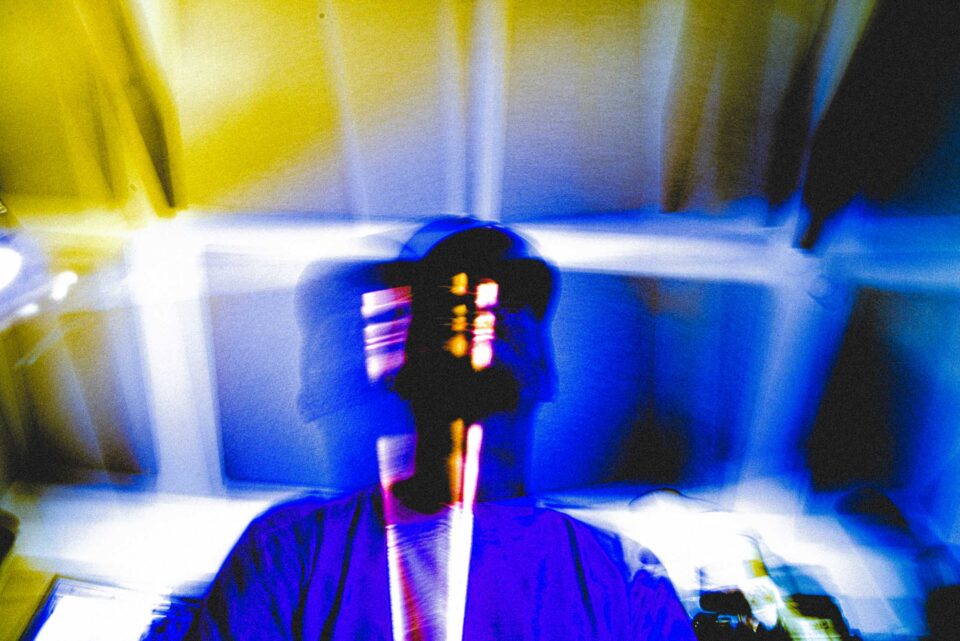
At the moment, DeMarco seems completely relaxed, sitting under a grapefruit tree on the back patio of his Los Angeles home, in the hilly neighborhood of Silver Lake. It’s about 92 degrees as the sun shines almost directly overhead, and the singer sips from a jar of water, clad in a T-shirt, jeans, and a light blue cap he picked up in a thrift store in Canada. Now 35, he compares his low-stress outfit to the simple black turtlenecks that Steve Jobs used to wear. “I love the utility,” DeMarco explains. “I like to renovate houses now. I work on cars and bikes and stuff. It’s like, these will work for that and they’ll work on the stage. It’s no problem.”
“When I do the song thing, it’s that feeling where it’s almost like someone’s like, ‘Good, you’re doing it again. You’re supposed to.’”
Minutes earlier, he answered his front door with a sudsy toothbrush still in his mouth, some residue smeared onto his mustache. Being chill and casual is not just second-nature for the musician, but is at the core of his being.
A few steps away is his personal studio where he recorded Guitar, in every way a DIY production. DeMarco not only played every instrument and recorded and mixed it himself, but he shot the cover photo (a self-portrait in slippers, with his guitar and fuzzy little dog), did the layout, and made the accompanying music videos. And, naturally, the album is being released on his own imprint, Mac’s Record Label. “It’s DIY to, like, a funny point, you know?”
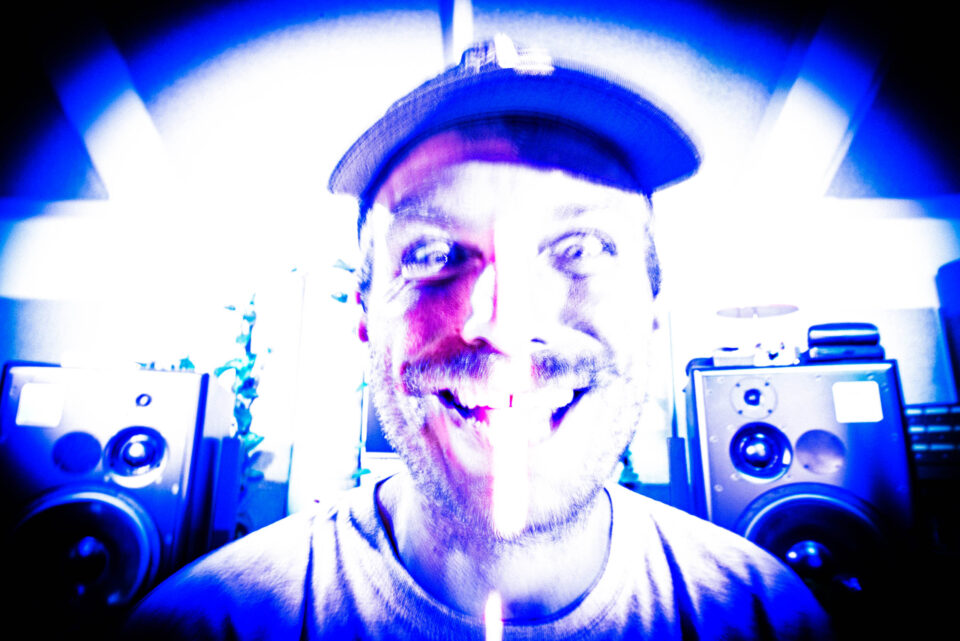
The first sound heard on Guitar is a fragile falsetto as he sings of a troubled romance on opener “Shining,” set against achingly gentle acoustic guitar and electric bass line: “My love must be broken / What’s been going on? / Can’t stop my heart wandering.” On the next song, “Sweeter,” he promises a lover, “This time will be sweeter / I can be much sweeter.” His songs are generally meant to be autobiographical, but loose and vague enough to fit the lives of listeners. “I’ve always tried to keep it personal enough that it means something to me, but also vague enough that people can take it and maybe reflect it on whatever they want. There’s some albums where I think it’s a little more apparent what I’m talking about.”
At the same time, he insists that the songs aren’t meant as news reports about the current state of his homelife, or his relationship with longtime partner Kiera McNally. “People will be like, ‘Oh, this is a love song about his partner’ or something,” he says. “But actually it’s not. It’s about some other relationship—not a romantic relationship, but maybe with a friend. Just ’cause I’m saying ‘love’ doesn’t mean romantic love.”
Woozy, wistful, adrift, the songs are modern, though the gently tuneful “Home” could also be Paul McCartney on an especially hazy, stoned afternoon. More playful is “Rock and Roll,” a song expressing the thrill of being at a rock show even when something is weighing you down emotionally: “No control / Over my feelings / For that boy / I’m down here screaming.” The tune ends with the sound of the song falling apart, the noisy finish DeMarco would normally fade out. “We’ve never been the sexy rock band on stage,” DeMarco says with a big gap-toothed grin. “We’re kind of the doofuses in blue jeans, but I’m part of this rock ’n’ roll tradition, or I’m honored to be if it shall allow me in a little bit. It’s a beautiful thing, and I think it’s funny in a lot of ways—but also almost spiritual, the effect that the music has on people. The song is like, this girl’s so excited in the crowd, but then the verse is like, ‘But why do I still feel so down?’ It’s like this false thing that it also embodies. It’s strange. It’s magic.”
The music on Guitar is often gentle, as a contrast to the emotional turmoil of the lyrics. But as a collection of songs, it remains in the tradition of DeMarco’s breakthrough records, 2 and Salad Days, which established him as an important artist in the indie rock realm over a decade ago. Recording then on an old Fostex 8-track reel-to-reel machine, the message and sound were perfectly matched, putting him in league with ambitious ’90s slackers like Beck and Stephen Malkmus.
Guitar was digitally recorded (though DeMarco still occasionally uses tape) to the same effect. When he stepped back into making songs again, it wasn’t a smooth operation at first. His last two albums had been very different, starting with the all-instrumental Five Easy Hot Dogs in 2023. That same year he put out One Wayne G, a nine-hour compilation of 199 recordings he’d built up over a five-year period, more than half of them instrumental. After that, he didn’t work on any music for a while. “I was like, ‘Well, maybe I’ll let the tank fill up with gas again,’” he says. Instead of writing and recording, he traveled for a bit, then dove into his other interests. Then, after that, he finally got back to work on a new album of songs under the title “Hear the Music.” Things did not go well.
“I listen to one of my old records and I’ll remember the apartment that I made it in, and the people I was around at the time. That, to me, is the timestamping quality of music.”
While making that album, DeMarco trapped himself in a pattern of writing and demoing a new song, and then tried to make new master recordings that attempted to recapture the same vibe, a difficult and frustrating task. “I just got lost in the sauce,” he says. “My partner Kiera would come in and she’d just be like, ‘What the fuck are you doing in here?’ And I was like, ‘No, no, no, the snare’s sounding really good…’ I was rerecording songs, like, 15 times or something. I just got into a funk of trying to recreate the energy from a demo, which is like, you’re chasing something that isn’t perfect, and you’re trying to make a perfect recreation of something fucked up. You’re never gonna do it.”
As he struggled through its 14 songs, Hear the Music died a slow death, and the finished product was nothing like he hoped. He says that the album will likely never be released in any form. He might change his mind about that, or dump all the songs onto a One Wayne G, Part Deux. Regardless, he’s grateful for going through the agony of trying and failing, flushing the pipes and clearing out the cobwebs of his mind, as it led him to the surprising ease of making Guitar, which he wrote and recorded in just two weeks.
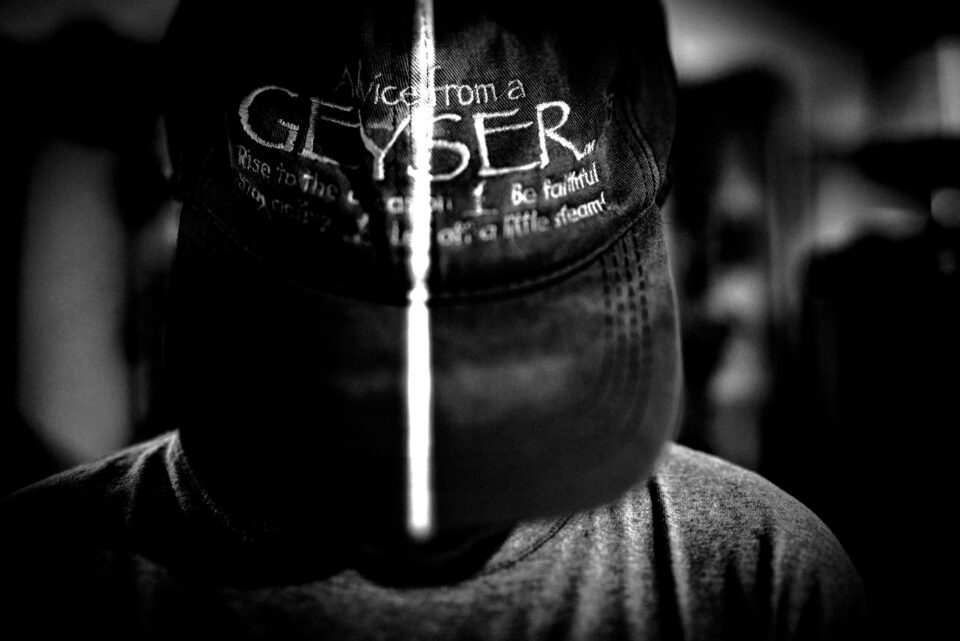
This time, he skipped the usual demo process, and the demo-itis he’d just gone through, and wrote and recorded directly as finished tracks. “I would write the song in the morning, kind of tweak it. And then, around dinner time, probably start recording. It was like a song a day. There were maybe a couple days I didn’t get one, so it was maybe, like, 14 days. Once the faucet was going, the first song came and I was just like, ‘Oh, this feels natural and good.’ That feeling is so addictive.”
There was a purity in that approach, which he took a step further by sequencing the album in the order the songs were recorded with one exception: the final two tracks, “Holy” and “Rooster,” which are flipped in order. When compared to the confounding experience of Hear the Music, the making of Guitar is an entirely pleasant memory. The record lives up to its title, built around DeMarco’s gentle guitar playing. Even on the one track originally created with a keyboard, he eventually erased the keyboard track and replaced it with guitar. In that, Mac is an artist fully committed to his concepts. “I listen to one of my old records and I’ll remember the apartment that I made it in, and the people I was around at the time,” he says. “That, to me, is the timestamping quality of music. It’s so incredible.”
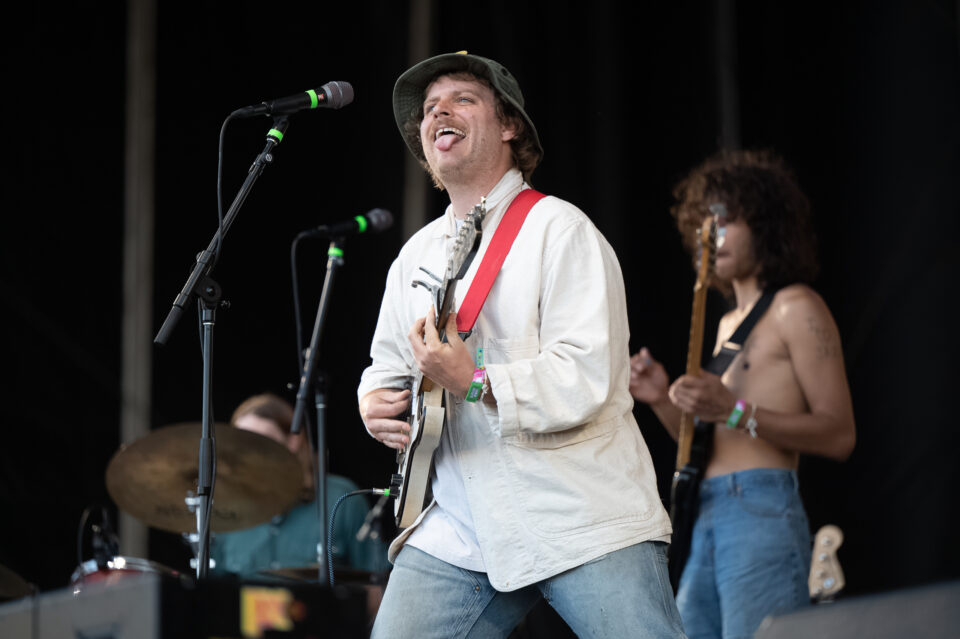
A few days earlier, DeMarco is across town at the Greek Theatre, on the first of three nights headlining at the esteemed outdoor amphitheater. Over the decades, it has been the site of legendary concerts by Frank Sinatra and Bruce Springsteen, Aretha Franklin and Radiohead. Neil Diamond, clad in denim and Native American silver and beads, famously recorded his Hot August Night album there in 1972. DeMarco is there dressed almost exactly as he does in his backyard.
Mac DeMarco
“We’ve never been the sexy rock band on stage. We’re kind of the doofuses in blue jeans, but I’m part of this rock ’n’ roll tradition.”
Mac DeMarco
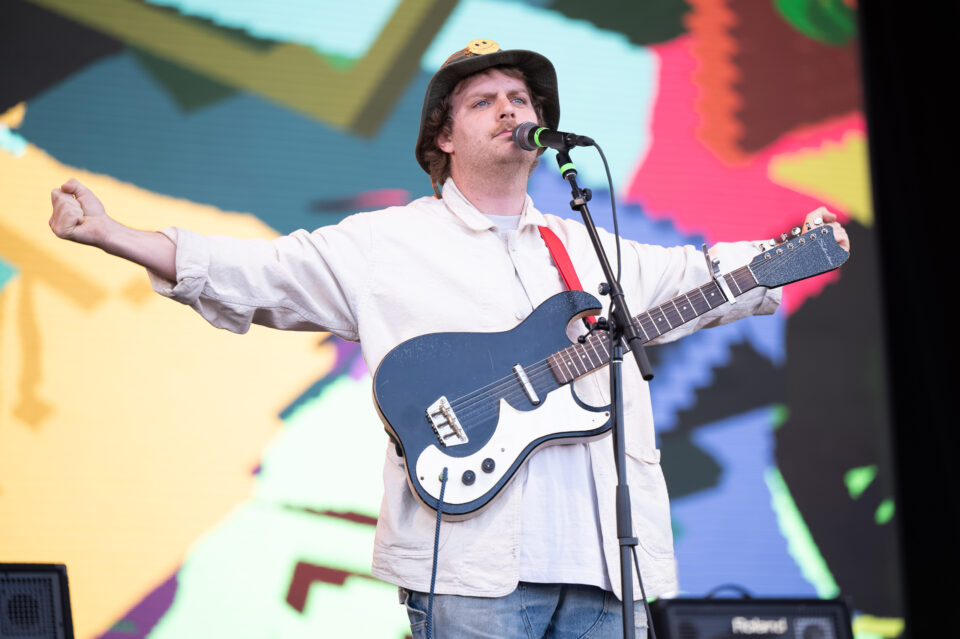
He’s in worn denim jeans and a faded blue T-shirt, his red sneakers the flashiest thing about him. DeMarco sways and dances like a dude alone in his living room. The same light blue cap from home is pulled over his brow as the show begins with “Shining.” Then comes 2017’s sparkly “For the First Time,” with extra shimmer to the guitar, as the crowd claps to the beat. Other than a thin layer of stage fog above DeMarco and his band, and some modest mood lighting, there is no stage production at all during the show. They could be performing this exact same set at the Greek, your local bar, or at a backyard barbeque. Regardless, the fans are mesmerized.
Early in the evening, DeMarco pauses to tell a “joke,” which is really more of a weird story about eating warmed-over Indian food and masturbating at home, “a masterpiece I wrote on Christmas day.” It ends not with a punchline, but groans and nervous laughter in the crowd, as the band begins “Rock and Roll.” “I feel like half the crowd was like, ‘What the fuck was that?’ But if I’m confusing, I feel like I’m accomplishing what I’ve set out to do,” he explains later. “Maybe I’m too comfortable up there nowadays.”
There are a lot of very successful, well-known acts who couldn’t play three consecutive nights at the Greek. When DeMarco got started making music back in Edmonton, Alberta, and putting it out into the world, he never once imagined he’d be playing to crowds like this. “Absolutely not,” he says. “When I was younger, I always envisioned that maybe I would’ve gone to school or I probably would’ve worked in the trades or something. And then the music would kind of be the hobby thing. There’s a lot of Canadian friends of mine in bands, and that’s the reality. But even the fact that I haven’t had a job since I was 22 or something is pretty insane to me, you know?”
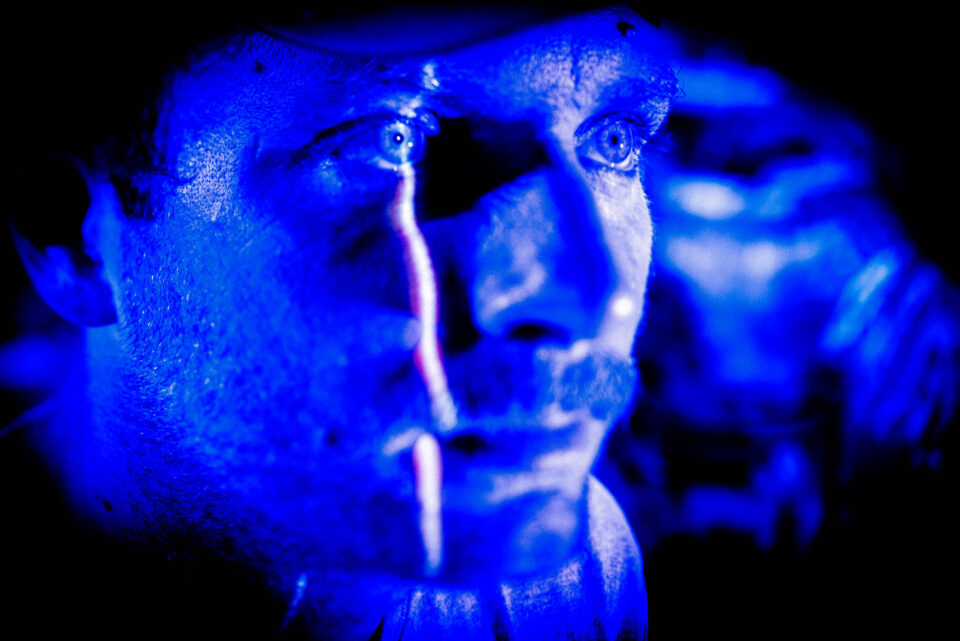
The stage atmosphere is strictly low-pressure, and by design as simple as his living room, but DeMarco surrounds himself on tour with great players who also share his laid-back vibe, which is an essential part of the night. “I have some guys that really know what they’re doing now, but I really don’t know what I’m doing,” he says casually. “I can make my little songs, but that’s pretty much it. I’m not a crazy musician. I’m not studied. People seem to respond to what I am able to do, so I guess I’ll keep trying to do it. It’s like a dream.
“We don’t have a video wall. We don’t really supplement it with very much,” he explains of his show. “It’s kind of like a bar band set up in a very big place.” But anything bigger than the 8,500-capacity Greek, for example, is maybe too much, he says. “I want to do the same show for 50 people as, like, 8,000 people. That would be the ideal situation. And like, keep it really small with the travel. We’re just gonna take a van, kind of hunkering back to how we used to do it back in the day.”
Part of his motivation is to keep his roadshow self-contained and mobile on a small scale. While most headliners with his draw tour in buses, DeMarco has gone back to touring in a Sprinter van, and he prefers it that way. It has nothing to do with saving money. “I think there’s just something about the DIY thing that’s maybe a bit lost these days,” he adds, so he insists on “keeping it a little more like grassroots—even though it may cause me great pain.”
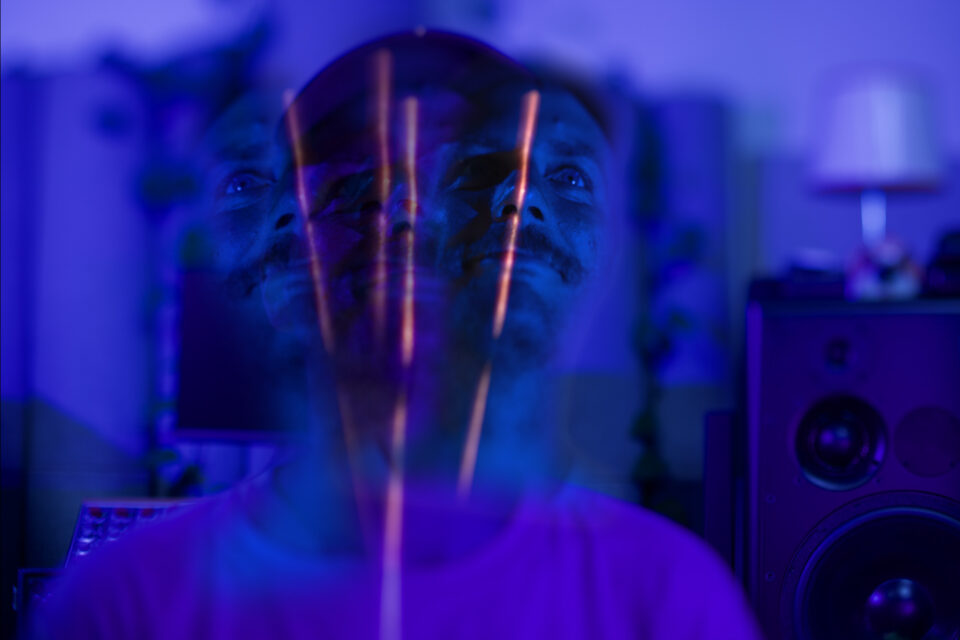
Likewise, there are no sweeping gestures from DeMarco onstage either. Pacing is based on his whims of the moment. “There’s a lot of, like, lulls,” DeMarco says of the way his opening night at LA’s Greek unfolded. “There’s a lot of, ‘Well, now I’m just gonna talk to you.’ It’s a bit strange, you know? And that’s the beginning of the tour, too, so that’ll get cultivated. It’s like a balancing act. Some of these shows in this tour are probably going to go very strangely, but that’s what I’m excited for.”
There have been other changes since his last proper album, 2019’s Here Comes the Cowboy. During the 2020 pandemic shutdown of his musical universe, DeMarco got sober, then quit smoking. It’s made touring a very different experience. “When we took buses before, it just turned into a bar on wheels,” he remembers. “I’d wake up at 4 p.m. every day and it was like a horrible thing.” Now he gets up early and explores whatever town the van is passing through. “I love to drive, as well. The gas stations are so cool. I love to swim in the lake or get in the river. I want to make sure that we can do all of that stuff.”
Los Angeles is home for the most part, and has been after landing here about nine years ago. Before that, he’d left his hometown first for Montreal and then New York City. But LA still remained a mystery until COVID-19 hit and he couldn’t tour, and he finally spent a lot of uninterrupted time in the city. “LA has definitely seeped into my life in a lot of different ways. And I think California has in a lot of different ways, too. It’s a very strange place and it’s a really interesting place. I think that’s why I’ve stuck around for so long.”
“People seem to respond to what I am able to do, so I guess I’ll keep trying to do it. It’s like a dream.”
DeMarco’s also got a century-old farmhouse on an island off the coast of British Columbia, which is where some of his best home improvement and landscaping work has taken place. There is a lot more to do, but he’s now got a long period of touring ahead of him, and it will take him far from either home. Just how he likes it. “Playing in LA is great; playing in New York is great,” he says. “The venues are beautiful and it’s nice to have family and friends around. But there’s another feeling of being in, like, Milwaukee or something. The kids coming to that show are just as excited as anywhere else, but I don’t know anybody there. Nobody from the label’s coming. And we’re just here doing the job.
“You’re still on tour, but everyone else is just doing their life back home. You kind of fade into the wallpaper, but it’s still exciting every day. I just want that desertion kind of weird tour feeling. I miss it. Which is crazy to say, but I’m hyped. It’s gonna be cool.” FL