

Searows
Death in the Business of Whaling
LAST RECORDINGS ON EARTH
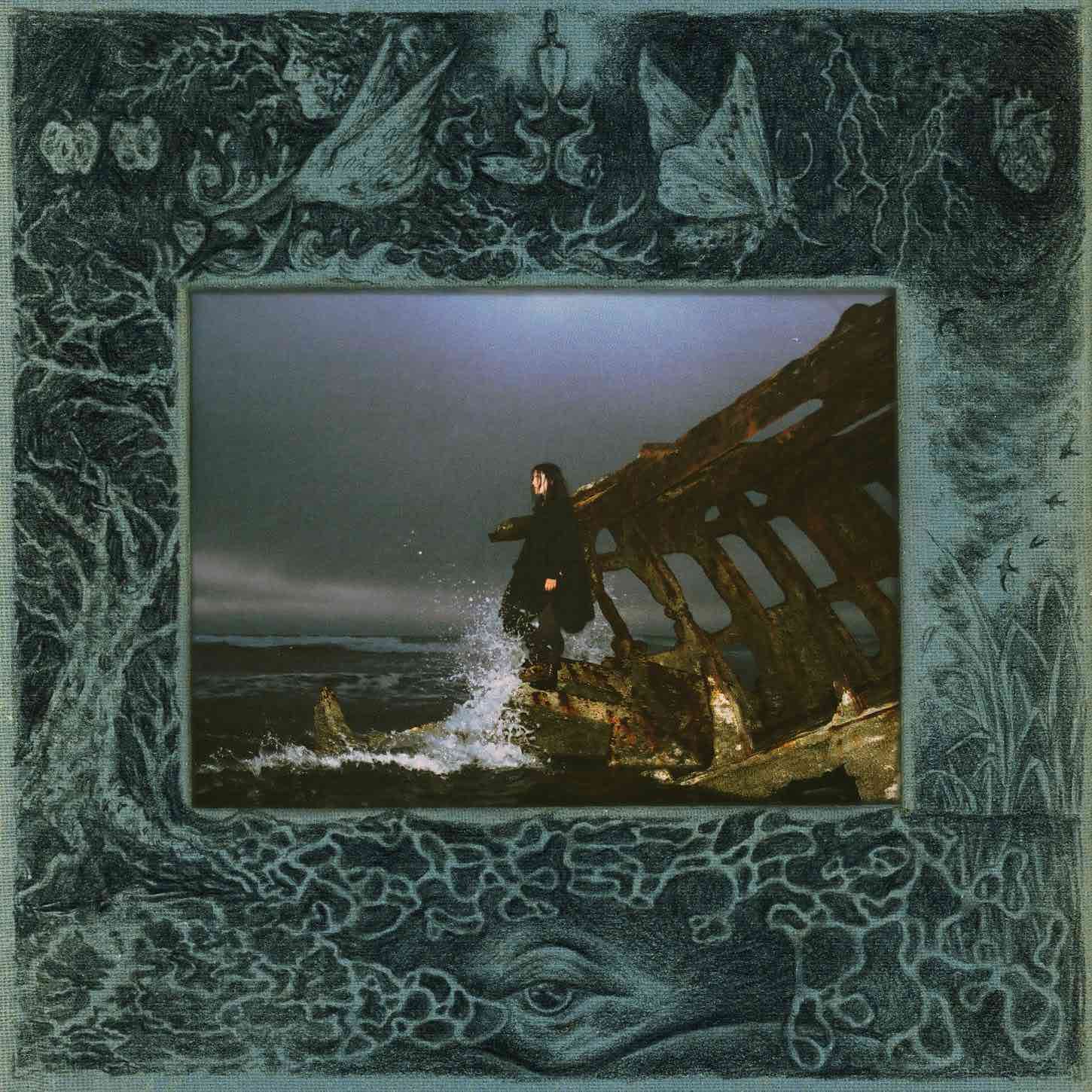
Water, oceans, and the sea make for endlessly rich artistic metaphors. Great records like Dirty Three’s Ocean Songs, The Antlers’ Undersea EP, and Fennesz’s Venice use these images to mirror the wondrous roll and bob of infinite oceans, while a host of metal bands have also employed nautical themes to reflect this landscape’s crushing depths, both literal and psychological: Isis’ Oceanic and The Ocean’s Pelagial, as well as Mastodon’s Leviathan and Ahab’s The Call of the Wretched Sea—two pertinent Moby-Dick-themed albums.
While Searows’ second full-length isn’t exactly a metal album, it’s certainly heavy in terms of instrumentation and emotions. Death in the Business of Whaling takes its title from a line in Herman Melville’s aforementioned epic: “yes, there is death in this business of whaling—a speechlessly quick chaotic bundling of a man into Eternity.” The beauty and weight of Melville’s prose perfectly matches the music contained within. This is emotionally fragile, Ethel Cain–style indie-folk infused with a trudging heaviness that pushes toward doom-metal territory. Chelsea Wolfe and Emma Ruth Rundle are perhaps the best reference points for these nine slow, churning tracks that, although they never hit with metallic musical force, crush with the weight of a slow, inexorable tidal surge.
Bolstered by gorgeous, widescreen production courtesy of Trevor Spencer, these songs are stark, crisp, and downright beautiful, like an icy shoreline. From the banjos and folky drums of “Photograph of a Cyclone” to the sparse, guitars-and-vocals-only “Dirt,” each track is an icy, immersive wonder. Duckart’s lyrics are similarly quietly spectacular, if quite guarded. They’re like opaque, fragmented short stories that reach either ambiguous or tragic ends. “Dearly Missed” tells a (sort of) story about someone who “drove his car off the river bridge,” while “Kill What You Eat” ends with an intriguing image of any icy “lake I made,” from which the narrator “ran away” and “left you there to take my place.” These lyrics invite you to peer inside, to plunge your head into their cold and murky depths.
A fog-strewn, fraught place, Death in the Business of Whaling is nonetheless a wholly immersive experience, one that uses its cavalcade of intriguing (and very chilly) aquatic imagery to pretty and frequently devastating effect.
