

Kathryn Mohr
Carve
THE FLENSER
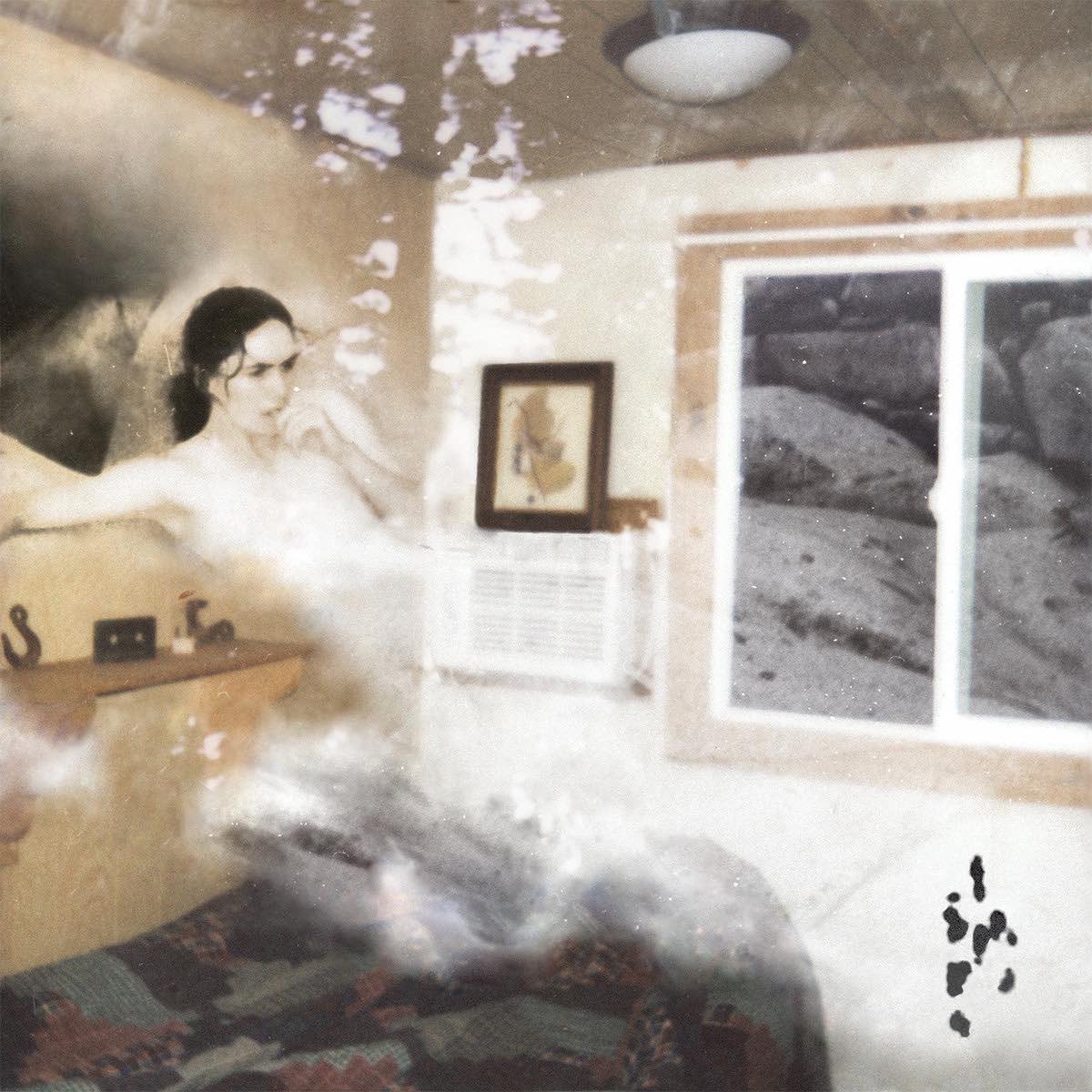
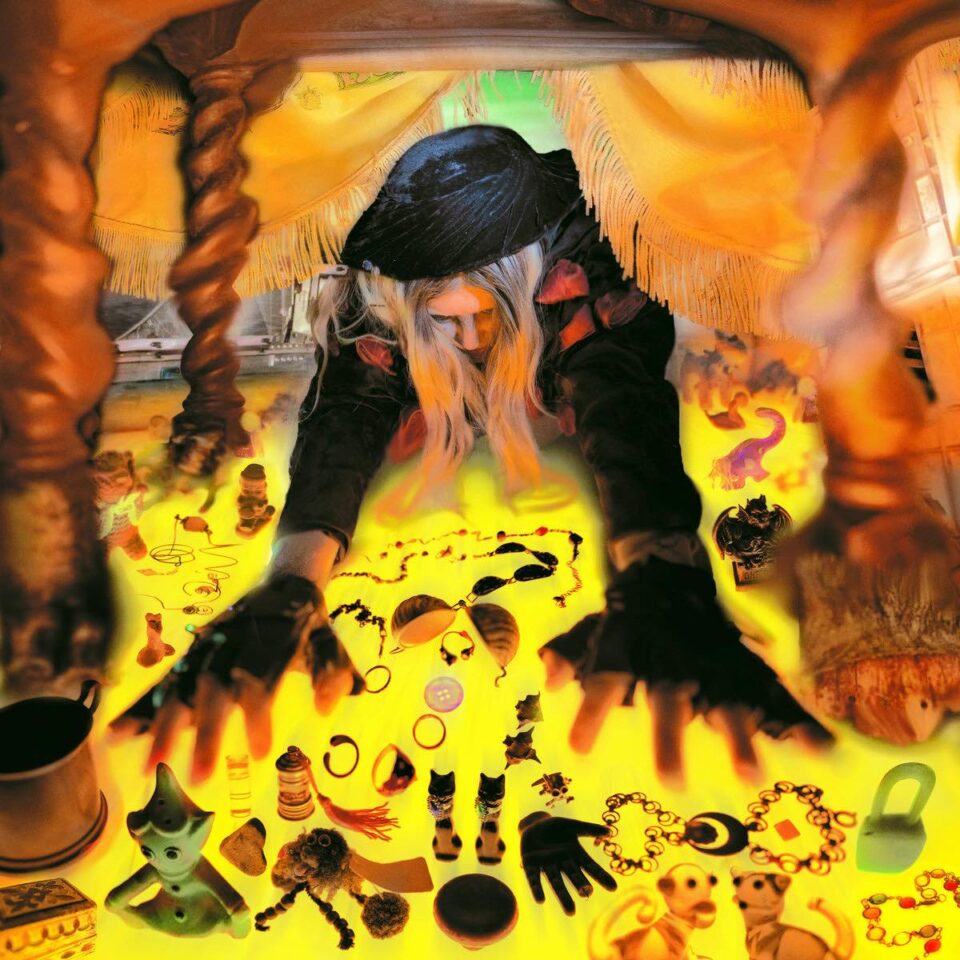
“Is anything in its final form now? Or are we just putting out clay for fans to mold?” This is one of many pertinent questions posed by Liz Pelly in her book Mood Machine, a deeply researched study on Spotify’s domineering influence over all facets of the music industry, even down to how artists are now writing songs: posting snippets (clay) on social media, waiting to see what gets hits, then molding the rest around whatever Big Streaming and our five-second attention spans demand. Kathryn Mohr’s music is rather clay-like, too. The songs on Carve, the Bay Area experimentalist’s second album, could be demos. They’re all about fundamentals and incidentals—music that can be played when the system fractures and the computers go down, and that may perhaps never sound the same exact way twice. There’s longevity and timelessness here, a reaction to the increasing homogenization of over-easy Spotifycore. But it’s the authentic version of that make-of-this-what-you-will approach. Mohr is obviously not interested in virality, but in letting these songs be what they are.
For Carve, Mohr took inspiration from how our memories stay lodged into places long after we’ve left, like fossils or cave paintings. You can’t orchestrate your memories—at least five-year-old Mohr didn’t when her family visited the Mojave Desert, the place she returned to to make this record—so it follows that you shouldn’t resist what the songs want to drink up from their surroundings. That’s what Carve feels like: like Mohr is the desert’s temporary collaborator, borrowing its desolation to work out what she needs to, but creating with it. On tracks like “Chromium 6,” she lets the formidable, disinterested Mojave have the floor, speaking for itself through field recordings of crunching rocks, arguing birds, crying coyotes, and a droning gong sound that could be Mohr’s lone contribution to the wild symphony. Or perhaps it simply blows in the wind outside some rundown motel, and she’s merely an observer, the conduit.
Otherwise, the album largely consists of Mohr sitting in a jail-themed Airbnb with a guitar that lumbers with grungy distortion. Sometimes this is reminiscent of Mia Zapata or Courtney Love soundchecking sans backing band circa the mid-’90s. But Mohr isn’t aping anyone. She sings like she’s casting spells with double- or triple-tracked vocals. She opens the album with a digital chittering/radio static soundspace, titled “Bone Infection,” that resembles a Stranger Things cold open. “Doorway” leads on from there, an eerie, sludgy din that melts into satisfying chord turnarounds in the chorus as she fast-talks her way into something as close to uplifting as we’re gonna get. The subtle brilliance of her arranging choices are apparent here, too, as toward the end of the track she benches the bass then puts it back in. You can really feel the low-end reinforcement—and its absence—like distant, strangely comforting rumbles of thunder.
The album’s second half changes up the sonics a little, ceding the distorted guitar to a dusty acoustic, more field recording clips, and different vocal approaches. “Owner,” which contains the widest spectrum of sounds, is like a music box gone very wrong—unintelligible whispers like sand riding on wind, a background of crinkles and creaks, and a clean guitar evoking a twinkling night sky with pretty but dissonantly uneasy textural arpeggios. Mohr doesn’t need to do much for the tension to build almost unbearably—and that’s true of the whole record.
Through it all, there are repeated lyrics that rise to the top, especially laden with doom and grief. “I can’t commit to anything,” Mohr sneers at herself on “Commit,” while “The dead get further all the time” is the chilling refrain of “Idiocy.” As “Trouble Me” closes out, she painfully cycles the words “Don’t change,” the album’s final line—its final plea—before she relinquishes to the trembling, warped distortion soundscape of “Crow Eyes.” Carve doesn’t end on a hopeful note. It sounds exhausted, fried, and heartbroken, leaving you unsure where to go from here. I guess that’s what it would feel like to be alone in the desert with your thoughts.
Carve was tracked over a couple weeks, though written across several years. To make her previous record, 2025’s Waiting Room, Mohr likewise isolated in a remote place—but that time it was a fish-packing factory in a small Icelandic village. Both locations are equally intimidating and aloof, but there are kinder edges to Waiting Room, which has floaty, reverby soundscapes with organ drones, more seamlessly integrated field recordings, and is indeed more akin to a waiting room—patient, almost peaceful, though still creepy and anxious, to be sure. Carve doesn’t wait; it doesn’t have that roof over its head. Prompted by a different kind of intensity and, when it comes down to it, anger, it’s a frustrated, bare-bones, soul-searching, quietly horrifying album that leaves itself inside you like a memory chipped into a craggy rock in the middle of nowhere. Whether you want to or not, you’ll always be able to find your way back.
