
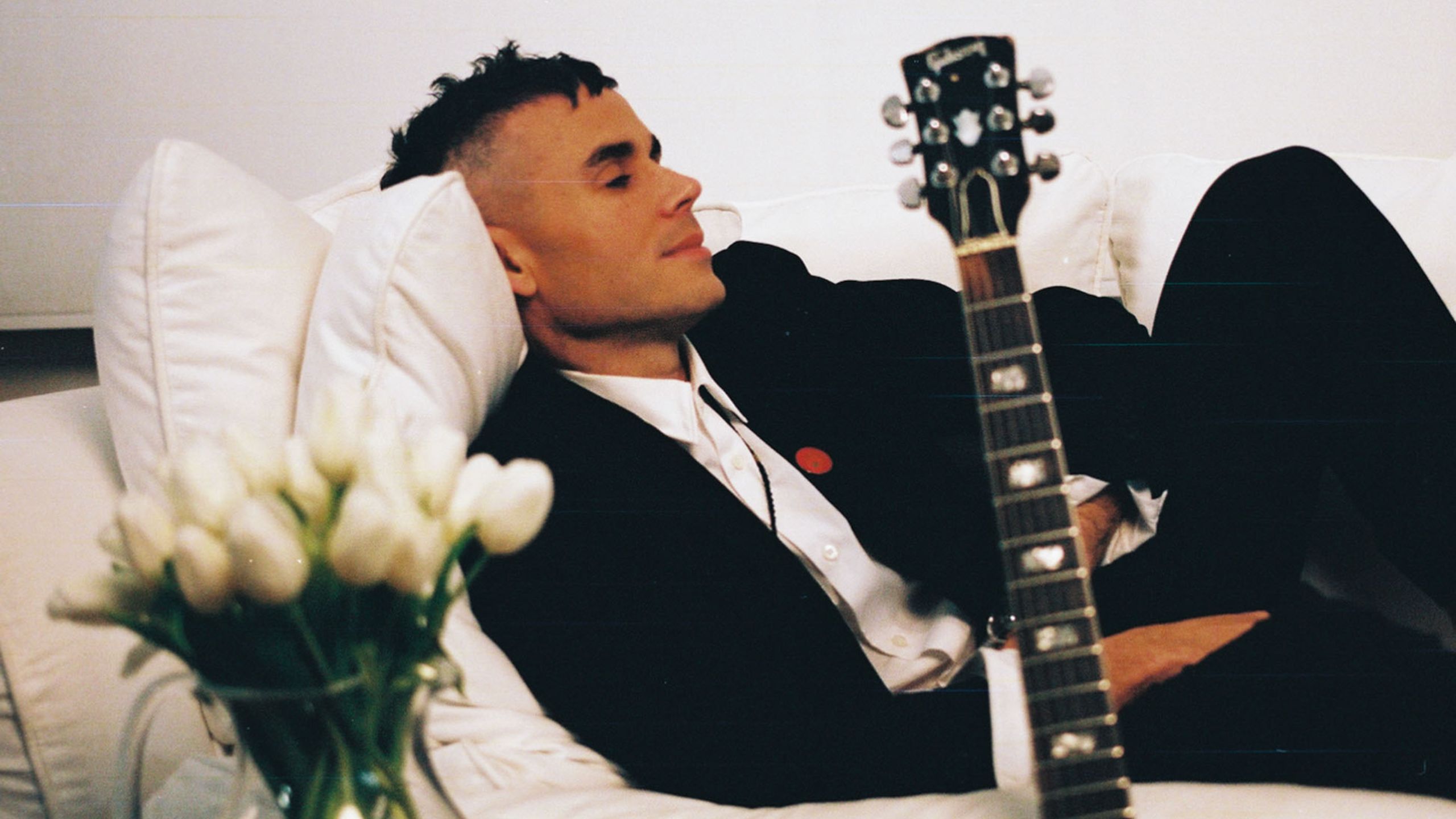
Rostam is thinking. That’s not a surprise. If you’ve paid attention to his work as a songwriter, producer, or composer since he left the employ of Vampire Weekend a little under 10 years ago, you’ve heard his wealth of deeply considered, subtly contagious melodies, provocative orchestration, and imagistic lyrical content across solo albums such as 2017’s Half-Light and 2021’s Changephobia. Minus his wise and witty words, Rostam has crafted tense, elaborate soundscapes for the work of conjoined filmmakers Brit Marling and Zal Batmanglij (his brother) on projects such as Sound of My Voice and The OA, as well as his gifting HAIM, Frank Ocean, Charli XCX, and others with his particular brand of lofty rainbow-toned production vibes, cinematic arrangements, and knowing studio savvy. Though ripe with the possibilities that intuition may bring, nothing in Rostam’s world is ever dashed off or half-stepped.
But as far as concentrated subject matter with ornate instrumentation more directly related to his own background goes, with tales tall and not-too-tall to tell—with the momentous guts and gracefulness of Dos Passos’ USA trilogy—there’s nothing as well thought-out and focused as his new album American Stories and its soon-to-follow concert film. Whether it’s the country-twang-meets-Persian-swirl of “Back of a Truck” or the uneasy existential flourish of “The Road to Death,” Rostam has filled each of these stories with the passions and pains of his life and time as a maturing gay Iranian-American in the 21st century, one who just happens to be giving as much time and thought to each of my interview questions as he has his catalog of sounds across this last decade.
Read on for his enthusiastic answers, and listen to American Stories here.
After having been “Rostam” for as long as you have been, do you feel as if he’s a character apart from you?
It’s nothing I’ve ever considered before. There’s a level of integration between who I am in my songs as Rostam and the person that I am in the world. I don’t think that I’d be any good at writing songs from a character’s point of view. Because I’m somebody who writes so frequently, collaboratively, on songs for other people, when I’m working as Rostam, I’m telling the story from Rostam’s perspective—this person with this collection of experiences and this identity.
Are all three of your solo records a logical progression in accordance with the lives that have been lived within them?
I do believe that I’ve gotten more personal with each album, yeah. There’s a lyric that comes to mind: “My father carries the name of a prophet / But dad is no believer.” That line is very specific to my experience as an Iranian-American, as someone born in 1983, as Rostam. I couldn’t write a lyric like that from any perspective other than my own.
Would you say then that American Stories was a foregone conclusion?
If your question is, “Was writing an album about my feelings toward America inevitable,” I say “yes.” Coming from a four-person family, I’m the only one born in America. It’s always been on my mind as to what that means. It makes sense that I’d engage in artistic conversation and exploration about my relationship to being an American. Just like I collected chord progressions for this song or that song, the same thing went for lyrics and drum patterns, some very elaborate. The song “Hardy” on this album was something I’d written in 2012 and held onto. Other songs I wrote in a more traditional way, just sitting right here at my kitchen table with an acoustic guitar.
There’s a moment in the album-making process where I transition from collecting ideas to figuring out what the big idea is. I love the idea of pulling together nine or 10 songs, that the sum total of those songs is greater than its individual parts, and that you’re able to explore themes and the interconnectiveness of those themes with everything from song choice and sequencing to the palette of sounds.

“There’s a level of integration between who I am in my songs as Rostam and the person that I am in the world. I don’t think that I’d be any good at writing songs from a character’s point of view.”

So was this new batch of songs always interconnected?
No. At some point, it went from just being a collection of ideas to something, to American Stories, to me exploring American and Persian music, to me interweaving those sounds and looking at my own identity.
Everything is politicized, but did your backstory make you a political animal, especially in your songwriting?
It’s interesting that you use the word “politicized,” as that signifies an external force. And that’s a conversation worth having, as to what my politics are.
What are your politics?
I meant that rhetorically [laughs]. I like the idea that a person will arrive at the idea of what my politics are from reading the lyrics, if they want, and experiencing the album as a whole, musically, sonically. I like the idea that that is how you arrive at understanding my politics. If I were to give you a few sentences on that topic, I don’t think it would do justice to my life or my work. I also believe that it’s the responsibility of the artist to maintain mystery.
I hear how the album all sort of blossoms forth like a flower rather than hitting you over the head like a mallet.
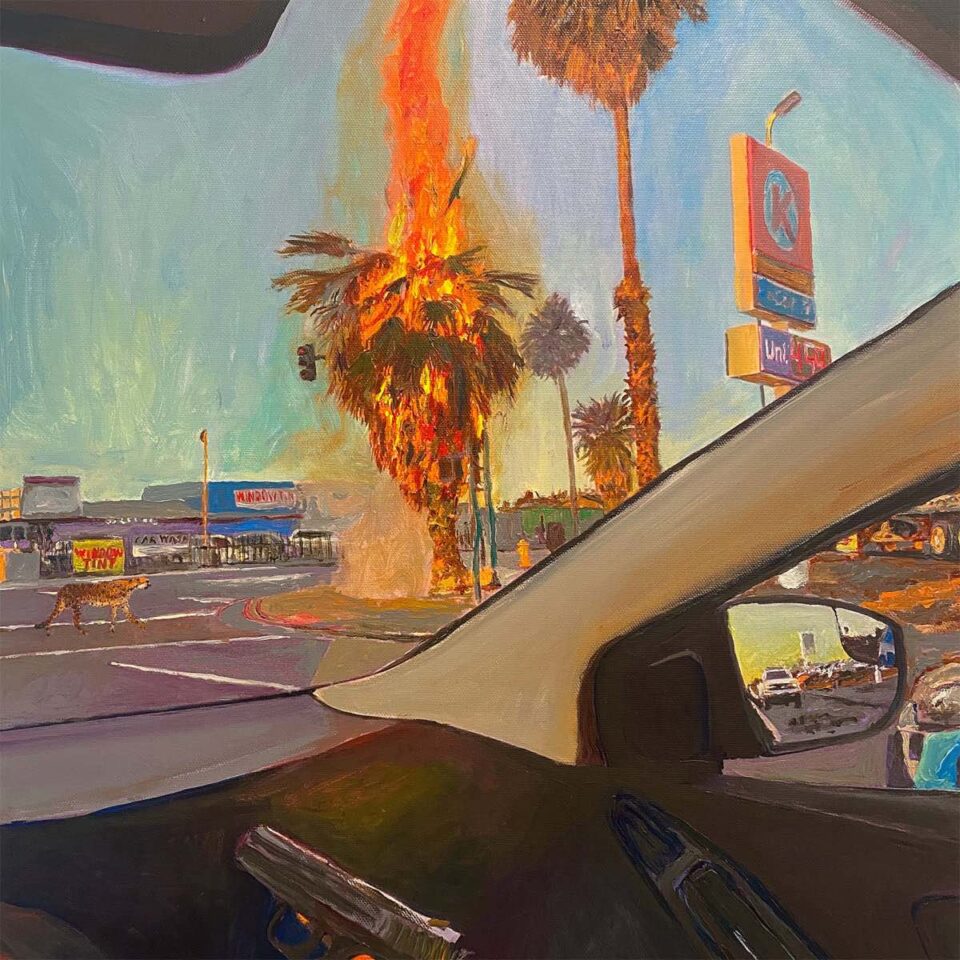
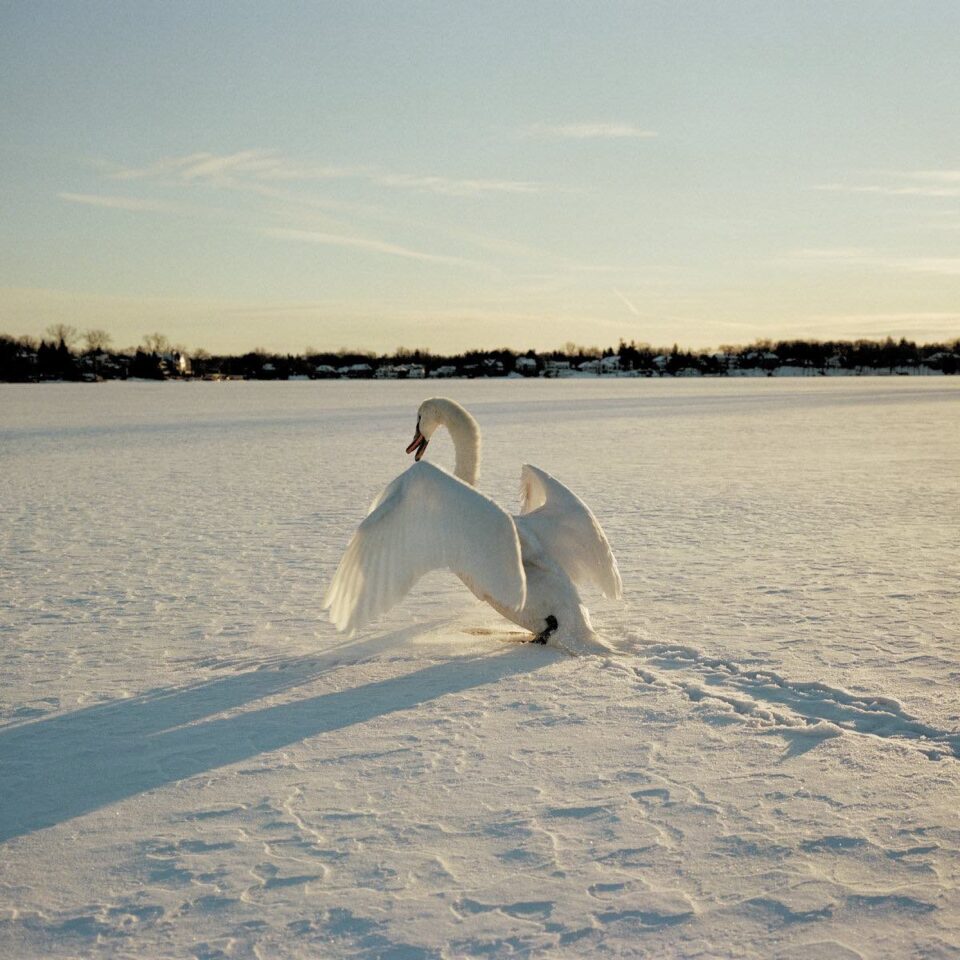
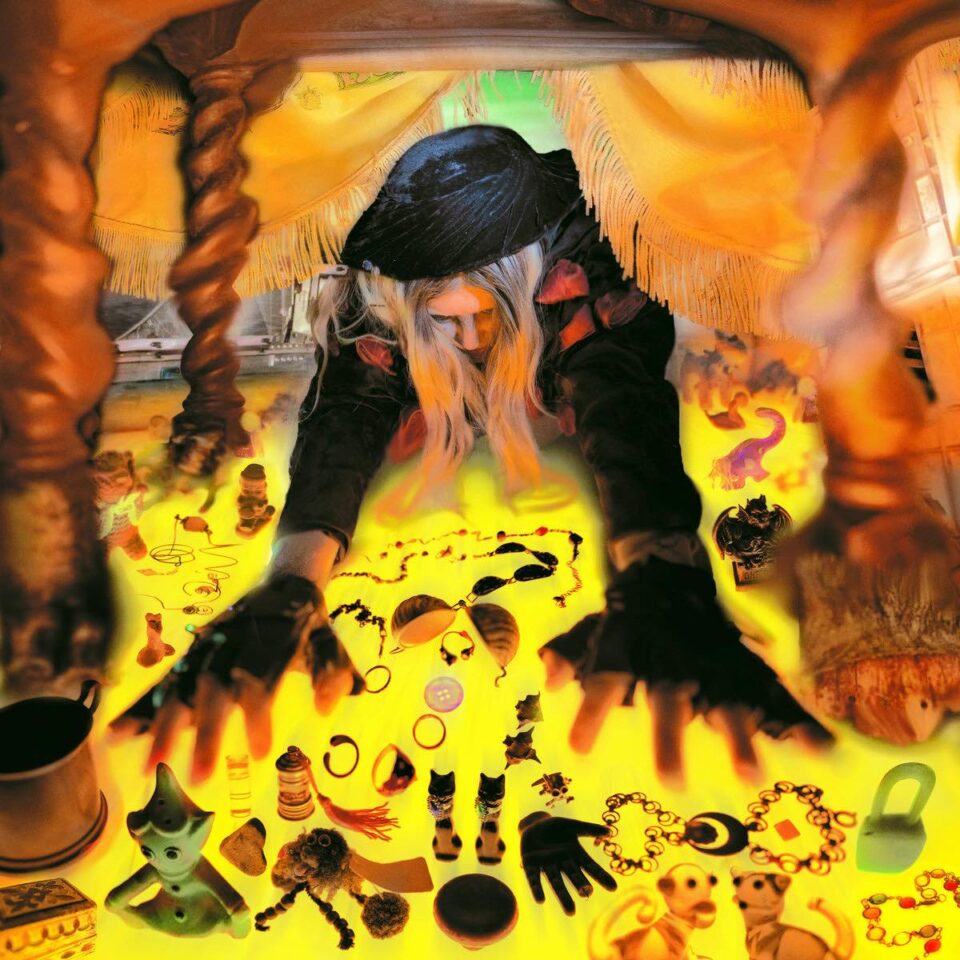
Thank you, that’s quite a compliment. I think that there was a reason that I called it “stories,” plural. Because that’s what I’m interested in: weaving together various experiences. The immigrant experience, the queer experience, the American experience. I was interested in quilting together this set of disparate stories. Because of the nature of this album, from its title through its cover, it’s forced me to contend with the idea of “concept.” Like, would I ever make a concept album? I came to the conclusion that I could not, and should not.

“There was a reason that I called it ‘stories,’ plural. That’s what I’m interested in: weaving together various experiences. The immigrant experience, the queer experience, the American experience.”
So it would be easy to say, “Well, there’s a twangy American country element to it,” and “There’s this Persian musical element to it.” Can you talk about that from a production standpoint?
I think what you’re referencing is that it’s not just the songwriting and the lyrics that are personal to me on this album, it’s the palette. That said, I don’t believe that the only people who should be allowed to use Middle Eastern sounds in their music must be of Middle Eastern descent. However, as someone of Middle Eastern descent who has studied Western classical music extensively, along with Western pop music, and contributed greatly to the oeuvre of Western pop music, I think that integrating—in as natural a way as possible—those sounds, the aspects of Middle Eastern music that I love, presented a challenge, but a challenge that I was up for. A challenge that really inspired me. Lit a fire beneath me, and really gave me this sense of purpose.
How did you come to write “The Road to Death”? It’s the only track on the album that I can’t figure out completely as to how it fits into a life.
It was inspired by a conversation I had with a former partner of mine. We were discussing how, after I’d contracted the COVID virus three times and didn’t quite feeI how I used to feel, maybe my immune system was getting weaker. And he said, “Yeah, your immune system is going to keep getting weaker as you get older, and eventually that’s how and why you die.” I’d never thought of death as the consequence of an immune system that just gives out. That really sent me down this road of how you have some friends who smoke a pack of cigarettes a day versus those who haven’t ever touched even one cigarette who live longer and healthier lives with little rhyme or reason to it.
You have this filmic sensibility to the manner in which you arrange your albums. What is collaborating on music for your albums like in opposition to those for films that you work on?
I think I can trace that chronology back to a documentary that Brit Marling made with Mike Cahill, Boxers and Ballerinas, about dancers and fighters in Cuba and Miami, with its music made by Craig Wedren. My first job out of college was working for Craig. I’d already looked up to him for his work with Shudder to Think, a band who hardly conformed to their assigned genre of hardcore. Craig loaded me up with these sounds so that I could help him score films, the same sounds that I put into this album that I was producing at the time, our first Vampire Weekend album. Craig was very instrumental in providing me with these cinematic overtones that I’d been curious about for years.

Going back even further, I remember Ezra [Koenig] and I in 2003 going to Largo to see Jon Brion and cornering Jon after the show about those flute sounds that he used when producing Fiona Apple’s version of “Across the Universe,” which is one of my favorite recordings. And he said that it was a Chamberlain flute. Well, that’s the same flute sound I used when producing “A-Punk,” a sound that I had access to through Craig. Several years later, I’d gone from being an assistant to doing my own thing and I’m scoring a film of my brother’s with my own collection of choir sounds. Though I’d collected those sounds to use on new film scores, I wound up using them as well while producing our third album [Modern Vampires of the City]. I think the entire palette of sounds on that album is indebted to film scores and scoring.
When I graduated college, I was preparing for three paths: one was composing classical music, as I had just majored in music at Columbia; the second was writing film music; and the third was producing albums. I’ve been able to do all three of those things to varying degrees, but what inspires me the most is integrating drama and the majestic qualities of film scores and film music into song. I think that putting the most unlikely elements into the larger basket of what we call “song” will inspire me for the rest of my life.
American Stories comes with a visual component, American Stories: A Concert Film. What ideas have you brought from working in film into this project? How did those ideas maybe stretch into the album itself?
I look at movie-making and album-making as the worthiest art forms. And they’re both the most modern of art forms. There’s a part of me that’s interested in using art forms that reach as many people as possible. Maybe they don’t know what Persian music is, foreign as it may be. But thinking of listeners not knowing and liking it because they heard it through American Stories, the album or the concert film? That, to me, is a worthy pursuit. So, too, is making a great film in the way that a film such as Brokeback Mountain humanized gay people to a broader audience, showed off men being in love with each other. Certain art forms allow you to enter—and perhaps even alter—people’s consciousness. That’s what I want to do. FL
