
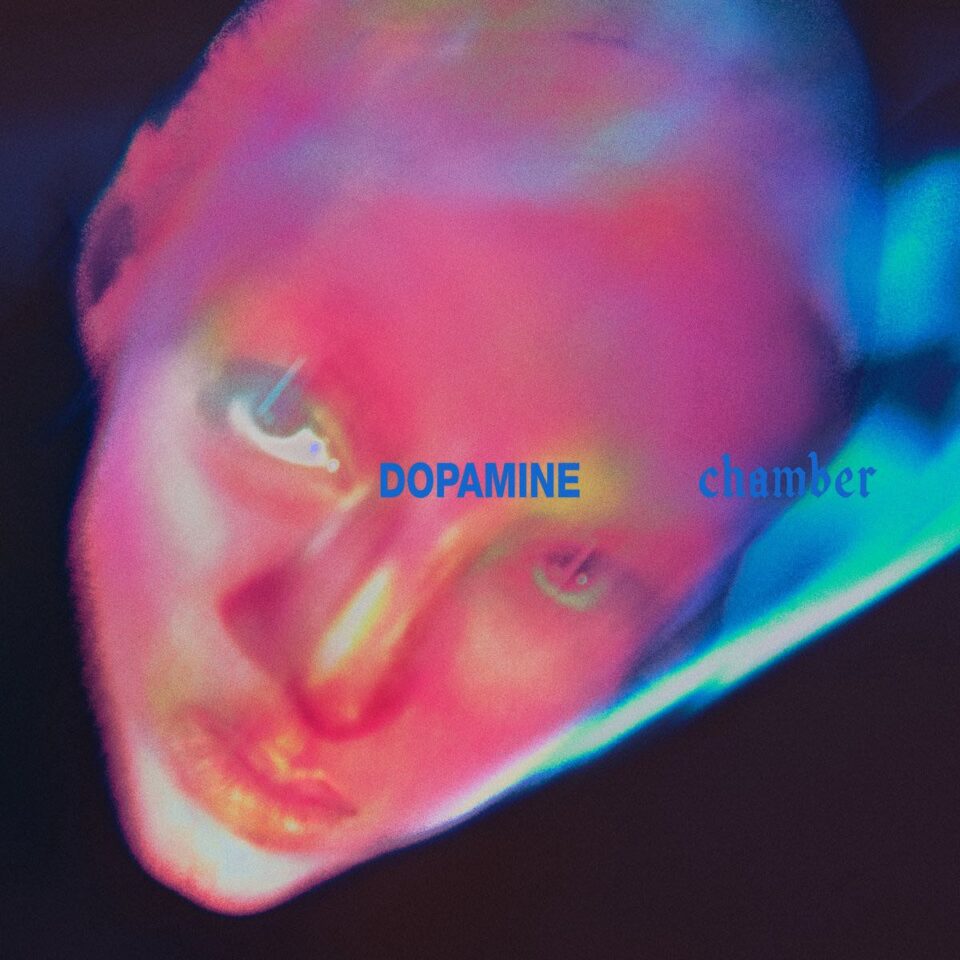
After writing and producing some of the most era-defining pop hits of the ’00s (such as Christina Aguilera’s “Beautiful”), blessing the world with one of the biggest karaoke classics of all time (4 Non Blondes’ “What’s Up?”), and doing her part to kick in the door for lesbian representation in the music industry, Linda Perry could be forgiven for wanting to spend the latter part of her career sticking to cushy gigs like scoring Netflix movies in her luxurious, cocoon-like studio in the Hollywood Hills—and at the beginning of the new documentary Let It Die Here, that’s exactly what we find her doing. But then she begins opening up about her abusive mother and her loving relationship with her child Rhodes (who she co-parents with actress Sara Gilbert), and then her mother dies, leading to a painful moment of immense personal transformation and the birth of the album that gives the film its name.
That resulting album is a brutally honest reckoning with a relationship that remained deeply tangled until its end, dealing with the complexity of grief, generational trauma, and generational healing while Perry rifles through a pile of influences running from pre-war blues to Elton John to indie rock, and proves that her talent for crafting colossal hooks remains undiminished. Emotionally messy and uninterested in feel-good narratives, Let It Die Here is a recklessly daring move for an established industry veteran, but fully in line with the way Perry has lived her singular life, which has always thrived most when it’s close to the edge.
We caught up with Perry to talk about her biggest hits, the 4 Non Blondes reunion, and why her mother’s death was the most freeing experience of her life.
After all these years working behind the scenes with other artists, what’s it been like for you to get back out into the public eye as a performer with such a deeply personal project?
I’m extremely nervous about this project, because I’m very sensitive. One of the reasons why I left [4 Non Blondes] to begin with was because I’m very emotional. I’ve been doing a little bit of hiding behind other people, trying to bring them to another level. And then one day, honestly, I was just sitting here, and I’m like, “Linda, you’re the star, you have to point the energy at yourself.”
We didn’t know we were making a documentary—I thought [director Don Hardy] was just getting content in my studio. But then he told me, “I edited 30 minutes of it and I showed it to some people, and we all think there’s a documentary here.” And I’m like, “Just do whatever the fuck you’re gonna do, but leave me out of it.” And he started laughing. He’s like, “But Linda, how do I leave you out of it when you’re the focal point?” When I saw it I was like, “Holy shit, that girl needs a fucking hug,” you know? And that really inspired me to heal myself. It’s like, “You’ve been carrying this far too long, Linda, it’s time to fucking let it go.”
What fascinating timing for this documentary to be happening at this moment of great change in your life.
Life has been so kind to me. The universe constantly gives me gifts, and for the longest time I didn’t receive them because I didn’t understand them. And then somewhere along the line, I think probably around when I was 40, I started opening myself up to be worthy of receiving these gifts and things started changing for me. The documentary—as harsh and emotional and raw and fucking embarrassing as it is—really showed me a lot about who I am and how much unneeded suffering I put myself through. I am so fucking hard on myself. And it’s all a pattern of where I came from and what was given to me. It’s like we’re given things by our family, but when your parents open up a toolbox and it’s filled with junk, and you’re supposed to build a house out of it, there’s gonna be flaws.

“When I saw [the film] I was like, ‘Holy shit, that girl needs a fucking hug,’ you know? And that really inspired me to heal myself.”


In the film you, when your mother goes into hospice, it seems like there was a lot of healing before she died. But afterward you talk about this sense of relief that your mother isn’t there to watch you and judge you. I was wondering what it’s been like to put those specific kinds of feelings out into the world that are so complex.
The best gift my mother ever gave me was dying and leaving in peace. I brought my mom to my house [when she was sick] and her hospital bed was right next to mine, and I woke up all night long, tending to her. She’d be laying there, just looking at me, and I’d crawl in the bed and hold her, and she would put her arms around me. I’d never had that. My mom has never just put her arms around me and held me. It was the craziest feeling. In her last three months, my mom became the mother I’ve always wanted, and that was a huge, cathartic awakening for me. In one of the songs I say she’s the hero-villain and my muse. As fucked up as she was, she was powerful and smart and funny and calculating and mean—all of those things. My mom taught me how to be a survivor, and I’m so grateful for that. The gift that she left me with was this surrender, this beautiful, peaceful departure. It’s like she was just making up for all the years she fucked me over.
It seems like this gift opened the floodgates for you.
The last thing we shot [for the doc] was the making of the song “What Lies with You.” I told the director, “I need to go jam”—because my mom had just passed away—“do you want to come film me in the rehearsal room? I’m gonna put a band together, I’m gonna hire strings, and I’m gonna get background singers.” I just went to the piano and wrote this song—I’m bawling, and this song is coming out. As I walk into the rehearsal room, the band is there. I’m still trying to figure out the lyrics. As the band learned the song, the strings walked in. As soon as I saw the strings, I heard the string part and taught it to them. As soon as they learned their part, the background singers walked in. It was like three hours that happened, and this beautiful song gets created.
And what happened was I was like, “OK, I gotta go back now, I gotta tell my story.” And so that’s why I start [the album] off with “Balboa Park.” [In my twenties] I was a drug addict. I was living out in the streets and the park with all my gay friends, my mods, my punks, my transgenders, my drag queens, my straight friends. It was the the best fucking time. There’d be, like, seven different boomboxes playing everything from the Sex Pistols to Specimen and Siouxsie and the Banshees. So I took everybody on this journey of where I come from, and how all of [my mother’s] stuff kind of fucked my brain up.
And at the end [of the album], with “Albatross,” it’s like I’ve been carrying this weight and this guilt and this shame, and I’m letting it go, and that’s why that song is brighter than the other ones. It’s the most unproduced one, and it’s just telling a story of, “I’m letting go, and here’s this big power chord I’m going to end on. Bye, I’m done.”

“When your parents open up a toolbox and it’s filled with junk, and you’re supposed to build a house out of it, there’s gonna be flaws.”


It’s such a beautiful note to wrap everything up.
And then, so, yes, 4 Non Blondes. Every year, somebody asks me, “Will you put 4 Non Blondes back together and go play a special show?” I’ve been asked for 30 years to do that. And I was just sitting here in my studio, and I was like, “You know what? I think it’s OK. I think you can say yes. You need fun right now. Stop being so fucking serious, Linda.” And then, I kid you fucking not, a week later, my manager called me up and said, “BottleRock offered 4 Non Blondes a show.” I just started laughing. I called up the band one by one and said, “Hey, this isn’t for sure, I just want to see how we are”—because we don’t talk to each other. I went up to San Francisco, I put us in a rehearsal room, and I said, “If this feels good to everybody, I’ll approve [the show], but I just want you guys to know once we do BottleRock, people are going to want us to do more, so we’ve just got to be prepared for that.”
And so they’re like, “Yes.” Then I’m like, “OK, the other caveat is, I don’t want to play any of the album songs—only ‘Train’ and ‘What’s Up?,’ but all the other songs I cannot get behind.” And they were looking at me very confused like, “Well, what are we going to do then?” And I said, “I’m going to write us a record.” So that’s what I did, and we did that all last year, played all these festivals, and everybody stayed. I mean, this record is so fucking good. I’m actually in the studio right now recording it and putting in overdubs. It sounds like the kind of record I wanted to make in 1994.

“This [new 4 Non Blondes] record is so fucking good. I’m actually in the studio right now recording it and putting in overdubs. It sounds like the kind of record I wanted to make in 1994.”


I love that you revisited “Beautiful” for the new album. What was it like for you the first time you heard Christina sing that song, and what’s it been like to revisit it?
Christina wanted me to sing her a song because she was nervous being in my studio. I don’t like entourages, I think they’re all distractions—nobody’s allowed to bring their team into the studio when recording. So she had to show up by herself, and she was like, “Can you play me a song? I love your voice, it’ll break the ice for me.” So I played her “Beautiful,” because it was my freshest song, and at the end of it she said, “Can you demo that for me and give me the lyrics? I want that for my album.” She heard it right away, and I was taken aback by it, because I didn’t know if someone like her could relate to a song like this.
I’ve been telling people for years, [the vocal on the release] was her demo vocal. My [original] version of the song is exactly like the one I just recorded. She did such an amazing job with it. She owned it—forever that will be a classic. And when it came around to me doing my version, I never thought, “Oh, I’m competing with Christina.” I was just more like, “I’m competing with myself.” Then I had to think about it and go, “Well, what would have been my version back then?” And I just recorded it exactly the way I heard it. Then I asked my ex, “Hey, I’m gonna shoot a video for this, I want you to direct it.” She’s never directed a video before, but she’s so talented. She sent me the synopsis, and I never read it. I said, “Just tell me where to be, what time, what you want me to dress like.” I was wearing clothes I would never wear. I had makeup on that I would never wear. But I never questioned it. She said she wanted Rhodes to be the star, and I’m like, “Of course.” She did an amazing, incredible, dare I say beautiful job on that video. It was a really wonderful experience for all of us.
I’m sure seeing your child dressed up as you lip syncing to your song was a really emotional experience
Yeah, I teared up. There’s a moment where I walk up to the stage and Rhodes is singing, and we’re singing to each other, and Rhodes’s hand was out, and I grabbed it and kissed it, and I just had tears coming down. So I feel putting “Beautiful” on the album was a full-circle moment for me. FL

