



Nara’s Room
Tearless, thoughtless
MTN LAUREL
You don’t walk into Nara’s Room; you log on. The Brooklyn-based band’s website is themed with a custom OS that situates visitors right around the mid-aughts transition between Windows XP and Vista, so that clicking the link to their TikTok page feels like breaking the space-time continuum. You’ll find bare-bones applications like Notepad and Calculator, as well as embedded music videos, a tour archive, and links to press coverage from websites like this one, which wouldn’t have been born for another decade. If you’re led to assume this is a portal to an intimate lo-fi bedroom project, however, you don’t need to dig much deeper to discover that Nara’s Room can also be raucously loud. A “Bio.txt” file informs us that they “became known for their energetic and immersive live sets around New York,” and the volume bar is stuck at 100 percent. If it were up to Nara, time might as well be frozen, too.
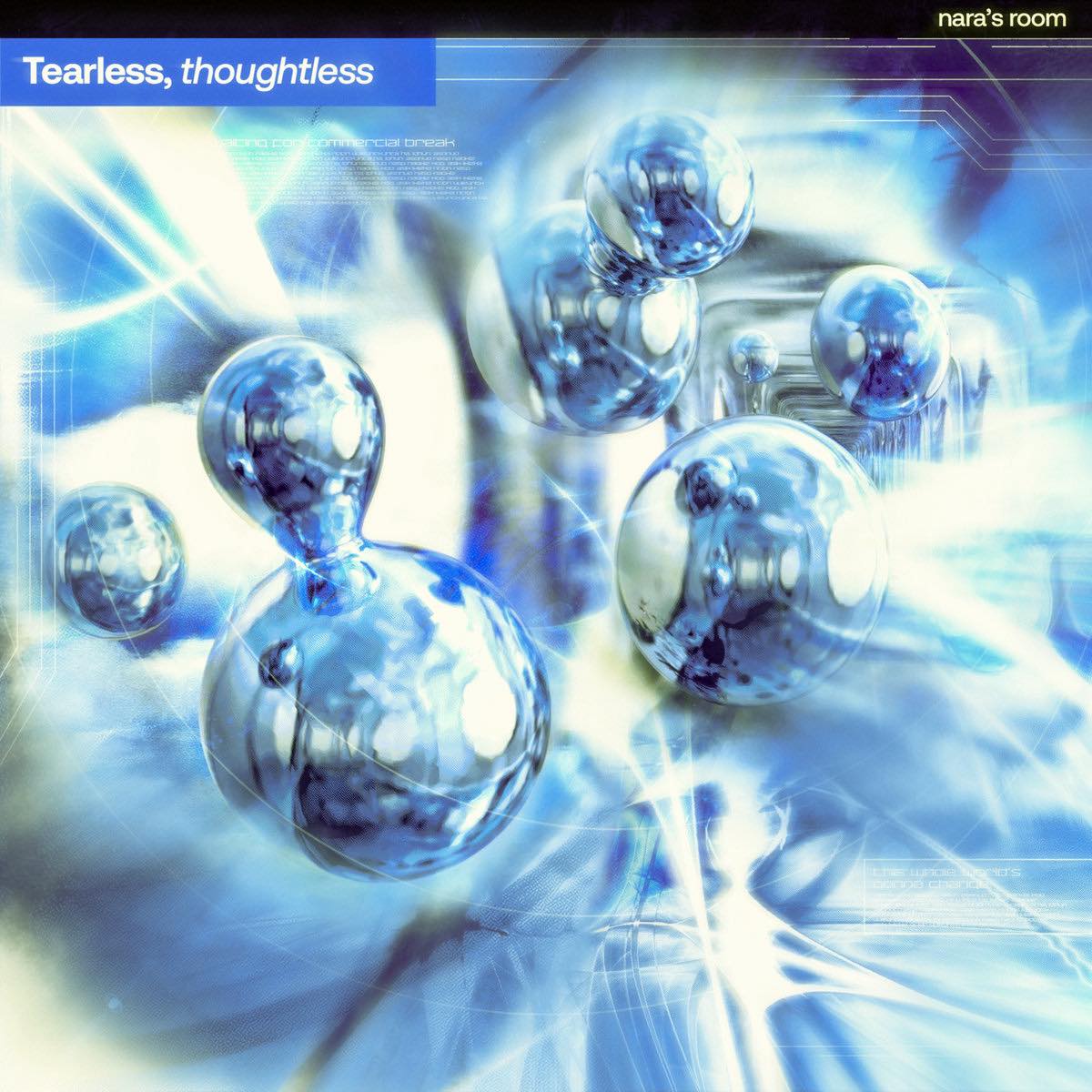
The name is not an alias designed to keep the identity of the group hidden; their bio also reveals that the project is led by songwriter Nara Avakian, who recruited bandmates Ethan Nash and Brendan Jones after putting up a Craigslist ad for non-men players (“Lo and behold, two of the most boyish of boys responded,” Avakian playfully lamented). With the addition of Will Fisher in the “ambient duty” role, Nara’s Room bring more dimension to their sound on their magnetic second record, Tearless, thoughtless, whose framing mixes analog technology and Y2K aesthetics. We’re ushered into its world with “DVD Menu,” a one-minute instrumental too nightmarish to be accused of ripping off the opening track of the same name from Phoebe Bridgers’ Punisher; later, a track named after the MiniDV tape format is followed by the mid-album interlude titled “AOL Away Msg,” which takes a moment to appreciate those listening on physical media.
Even when streamed, though, the album rewards anyone willing to stick along for the ride, shrinking attention spans be damned. It might seem front-loaded with its catchiest tracks, switching from the anthemic playfulness of “Reseda” to the unwaveringly soaring “Cut to Blue” and juxtaposing the irresistible nostalgia of “Lizzie McGuire” with the glitchy progginess of “MiniDV.” But flipping over to side B doesn’t just showcase a different, more meditative side of the band; it feels like logging off to confront the present moment, which turns out to be hazy with celestial longing and diasporic dreams. After all, the overarching theme of Tearless, thoughtless is change—how “this old world keeps changing the course of its stream,” as Avakian sings on the seven-minute lead single “Tucson,” where the jumping-off point is suddenly no longer 2000s pop culture but a poignant moment from a fairly recent documentary about Linda Ronstadt.
“Everything’s new, don’t think I wanna be a part of it at all,” Avakian sings earlier on the record, their lamenting the end of Lizzie McGuire certain to strike a chord with fans still reeling from the planned reboot being scrapped a few years ago. But there’s a reason you can’t edit the time on Nara’s Room’s website; it has to move forward, and Nara’s Room gladly count themselves among a new guard of NYC-based acts leaning into both the stream-of-consciousness warmth of Cassandra Jenkins and the off-kilter ambition of fantasy of a broken heart on “Sketchers.” You could even compare their sense of camaraderie to former tourmates like mary in the junkyard and labelmates Sister., but none of the members met as teenagers or college roommates—so when Avakian sings, “As long as I have my boys, I’ll be around,” it lets you hope that this kind of fruitful serendipity can extend beyond the most formative years of youth. It’s just a different kind of growing up together.
